High vs Low Deductible: Best Health Plan Choice
Discover if high or low deductible health plans suit your budget, health needs, and long-term savings goals for optimal coverage.
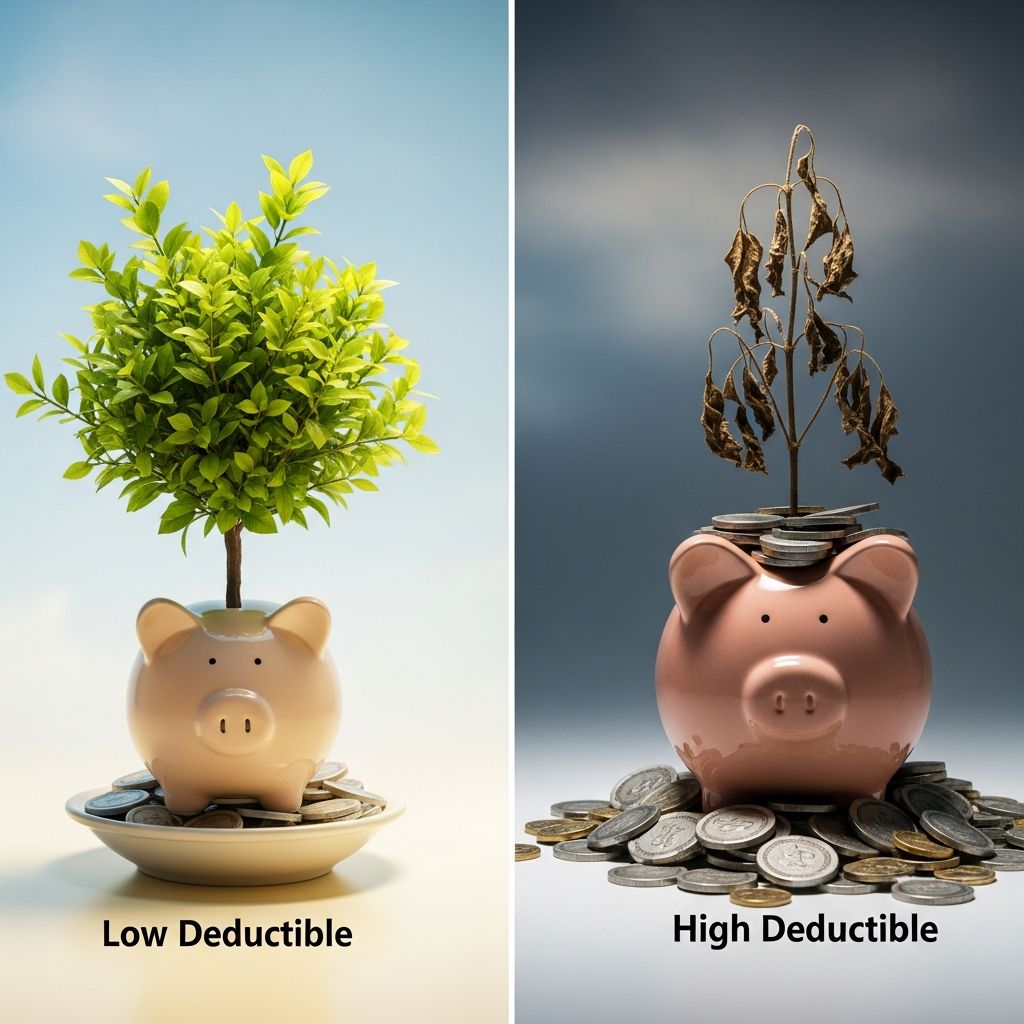
Choosing between a high deductible health plan (HDHP) and a low deductible health plan (LDHP) hinges on your expected medical usage, financial flexibility, and preference for monthly budgeting. HDHPs feature lower premiums paired with higher upfront costs, suiting healthy individuals, while LDHPs provide higher premiums but faster insurance activation for those with regular care needs.
Core Concepts of Health Insurance Deductibles
A deductible represents the initial amount you pay from your pocket for covered services before your insurer contributes. This threshold resets annually and influences overall plan economics. High deductibles, often $1,700+ for individuals in 2026, shift more risk to you but reduce premium burdens. Low deductibles, under $1,700, ease early-year expenses at the cost of elevated premiums.
Out-of-pocket maximums cap total annual spending, including deductibles, copays, and coinsurance. For HDHPs, these limits are $8,500 for self-only and $17,000 for families in 2026, after which coverage is comprehensive. LDHPs may have higher maximums but activate benefits sooner.
Breaking Down High Deductible Health Plans (HDHPs)
HDHPs prioritize affordability in premiums, making them accessible for budget-conscious shoppers. In 2026, minimum deductibles stand at $1,700 for individuals and $3,400 for families, with premiums often hundreds less monthly than LDHP counterparts.
- Affordable Monthly Costs: Lower premiums free up cash flow for savings or other expenses.
- Preventive Care Coverage: Screenings, vaccines, and checkups are frequently 100% covered pre-deductible.
- HSA Compatibility: Pairing with a Health Savings Account enables pre-tax contributions up to annual limits, growing tax-free for qualified uses.
These plans empower proactive health management, as unused HSA funds roll over indefinitely, fostering long-term wealth. For low-utilization households, savings can exceed $1,000-$2,500 yearly.
Understanding Low Deductible Health Plans (LDHPs)
LDHPs appeal to those anticipating frequent visits, prescriptions, or chronic management. Deductibles below 2026 minima ($1,700 individual/$3,400 family) mean quicker insurer involvement. Premiums rise to offset this, but budgeting becomes straightforward.
- Swift Coverage Activation: Pay less upfront for services like specialist consults or therapies.
- Stable Expenses: Predictable costs aid financial planning, minimizing surprise bills.
- Lower Coinsurance: Post-deductible shares are often more favorable.
Ideal for families or high-risk profiles, LDHPs safeguard against escalating costs during illnesses.
Side-by-Side Comparison Table
| Feature | HDHP (2026 Minimums) | LDHP |
|---|---|---|
| Monthly Premiums | Lower | Higher |
| Deductible (Self/Family) | $1,700+ / $3,400+ | <$1,700 / <$3,400 |
| Out-of-Pocket Max (Self/Family) | $8,500 / $17,000 | Varies, often higher up to $10,600/$21,200 |
| Coinsurance | Typically higher | Typically lower |
| HSA Eligible | Yes | No |
| Best For | Healthy, low-use individuals | Frequent care users |
This table highlights trade-offs based on 2026 standards. Marketplace caps ensure no plan exceeds defined maximums.
Financial Upsides and Downsides
Benefits of HDHPs
Beyond premiums, HDHPs shine via HSAs. Contributions reduce taxable income; earnings compound tax-free. Post-65, non-medical withdrawals incur only income tax, akin to a retirement vehicle. Healthy users may never hit deductibles, pocketing premium differences.
Drawbacks of HDHPs
Major events like surgeries can burden cash flow until maximums. Without reserves, this risks debt.
Benefits of LDHPs
Peace of mind prevails with lower barriers to care, encouraging timely interventions and averting costlier outcomes. Budgeting aligns with fixed premiums.
Drawbacks of LDHPs
Higher premiums strain ongoing budgets, especially sans employer subsidies. No HSA access limits savings incentives.
Personalized Selection Strategies
Align plans with life stage: Youthful, active singles lean HDHP for premium relief. Families, seniors, or chronic patients favor LDHPs. Review past usage: Under $1,700 spent? HDHP likely wins. Project forward: Pregnancy or sports? Opt low.
Factor employer contributions, subsidies, and networks. Simulate scenarios: HDHP premiums x12 vs potential deductibles.
Leveraging Health Savings Accounts with HDHPs
HSAs amplify HDHP value. 2026 limits (projected from trends) allow substantial pre-tax deposits. Use for deductibles, then invest. Fidelity notes average balances rival 401(k)s over time. Employer matches boost further.
- Invest in stocks, bonds via providers like Fidelity or HSA Bank.
- Pay providers directly or reimburse later with records.
- Portability ensures lifelong utility.
Navigating Auto and Other Insurance Parallels
Health mirrors auto: High-deductible policies cut premiums for low-claim drivers, akin to HDHPs. Low-deductible auto suits frequent repairs. Hybrid thinking applies across insurances.
2026 Updates and Marketplace Insights
Annual adjustments reflect inflation. HDHP minima rose from prior years; monitor Healthcare.gov for open enrollment. Bronze plans often HDHPs; silver/gold skew LDHP.
Frequently Asked Questions
What qualifies as an HDHP in 2026?
Self-only: $1,700+ deductible; family: $3,400+, with max limits $8,500/$17,000.
Can I switch mid-year?
Typically no, barring qualifying events like job loss. Plan during open enrollment.
Are preventive services free under HDHPs?
Yes, per ACA, no deductible needed.
Does HDHP affect Marketplace subsidies?
No, eligibility bases on income, not plan type.
What’s better for families?
LDHP if kids need regular care; HDHP if healthy with HSA strategy.
Steps to Finalize Your Decision
- Track last year’s medical bills.
- Estimate future needs (e.g., maternity, meds).
- Compare quotes on eHealth or Healthcare.gov.
- Model total costs: Premiums + expected OOP.
- Consult brokers for HSA setup if HDHP-bound.
Reassess yearly as health evolves. Hybrid approaches, like HDHP with robust savings, balance risks optimally.
References
- High vs. Low Deductible Health Insurance Explained — eHealth. 2026. https://www.ehealthinsurance.com/resources/individual-and-family/high-vs-low-deductibles
- Choosing Between a Low or High Deductible Health Plan — PeopleKeep. 2026. https://www.peoplekeep.com/blog/high-vs-low-deductible-health-insurance
- Do I need high-deductible or low-deductible insurance? — Arkansas Blue Cross Blueprint. 2026. https://hub.arkansasbluecross.com/do-i-need-high-deductible-or-low-deductible-insurance/
- Do you want high or low health insurance deductible plan? — Prudential Financial Education. 2025. https://www.prudential.com/financial-education/high-low-deductible-health-insurance
- Copay vs. high-deductible health plans: Which is better? — HealthPartners Blog. 2026. https://www.healthpartners.com/blog/choosing-high-deductible-vs-copay-plan/
Similar Articles








Read full bio of Sneha Tete