The Hidden Cost of Traditional Bank Savings Accounts
Why keeping money in low-yield savings accounts costs you more than you realize

Understanding the Savings Account Interest Rate Gap
When depositing money into a savings account, most people assume they are making a prudent financial decision. However, the choice of which bank to use can have profound implications on wealth accumulation over time. The financial industry has undergone significant changes in recent years, creating a stark divide between the interest rates offered by traditional brick-and-mortar banks and those provided by online financial institutions.
As of March 2026, the national average savings account rate hovers around 0.6% annual percentage yield (APY). This baseline rate represents what many conventional banks offer their customers. However, this figure masks considerable variation in the marketplace, with some financial institutions offering rates substantially higher than others.
How Traditional Banks Structure Their Rates
Major banking institutions, particularly those with extensive branch networks, typically offer among the lowest savings rates available. These banks maintain significant overhead costs associated with physical locations, staff, and infrastructure. To maintain profitability, they often keep deposit rates artificially low, effectively subsidizing their operational expenses through customer deposits.
Traditional banks employ a tiered rate structure, meaning the interest rate you earn depends on your account balance. Lower balances earn minimal returns, while higher balances may qualify for slightly improved rates. However, even the highest tiers at traditional banks rarely approach competitive market rates. The rate structure creates a situation where customers with substantial savings—those who could benefit most from competitive returns—still receive inadequate compensation for their deposits.
Calculating the Real Cost of Opportunity Loss
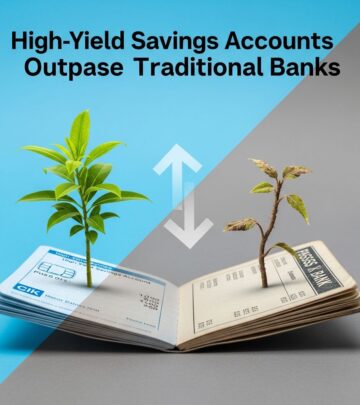
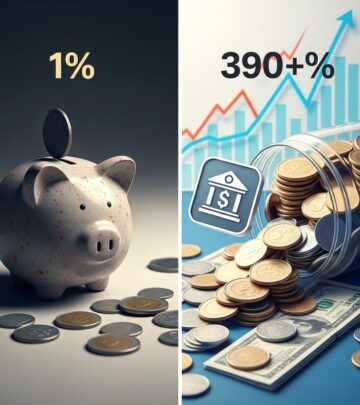
To understand the financial impact, consider a concrete example. An individual with $10,000 in a traditional bank savings account earning 0.01% APY would accumulate approximately $1 in annual interest. Meanwhile, the same $10,000 deposited in a high-yield savings account offering 4.21% APY would generate approximately $421 in annual interest. The difference—roughly $420 annually—represents a substantial opportunity cost.
When extrapolated over multiple years, this disparity becomes even more pronounced. Over a decade, the opportunity cost could exceed $4,200 in lost earnings, not accounting for compound interest effects. For individuals managing larger portfolios, the financial impact scales accordingly, making the choice of banking institution a critical financial decision.
Multi-Year Impact Analysis
The true measure of opportunity cost extends beyond a single year. Assuming a consistent rate differential and annual compounding, the impact accumulates exponentially:
- After 5 years: Approximately $2,100 in lost earnings at standard rates versus high-yield accounts
- After 10 years: Approximately $4,600 in lost earnings due to compounding effects
- After 20 years: Approximately $10,700 in lost earnings, representing more than the original deposit
Why Major Banks Maintain Low Rates
Understanding the business model behind traditional banking illuminates why rates remain so low. Major banks generate revenue through multiple channels: loan origination fees, overdraft charges, account maintenance fees, and the interest rate spread between what they pay depositors and what they charge borrowers. By minimizing deposit rates, banks maximize their profit margins on this interest rate differential.
Furthermore, traditional banks benefit from customer inertia. Many depositors maintain accounts simply because they have established relationships with a particular institution or utilize its branch network. These customers often fail to comparison shop for better rates, allowing banks to maintain their rate advantage without losing significant deposits.
Account fees represent another revenue source that can substantially erode any interest earnings. Some traditional banks impose monthly maintenance fees, minimum balance requirements, or charges for account inactivity. These fees can quickly consume any interest earned, creating a net negative return on the deposit.
The Online Banking Revolution
Online-only banks have disrupted the traditional banking model by eliminating the overhead associated with physical branches. Without the expense of maintaining brick-and-mortar locations, these institutions can pass savings directly to customers through higher interest rates. This fundamental business model difference has created unprecedented opportunities for savers willing to adopt digital banking methods.
As of March 2026, the most competitive savings accounts offer rates exceeding 4.2% APY, with several institutions providing options between 3.75% and 4.00%. These rates are accessible to customers without requiring substantial minimum balances or imposing monthly fees. The competitive landscape continues to evolve, with institutions regularly adjusting rates in response to Federal Reserve policy and market conditions.
Comparing Account Options Side by Side
| Account Type | APY Rate | Minimum Balance | Monthly Fees | Annual Interest on $10,000 |
|---|---|---|---|---|
| Traditional Bank Savings | 0.01% | $0–$2,500 | $0–$25 | $1 |
| High-Yield Savings (Standard) | 3.75–3.85% | $5,000 | $0 | $375–$385 |
| High-Yield Savings (Premium) | 4.00–4.21% | $0–$250,000 | $0 | $400–$421 |
This comparison demonstrates the stark financial difference between account types. The annual interest differential alone justifies the effort to transfer deposits to more competitive options.
FDIC Insurance and Safety Considerations
A common concern about online banks involves deposit safety. However, FDIC (Federal Deposit Insurance Corporation) insurance applies equally to online and traditional banks, protecting deposits up to $250,000 per account holder per institution. This protection means that switching to an online institution does not compromise the safety of your funds.
Customers should verify that their chosen institution displays FDIC membership prominently and understand the coverage limits. For deposits exceeding $250,000, customers may need to distribute funds across multiple institutions to maintain full coverage.
Fees and Hidden Costs Across Different Banks
While high-yield savings accounts typically advertise no monthly fees, traditional banks frequently impose various charges that can undermine any interest earnings. Common fees include:
- Monthly account maintenance fees ($5–$25)
- Minimum balance fees (charged when balance falls below specified threshold)
- Inactivity fees (charged for accounts with no transactions during specified periods)
- Overdraft charges (when linked to checking accounts)
- Paper statement fees (for customers requesting physical statements)
A $10 monthly maintenance fee charged by a traditional bank would consume the entire annual interest earned on a $10,000 deposit at 0.01% rates, creating a net negative return. This reality makes fee-free high-yield savings accounts substantially more advantageous for most depositors.
Making the Switch: Practical Considerations
Transitioning from a traditional bank to a high-yield savings option requires minimal effort but delivers substantial long-term benefits. Most online banks facilitate easy fund transfers, and customers can maintain their traditional bank account if needed for other purposes. The process typically involves opening an online account, providing identification verification, and initiating a transfer of funds.
Customers concerned about online banking can take advantage of the same security features used by traditional banks, including multi-factor authentication, encryption, and fraud monitoring. Mobile applications provided by online banks offer full account management capabilities comparable to traditional banking platforms.
Interest Rate Trends and Future Expectations
Savings account rates fluctuate in response to Federal Reserve policy decisions. When the Federal Reserve raises its benchmark interest rate, banks typically increase savings rates to remain competitive. Conversely, rate cuts trigger corresponding reductions in deposit rates. Understanding these cycles can help savers optimize their account selections over time.
Currently, financial analysts expect relatively stable rate environments in the coming months, with potential rate adjustments depending on inflation trends and economic conditions. Regardless of future rate movements, the fundamental advantage of maintaining funds in competitive accounts rather than low-yield traditional bank accounts will likely persist.
Special Account Features and Bonuses
Beyond standard interest rates, many high-yield savings accounts offer additional features that enhance their value proposition. Some institutions provide:
- Sign-up bonuses (typically $200–$300 for meeting deposit requirements)
- Goal-setting tools for organizing savings targets
- Round-up features that automatically transfer small amounts to savings
- No minimum balance requirements despite competitive rates
- Premium tiers with rate boosts for maintaining higher balances
These features can further enhance the total return on savings and provide valuable financial management tools.
Frequently Asked Questions
How often do savings account rates change?
Savings account rates can change daily at the bank’s discretion, though major adjustments typically occur in response to Federal Reserve rate changes. Customers should monitor their accounts periodically to ensure they remain competitive or consider moving funds if rates decline substantially.
Are online banks as safe as traditional banks?
Online banks must maintain the same regulatory standards and FDIC insurance as traditional banks. Deposits are equally protected, and these institutions employ similar security measures for protecting customer information.
What is the maximum FDIC protection?
FDIC insurance covers deposits up to $250,000 per account holder per institution. Customers with larger savings should distribute funds across multiple institutions to maintain full coverage.
Can I access my money quickly from online banks?
Yes, online banks offer various withdrawal methods including ACH transfers, debit cards, and wire transfers, typically with processing times comparable to traditional banks.
Conclusion: Taking Action
The financial impact of maintaining substantial deposits in low-yield savings accounts cannot be overstated. The opportunity cost represents real money that could support financial goals, retire debt, or build wealth. While the decision to switch banks may seem inconsequential, the cumulative effect over years and decades proves substantial.
Depositors should conduct a comprehensive review of their current banking arrangements, calculate their personal opportunity costs, and evaluate whether their current institution’s services justify accepting below-market interest rates. For most savers, the answer will be a definitive no.
References
- Chase Savings Account Interest Rates — JPMorgan Chase & Co. 2026. https://www.chase.com/personal/savings/savings-account/interest-rates
- Best High-Yield Savings Accounts for March 2026 — NerdWallet. 2026. https://www.nerdwallet.com/banking/best/high-yield-online-savings-accounts
- Best High-Yield Savings Accounts Of March 2026 (Up to 4.21%) — Bankrate. 2026. https://www.bankrate.com/banking/savings/best-high-yield-interests-savings-accounts/
- Chase Premier Savings Account Interest Rates — JPMorgan Chase & Co. 2026. https://www.chase.com/personal/savings/interest-savings/interest-rates
Similar Articles








Read full bio of medha deb