Hidden Banking Habits Draining $8K in 5 Years
Discover the simple banking oversight that's silently eroding your wealth and learn proven strategies to reclaim thousands over the next five years.

Many people unknowingly lose thousands of dollars simply by leaving their savings in low-interest traditional bank accounts. This oversight, often stemming from inertia, can erode purchasing power and hinder financial growth over time. By understanding this issue and adopting better practices, individuals can safeguard their money and potentially earn significantly more.
Why Traditional Savings Accounts Are a Silent Wealth Killer
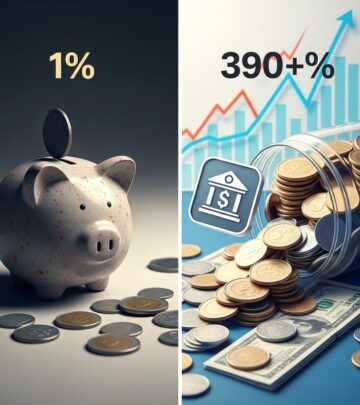
Standard savings accounts at big banks typically offer minimal interest rates, often below 0.5% annually. In an environment where inflation hovers around 2-3%, this means your money is effectively losing value each year. For someone with $20,000 in savings, that’s roughly $100 or less in interest per year—far short of what higher-rate options provide.
The problem intensifies with compound interest. Over five years, the gap widens dramatically. A $20,000 balance at 0.45% APY grows to about $20,452, while the same amount at 5% APY reaches $25,526. That’s a $4,074 difference, scaling up to $8,000 or more with larger balances or longer periods.
The Power of Compound Interest: A Game-Changer for Savers
Compound interest works by earning returns on both principal and accumulated interest. High-yield savings accounts (HYSAs), often online-only, leverage this with rates 10 times higher than traditional ones—currently averaging 4-5% APY. The Federal Deposit Insurance Corporation (FDIC) reports national averages confirming this disparity, urging consumers to shop around.
Consider this comparison:
| Account Type | APY | 5-Year Growth on $20,000 | Opportunity Cost |
|---|---|---|---|
| Traditional Savings | 0.45% | $20,452 | – |
| High-Yield Savings | 5.00% | $25,526 | $5,074 |
This table illustrates the stark contrast. According to FDIC data, as of late 2025, brick-and-mortar banks lag behind online competitors due to lower overhead costs.
Common Barriers Keeping People Stuck in Low-Rate Accounts
- Complacency: ‘If it’s not broken, don’t fix it’ mentality prevents checking rates.
- Lack of Awareness: Many don’t realize HYSAs are FDIC-insured up to $250,000, matching traditional banks.
- Fear of Change: Concerns over online security or access, despite robust protections.
- Branch Loyalty: Preference for physical locations overlooks digital convenience.
These hurdles are surmountable. Modern apps offer seamless transfers, and two-factor authentication enhances security beyond many physical branches.
Step-by-Step Guide to Upgrading Your Savings Strategy
Transitioning doesn’t require expertise. Start by assessing your current setup.
- Audit Existing Accounts: Log into your bank portal or app to note your APY and balance.
- Research Top HYSAs: Use comparison sites to find rates above 4.5%, prioritizing no-fee options.
- Open a New Account: Provide ID and link your current bank for transfers—typically instant verification.
- Transfer Funds: Move money in batches to avoid overdrafts; automate recurring deposits.
- Monitor and Adjust: Rates fluctuate; review quarterly and switch if better options emerge.
Tools like bank rate trackers simplify this process, ensuring you always capture peak earnings.
Real-World Examples: Savers Who Turned It Around
Take Sarah, a 35-year-old teacher with $15,000 saved. Her traditional account yielded $67 yearly. Switching to a 4.75% HYSA boosted that to $712 annually. Over five years, she gained over $3,000 extra, funding a family vacation.
Similarly, Mike, a freelancer, consolidated $50,000 across low-rate accounts. Post-switch, his five-year projection jumped from $11,250 total interest to $13,439—a $2,189 win. These stories highlight accessible gains without lifestyle changes.
Advanced Tactics to Maximize Every Dollar
Beyond basics, consider laddering CDs for locked-in rates or money market accounts for check-writing flexibility. Pair HYSAs with budgeting apps to funnel windfalls directly into high-earning spots.
For 2026, watch Federal Reserve rate decisions. If cuts occur, lock in current HYSAs promptly. Diversify across multiple institutions to stay under FDIC limits per bank.
Money Mistakes to Dodge Alongside Low Rates
Low savings rates compound other errors. Per financial experts, avoid:
- Not automating transfers, leading to inconsistent saving.
- Ignoring inflation’s bite on cash holdings.
- Clinging to debt while under-earning on savings.
Integrate high-yield strategies with debt payoff plans for holistic progress.
FAQs: Answering Your Top Savings Questions
Are high-yield savings accounts safe?
Yes, FDIC or NCUA insurance covers up to $250,000 per depositor, per institution—identical to traditional banks.
How often do HYSA rates change?
Rates adjust monthly based on Fed funds rate; no-notice changes are common, so compare frequently.
Can I access my money anytime?
Most allow unlimited withdrawals, though federal rules limit transfers to six per month.
What’s better for long-term goals: HYSA or investments?
HYSAs suit emergency funds; for growth, consider stocks or retirement accounts after building cash reserves.
Do I need a minimum balance?
Many have none, but check terms—some offer tiered rates for higher deposits.
Protecting Your Finances in an Uncertain Economy
As 2026 unfolds with potential rate shifts and economic pressures, proactive banking is key. Inflation erodes low-rate savings fastest during volatility. By acting now, you not only recoup lost interest but build resilience against downturns.
Empower yourself with knowledge: small shifts yield big rewards. Review accounts today, and watch your wealth compound.
References
- National Rates and Rate Caps — Federal Deposit Insurance Corporation. 2025-12-16. https://www.fdic.gov/resources/bankers/national-rates/
- Your Insured Deposits — Federal Deposit Insurance Corporation. 2025-10-01. https://www.fdic.gov/resources/deposit-insurance/brochures/insured-deposits/
- Costly Money Mistakes to Avoid in 2026 — KATU News. 2026-01-15. https://katu.com/amnw/am-northwest-lifestyle-health/costly-money-mistakes-to-avoid-in-2026
- Avoid These 5 Common Budgeting Mistakes Before 2026 — Accounting Department. 2025-12-01. https://www.accountingdepartment.com/blog/avoid-these-5-common-budgeting-mistakes-before-2026
- Consumer Price Index Summary — U.S. Bureau of Labor Statistics. 2026-02-12. https://www.bls.gov/news.release/cpi.nr0.htm
Similar Articles








Read full bio of Sneha Tete