HELOC Vs Home Equity Loan: Which Is Right For You?
Discover the key differences between HELOCs and home equity loans to choose the best home-backed financing for your needs and budget.
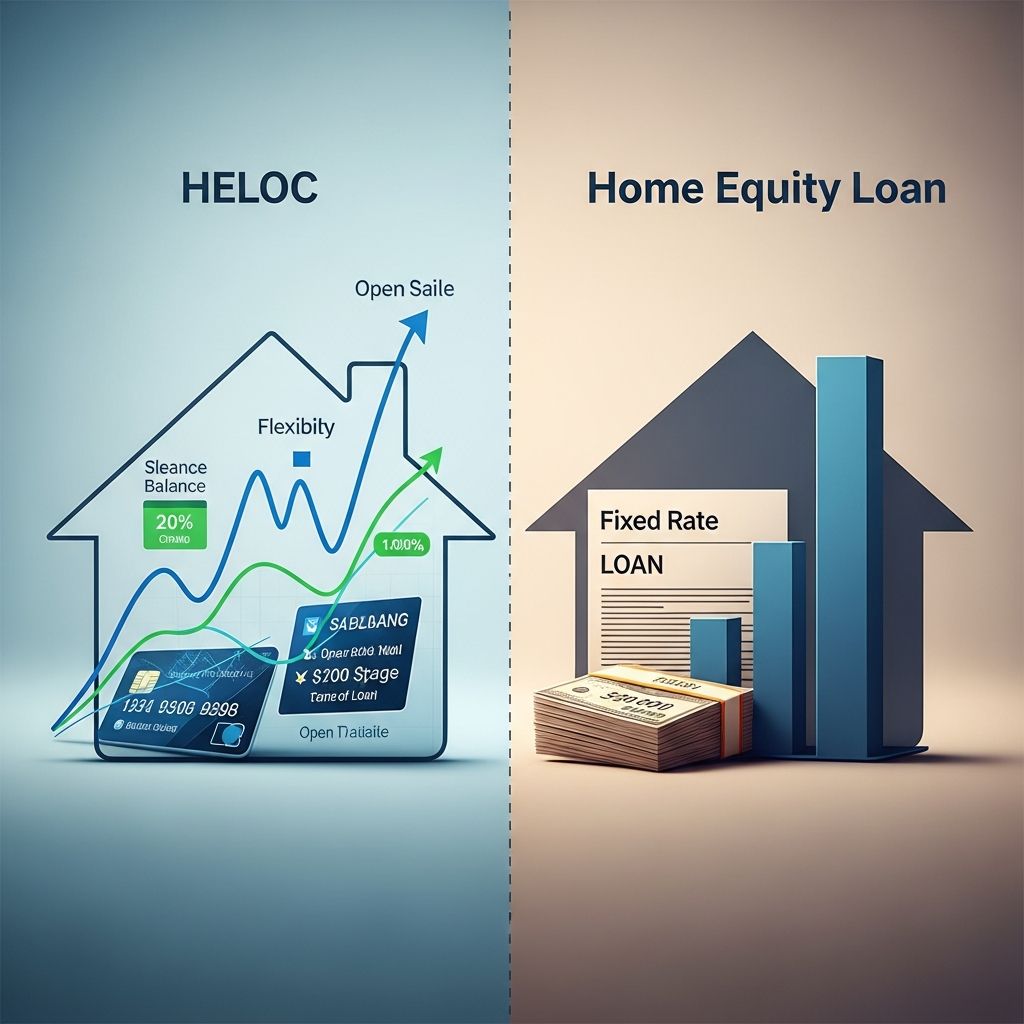
Unlocking the value in your home can provide substantial funds for renovations, debt consolidation, or major purchases. Two primary options stand out: the
home equity line of credit (HELOC)
and thehome equity loan
. Both use your property as collateral but differ significantly in structure, flexibility, and costs. This guide breaks down their mechanics, benefits, risks, and ideal scenarios to help you decide which fits your financial situation.Building Home Equity: The Foundation of Borrowing
Home equity represents the portion of your property’s current market value that you truly own, calculated by subtracting your outstanding mortgage balance from the appraised value. For instance, if your home appraises at $400,000 with a $200,000 mortgage, you hold $200,000 in equity, or 50% ownership stake.
Equity accumulates through mortgage principal payments, property value appreciation, or home improvements. Lenders typically allow borrowing up to 80-90% of this equity, minus your existing mortgage, subject to combined loan-to-value (CLTV) ratios. Strong equity positions enable lower rates since the home secures the debt.
- Equity builds over time with consistent payments.
- Market fluctuations can increase or decrease available equity.
- Appraisals determine exact borrowable amounts.
Understanding Home Equity Loans
A
home equity loan
, often called a second mortgage, delivers a one-time lump sum at closing. You repay it over a fixed term, usually 5-20 years, with equal monthly installments covering principal and interest.These loans feature
fixed interest rates
, ensuring predictable payments regardless of market shifts. Rates are higher than primary mortgages but lower than unsecured options like credit cards due to collateral. Closing costs range from 2-5% of the loan amount, including appraisal and origination fees.| Feature | Details |
|---|---|
| Disbursement | Lump sum payout |
| Interest Rate | Fixed (e.g., 7-9% as of 2025) |
| Repayment | Fixed monthly payments from day one |
| Term Length | 5-20 years |
| Best For | Known, one-time expenses like remodels |
Principal repayment starts immediately, providing structure for budgeters who prefer stability.
Exploring Home Equity Lines of Credit (HELOCs)
A
HELOC
functions as a revolving credit line, similar to a credit card but secured by home equity. Approved for a credit limit (e.g., $100,000), you draw funds as needed during a 5-10 yeardraw period
.Interest applies only to borrowed amounts, often at
variable rates
tied to the prime rate plus a margin (e.g., prime + 0.5-2%). Payments during the draw period may cover interest only, with principal deferred. After the draw ends, a 10-20 yearrepayment period
begins, requiring full amortization.Some HELOCs offer fixed-rate conversion options on portions of the balance for rate protection.
- Flexible draws up to the limit.
- Revolving access: repay and borrow again.
- Variable rates can rise, increasing costs.
Core Differences: A Side-by-Side Comparison
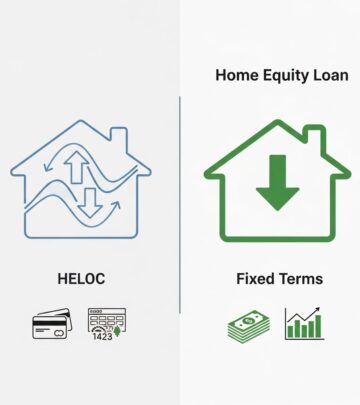
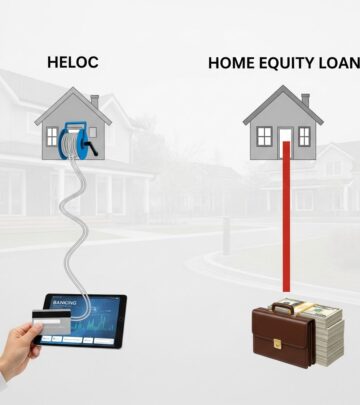
Choosing between these requires weighing access style, rate stability, and payment predictability. Home equity loans suit fixed needs; HELOCs offer adaptability.
| Aspect | Home Equity Loan | HELOC |
|---|---|---|
| Funds Access | Single lump sum | |
| Interest Rate | Fixed | Variable (some fixed options) |
| Payments | Consistent principal + interest | |
| Interest Charged On | Full amount | Outstanding balance only |
| Flexibility | Low | High |
Source data from recent lender reports shows average HELOC rates at 8.5-9.5% variable, versus 7.5-8.5% fixed for loans.
Advantages and Drawbacks of Each Option
Home Equity Loan Pros and Cons
Pros: Budget-friendly predictability; no temptation to overspend; potentially lower closing costs for smaller amounts.
Cons: Less flexibility if needs change; interest on full sum even if unused; harder to qualify for large sums without ample equity.
HELOC Pros and Cons
Pros: Pay interest only on used funds; reuse as you repay; ideal for ongoing projects or emergencies.
Cons: Rate volatility risks payment shocks; balloon payments post-draw; discipline required to avoid overborrowing.
Qualification Criteria and Application Process
Both require credit scores of 620+, debt-to-income (DTI) under 43%, and 15-20% equity. Lenders appraise your home, review income/debt, and check payment history.
- Check credit and equity via free reports.
- Prequalify with multiple lenders.
- Submit docs: income proof, property details.
- Appraisal and underwriting (2-6 weeks).
- Close and fund.
Shop rates; federal law mandates good faith estimates.
Strategic Uses for Home Equity Borrowing
Leverage these for high-impact purposes:
- Renovations: Boost property value (e.g., kitchen upgrades yield 50-70% ROI).
- Debt Consolidation: Lower rates vs. cards (average 20%+).
- Education/Medical: Cover gaps without high-interest alternatives.
- Investments: If returns exceed borrowing costs (consult advisors).
Avoid using for depreciating assets like vehicles.
Costs, Fees, and Tax Considerations
Expect origination (0-1%), appraisal ($300-500), title, and annual fees. HELOCs may add inactivity charges.
Interest may be tax-deductible if used for home improvements (up to $750,000 debt post-2017 Tax Cuts; consult IRS Pub 936 or advisor).
Risks and Safeguards for Borrowers
Your home is at risk of foreclosure if payments lapse. Mitigate with:
- Emergency funds covering 3-6 months.
- Rate caps on HELOCs (e.g., lifetime 18%).
- Refinancing options if rates drop.
- Monitoring equity via annual checks.
Recent data shows delinquency rates under 1% for these products.
Current Market Insights for 2026
As of early 2026, fixed loan rates hover at 7.75-8.75%, variable HELOCs at prime (8%) + margin. Fed rate cuts could lower variables; fixed offers stability amid uncertainty.
Frequently Asked Questions
Can I get both a HELOC and home equity loan?
Yes, sequentially or simultaneously, if equity supports CLTV limits.
Which has lower rates?
HELOCs often start lower but vary; loans provide fixed security.
How long is the HELOC draw period?
Typically 10 years, followed by 20-year repayment.
Do I need a new appraisal each time?
No for HELOC draws; yes initially for both.
Is a HELOC better in a falling rate environment?
Yes, variables decrease faster than fixed refis.
Final Thoughts on Choosing Your Path
Opt for a home equity loan for defined sums and payment certainty. Select a HELOC for flexible, ongoing access despite rate risks. Assess your goals, risk tolerance, and market conditions—then compare lender offers. Professional advice ensures alignment with your full financial picture.
References
- HELOC Vs. Home Equity Loan: What’s The Difference? — Bankrate. 2025-08. https://www.bankrate.com/home-equity/home-equity-loan-vs-line-of-credit/
- Home Equity Loan vs. Line of Credit – What are the Differences? — Bank of America. 2025. https://www.bankofamerica.com/mortgage/learn/home-equity-loan-vs-line-of-credit/
- HELOC vs. Home Equity Loan: What’s the difference? — Huntington Bank. 2025. https://www.huntington.com/learn/home-auto/heloc-vs-home-equity-loan
- Home Equity Loan vs. Home Equity Line of Credit (HELOC) — Equifax. 2025. https://www.equifax.com/personal/education/loans/articles/-/learn/home-equity-loans-vs-home-equity-lines-of-credit/
- What is the difference between a Home Equity Loan and a Home Equity Line of Credit (HELOC)? — Consumer Financial Protection Bureau (CFPB). 2025. https://www.consumerfinance.gov/ask-cfpb/what-is-the-difference-between-a-home-equity-loan-and-a-home-equity-line-of-credit-heloc-en-247/
- Home Equity Loan vs. HELOC: 5 Factors to Consider — Gate City Bank. 2025. https://www.gatecity.bank/education/articles/home-equity-loan-vs-HELOC/
Similar Articles








Read full bio of medha deb