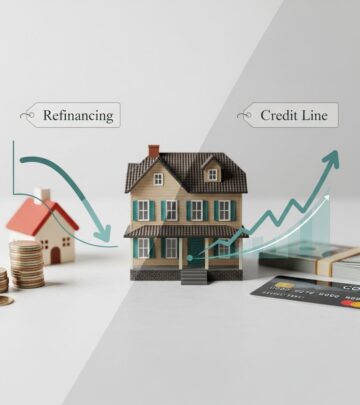
HELOC vs Home Equity Loan: Key Differences
Discover the core differences between HELOCs and home equity loans to choose the best borrowing option for your financial needs and goals.

Unlocking the equity in your home can provide substantial funding for major life expenses, renovations, or debt consolidation. Two primary options stand out: the home equity line of credit (HELOC) and the traditional home equity loan. While both use your property as collateral to secure lower interest rates than unsecured loans, they differ significantly in structure, flexibility, and cost implications. This guide breaks down their features, pros, cons, and scenarios where one outperforms the other, empowering you to make an informed decision.
Understanding Home Equity as a Financial Resource
Home equity represents the portion of your property’s current market value that you truly own, calculated by subtracting your remaining mortgage balance from the appraised value. For instance, if your home is worth $400,000 and you owe $250,000, your equity totals $150,000. Lenders typically allow borrowing up to 80-90% of this amount, depending on creditworthiness, income, and debt-to-income ratio.
Building equity occurs through mortgage principal payments, home value appreciation, or improvements. In recent years, rising property values have boosted available equity for millions of homeowners, making these products increasingly popular. However, since your home secures the debt, defaulting risks foreclosure, underscoring the need for careful financial planning.
Breaking Down the Home Equity Loan
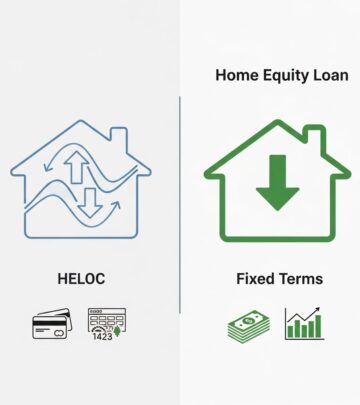
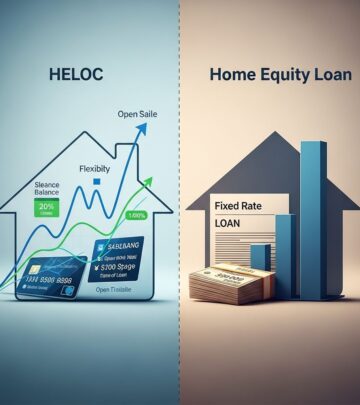
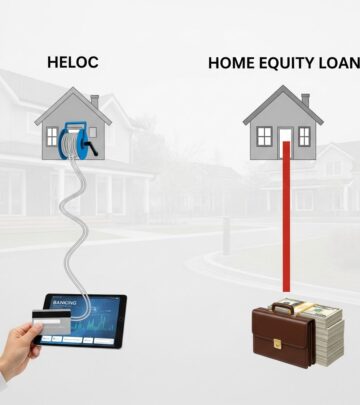
A home equity loan, often called a second mortgage, delivers a one-time lump sum payout upon approval. You then repay it over a fixed term through equal monthly installments covering principal and interest. This structure mirrors primary mortgages, offering predictability prized by budget-conscious borrowers.
- Fixed Interest Rates: Most feature unchanging rates, shielding you from market fluctuations and ensuring stable payments.
- Repayment Terms: Common durations span 5 to 30 years, with shorter terms yielding higher monthly payments but less total interest.
- Funding Use: Ideal for defined, large-scale projects like kitchen remodels or college tuition where the total cost is known upfront.
Approval involves a home appraisal, credit check, and income verification, similar to initial mortgages. Closing costs, often 2-5% of the loan, apply but can be rolled into the balance. Rates hover lower than credit cards or personal loans due to collateral, frequently in the 7-9% range as of recent data.
Exploring the Home Equity Line of Credit (HELOC)
Unlike lump-sum loans, a HELOC functions as a revolving credit line, akin to a credit card secured by your home. It includes a draw period (usually 5-10 years) for borrowing up to an approved limit, followed by a repayment phase (10-20 years).
- Variable Rates: Tied to the prime rate, these adjust periodically, potentially lowering costs in falling-rate environments but rising otherwise. Some lenders offer fixed-rate conversion options.
- Flexible Access: Borrow only what you need via checks, cards, or transfers; available credit replenishes as you repay.
- Interest-Only Payments: During the draw phase, minimums often cover just interest on drawn amounts, easing cash flow.
Post-draw, payments amortize principal plus interest, increasing significantly. HELOCs suit ongoing or unpredictable expenses, such as phased renovations or emergency funds. Maximum loan-to-value ratios reach up to 89.99% with strong profiles.
Side-by-Side Comparison: HELOC vs Home Equity Loan
To clarify distinctions, consider this table highlighting core attributes:
| Feature | Home Equity Loan | HELOC |
|---|---|---|
| Disbursement | Lump sum at closing | Revolving draws as needed |
| Interest Rate | Fixed | Variable (fixed option possible) |
| Payments | Fixed principal + interest from start | Interest-only draw; full amortization later |
| Best For | Known, one-time costs | Ongoing/uncertain expenses |
| Rates (Typical) | 7-9% fixed | Prime + margin (variable) |
| Max LTV | 80-90% | 80-90% |
This overview, drawn from major lenders, reveals how loans prioritize stability while HELOCs emphasize adaptability.
Financial Advantages and Potential Drawbacks
Benefits of Each Option
Home Equity Loan Pros:
- Predictable budgeting with unchanging payments.
- Lower closing costs for smaller amounts.
- Potential tax deductions on interest for qualified home improvements (consult IRS rules).
HELOC Pros:
- Pay interest solely on utilized funds, minimizing waste.
- Reusability during draw period supports multiple needs.
- May boost credit mix and scores with responsible use.
Risks and Considerations
Both carry foreclosure risk, but HELOCs amplify it via variable rates and temptation to overborrow. During economic downturns, like 2008, many faced payment shocks as rates climbed. Home values could dip, trapping you in negative equity. Qualification demands FICO scores above 620-680, DTI under 43%, and sufficient equity. Compare multiple lenders for best rates and fees.
Ideal Scenarios for Borrowing
Choose a home equity loan for finite projects: adding a pool ($50,000 known cost) or debt consolidation into one fixed payment. Its stability suits fixed-income retirees or risk-averse families.
Opt for a HELOC in fluid situations: multi-year home flips, medical expenses, or as an emergency buffer. Flexibility shines for small business owners funding inventory variably.
Hybrid strategies exist, like using HELOCs for initial draws then locking portions into fixed loans. Evaluate current rates—fixed loans edge out if variables trend upward.
Application Process and Qualification Tips
Steps mirror mortgages: gather docs (pay stubs, tax returns), undergo appraisal (costing $300-500), and await underwriting (2-6 weeks). Boost approval odds by:
- Improving credit utilization below 30%.
- Reducing other debts.
- Shopping rates from banks, credit unions, and online lenders.
Online tools from institutions like U.S. Bank or Navy Federal simplify prequalification without credit dings[10].
Frequently Asked Questions (FAQs)
Which has lower rates: HELOC or home equity loan?
HELOCs often start lower due to variable structures but can exceed fixed loans over time. Shop current offers.
Can I get both simultaneously?
Yes, if equity supports combined loan-to-value limits, though it heightens risk.
Are closing costs avoidable?
Many lenders waive them or offer no-cost options, especially for HELOCs.
What if rates rise on my HELOC?
Convert to fixed-rate portions if available, or refinance into a loan.
Tax benefits apply how?
Interest may be deductible if funds improve the home; track via Form 1098.
Strategic Tips for Maximizing Value
Prioritize high-interest debt payoff first—credit cards at 20%+ vs equity rates under 9%. Use for value-adding upgrades like energy-efficient windows, potentially recouping costs via appraisals. Avoid tapping over 80% LTV to preserve refinancing flexibility. Monitor Federal Reserve actions, as they influence variable rates. Finally, build an emergency fund to prevent unnecessary draws.
In summary, align your choice with cash flow needs: lump-sum certainty or revolving access. Consulting a financial advisor ensures alignment with long-term goals amid fluctuating markets.
References
- Home Equity Loan vs. Line of Credit – What are the Differences? — Bank of America. 2024. https://www.bankofamerica.com/mortgage/learn/home-equity-loan-vs-line-of-credit/
- Compare Benefits of Home Equity Loans Vs HELOC — TD Bank. 2024. https://www.td.com/us/en/personal-banking/learning-home-lending/home-equity-comparison
- HELOC Vs. Home Equity Loan: What’s The Difference? — Bankrate. 2024. https://www.bankrate.com/home-equity/home-equity-loan-vs-line-of-credit/
- Home Equity Loan vs HELOC vs. Personal Loan — Navy Federal Credit Union. 2024. https://www.navyfederal.org/makingcents/home-ownership/heloc-home-equity-loan-vs-personal-loan.html
- HELOC vs. Home Equity Loan: What’s the difference? — Huntington Bank. 2024. https://www.huntington.com/learn/home-auto/heloc-vs-home-equity-loan
- What is the difference between a Home Equity Loan and a Home Equity Line of Credit (HELOC)? — Consumer Financial Protection Bureau. 2023-10-01. https://www.consumerfinance.gov/ask-cfpb/what-is-the-difference-between-a-home-equity-loan-and-a-home-equity-line-of-credit-heloc-en-247/
Similar Articles








Read full bio of Sneha Tete