HELOC Qualification Guide: Essential Steps For 2026
Unlock your home's potential: Master the essentials of qualifying for a Home Equity Line of Credit with proven strategies and lender insights.

A Home Equity Line of Credit (HELOC) offers homeowners a flexible way to borrow against their property’s value, ideal for renovations, debt consolidation, or unexpected expenses. Unlike a traditional loan, a HELOC functions like a revolving credit line, allowing you to draw funds as needed during a draw period, typically 5-10 years, followed by repayment. Qualifying requires meeting specific lender criteria, which we’ll break down comprehensively to help you prepare effectively.
Understanding Home Equity: The Foundation of HELOC Approval
Home equity represents the portion of your property you truly own, calculated as the current market value minus any outstanding mortgage balance or liens. For instance, a $400,000 home with a $280,000 mortgage yields $120,000 in equity.
Lenders generally demand 15-20% equity minimum to mitigate risk, meaning your loan-to-value (LTV) ratio should not exceed 80-85% post-HELOC. This buffer protects against market dips. Recent data shows some institutions like U.S. Bank emphasizing equity alongside credit metrics.
- Appraisal Process: Expect a professional valuation to confirm worth, though some use automated tools for efficiency.
- Building Equity: Accelerate via extra mortgage payments or home improvements boosting value.
- Maximum Borrowing: Often capped at 85-90% LTV, varying by lender.
| Home Value | Mortgage Balance | Equity | % Equity | Potential HELOC (85% LTV) |
|---|---|---|---|---|
| $300,000 | $240,000 | $60,000 | 20% | $15,000 |
| $500,000 | $350,000 | $150,000 | 30% | $75,000 |
| $250,000 | $175,000 | $75,000 | 30% | $37,500 |
This table illustrates how equity directly influences borrowing power. Higher equity unlocks larger limits and better rates.
Credit Score Benchmarks: Your Gateway to Competitive Rates
A robust credit profile is paramount. Most lenders target a FICO score of 680+, with 720+ yielding optimal terms. Scores below 680 may qualify via substantial equity or income, but anticipate higher rates. U.S. Bank sets a 660 threshold, balancing with other factors.
Key influencers include payment history (35% of score), credit utilization (30%), and length of history. Dispute inaccuracies via free annual reports to elevate standings pre-application.
- Ideal Range (740+): Lowest APRs, highest limits.
- Good (680-739): Standard approval.
- Fair (620-679): Possible with offsets like low DTI.
Pro tip: Reduce utilization below 30% months ahead for boosts.
Income Stability: Proving Repayment Capacity
Lenders scrutinize verifiable, steady income to affirm payment ability. No universal minimum exists, but it must support added debt. Documentation varies:
- W-2 Employees: Pay stubs (2 months), W-2s (2 years), bank statements.
- Self-Employed: Tax returns (2 years), profit/loss statements.
- Retirees: Social Security, pension docs.
- Others: Rental agreements, investment proofs.
Higher earnings lower perceived risk, enabling larger lines.
Debt-to-Income Ratio: The Critical Balancing Act
DTI measures monthly debt payments against gross income, ideally under 43% for approval. Calculate as (total debts / monthly income) x 100. Example: $6,000 debts on $10,000 income = 60% (high risk).
HELOCs add to DTI dynamically based on draws. Lenders project during qualification. Strategies to improve:
- Pay down revolving debts.
- Avoid new credit.
- Increase income via side gigs (documented).
| Monthly Income | Current Debts | DTI | HELOC Viability |
|---|---|---|---|
| $8,000 | $2,000 | 25% | Excellent |
| $8,000 | $3,500 | 44% | Marginal |
| $8,000 | $4,000 | 50% | Decline Likely |
Additional Lender Considerations and Documentation
Beyond core metrics, expect reviews of employment history (2+ years stability), homeowners insurance proof, and property type (primary residences favored). Some require title checks, though HELOCs often streamline vs. loans.
Prepare a checklist:
- ID/proof of residency.
- Mortgage statements.
- Recent tax returns.
- Insurance policy.
- Bank/investment statements.
Navigating the HELOC Application Journey
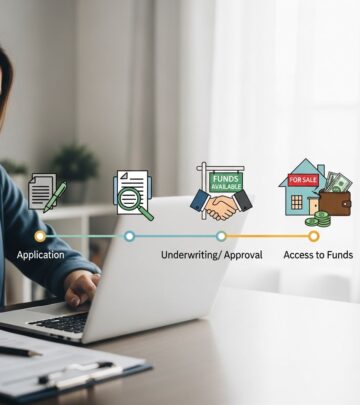
Applications mirror mortgages but emphasize equity appraisal. Steps include prequalification (soft credit pull), full app (hard inquiry), underwriting (30-45 days), and closing. Shop multiple lenders for rates; credit unions may offer perks.
Post-approval: Draw period interest-only payments; repayment amortizes principal. Watch variable rates tied to prime[10].
Common Pitfalls and How to Avoid Them
Avoid overborrowing eroding equity, ignoring rate fluctuations, or applying amid credit dings. Monitor via free tools; consult advisors for personalized fits.
HELOC vs. Alternatives: Informed Choices
| Option | Pros | Cons | Best For |
|---|---|---|---|
| HELOC | Flexible draws, interest-only phase | Variable rates, home risk | Ongoing needs |
| Home Equity Loan | Fixed rates, lump sum | Rigid, higher closing costs | One-time projects |
| Cash-Out Refi | Larger sums | Resets mortgage term | Low rates |
Frequently Asked Questions (FAQs)
What is the minimum equity for a HELOC?
Typically 15-20%, with LTV up to 85%.
Can I get a HELOC with bad credit?
Possible below 680 with strong equity/income, but rates rise.
How long does approval take?
2-6 weeks, faster for prequals.
Are HELOC rates fixed?
Mostly variable; some offer fixed-rate options[10].
Does a HELOC affect my mortgage?
No direct impact, but total debt rises.
Strategies for Boosting Approval Odds in 2026
With market shifts, prioritize equity growth via appreciation/payments. Time applications post-credit improvements. Compare 3-5 lenders; credit unions often laxer. Leverage tools like Experian’s free monitoring.
Ultimately, preparation transforms eligibility into approval. Assess your profile today—equity calculators abound online.
References
- HELOC Application Process — Heritage Family Credit Union. 2024. https://www.hfcuvt.com/post/heloc_application_process.html
- Requirements for a Home Equity Loan or HELOC — Experian. 2025-01-15. https://www.experian.com/blogs/ask-experian/requirements-for-home-equity-loans-and-helocs/
- HELOC And Home Equity Loan Requirements In 2025 — Bankrate. 2025-12-01. https://www.bankrate.com/home-equity/requirements-to-borrow-from-home-equity/
- Home Equity Line of Credit (HELOC) — U.S. Bank. 2025. https://www.usbank.com/home-loans/home-equity/home-equity-line-of-credit.html
- HELOC Requirements, 2026: What You Need to Know — Freedom Mortgage. 2026-01-10. https://www.freedommortgage.com/learning-center/articles/heloc-requirements
- What is a Home Equity Line of Credit and How Does it Work? — Bank of America. 2025. https://www.bankofamerica.com/mortgage/learn/what-is-a-home-equity-line-of-credit/
- What you should know about Home Equity Lines of Credit (HELOC) — Consumer Financial Protection Bureau. 2014-06-01 (authoritative CFPB guide). https://files.consumerfinance.gov/f/documents/cfpb_heloc-brochure_print.pdf
Similar Articles








Read full bio of medha deb