HELOC Myths Debunked
Uncover the truth behind common misconceptions about home equity lines of credit to make smarter borrowing decisions for your financial future.

Home equity lines of credit (HELOCs) offer homeowners a flexible way to access cash by leveraging the value built up in their property. As a revolving credit line secured by your home, a HELOC functions much like a credit card, allowing you to borrow up to a set limit, repay, and borrow again during a draw period. However, despite their popularity—especially in fluctuating economic times—numerous misunderstandings persist about how they work, their costs, and the risks involved. This article separates fact from fiction, drawing on reliable financial insights to equip you with the knowledge needed for informed decisions.
Understanding the Fundamentals of a HELOC
Before diving into misconceptions, it’s essential to grasp what a HELOC truly is. Unlike a traditional loan, which disburses a one-time lump sum, a HELOC provides ongoing access to funds up to an approved limit, typically 80-90% of your home’s equity minus any outstanding mortgage balance. Lenders calculate equity as the home’s current market value minus the remaining primary mortgage debt. During the initial draw period (often 5-10 years), you can withdraw funds as needed, paying interest only on the amount used. This is followed by a repayment period (10-20 years) where principal and interest payments are required.
HELOCs generally feature variable interest rates tied to an index like the prime rate, which can lead to payment fluctuations. Approval hinges on factors such as credit score (often 620+ minimum, though preferences vary), debt-to-income ratio under 43-50%, and sufficient equity. Closing costs range from 2-5% of the credit line, though some lenders waive them.
Myth 1: HELOCs Are Identical to Home Equity Loans
One of the most persistent confusions equates HELOCs with home equity loans. Both tap into home equity and use the property as collateral, but their structures differ fundamentally. A home equity loan delivers a single lump sum with a fixed interest rate and predictable monthly payments over a set term, ideal for one-off expenses like a renovation.
In contrast, a HELOC’s revolving nature allows repeated borrowing and repayment, with interest charged solely on drawn amounts. Variable rates mean payments can rise or fall with market changes, offering flexibility but introducing uncertainty. Choosing the wrong product could result in mismatched financial needs—fixed stability versus adaptable access.
| Feature | HELOC | Home Equity Loan |
|---|---|---|
| Disbursement | Revolving line, draw as needed | Lump sum upfront |
| Interest Rate | Variable (usually) | Fixed |
| Payments | Interest-only initially; fluctuate | Fixed principal + interest |
| Best For | Ongoing or variable expenses | Single large purchase |
Myth 2: You Can Access 100% of Your Home’s Equity
Many assume they can borrow against every dollar of equity, but lenders impose strict limits to mitigate risk. Combined loan-to-value (CLTV) ratios typically cap at 80-90%, meaning if your home is worth $400,000 with a $200,000 mortgage, you might access up to $120,000-$160,000. Creditworthiness and property type further influence this.
Exceeding these safeguards could leave no buffer if home values dip, a real concern in volatile markets. Always review lender-specific parameters during pre-approval to align expectations with reality.
Myth 3: HELOCs Come with No Costs or Fees
The allure of ‘free money’ from home equity leads some to overlook expenses. While not as pricey as primary mortgages, HELOCs involve origination fees, annual charges, appraisal costs, and potential inactivity fees if you don’t draw funds. Interest accrues on borrowed amounts, and variable rates can amplify costs if indices rise.
Shop around: some institutions offer no-closing-cost options or discounts for autopay. Factor in these over the full term—a seemingly low intro rate might not stay that way.
Myth 4: Funds Must Only Improve Your Home
The ‘home equity’ label misleads many into thinking usage is restricted to property upgrades. In truth, HELOC proceeds can fund debt consolidation, education, vehicle purchases, medical bills, or even vacations—any legal purpose.
This versatility shines in high-inflation environments, where HELOC rates often undercut credit cards or personal loans. However, since your home secures the debt, treat it responsibly to avoid jeopardizing your most valuable asset.
Myth 5: Opening a HELOC Alters Your Primary Mortgage
Social media buzz sometimes blurs HELOCs with cash-out refinances. A HELOC is a separate second lien, leaving your first mortgage’s rate, term, and payments intact. Refinancing, by comparison, replaces the original loan with a larger one, resetting terms and potentially hiking rates.
This separation preserves favorable existing mortgage rates while adding liquidity. Confirm with your lender that the HELOC won’t trigger a refi-like review of your primary loan.
Myth 6: Variable Rates Are Always Fixed or Predictably Low
While some HELOCs offer fixed-rate advance options, most are variable, pegged to benchmarks like the Wall Street Journal Prime Rate plus a margin. Rates have trended down amid recent Fed cuts, but inflation rebounds or policy shifts could reverse this.
Projections aren’t guarantees—plan for potential increases by stress-testing affordability. Lock in fixed portions if available, or time openings when rates favor borrowers.
The Real Risks: Foreclosure and Repayment Pitfalls
Missing payments on a HELOC can lead to foreclosure, regardless of primary mortgage status. As secured debt, default (typically after 90-120 days) empowers lenders to pursue legal action, potentially resulting in home loss.
Draw period temptations—minimum interest-only payments—can balloon balances if not managed. Transition to repayment brings fully amortizing payments, demanding budgeting discipline. Build an emergency fund to cover 6-12 months of obligations.
Who Qualifies and How to Apply Strategically
Qualification varies: excellent credit (740+) unlocks best rates, but scores in the 600s may suffice elsewhere. Stable income, low DTI, and 15-20% equity are key. Prequalify without hard inquiries to compare offers.
- Boost Approval Odds: Pay down debt, correct credit report errors.
- Timing Tips: Apply when home values peak and rates dip.
- Lender Shopping: Compare APRs, fees, draw/repayment periods.
HELOCs in Today’s Economy: Pros and Cons
With variable rates cooling post-2024 Fed actions, HELOCs appeal for cost-effective borrowing versus high-rate alternatives. Flexibility suits uncertain expenses, but volatility and collateral risk demand caution.
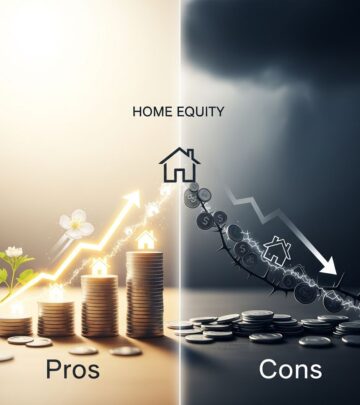
| Pros | Cons |
|---|---|
| Flexible access to funds | Variable rates can rise |
| Interest only on drawn amount | Fees and closing costs |
| Potential tax deductions on interest (consult IRS rules) | Risk of foreclosure |
| Lower rates than cards/loans | Equity limits and qualification hurdles |
Frequently Asked Questions (FAQs)
Can I pay off a HELOC early without penalty?
Most HELOCs have no prepayment penalties, allowing flexible repayment. Check your agreement for details.
How long is the draw period?
Typically 5-10 years, varying by lender. Some allow extensions.
Does a HELOC affect my credit score?
Applications cause temporary dips; ongoing use impacts utilization if maxed out.
Are HELOC rates tax-deductible?
Interest may be deductible if used for home improvements, per IRS Publication 936. Consult a tax advisor.
What if home values drop?
You still owe borrowed amounts; negative equity doesn’t erase debt, heightening risk.
Final Thoughts on Smart HELOC Use
HELOCs empower homeowners with liquidity but aren’t risk-free cash. By debunking myths—from unrestricted equity access to fee-free assumptions—you position yourself to leverage this tool effectively. Assess your financial stability, compare lenders, and borrow conservatively to protect your home and wealth.
References
- 9 myths about home equity: What homeowners often get wrong — Bankrate. 2024. https://www.bankrate.com/home-equity/myths-about-home-equity-what-homeowners-often-get-wrong/
- Understanding HELOC & What You Need To Know — Philadelphia Federal Credit Union. 2024-01. https://www.pfcu.com/resources/education/moneyline-blog/january-2024/understanding-helocs-everything-you-need-to-know
- Loan Zone: 5 Consumer Misconceptions About Home Equity Lending — Credit Union Management. 2017-10. https://www.cumanagement.com/articles/2017/10/loan-zone-5-consumer-misconceptions-about-home-equity-lending (Used for enduring lending principles, still relevant per industry standards).
- 3 Myths About HELOCs — Fidelity Bank & Trust. 2022-05-20. https://www.bankfidelity.bank/media-events/blog/3-myths-about-helocs/
- 3 timely HELOC myths homeowners should know now — CBS News. 2024. https://www.cbsnews.com/news/timely-heloc-myths-homeowners-should-know-now/
Similar Articles








Read full bio of medha deb