Understanding HELOC Interest Rates and APR Mechanics
Learn how HELOC APRs work and what factors influence your borrowing costs
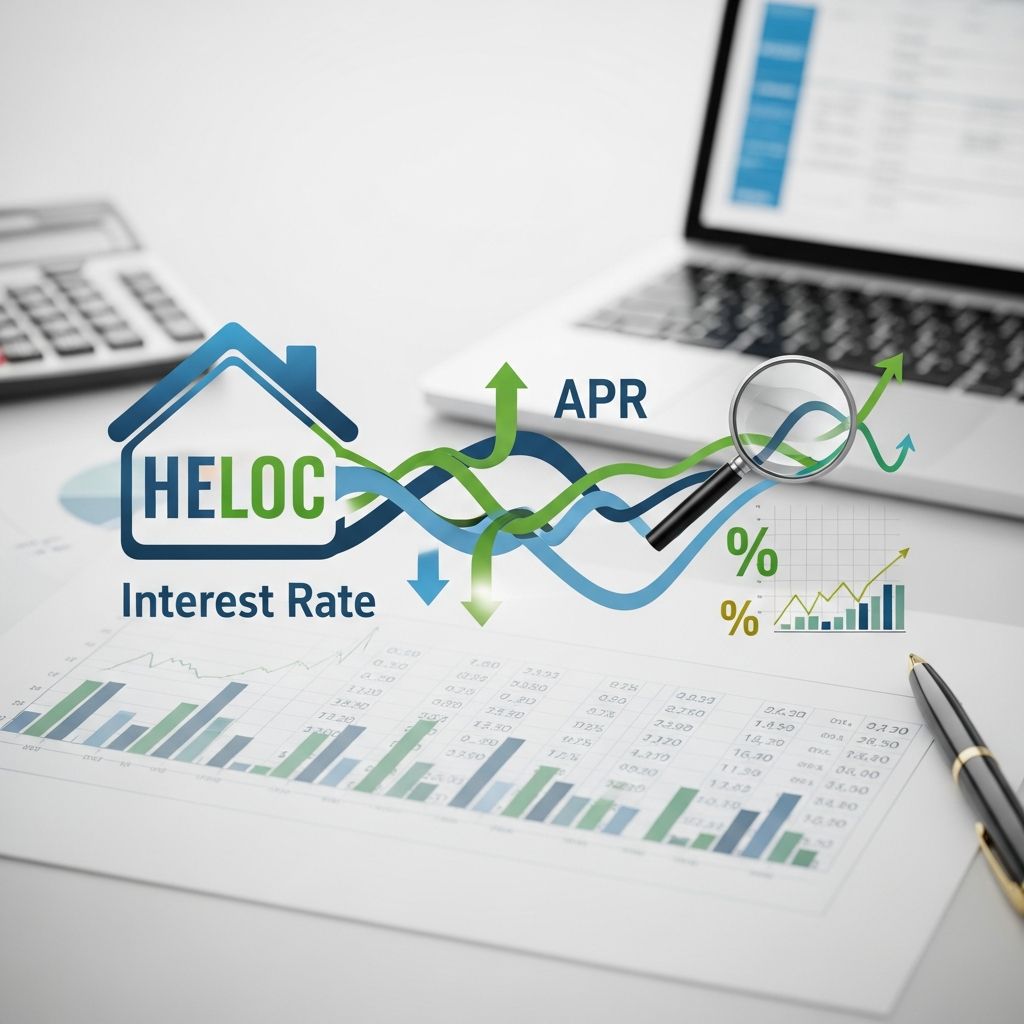
A home equity line of credit (HELOC) represents a flexible borrowing solution that allows homeowners to access the equity accumulated in their properties through a revolving credit arrangement. Unlike traditional home equity loans that provide a lump sum upfront with fixed interest rates, HELOCs operate more like credit cards, enabling borrowers to draw funds as needed and repay them according to their financial circumstances. The interest rate structure of HELOCs differs significantly from other lending products, particularly because most HELOCs utilize variable-rate annual percentage rates (APRs) rather than fixed rates. This fundamental characteristic means that the cost of borrowing can fluctuate substantially over the life of the credit line, directly impacting monthly payment obligations and overall borrowing expenses.
The Foundation: How Variable-Rate APRs Function
The most critical distinction between HELOCs and conventional home equity loans centers on how interest rates are structured. While home equity loans typically feature fixed annual percentage rates that remain constant throughout the loan term, HELOCs employ variable rates that adjust periodically based on broader economic conditions. This variability means your monthly payments can increase or decrease as market conditions change, creating both opportunities and challenges for borrowers planning their finances.
Variable-rate APRs on HELOCs consist of two essential components that work together to determine your actual interest rate: the index and the margin. Understanding how these elements interact is crucial for homeowners seeking to comprehend their true borrowing costs and anticipate future payment adjustments.
The Index Component
The index represents the financial benchmark that lenders use as a starting point for calculating HELOC interest rates. Most financial institutions, including major banks and credit unions, base HELOC rates on the U.S. Prime Rate, which is published regularly in The Wall Street Journal. This prime rate serves as a foundational indicator that reflects the current lending environment and the broader economic landscape. The Federal Reserve’s monetary policy decisions have a direct effect on the prime rate, as changes to the federal funds rate create ripple effects throughout the consumer lending market. When the Federal Reserve adjusts its benchmark rates, typically a few weeks pass before these changes translate into adjusted HELOC rates offered by lenders. For existing HELOC accounts, rate modifications usually occur within approximately one month following a Federal Reserve decision.
The Margin Component
Beyond the index, lenders add an additional percentage amount known as the margin to determine your final HELOC APR. This margin represents the lender’s profit component and compensates them for the risk they assume by extending credit to you. The margin remains fixed throughout your HELOC term and doesn’t fluctuate with market conditions, whereas the index portion changes according to economic factors. For example, if the prime rate (index) stands at 6.25% and your lender applies a 1% margin, your total HELOC APR would be 7.25%. Should the prime rate subsequently increase to 9%, your new APR would become 10%, reflecting the addition of the fixed 1% margin to the new index rate.
Variables That Influence Your HELOC APR Assignment
Beyond the fundamental index-plus-margin calculation, lenders evaluate multiple factors related to your financial profile and the property itself when determining the specific margin and rate tier you’ll receive. These variables significantly impact whether you qualify for premium rates, standard rates, or higher risk-adjusted rates.
Credit Score Requirements
Your creditworthiness, as measured by your FICO score, plays a pivotal role in HELOC approval and rate determination. Most lenders establish minimum credit score thresholds for HELOC qualification, with many accepting scores starting at 680. However, financial institutions typically recommend credit scores of at least 720 to secure more favorable rate offers. Borrowers with higher credit scores generally receive lower margins, translating into reduced overall APRs compared to those with lower scores. This reflects lenders’ assessment that individuals with strong credit histories present lower default risk and deserve better terms.
Home Equity Position
The amount of equity you’ve accumulated in your property directly influences the interest rate you receive. Lenders prefer borrowers who maintain conservative loan-to-value (LTV) ratios, typically not exceeding 80% of the home’s equity. Some lenders will go higher—up to 85% or even 90%—for borrowers with excellent credit profiles and strong financial credentials. When calculating your HELOC rate, lenders may also consider your combined loan-to-value (CLTV) ratio, which represents the total debt secured by your home (including your existing mortgage) as a percentage of your home’s value. A lower CLTV demonstrates greater financial stability and results in more favorable rate offers.
Debt-to-Income Ratio
Your debt-to-income (DTI) ratio—the percentage of your gross monthly income consumed by all debt obligations—is another critical assessment metric. Lenders evaluate this ratio to ensure you have sufficient income to support additional borrowing. A lower DTI ratio indicates you maintain better financial balance and may qualify for promotional or discounted rates. Conversely, higher DTI ratios may result in standard or risk-adjusted pricing tiers.
Employment Status and Income Stability
Lenders also examine your employment situation and income documentation to verify your ability to service debt. Stable, verifiable income strengthens your application and can lead to better rate offers. Self-employed individuals or those with irregular income may face additional scrutiny, potentially affecting the margin applied to their HELOC.
Rate Tiers and Promotional Opportunities
Based on the combination of these evaluation criteria, lenders typically offer borrowers one of three rate classification categories:
- Promotional Rates: Reserved for borrowers with exceptional credit scores, low DTI ratios, and favorable CLTV positions, promotional or “teaser” rates can be approximately three percentage points below standard prevailing home equity rates. These rates may apply during an initial period before reverting to standard rates.
- Standard Rates: Borrowers with good-to-excellent financial profiles who don’t quite qualify for promotional pricing receive standard rates aligned with current market conditions for their loan type and amount.
- Risk-Adjusted Rates: Those with lower credit scores, higher DTI ratios, or less favorable home equity positions receive rates adjusted upward to compensate lenders for the increased perceived risk.
Additionally, some lenders extend small discounts for borrowers who elect automatic payment arrangements or maintain other banking relationships with the institution.
Practical Examples of Rate Fluctuations
To illustrate how HELOC APRs operate in practice, consider a concrete scenario. Suppose you establish a 20-year HELOC with a $20,000 credit line, borrowing at the prime rate plus 1%. If the prime rate currently stands at 6.25%, your APR would be 7.25%. During the initial draw period, your interest-only monthly payments would approximate $120. However, if the prime rate increases to 9% due to Federal Reserve policy adjustments, your APR would rise to 10%, elevating your monthly interest charges to approximately $166—a $46 monthly increase despite no additional borrowing. This example demonstrates how external economic factors directly impact your payment obligations even when your borrowing amount remains constant.
Draw Periods and Rate Structures
HELOCs typically operate in two distinct phases: the draw period and the repayment period. During the draw period—commonly lasting 10 years—you can access funds as needed and often make interest-only payments. Variable rates apply throughout this phase, and your payments fluctuate as the prime rate changes. Once the draw period concludes, any outstanding balance converts into an amortizing loan requiring principal-plus-interest payments over a specified repayment term, typically 20 years. Some lenders offer fixed-rate conversion options, allowing borrowers to lock in fixed rates for all or portions of their outstanding balance, providing payment predictability during the repayment phase.
Floor and Ceiling Constraints
HELOC agreements typically establish interest rate floors and ceilings that limit how much your rate can decrease or increase. The floor represents the minimum rate you’ll pay regardless of how low the prime rate drops, while the ceiling establishes a maximum rate you’ll owe even if the prime rate skyrockets. These protective parameters prevent unlimited rate swings and provide some measure of payment predictability. Understanding your specific floor and ceiling is essential for worst-case scenario financial planning.
Comparing HELOCs to Home Equity Loans
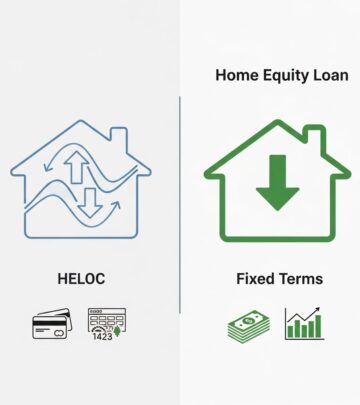
| Feature | HELOC | Home Equity Loan |
|---|---|---|
| Interest Rate Type | Variable (adjustable) | Fixed |
| Payment Structure | Revolving line of credit | Lump sum distribution |
| Draw Method | As needed during draw period | Entire loan upfront |
| Payment Predictability | Fluctuating payments | Consistent payments |
| Interest Rate Calculation | Index plus margin (variable) | Fixed percentage |
Strategic Considerations for HELOC Borrowers
Understanding HELOC APR mechanics enables homeowners to make informed decisions about when and how to access home equity. Those comfortable with payment variability and seeking maximum flexibility may appreciate HELOCs’ revolving credit structure. Conversely, borrowers prioritizing payment predictability might prefer fixed-rate home equity loans or HELOC fixed-rate conversion options for their outstanding balances.
Monitoring the Federal Reserve’s monetary policy stance provides valuable insight into likely HELOC rate trajectories. When interest rate increases appear probable, borrowers carrying HELOC balances might consider converting variable balances to fixed rates before increases materialize. Conversely, during periods of anticipated rate decreases, maintaining variable-rate status preserves the opportunity to benefit from declining payments.
Disclosure Requirements and Transparency
Lenders are legally required to disclose critical HELOC information to prospective borrowers, including the APR, information about variable rate features, payment terms distinguishing between draw and repayment periods, any annual or transaction fees, and ancillary charges such as appraisal or credit report fees. These disclosures typically accompany loan applications, enabling borrowers to compare offers from multiple institutions and understand their true borrowing costs.
Frequently Asked Questions
Why do HELOC rates change when I’m not borrowing more?
HELOC rates fluctuate based on the index (prime rate), which changes due to Federal Reserve monetary policy decisions. Your rate adjusts automatically regardless of your borrowing behavior because the adjustment reflects market-wide lending rate changes.
Can I lock in a fixed rate on my HELOC?
Many lenders offer fixed-rate conversion options allowing you to convert all or part of your variable-rate balance to a fixed rate, typically at a higher APR than the current variable rate. This provides payment predictability but usually costs more.
What credit score do I need for a HELOC?
Minimum FICO scores of 680 often qualify for HELOCs, though lenders typically recommend scores of at least 720 for favorable rate offers. Higher scores generally result in lower margins and better overall APRs.
How much of my home’s equity can I access?
Most lenders permit borrowing up to 80% of your home’s equity, though some extend this to 85% or 90% for borrowers with excellent credit and strong financial profiles. The specific limit depends on your CLTV ratio and creditworthiness.
References
- How Do HELOC APRs Work? — Experian. 2024. https://www.experian.com/blogs/ask-experian/how-do-heloc-aprs-work/
- Home Equity Loans and Home Equity Lines of Credit — Federal Trade Commission Consumer Advice. 2024. https://consumer.ftc.gov/articles/home-equity-loans-and-home-equity-lines-credit
- How Are HELOC and Home Equity Loan Rates Determined? — Bankrate. 2024. https://www.bankrate.com/home-equity/how-are-heloc-and-home-equity-loan-rates-determined/
- Understanding HELOC Interest Rates: Calculating Index and Margin — Affinity Federal Credit Union. 2024. https://www.affinityfcu.com/personal-banking/borrow/mortgage/understanding-heloc-interest-rates
- What is a Home Equity Line of Credit (HELOC)? — Bank of America. 2024. https://www.bankofamerica.com/mortgage/learn/what-is-a-home-equity-line-of-credit/
- What You Should Know About Home Equity Lines of Credit (HELOC) — Consumer Financial Protection Bureau. 2024. https://files.consumerfinance.gov/f/documents/cfpb_heloc-brochure_print.pdf
- How Does A Home Equity Line Of Credit Work — U.S. Bank. 2024. https://www.usbank.com/home-loans/home-equity/how-home-equity-lines-of-credit-work.html
Similar Articles








Read full bio of medha deb