HELOC Impact on Credit Score
Understand how opening, using, and managing a HELOC influences your credit score positively or negatively for smarter financial decisions.
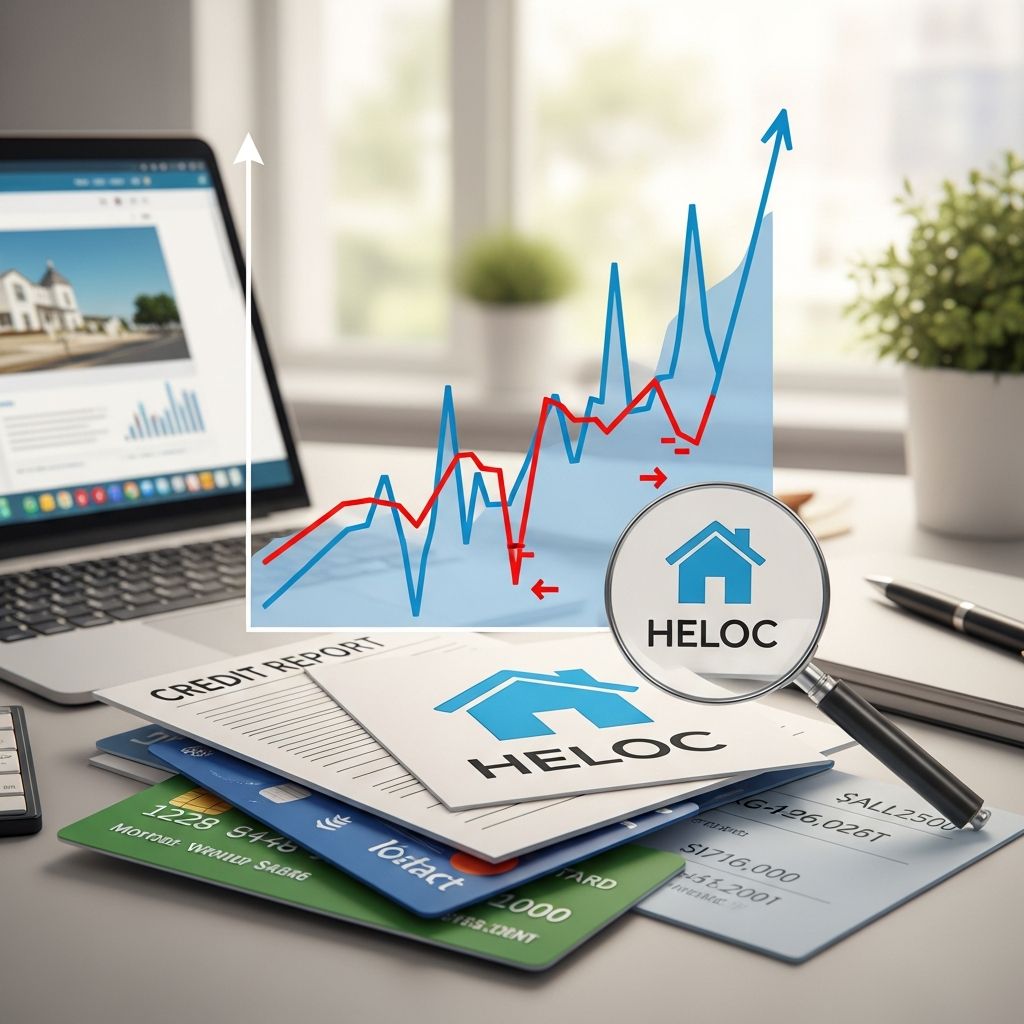
A Home Equity Line of Credit (HELOC) allows homeowners to borrow against their property’s equity, offering flexible funds for renovations, debt consolidation, or emergencies. However, its influence on your credit score hinges on application processes, usage patterns, and repayment discipline. While initial effects may dip your score, responsible management often leads to improvements over time.
Initial Application Effects
Applying for a HELOC triggers a hard credit inquiry, where lenders review your credit history comprehensively. This check signals to credit bureaus that you’re seeking new credit, typically causing a small, temporary score reduction of 5-10 points. The inquiry remains on your report for two years but primarily affects scores for about 12 months.
Multiple applications within a short period amplify this impact, as each hard pull adds to the tally of recent inquiries. Lenders view frequent searches as higher risk, potentially lowering your score further. To minimize damage, shop for HELOC rates within a 14-45 day window, as many scoring models treat these as a single inquiry.
Opening the Account: Short-Term Changes
Once approved, opening a HELOC adds a new account to your credit file. This can shorten your average account age, a factor comprising 15% of FICO scores, leading to another minor dip. Additionally, the new revolving credit line increases your total available credit, which influences utilization if balances rise.
Unlike fixed installment loans, HELOCs function as revolving credit similar to credit cards. Even an unused HELOC contributes positively to your credit mix by diversifying account types—installment, revolving, and now secured revolving debt—which accounts for 10% of your score.
Key Credit Score Factors Influenced by HELOCs
Credit scores, such as FICO (used by 90% of top lenders), weigh five main components. HELOCs primarily affect payment history (35%), amounts owed (30%), and length of credit history (15%). Here’s a breakdown:
| Factor | Weight in FICO | HELOC Influence |
|---|---|---|
| Payment History | 35% | On-time payments build score; delinquencies cause severe drops. |
| Amounts Owed | 30% | Utilization on revolving portion key; keep under 30%. |
| Credit History Length | 15% | New account lowers average age initially. |
| Credit Mix | 10% | Adding secured revolving credit helps diversity. |
| New Credit | 10% | Hard inquiries and new account noted. |
HELOC vs. Home Equity Loan: Distinct Impacts
Distinguish HELOCs from lump-sum home equity loans. The latter is an installment loan with fixed payments that doesn’t factor into credit utilization, stabilizing your “amounts owed” category without fluctuation risks.
- Home Equity Loan: Fixed borrowing; no utilization ratio impact, aids predictability in debt-to-income (DTI) calculations.
- HELOC: Draw-as-needed line; variable balances directly affect utilization if overused.
HELOCs offer flexibility but demand vigilant balance monitoring to avoid score erosion.
Positive Ways HELOCs Boost Credit
Strategic use turns potential negatives into gains. Paying down high-interest credit card debt with HELOC funds lowers overall utilization on unsecured revolving accounts, often raising scores significantly. For instance, reducing card balances from 80% to 20% utilization can add 50-100 points.
Consistent on-time payments reinforce payment history, the dominant factor. An open but low-balance HELOC enhances credit mix and available credit, signaling financial stability to future lenders. Home-secured debt is viewed favorably as “good debt” tied to appreciating assets.
Risks and Negative Consequences
Mismanagement invites pitfalls. Maxing out your HELOC spikes utilization—ideally stay below 30% across all revolving accounts. High balances signal overextension, dropping scores by 50+ points in severe cases.
Missed payments, especially 30+ days late, scar payment history for up to seven years. Since HELOCs are secured by your home, default risks foreclosure, compounding damage with public records and repossession notations.
Increased total debt elevates DTI ratios, complicating future borrowing. Closing a paid-off HELOC might shorten history length or alter mix, though effects are usually mild if other accounts remain active.
Management Strategies for Credit Health
Proactive steps preserve or elevate scores:
- Limit Draws: Borrow only necessities; treat like emergency funds.
- Automate Payments: Ensure timely remittances to build positive history.
- Monitor Utilization: Use free tools from bureaus to track ratios monthly.
- Debt Consolidation: Prioritize high-rate cards for payoff.
- Review Reports: Check annually via AnnualCreditReport.com for errors.
Maintain DTI under 36% for lender appeal. If equity grows, refinance opportunities may lower rates without new inquiries.
Long-Term Credit Profile Evolution
Over years, a well-handled HELOC matures into a score asset. Aging accounts lengthen history; low utilization and perfect payments compound benefits. Many users report net gains after 12-24 months, especially post-consolidation.
However, economic shifts like rising rates during draw periods strain budgets, underscoring affordability assessments pre-approval.
Common Scenarios and Outcomes
| Scenario | Short-Term Effect | Long-Term Effect |
|---|---|---|
| New HELOC, unused | -5 to -10 pts (inquiry) | + points (mix, history) |
| Debt consolidation | Mild dip | Significant boost (utilization drop) |
| High utilization | -20 to -50 pts | Ongoing harm until reduced |
| Missed payment | -100+ pts | 7-year negative mark |
Frequently Asked Questions
Does an unused HELOC hurt my credit?
No, an unused HELOC typically helps by diversifying mix without utilization pressure, provided payments stay current.
How long does a HELOC inquiry affect my score?
About 12 months, though visible for 24.
Can HELOC improve my score quickly?
Yes, via credit card payoff lowering utilization.
Is HELOC debt included in utilization?
HELOC balances factor into total debt but not always revolving utilization for FICO; management remains key.
What credit score for HELOC approval?
Typically 620+, with 680+ ideal for best rates.
Final Thoughts on Balancing HELOC and Credit
HELOCs empower homeowners but require disciplined oversight. Initial hurdles fade with positive habits, often yielding stronger profiles. Consult financial advisors to align with goals, ensuring equity unlocks value without credit compromise.
References
- How Home Equity Financing Affects Your Credit Score — HAR.com. 2023. https://www.har.com/ri/3819/how-home-equity-financing-affects-your-credit-score
- How does a Home Equity Line of Credit impact my credit score? — North Shore Bank. 2024. https://www.northshorebank.com/faqs/heloc-maturity/how-does-a-home-equity-line-of-credit-impact-my-cr
- How Does a Home Equity Loan Affect Your Credit? — myFICO. 2024-01-15. https://www.myfico.com/credit-education/blog/how-helocs-affect-credit
- How Does A HELOC Affect Your Credit Score? — Bankrate. 2025-02-20. https://www.bankrate.com/home-equity/does-heloc-affect-credit-score/
- How Does a HELOC Affect Your Credit Score? — Experian. 2025. https://www.experian.com/blogs/ask-experian/how-does-a-heloc-affect-your-credit-score/
Similar Articles








Read full bio of medha deb