HELOC Essentials Guide
Unlock your home's potential with a HELOC: explore benefits, risks, and smart strategies for borrowing against equity.
A Home Equity Line of Credit (HELOC) provides homeowners with a flexible way to access cash by leveraging the value built up in their property. Unlike traditional loans, it functions similarly to a revolving credit line, allowing draws as needed during an initial period.
Building Equity: Your Home’s Hidden Asset
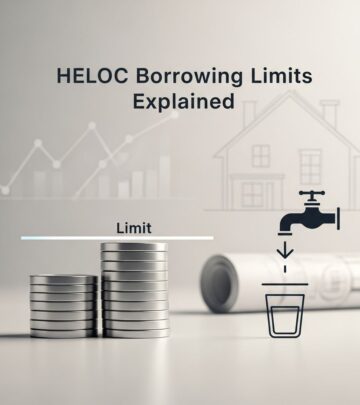
Home equity represents the portion of your property’s current market value that you truly own, calculated by subtracting any remaining mortgage balance from the appraised value. For instance, if your home is worth $600,000 and you owe $400,000, you hold $200,000 in equity. Lenders typically permit borrowing up to 85% of this amount, potentially unlocking $170,000 in available funds.
This equity accumulates through consistent mortgage payments that reduce principal, property value appreciation over time, and targeted home improvements. Maintaining this asset thoughtfully positions homeowners to tap into it for significant financial needs without selling their residence.
How a HELOC Operates in Practice
Secured by your home, a HELOC divides into two phases: the draw period and the repayment period. During the draw phase, lasting 5 to 10 years, borrowers can withdraw funds up to the approved limit whenever required, often paying interest only on the borrowed amount. This mirrors credit card functionality but with generally lower rates due to the collateral.
Following this, the repayment phase—typically 10 to 20 years—begins, where new draws cease, and payments cover both principal and interest. Some plans include balloon payments at the end, demanding full settlement or refinancing. Understanding these timelines ensures borrowers align usage with their cash flow projections.
Key Advantages of Choosing a HELOC
- Cost-Effective Rates: As secured loans, HELOCs offer interest rates several points below unsecured alternatives like credit cards or personal loans, reducing overall borrowing expenses.
- Pay-as-You-Go Interest: Interest accrues solely on funds actually used, not the full credit line, optimizing costs for intermittent needs.
- Revolving Access: Reuse repaid amounts within the limit during the draw period, providing ongoing liquidity without repeated applications.
- Potential Tax Perks: Interest may qualify as deductible when funds support home enhancements, though consulting a tax professional is advised.
- Interest-Only Options: Many plans allow interest-only payments initially, easing monthly burdens during the draw phase.
Navigating the Drawbacks and Risks
While appealing, HELOCs carry substantial risks primarily due to their secured nature. Defaulting on payments endangers your home through potential foreclosure, a consequence far graver than unsecured debt fallout.
| Benefit | Risk |
|---|---|
| Lower rates than credit cards | Variable rates can rise with market changes |
| Flexible draws | Foreclosure risk on default |
| Interest on used amounts only | Payment shock at repayment phase start |
| Tax-deductible interest possible | Home value drops could trap you in negative equity |
Strategic Uses for HELOC Funds
Directing HELOC proceeds toward value-adding purposes maximizes returns. Home renovations often top the list, as upgrades like kitchen remodels or roof replacements can elevate property worth, sometimes exceeding the loan cost.
- Debt consolidation: Shift high-interest balances to the HELOC’s lower rate, streamlining payments.
- Education financing: Cover tuition or related costs more affordably than private student loans.
- Emergency reserves: Address unexpected repairs or medical bills without depleting savings.
- Investment opportunities: Fund business startups or real estate ventures, though with caution due to risks.
Avoid frivolous spending on daily expenses, as this erodes equity without productive outcomes and heightens repayment challenges.
HELOC Versus Traditional Home Equity Loans
HELOCs differ from lump-sum home equity loans in structure and suitability. The latter disburses a fixed amount upfront with steady principal-plus-interest payments and often fixed rates.
| Feature | HELOC | Home Equity Loan |
|---|---|---|
| Borrowing Style | Revolving line, draw as needed | Lump sum disbursement |
| Interest Rate | Variable | Typically fixed |
| Repayment Flexibility | Interest-only draw phase | Consistent from day one |
| Best For | Ongoing or uncertain needs | Known, one-time expenses |
Qualifying for a HELOC: What Lenders Evaluate
Lenders scrutinize credit scores (ideally 620+), debt-to-income ratios under 43%, and sufficient equity (at least 15-20% remaining post-borrowing). Stable income and employment history also factor heavily. Appraisals determine exact equity availability, and closing costs—1-5% of the line—apply, though some waive fees.
Current Market Insights and Rate Trends
As of recent data, HELOC rates hover lower than credit cards but fluctuate with prime rates. Borrowers benefit from monitoring Federal Reserve actions, as hikes amplify variable costs. Fixed-rate conversion options exist with some lenders to hedge against rises.
Steps to Secure and Manage a HELOC Responsibly
- Assess your equity via online estimators or professional appraisal.
- Compare offers from multiple lenders on rates, fees, and terms.
- Calculate affordability including worst-case rate scenarios.
- Establish a repayment plan before drawing funds.
- Track usage to prevent overextension.
Financial discipline proves paramount; treat the HELOC as a tool, not an endless resource.
Frequently Asked Questions (FAQs)
Can I use a HELOC for any purpose?
Yes, though wise choices like home improvements or debt reduction yield better long-term results than discretionary spending.
What happens if interest rates increase?
Variable rates adjust periodically, potentially raising payments; budget for hikes and consider fixed-rate alternatives if available.
Is a HELOC better than refinancing my mortgage?
Often yes for smaller, flexible needs, as it preserves your current low mortgage rate unlike a full refinance.
How long does approval take?
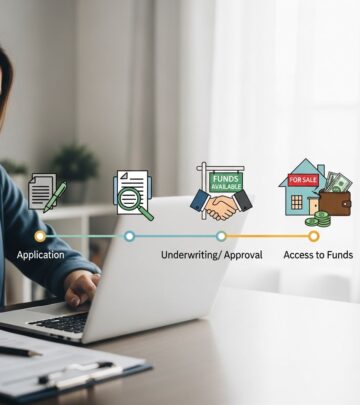
Typically 2-6 weeks, involving credit checks, income verification, and home appraisal.
Can I pay off a HELOC early?
Most allow prepayments without penalty during repayment, accelerating equity rebuild.
Final Thoughts on Leveraging Home Equity
A HELOC empowers homeowners with versatile financing at competitive costs, ideal for strategic investments. Yet, its home-backed security demands respect—rigorous planning mitigates risks like rate volatility and default consequences. Evaluate your situation thoroughly to determine if this instrument aligns with your goals.
References
- Is a HELOC Right for You? Compare Benefits, Risks, and Options — Freedom Mortgage. 2024. https://www.freedommortgage.com/learn/home-equity/is-a-heloc-a-good-idea
- Benefits and Risks of Home Equity Lines of Credit (HELOCs) — Armstrong Wealth. 2024. https://www.armstrongwealth.com/news/article/heloc-benefits-risks-guide
- Pros And Cons of Getting a HELOC — Rate.com. 2024. https://www.rate.com/mortgage/resource/heloc-benefits
- Understanding HELOCs for Homeowners — Comerica. 2024. https://www.comerica.com/insights/personal/home-ownership/how-does-a-heloc-work.html
- Pros and Cons of a Home Equity Line of Credit — PNC Insights. 2024. https://www.pnc.com/insights/personal-finance/borrow/pros-and-cons-of-a-home-equity-line-of-credit.html
- What you should know about Home Equity Lines of Credit (HELOC) — Consumer Financial Protection Bureau. 2014 (authoritative guidance still relevant). https://files.consumerfinance.gov/f/documents/cfpb_heloc-brochure_print.pdf
- Home Equity Loans and Home Equity Lines of Credit — Federal Trade Commission. 2024. https://consumer.ftc.gov/articles/home-equity-loans-and-home-equity-lines-credit
Similar Articles








Read full bio of Sneha Tete