HELOC Draw Period Explained: Key Facts And Smart Tips
Master the HELOC draw period: borrow flexibly now, plan for repayment later to unlock your home equity wisely.
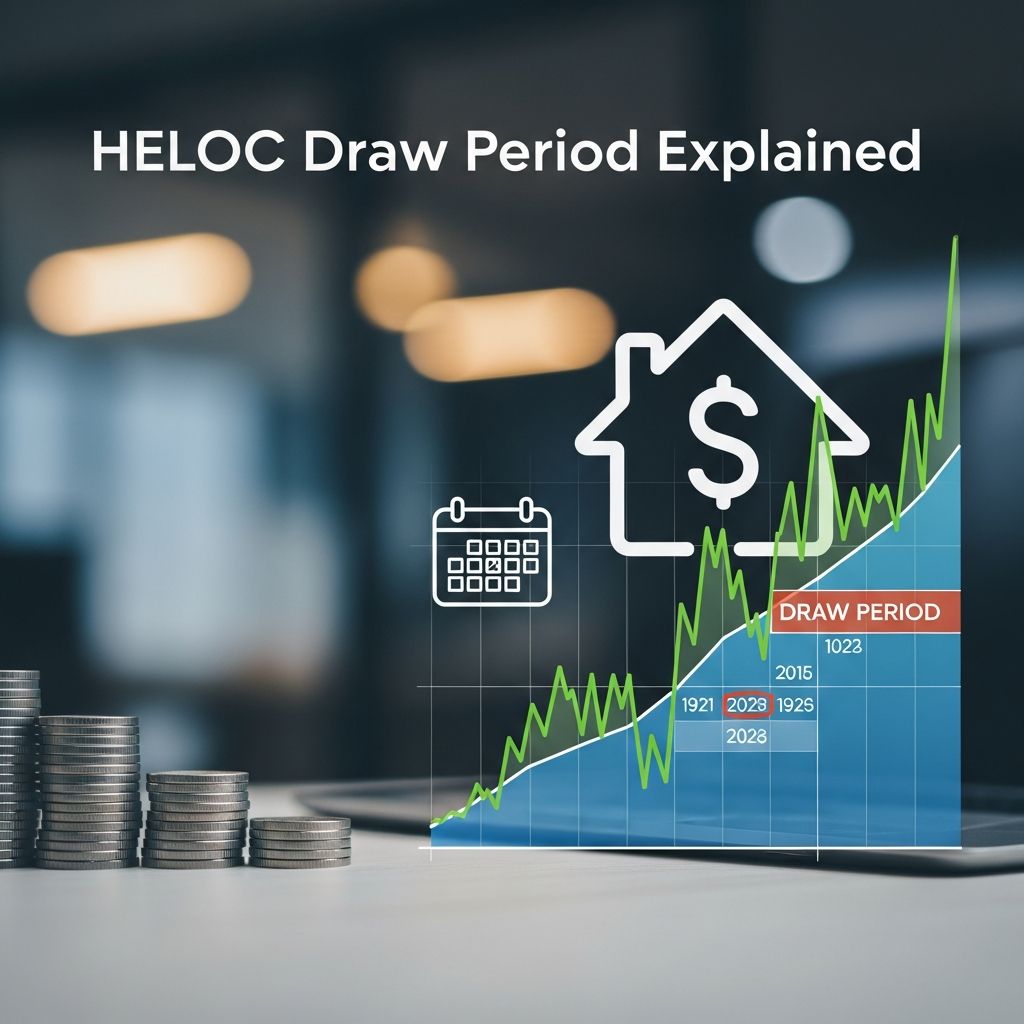
The draw period represents the initial phase of a home equity line of credit (HELOC), allowing borrowers to access funds flexibly against their home’s equity, usually with interest-only payments, before transitioning to full repayment.
Understanding Home Equity Lines of Credit
A HELOC functions as a revolving credit line secured by your home’s equity, which is the difference between your property’s market value and any outstanding mortgage balance. Lenders typically approve borrowing up to 80-85% of this equity, minus existing debts. Unlike a traditional home equity loan that provides a lump sum, a HELOC lets you draw funds as needed, similar to a credit card but with your home as collateral.
This structure offers advantages for ongoing projects like renovations or debt consolidation, where expenses arise unpredictably. However, the secured nature means defaulting risks foreclosure, making responsible use critical.
Core Phases of a HELOC: Draw and Repayment
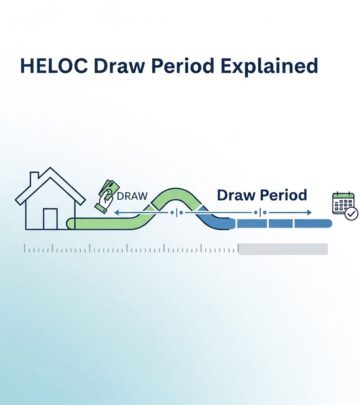
Every HELOC divides into two distinct phases: the draw period and the repayment period. The draw period is when the line remains open for borrowing, while the repayment period closes new advances and requires amortizing the balance.
- Draw Period: Borrow up to your limit, repay partially or fully, and re-borrow available amounts.
- Repayment Period: No further draws; focus on principal plus interest until paid off.
This phased approach balances flexibility with discipline, encouraging borrowers to plan ahead.
Key Features of the Draw Period
During this opening phase, you gain access to your approved credit line through methods like checks, online transfers, or debit cards, depending on the lender. Funds become available only upon withdrawal, so unused portions incur no payments.
Payments cover interest on borrowed amounts, often at variable rates tied to the prime rate. Principal reduction is optional but replenishes your borrowing capacity. For instance, drawing $20,000 from a $50,000 line leaves $30,000 available; repaying $10,000 restores it.
| Aspect | Draw Period | Repayment Period |
|---|---|---|
| Borrowing Access | Yes, up to limit | No |
| Minimum Payments | Interest-only typical | Principal + interest |
| Duration | 5-10 years common | 10-30 years |
| Rate Type | Usually variable | Variable or fixed options |
Standard Length of the Draw Period
Most HELOCs feature a draw period of 5 to 10 years, though variations exist. PNC Bank offers 10 years, aligning with industry norms, while some extend to 15-20 years for greater flexibility. Shorter periods, like 3-5 years, may apply from certain providers. Always review your agreement, as the lender sets these terms based on creditworthiness and market conditions.
The Consumer Financial Protection Bureau (CFPB) notes that draw periods enable strategic borrowing without immediate full commitment.
Making Payments During the Draw Phase
Expect monthly interest-only minimums, calculated daily on outstanding balances. If rates rise, so do payments, even without new draws. Some plans permit principal payments to build equity faster or avoid future hikes.
Fixed-rate conversion options, like U.S. Bank’s, let you lock portions into installment loans during this time, hedging against rate volatility. Prepaying fully closes the line but may trigger penalties—verify terms upfront.
Transitioning from Draw to Repayment
When the draw period expires, the line freezes. You enter repayment, typically 10-30 years, with higher payments covering principal and interest. For example, a $50,000 balance at 7% interest might jump from $300 monthly (interest-only) to over $600 (amortizing over 20 years).
Balloon payments, where the full balance due at once, are less common but possible; most amortize gradually. Variable rates persist unless converted, exposing you to fluctuations.
Strategic Uses for HELOC Funds
Ideal for variable-cost needs:
- Home improvements paid in stages.
- Education expenses over semesters.
- Emergency funds or bridging cash flow gaps.
- Investment opportunities with calculated risks.
Avoid high-interest consumer debt or speculative ventures, as home collateral amplifies consequences.
Potential Risks and Pitfalls
Low draw-period payments tempt over-borrowing, leading to unaffordable repayment jumps. Rate increases compound this; prime rate hikes directly impact variable HELOCs. Home value drops could trigger margin calls, demanding immediate principal paydown.
Early closure via payoff might incur fees. Post-draw, refinancing becomes an option if terms sour, but closing costs apply.
Factors Influencing Draw Period Terms
Lenders tailor durations by:
- Credit Profile: Strong scores unlock longer periods.
- Equity Level: Higher ratios improve options.
- Property Location: Regional rules affect repayment lengths, e.g., PNC varies by state.
- Market Rates: Economic shifts influence offerings.
Comparing HELOCs Across Lenders
| Lender Example | Draw Period | Repayment Period | Key Feature |
|---|---|---|---|
| PNC Bank | 10 years | 20-30 years | State-specific terms |
| U.S. Bank | 10 years | 20 years | Fixed-rate locks |
| Citizens Bank | 10 years | Up to 20 years | Flexible access methods |
Qualifying for a HELOC
Expect appraisals, credit checks (typically 620+ FICO), debt-to-income under 43%, and minimum equity (15-20%). Approval hinges on stable income and payment history.
Tips for Effective HELOC Management
- Track usage to stay under limits.
- Pay principal early when possible.
- Monitor rates and refinance if advantageous.
- Build an emergency fund to avoid reliance.
- Consult advisors for tax implications—interest may be deductible for qualified uses.
Frequently Asked Questions
What happens if I don’t use my HELOC during the draw period?
No payments due until you borrow; the line remains available until expiration.
Can I extend the draw period?
Some lenders allow renewals or modifications, subject to requalification and fees.
Are HELOC rates fixed or variable?
Predominantly variable, indexed to prime plus a margin; fixed options exist for portions.
What if home values decline during the draw period?
Lenders may reduce limits or demand repayment to maintain loan-to-value ratios.
Is a HELOC better than a home equity loan?
HELOC suits flexible needs; lump-sum loans fit fixed expenses with stable payments.
Planning for Long-Term Success
Approach HELOCs with a clear exit strategy. Model scenarios: if drawing maximally, ensure repayment fits your budget. Use online calculators for projections. Regularly reassess equity as values change—rising markets expand options.
For debt consolidation, compare HELOC rates to existing obligations. Renovations boosting value can justify use, creating a virtuous cycle. Always prioritize essentials over luxuries.
References
- What is the Draw Period on a HELOC? — PNC Bank. 2023. https://www.pnc.com/insights/personal-finance/borrow/what-is-heloc-draw-period.html
- What Is a Draw Period on a HELOC? — Experian. 2024. https://www.experian.com/blogs/ask-experian/what-is-a-draw-period-on-a-heloc/
- Understanding the Draw and Repayment Periods for a Home Equity Line of Credit (HELOC) — NIHFCU. 2023. https://www.nihfcu.org/blog/understanding-the-draw-and-repayment-periods-for-a-home-equity-line-of-credit-heloc/
- Understanding a HELOC: draw vs. repayment period — Citizens Bank. 2024. https://www.citizensbank.com/learning/heloc-draw-period-and-repayment-period.aspx
- How Does A Home Equity Line Of Credit Work — U.S. Bank. 2024. https://www.usbank.com/home-loans/home-equity/how-home-equity-lines-of-credit-work.html
- What you should know about Home Equity Lines of Credit (HELOC) — Consumer Financial Protection Bureau. 2014-06-01. https://files.consumerfinance.gov/f/documents/cfpb_heloc-brochure_print.pdf
Similar Articles








Read full bio of Sneha Tete