HELOC Closing Costs: Typical Fees, Timeline, And Savings
Navigate HELOC closing costs with confidence: Understand fees, negotiation tactics, and smart ways to minimize expenses on your home equity line of credit.

Closing costs for a home equity line of credit (HELOC) typically range from 2% to 5% of the credit line amount, though this can vary by lender and location. For a $100,000 HELOC, expect to pay between $2,000 and $5,000 upfront, covering essential services like appraisals and title searches that protect both you and the lender.
What Exactly Are HELOC Closing Costs?
These fees arise during the final stages of securing your HELOC, compensating third parties and lenders for processing, verifying property value, and ensuring legal compliance. Unlike a revolving credit card, a HELOC uses your home as collateral, necessitating thorough checks similar to primary mortgages but often at a reduced scale. Costs can sometimes dip to 1% or climb to 6% depending on market conditions and lender policies.
Understanding these expenses upfront allows borrowers to budget accurately and shop competitively. Factors influencing totals include loan size, geographic area, and credit profile—stronger profiles may unlock waivers or discounts.
Breakdown of Common HELOC Fees
HELOC closing costs comprise several components, each serving a distinct purpose. Here’s a detailed overview of the most frequent charges:
| Fee Type | Typical Range | Purpose |
|---|---|---|
| Origination Fee | 0.5%–1% of credit line | Covers lender’s processing and underwriting expenses. |
| Appraisal Fee | $300–$1,000 | Professional assessment of your home’s current market value to confirm equity. |
| Credit Report Fee | $30–$120 | Pulls and reviews your credit history for approval and rate setting. |
| Title Search | $75–$300 | Verifies no outstanding liens or ownership disputes on the property. |
| Title Insurance | 0.5%–1% of loan amount | Protects against future title defects; lender’s policy is standard. |
| Notary & Recording | $20–$150 | Official signing and filing of loan documents with local authorities. |
| Document Prep/Attorney | $100–$500 | Prepares legal paperwork; may include legal review. |
These figures draw from analyses by major credit bureaus and lenders, reflecting 2025-2026 market norms. Regional differences apply—urban areas often see higher appraisal and title costs due to demand.
How HELOC Costs Compare to Home Equity Loans
HELOCs and lump-sum home equity loans share similar closing fee structures, both hovering at 2-5% of the principal. However, HELOCs may incur fewer upfront charges since they function as flexible lines rather than fixed disbursements. Some lenders skip full appraisals for HELOCs under certain thresholds, opting for automated valuations.
HELOCs introduce unique ongoing fees absent in fixed loans:
- Annual maintenance: $5–$250
- Inactivity: $5–$50 if unused
- Early closure: Up to $500 or 2-5% of balance within draw period
- Transaction: $5 per advance
This trade-off suits borrowers needing ongoing access over one-time funds. For instance, Bank of America notes potential early closure fees if terminated within 36 months.
Factors Influencing Your Total Closing Costs
Several variables dictate your final bill:
- Lender Policies: Credit unions and online lenders like Rocket Mortgage often cap fees at 3-6%, while traditional banks vary.
- Location: Coastal states charge more for titles and appraisals due to complex records.
- Credit Score: Scores above 740 frequently qualify for fee waivers.
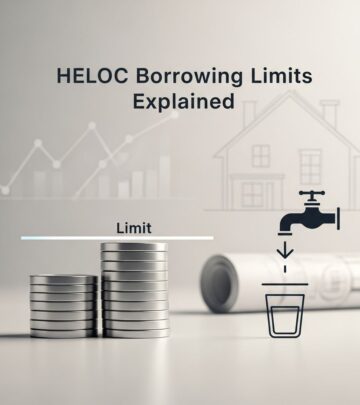
- Loan Size: Larger lines amortize percentage fees effectively but amplify absolutes.
- Market Timing: 2026 forecasts stable rates, but high demand could inflate third-party services.
Shop multiple quotes; a $50,000 HELOC might cost $1,000–$2,500, per Experian data.
Strategies to Minimize or Avoid HELOC Fees
Proactive steps can slash expenses significantly:
- Compare Lenders: Use platforms aggregating quotes from at least three providers.
- No-Closing-Cost Options: Trade higher interest for waived fees—viable for short-term use.
- Improve Qualifications: Boost credit and lower debt-to-income for better terms.
- Auto-Pay Discounts: Many waive points for enrollment.
- Refinance Existing: If rates drop, roll costs into a new line.
Experts emphasize timing: Secure during low-rate windows to offset fees via savings.
Negotiation Tactics for Closing Costs
Most lender-controlled fees—origination, application, rate locks—are negotiable. Third-party costs like appraisals resist haggling but can be shopped.
| Highly Negotiable | Less Flexible |
|---|---|
| Origination (0.5-1%) Application Title Insurance | Appraisal ($300+) Credit Report Recording/Notary |
Approach: Request fee breakdowns early, cite competitor quotes, and leverage strong profiles. Lending specialists note 20-30% reductions are common. Always review the Loan Estimate form mandated by federal rules for transparency.
No-Closing-Cost HELOCs: Pros and Cons
Some products eliminate upfront fees by baking them into the rate (e.g., +0.25-0.5%). Ideal for quick needs or flips, but long-term borrowers pay more interest. Citizens Bank highlights variability—some offer zero costs outright. Weigh via total cost calculators: A 1% fee on $200,000 equals $2,000; higher rate over 10 years could exceed $5,000.
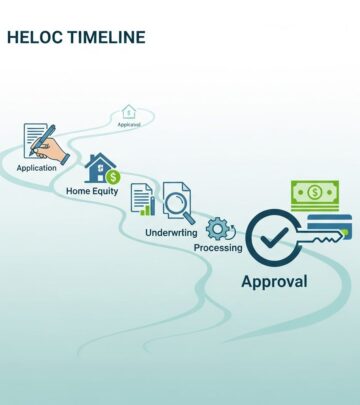
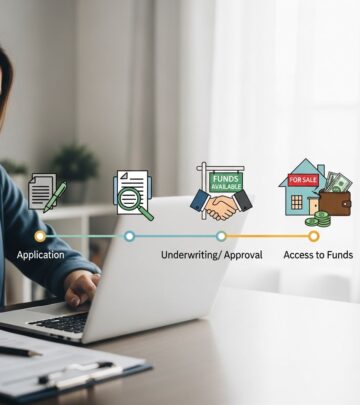
HELOC Closing Timeline and Process
Expect 2-6 weeks from application to funding:
- Day 1-3: Application and credit pull
- Week 1-2: Appraisal and title review
- Week 3: Disclosures and negotiations
- Week 4-6: Signing and recording
Delays spike costs via extended rate locks ($50+). The Consumer Financial Protection Bureau advises scrutinizing all docs.
Frequently Asked Questions
Are HELOC closing costs tax-deductible?
Potentially, if used for home improvements—consult IRS Publication 936 and a tax advisor.
Can I roll closing costs into the HELOC?
Yes, many lenders allow this, increasing your balance but preserving cash flow.
What’s the average HELOC closing cost in 2026?
Around 2-5% per recent analyses, or $2,000-$5,000 on $100k lines.
Do all lenders charge origination fees?
No—compare; some waive for premium clients.
How do I avoid early termination fees?
Review draw period terms (often 10 years); plan usage accordingly.
Final Preparation Checklist
Before closing:
- Review Loan Estimate vs. final HUD-1
- Verify fee waivers
- Confirm rate lock
- Prepare ID and funds for notary
- Understand draw/repayment phases
This ensures smooth execution and cost control.
References
- How Much Are Home Equity Loan Closing Costs? — Experian. 2025. https://www.experian.com/blogs/ask-experian/how-much-are-home-equity-loan-heloc-closing-costs/
- A guide to home equity loan closing costs — Rocket Mortgage. 2025. https://www.rocketmortgage.com/learn/home-equity-loan-closing-costs
- How much are home equity loan closing costs in 2025? — Bankrate. 2025-01-01. https://www.bankrate.com/home-equity/home-equity-loan-closing-costs/
- Home Equity Loan Closing Costs – Complete 2026 Guide — Amerisave. 2026. https://www.amerisave.com/learn/home-equity-loan-closing-costs-complete-guide-to-fees-and-savings
- 8 Surprising HELOC Facts You Should Know — Citizens Bank. 2025. https://www.citizensbank.com/learning/8-surprising-heloc-facts.aspx
- What you should know about Home Equity Lines of Credit (HELOC) — Consumer Financial Protection Bureau. 2014 (authoritative guide, remains relevant for core processes). https://files.consumerfinance.gov/f/documents/cfpb_heloc-brochure_print.pdf
Similar Articles








Read full bio of medha deb