Home Appraisals for HELOCs: What You Need to Know
Understanding appraisal requirements, costs, and alternatives for HELOC approval
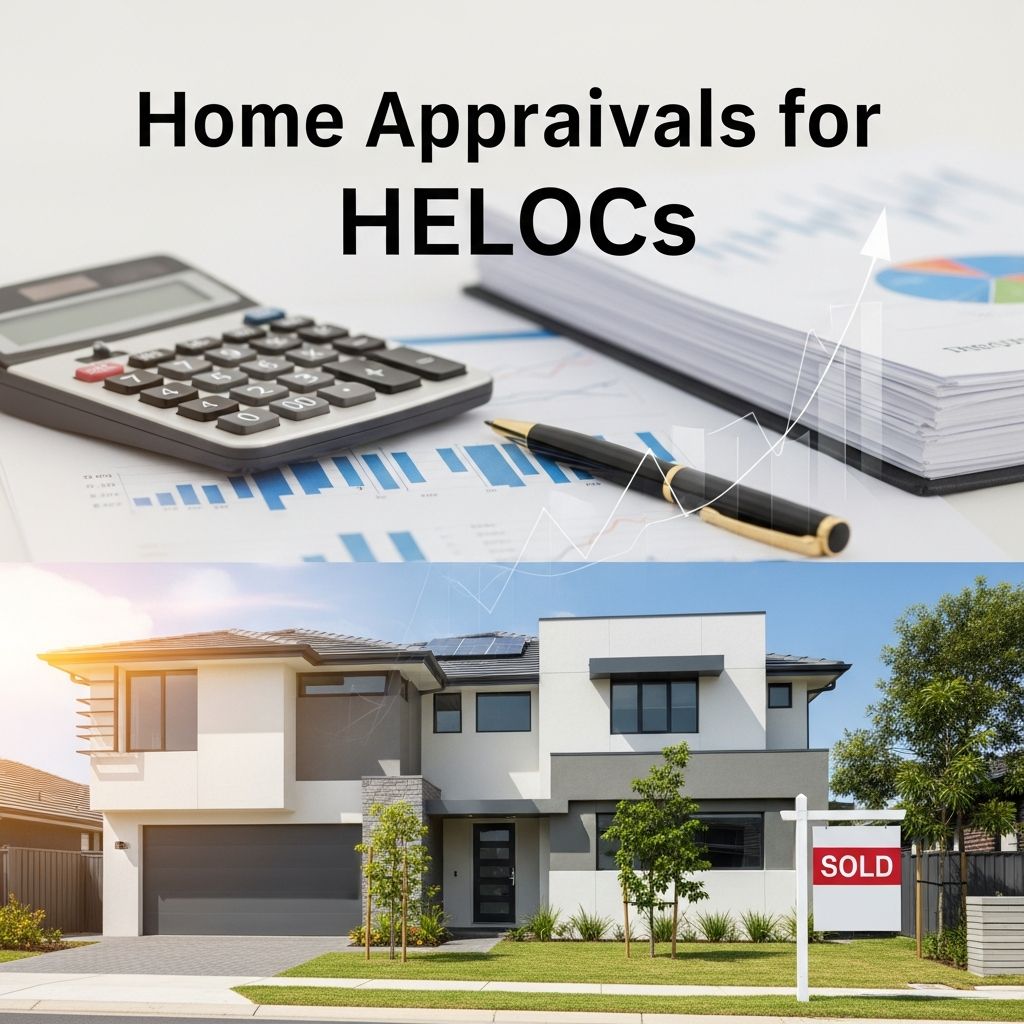
When homeowners consider accessing their home’s equity through a home equity line of credit, one of the most important steps in the approval process involves obtaining a professional property valuation. This valuation, commonly referred to as an appraisal, serves as a critical foundation for lenders to determine how much you can borrow. Understanding the role of appraisals in the HELOC application journey can help you prepare for what to expect and make informed financial decisions.
Why Lenders Require Property Valuations
Financial institutions that offer HELOCs depend on accurate property valuations to manage their risk effectively. Your home serves as collateral for the line of credit, which means the lender needs to understand exactly what that collateral is worth in the current real estate market. Without this information, lenders cannot accurately determine your available borrowing capacity or set appropriate loan terms.
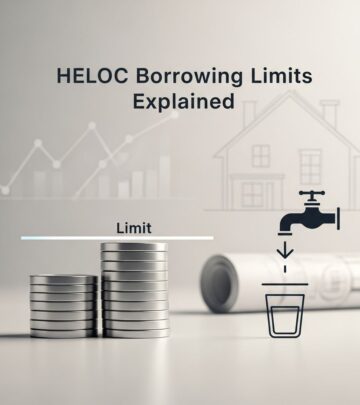
The appraisal process establishes a foundation for several critical lending decisions. First, it determines how much equity you actually have available to borrow against. Second, it influences the interest rate you receive on your HELOC. Third, it helps the lender verify that the loan amount requested aligns with prudent lending standards. Lenders typically restrict HELOC borrowing to a percentage of your home’s appraised value, most commonly between 60% and 85%, depending on your creditworthiness and the lender’s specific policies.
Understanding the Home Equity Calculation Process
The relationship between your home’s appraised value and your HELOC eligibility involves several interconnected factors. To calculate your available equity, lenders subtract your current mortgage balance from your home’s appraised value. However, they don’t allow you to borrow against 100% of this equity. Instead, they apply lending ratios that protect them from market downturns.
A key metric lenders use is the combined loan-to-value (CLTV) ratio. This compares the total of all loans secured by your home—your mortgage balance plus any new HELOC or home equity loan—to your home’s total appraised value. For example, if you have a $275,000 mortgage, seek a $150,000 HELOC, and a lender uses an 85% CLTV limit, your combined debt of $425,000 cannot exceed 85% of your home’s value. This means your home would need to appraise at $500,000 or higher to qualify for the full requested amount.
Understanding this calculation helps you prepare for HELOC application outcomes. A lower-than-expected appraisal can reduce your borrowing capacity, though it doesn’t necessarily result in application denial. Some lenders may approve a smaller credit line or require a higher interest rate if your equity position is tighter than initially anticipated.
The Professional Appraisal Process Explained
A formal appraisal involves a licensed professional appraiser conducting an on-site inspection of your property. During this visit, the appraiser examines the home’s physical condition, takes measurements, evaluates the layout and functionality, and assesses any upgrades or deterioration. The appraiser also researches comparable properties that have recently sold in your neighborhood to establish a fair market value.
This process generates a detailed written appraisal report that the lender uses throughout the HELOC underwriting process. The report includes photographs, property details, market analysis, and the appraiser’s professional opinion of your home’s current market value. The lender then uses this appraised value as the basis for calculating your HELOC credit limit and terms.
Typical Costs Associated with HELOC Appraisals
Most homeowners can expect to pay between $300 and $400 for a professional home appraisal, though costs may vary based on your location, home size, and local real estate market conditions. Some lenders cover this cost as part of their lending program, while others pass it to the borrower. It’s wise to ask potential lenders whether they absorb appraisal costs or charge them to the applicant, as this can influence your overall borrowing costs.
In some cases, lenders may waive the appraisal fee if you maintain an existing relationship with them or if you’re refinancing a HELOC you already have with that institution. Always inquire about fee structures early in the application process so you can factor these costs into your decision.
Alternative Valuation Methods
While traditional in-person appraisals remain the standard, some lenders now offer alternative valuation approaches that can streamline the approval process. Automated valuation models (AVMs) use algorithmic analysis of recent comparable sales, public records, and other data to estimate property values without requiring a physical inspection. These digital valuations can reduce costs and accelerate timelines, though many lenders still prefer the accuracy and detail provided by traditional appraisals.
Some lenders may use a hybrid approach, beginning with an AVM and only ordering a full appraisal if the automated estimate falls outside expected parameters. Understanding what valuation methods a particular lender uses can help you anticipate costs and timeline expectations.
No-Appraisal HELOC Options
While most lenders require some form of property valuation, some financial institutions offer no-appraisal HELOC programs. These programs typically rely on alternative valuation methods or may have higher credit score requirements to offset the lender’s increased risk in not obtaining a formal appraisal. No-appraisal HELOCs may appeal to borrowers seeking faster approval or those with complicated properties that are difficult to appraise.
However, no-appraisal options often come with trade-offs. Lenders may impose stricter loan-to-value ratios, require larger minimum credit scores, or charge higher interest rates to compensate for reduced documentation. Comparing the total costs and terms of no-appraisal options against traditional HELOC programs can help you determine whether bypassing an appraisal makes financial sense for your situation.
Factors That Influence Appraisal Outcomes
Several variables can affect your home’s appraised value and, consequently, your HELOC borrowing capacity. Market conditions play a significant role—homes in appreciating markets may appraise higher than expected, expanding your available equity. Conversely, homes in declining markets or neighborhoods experiencing slower appreciation may appraise lower than you anticipated.
Your home’s condition directly impacts its appraised value. Recent upgrades, well-maintained systems, and quality renovations support higher valuations. Deferred maintenance, aging infrastructure, or outdated aesthetics can result in lower appraisals. Comparable sales in your immediate area also heavily influence appraisals, as appraisers use recent transactions to establish market parameters.
Location-specific factors including school quality, neighborhood amenities, proximity to employment centers, and local economic trends all contribute to appraisal determinations. Understanding these factors allows you to set realistic expectations about your home’s valuation before applying for a HELOC.
What Happens If Your Appraisal Is Lower Than Expected
A lower-than-expected appraisal doesn’t automatically result in HELOC denial. Depending on your situation, you may still qualify, but with modifications to the credit line amount or terms. If your CLTV ratio still falls within acceptable parameters after a lower appraisal, you can proceed with a reduced credit limit. Alternatively, you can request that the lender reconsider if you believe the appraisal undervalues your property.
Most appraisers will explain their valuation methodology, allowing you to identify any factual errors or omissions. If you discover inaccuracies in the appraisal report, you have the right to request a reconsideration. However, disagreeing with the appraiser’s professional judgment typically won’t lead to a higher valuation without concrete evidence supporting your position.
Preparing for Your HELOC Appraisal
To maximize your home’s appraised value, prepare your property for the appraiser’s visit. Ensure the home is clean and well-maintained, as poor upkeep can negatively influence the appraisal. Document any recent renovations or upgrades with receipts and photos—appraisers may not notice all improvements without being informed about them. Provide information about energy-efficient upgrades, new roofing, updated electrical systems, or other enhancements that add value.
Have information ready about your home’s size, number of rooms, lot dimensions, and any special features. This allows the appraisal process to proceed smoothly and ensures accurate documentation. If you’re aware of significant recent comparable sales in your neighborhood that sold for strong prices, you can mention these to provide context, though the appraiser will conduct their own market research.
Credit Requirements and Appraisal Connections
While the appraisal determines your home’s value, your creditworthiness influences both your HELOC approval and the terms you receive. Lenders with different credit score requirements may have varying appraisal expectations and loan-to-value thresholds. Borrowers with credit scores of 740 or higher may qualify for HELOCs with higher loan-to-value ratios, while those with lower scores may face more conservative lending parameters.
Your debt-to-income ratio also factors into HELOC decisions. Even with a favorable appraisal, if your existing debts consume too much of your monthly income, lenders may limit your HELOC size or deny your application. Improving your financial position before applying—by paying down existing debts or increasing your income—can enhance your overall HELOC eligibility.
Timeline Considerations for HELOC Approval
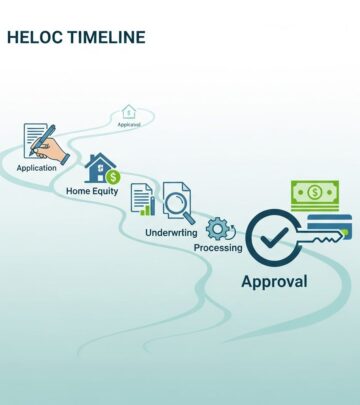
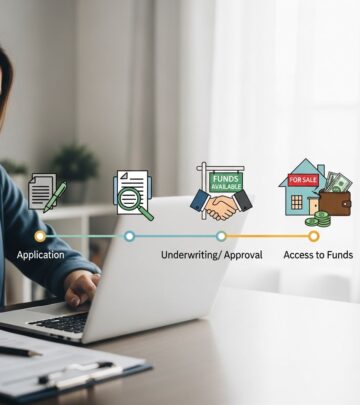
The appraisal typically occurs early in the HELOC application process, often within the first week or two after you submit your application. Once ordered, traditional appraisals usually take one to two weeks to complete, depending on appraiser availability and market conditions. Automated valuations can be completed within days or even hours, significantly accelerating certain applications.
Understanding the timeline helps you plan accordingly. If you need your HELOC funded quickly, inquire about lenders offering expedited appraisal options or those using alternative valuation methods. Some lenders prioritize applications during slower business periods, potentially accelerating the process.
Regulatory Framework for Appraisals
Home equity loans and HELOCs are subject to regulatory requirements regarding appraisals and property valuations. For loan amounts exceeding $100,000, federal regulations typically require formal written appraisals. Smaller loan amounts may only require written estimates of market value. These regulations exist to protect both lenders and borrowers by ensuring lending decisions are based on accurate property valuations.
Key Takeaways for HELOC Applicants
- Most lenders require property appraisals as a standard component of HELOC approval processes
- Appraisals determine your home’s market value, which directly affects your available borrowing capacity
- Expect to pay $300-$400 for a professional appraisal, though some lenders may cover this cost
- Alternative valuation methods exist but are less common than traditional appraisals
- Your home’s condition, local market conditions, and comparable sales influence appraisal outcomes
- A lower appraisal reduces your credit line amount but may not prevent approval
- Preparing your home and providing information about improvements can support a stronger appraisal
Frequently Asked Questions About HELOC Appraisals
Can I get a HELOC without an appraisal?
Some lenders offer no-appraisal or alternative valuation HELOC programs, but these typically come with higher credit score requirements or stricter loan-to-value ratios. Traditional appraisals remain the industry standard and most common requirement.
How long does the appraisal process take?
Traditional appraisals usually take one to two weeks from order to completion. Automated valuations can be completed within days. Once received, lenders use the appraisal to finalize your HELOC terms and prepare closing documents.
Who pays for the HELOC appraisal?
Appraisal costs vary by lender. Some absorb the expense as part of their lending program, while others charge borrowers typically $300-$400. Ask about appraisal cost responsibility when comparing HELOC offers.
What if my appraisal comes in lower than I expected?
A lower appraisal reduces your available credit line but doesn’t necessarily mean denial. You may still qualify for a smaller HELOC, or you can request reconsideration if you believe factual errors influenced the valuation.
Does the appraisal affect my HELOC interest rate?
Yes, the appraisal influences your interest rate. A higher appraisal means more equity and potentially better lending terms. Conversely, a lower appraisal may result in higher interest rates to compensate for the lender’s increased risk.
References
- Do you need an appraisal for a HELOC? — Achieve. March 2026. https://www.achieve.com/learn/home-equity-loans/do-i-need-to-reappraise-my-home-to-qualify-for-heloc
- Does your home equity loan require an appraisal? — Rocket Mortgage. November 2025. https://www.rocketmortgage.com/learn/home-equity-loan-appraisal
- Do you need an appraisal for a HELOC or home equity loan? — Bankrate. March 2026. https://www.bankrate.com/home-equity/do-you-need-an-appraisal-for-a-heloc-or-home-equity-loan/
- Do HELOCs Require an Appraisal? — Experian. March 2026. https://www.experian.com/blogs/ask-experian/do-helocs-require-appraisal/
- No-Appraisal HELOCs | Appraisal Process 2026 — The Mortgage Reports. March 2026. https://themortgagereports.com/97647/heloc-appraisal-requirements
- Do HELOCs and Home Equity Loans Require Appraisals? — Chase. March 2026. https://www.chase.com/personal/mortgage/education/financing-a-home/do-helocs-require-appraisals
- Appraisals for Home Equity Loans — National Credit Union Administration. 1996. https://ncua.gov/regulation-supervision/legal-opinions/1996/appraisals-home-equity-loans
Similar Articles








Read full bio of Sneha Tete