Head And Shoulders Pattern: Complete Technical Guide
Master the head and shoulders pattern: A comprehensive guide to identifying reversals in financial markets.
Head and Shoulders: A Complete Technical Analysis Guide
The head and shoulders pattern is one of the most reliable and widely recognized chart formations in technical analysis. This pattern emerges when a market trend is in the process of reversing, signaling a shift from bullish to bearish momentum or vice versa. Traders and analysts across the globe use this pattern to identify potential turning points in financial markets, making it an essential tool for anyone involved in trading or investing. Understanding this formation can significantly enhance your ability to predict price movements and execute profitable trades.
What Is a Head and Shoulders Pattern?
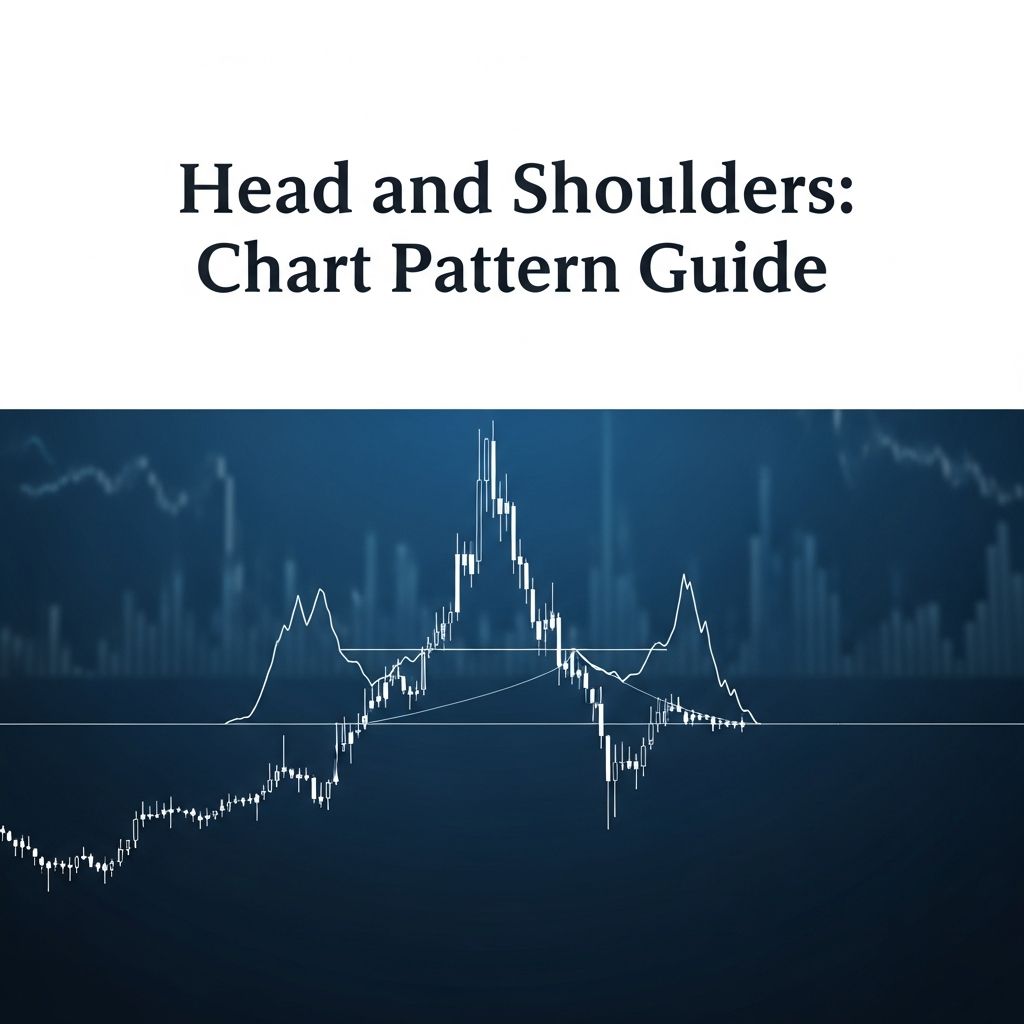
The head and shoulders pattern is a technical chart formation consisting of three distinct peaks: a left shoulder, a head, and a right shoulder, with a neckline connecting the valleys between them. This pattern represents a visual confirmation of a trend reversal, indicating that the dominant market direction is weakening and preparing to reverse course. The formation can appear in both uptrends and downtrends, with each variation offering unique trading opportunities and implications for price movement.
Formation Components
The pattern comprises several key elements that traders must understand:
- Left Shoulder: Formed at the end of an extensive bullish move with notably high trading volume, representing the last peak of the uptrend.
- Head: The highest point in the pattern, created when prices rally up from the valley between the left shoulder and head with normal to heavy volume.
- Right Shoulder: A peak that remains below the head’s level, formed with relatively lower volume than the head, indicating weakening momentum.
- Neckline: A line drawn connecting the valley bottoms between the shoulders and head, serving as a critical support or resistance level.
Head and Shoulders Top Formation
The head and shoulders top is the classic bearish reversal pattern that appears at the end of an uptrend. This formation signals that buying pressure is diminishing and sellers are gaining control of the market.
How the Top Formation Develops
The left shoulder forms during the tail end of a strong upward movement, characterized by elevated trading volume. After reaching its peak, the price retraces on lower volume, creating the first valley. The head then emerges as prices rally again, often with substantial volume, before declining to create the second valley. The right shoulder develops as prices attempt to rally once more but fail to reach the head’s level, showing weakening buying interest. This gradual loss of momentum across the three peaks visually demonstrates the struggle between bulls and bears, with bears increasingly gaining the upper hand.
Neckline Breakthrough
The true confirmation of a head and shoulders top occurs when prices break decisively below the neckline. This breakthrough represents a critical level breach and typically triggers accelerated selling. Some traders observe that prices may pull back to retest the neckline before resuming their decline, offering additional entry opportunities for those identifying the pattern early.
Head and Shoulders Bottom Formation
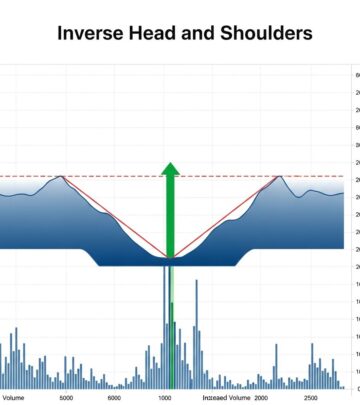
The head and shoulders bottom, also known as an inverted head and shoulders pattern, is the bullish counterpart that signals a reversal from a downtrend to an uptrend. This formation occurs when the market has exhausted selling pressure and is preparing for an upward move.
Inverted Pattern Characteristics
The inverted head and shoulders formation follows a similar structure to its top counterpart but with reversed positioning. Prices move down from the first valley with increasing volume to complete the left shoulder, then rise to create the first peak. A recovery move with higher volume establishes the head, forming the lowest point of the pattern. The right shoulder develops as prices decline again but fail to reach the head’s low, demonstrating that selling pressure is weakening. Finally, a sharp upward move on heavier volume breaks through the neckline, confirming the bullish reversal.
Duration Differences
An important distinction between top and bottom formations is their timeframe. Head and shoulders tops typically complete within several weeks, reflecting the quicker exhaustion of uptrend momentum. Conversely, bottom formations usually take considerably longer to develop, often spanning several months or even exceeding a year. This extended timeframe reflects the gradual accumulation process required to build sufficient buying pressure to reverse a downtrend.
Understanding the Neckline’s Critical Role
The neckline represents one of the most important elements of the head and shoulders pattern, serving as a crucial support or resistance level. The pattern cannot be considered complete unless this key level is decisively breached. The significance of the neckline breakthrough cannot be overstated, as it provides traders with a clear signal to enter or exit positions.
Breakthrough Characteristics
When a stock penetrates the neckline, the breakthrough may occur on significantly higher volume or more modest volume. However, traders should observe breakthroughs with particular care, as serious price declines can occur when the breakthrough exceeds three to four percent of the price level. On occasions where stocks drift through the neckline on minimal volume, a wave back up may occur, though such rallies typically fail to exceed the neckline’s general level before renewed selling pressure takes hold.
Pattern Characteristics and Variations
Real-world head and shoulders patterns rarely conform to textbook perfection. Understanding common variations helps traders identify patterns that may not initially appear obvious.
Common Deviations
- Tilted Neckline: The neckline may be ascending or descending rather than perfectly horizontal, depending on market momentum.
- Uneven Shoulders: One shoulder frequently appears broader than the other, resulting from varying timeframes in valley formation.
- Drooping Shoulders: Individual shoulders may appear to droop, creating an imperfect visual appearance while maintaining pattern validity.
- Ascending Neckline Requirement: When the neckline is ascending, the right shoulder’s lowest point must be noticeably lower than the left shoulder’s peak to qualify as a legitimate pattern.
Trading and Measuring Price Targets
Head and shoulders patterns provide valuable tools for estimating and measuring the minimum probable extent of subsequent price movements after pattern confirmation.
Calculation Method
To determine the price target after neckline penetration, traders employ a straightforward measurement technique. First, calculate the vertical distance from the head’s peak to the neckline. Then, measure the same distance downward from the neckline beginning at the point where prices break through after completing the right shoulder. This measurement provides the minimum objective for how far prices may decline following pattern completion. It’s important to note that if the price advance preceding the head and shoulders top is relatively brief, the subsequent decline may also be proportionally modest.
Complex Head and Shoulders Patterns
Advanced variations of the standard head and shoulders pattern involve multiple shoulders or heads, creating more complex formations that still follow the same underlying principles.
Multiple Head and Shoulders Variation
Complex head and shoulders patterns feature more than one left shoulder, head, or right shoulder. A notable variant is the Wyckoff distribution, typically consisting of a head flanked by two left shoulders and a weaker right shoulder. These complex patterns require careful analysis but often provide more reliable signals due to their extended consolidation periods and repeated tests of support and resistance levels.
Practical Trading Applications
Understanding head and shoulders patterns empowers traders to make more informed decisions about market entry and exit points. The pattern’s reliability has made it a staple in trading rooms and investment analysis departments worldwide.
Entry Strategies
Aggressive traders may initiate positions during the formation of the right shoulder or at the first signs of neckline penetration. Conservative traders typically wait for confirmed neckline breakdown with supporting volume before establishing positions. The choice between these approaches depends on individual risk tolerance and trading objectives.
Risk Management Considerations
Stop-loss orders are often placed above the right shoulder peak or slightly above the neckline, protecting against false breakdowns. This placement allows traders to remain in positions through minor pullbacks while limiting catastrophic losses if the pattern fails to deliver the anticipated reversal.
Distinguishing Head and Shoulders from False Signals
Not all three-peak formations constitute legitimate head and shoulders patterns. Traders must verify several conditions to confirm pattern validity.
Validation Criteria
Legitimate patterns display clear volume characteristics, with the head showing heavier volume than shoulders. The neckline must be identifiable and meaningful, connecting valleys that represent genuine support or resistance. Most importantly, a decisive breakthrough of the neckline with follow-through price action confirms the pattern’s validity. Without these confirmatory factors, what appears to be a head and shoulders formation may simply be random price fluctuation.
Frequently Asked Questions
Q: How reliable is the head and shoulders pattern for predicting price reversals?
A: The head and shoulders pattern is considered one of the most reliable reversal patterns in technical analysis when properly identified and confirmed with neckline breakthrough. However, no pattern is 100% reliable, and traders should combine this pattern with other technical indicators and risk management strategies.
Q: Can head and shoulders patterns appear on all timeframes?
A: Yes, head and shoulders patterns can form on intraday, daily, weekly, monthly, and yearly charts. Patterns on longer timeframes typically produce more significant price moves, while shorter timeframe patterns may offer more frequent trading opportunities.
Q: What volume characteristics should I expect in a valid head and shoulders pattern?
A: Generally, the left shoulder forms with high volume, the head develops with normal to heavy volume, and the right shoulder forms with diminishing volume. The neckline breakthrough should ideally occur on above-average volume to confirm pattern completion.
Q: How do I differentiate between a true head and shoulders pattern and a consolidation pattern?
A: True head and shoulders patterns show a clear three-peak structure with a defined neckline and volume divergence between peaks. Consolidation patterns typically show more uniform volume distribution and lack the distinctive shoulder-head-shoulder configuration.
Q: Can I trade head and shoulders patterns in crypto and forex markets?
A: Yes, head and shoulders patterns are effective across all liquid markets, including cryptocurrencies, forex, commodities, and equities. The pattern recognition principles remain consistent regardless of the underlying asset class.
References
- Head and shoulders (chart pattern) — Wikipedia. Accessed November 29, 2025. https://en.wikipedia.org/wiki/Head_and_shoulders_(chart_pattern)
- Technical Analysis of Stock Trends — Robert D. Edwards and John Magee. McGraw-Hill Education. Classic reference on chart pattern analysis and market reversals.
- A Random Walk Down Wall Street — Burton G. Malkiel. W.W. Norton & Company. 2023. Academic perspective on technical analysis and pattern recognition in financial markets.
Similar Articles








Read full bio of Sneha Tete