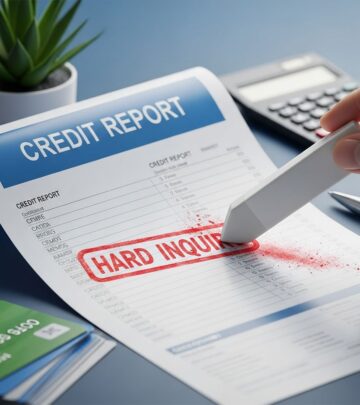
Hard Inquiries: When Too Many Hurt Your Credit
Discover how hard credit inquiries work, their impact on your score, and strategies to limit damage from multiple pulls.

Hard credit inquiries occur when lenders check your credit report during credit applications, potentially lowering your score temporarily.Typically, one inquiry drops your FICO score by fewer than five points, but multiple ones in a short time signal risk to lenders.
These checks help assess your creditworthiness but can compound if excessive. This guide explores their mechanics, effects, duration, differences from soft inquiries, safe limits, and mitigation strategies.
Defining Hard and Soft Credit Inquiries
Hard inquiries, or hard pulls, happen when you apply for credit like loans, cards, or mortgages. Lenders need your permission and review your full report, recording the inquiry.
Soft inquiries, or soft pulls, occur without applications—such as self-checks, pre-approvals, or employer background checks. They appear on reports but do not influence scores.
| Aspect | Hard Inquiry | Soft Inquiry |
|---|---|---|
| Affects Credit Score | Yes, temporarily | No |
| Triggered By | Credit applications | Pre-approvals, self-checks |
| Permission Required | Yes | No |
| Duration on Report | Up to 2 years | Up to 2 years |
Impact of Hard Inquiries on Your Credit Score
Hard inquiries factor into about 10% of FICO scores and 11% of VantageScores under ‘new credit’.A single pull usually subtracts under 5 points, fading within a year.
Your credit profile influences severity: strong histories see minimal drops, while thin files amplify effects. Multiple inquiries suggest desperation, worsening impacts.
- Isolated inquiry: Negligible, often <5 points.
- 2-3 in months: Minor cumulative drop.
- 6+: Up to 8x bankruptcy risk per stats; signals high risk.
Responsible habits like on-time payments (35% of FICO) outweigh inquiries long-term.
Duration: How Long Inquiries Linger
Hard inquiries remain visible on reports for two years, but scoring models like FICO consider only the last 12 months.
Lenders see all two-year inquiries, potentially viewing older ones as historical risk. Scores recover faster with good behavior.
Example: A 2024 inquiry affects 2025-2026 scores but lingers on reports until 2026.
Rate Shopping: Minimizing Multiple Inquiry Damage
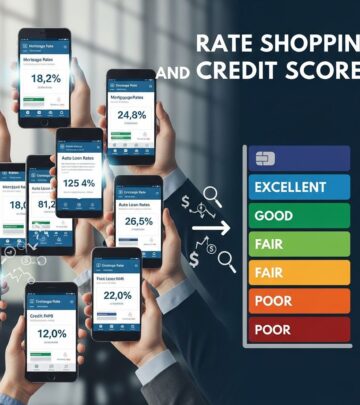
Applying for similar credit (e.g., mortgages, autos) within 14-45 days counts as one inquiry in many models. FICO groups them to encourage shopping without penalty.
- Mortgages: 45-day window.
- Auto loans: 14-45 days.
- Credit cards: No grouping; each separate.
Plan applications strategically within windows to consolidate pulls.
Recognizing Too Many Hard Inquiries
No universal ‘too many’ threshold exists, but guidelines emerge:1-2 occasionally fine; 3+ in months concerning.
Lenders flag patterns: 6+ inquiries correlate with higher default risk. Thin files (< few accounts) amplify damage.
| Time Frame | Safe Range | Risky Range |
|---|---|---|
| Short-term (weeks) | 0-1 | 3+ |
| 12 months | 0-3 | 5+ |
| 24 months | Under 6 | 6+ |
Context matters: Job changes or moves may justify more, but explain in applications.
Strategies to Limit Hard Inquiries
Preserve your score proactively:
- Pre-qualify first: Use soft-pull tools for eligibility without hard checks.
- Space applications: Wait months between non-related pulls.
- Improve existing credit: Increase limits or pay down debt first.
- Monitor reports: Free weekly via AnnualCreditReport.com; dispute errors.
- Avoid promotional apps: Decline unnecessary offers.
Tools like simulators predict impacts pre-application.
Recovering from Multiple Hard Inquiries
Drops are temporary; rebound via:
- Timely payments.
- Low utilization (<30%).
- Retain old accounts for history.
Scores often normalize in months. Avoid further pulls during recovery.
Common Myths About Credit Inquiries
- Myth: All inquiries equally harm. Fact: Rate-shopping merges them.
- Myth: Soft pulls are invisible. Fact: Visible but score-neutral.
- Myth: Inquiries permanent. Fact: Drop after 2 years.
Frequently Asked Questions
What causes a hard inquiry?
Applications for credit, leases, or some utilities where credit is extended.
Do hard inquiries affect all scores?
Yes, FICO and VantageScore include them, though weights vary.
Can I remove unwanted inquiries?
Dispute unauthorized ones via bureaus; authorized ones stay 2 years.
How many inquiries are okay yearly?
Under 3-5 ideal; depends on profile.
Do inquiries matter for rentals?
Yes, landlords often hard-pull, impacting scores.
Long-Term Credit Health Tips
Beyond inquiries, focus on payment history, utilization, mix, and age. Regular monitoring prevents surprises.
Inquiries are minor (10%) but avoidable. Strategic applications maintain prime scores (740+).
References
- What Is a Hard Inquiry and How Does It Affect Credit? — Experian. 2023. https://www.experian.com/blogs/ask-experian/what-is-a-hard-inquiry/
- How Long Do Hard Inquiries Stay on Your Credit Report? — Capital One. 2024. https://www.capitalone.com/learn-grow/money-management/how-long-do-hard-inquiries-stay-on-credit-report/
- What Is a Soft Credit Check? Soft Pull vs. Hard Pull — Credit Karma. 2024. https://www.creditkarma.com/credit/i/hard-credit-inquiries-and-soft-credit-inquiries
- How Credit Inquiries Affect Your Credit Score — Bankrate. 2024. https://www.bankrate.com/credit-cards/advice/how-credit-inquiries-affect-credit-score/
- Understanding Hard Inquiries on Your Credit Report — Equifax. 2023. https://www.equifax.com/personal/education/credit/report/articles/-/learn/understanding-hard-inquiries-on-your-credit-report/
- Credit inquiries: what you should know about hard and soft pulls — SBA.gov. 2023. https://www.sba.gov/blog/credit-inquiries-what-you-should-know-about-hard-soft-pulls
- Do Credit Inquiries Lower Your FICO Score? — myFICO. 2024. https://www.myfico.com/credit-education/credit-reports/does-checking-credit-score-lower-it
Similar Articles








Read full bio of medha deb