Handwritten Cover Letters: When & How to Use Them
Master the art of handwritten cover letters and stand out in your job search.
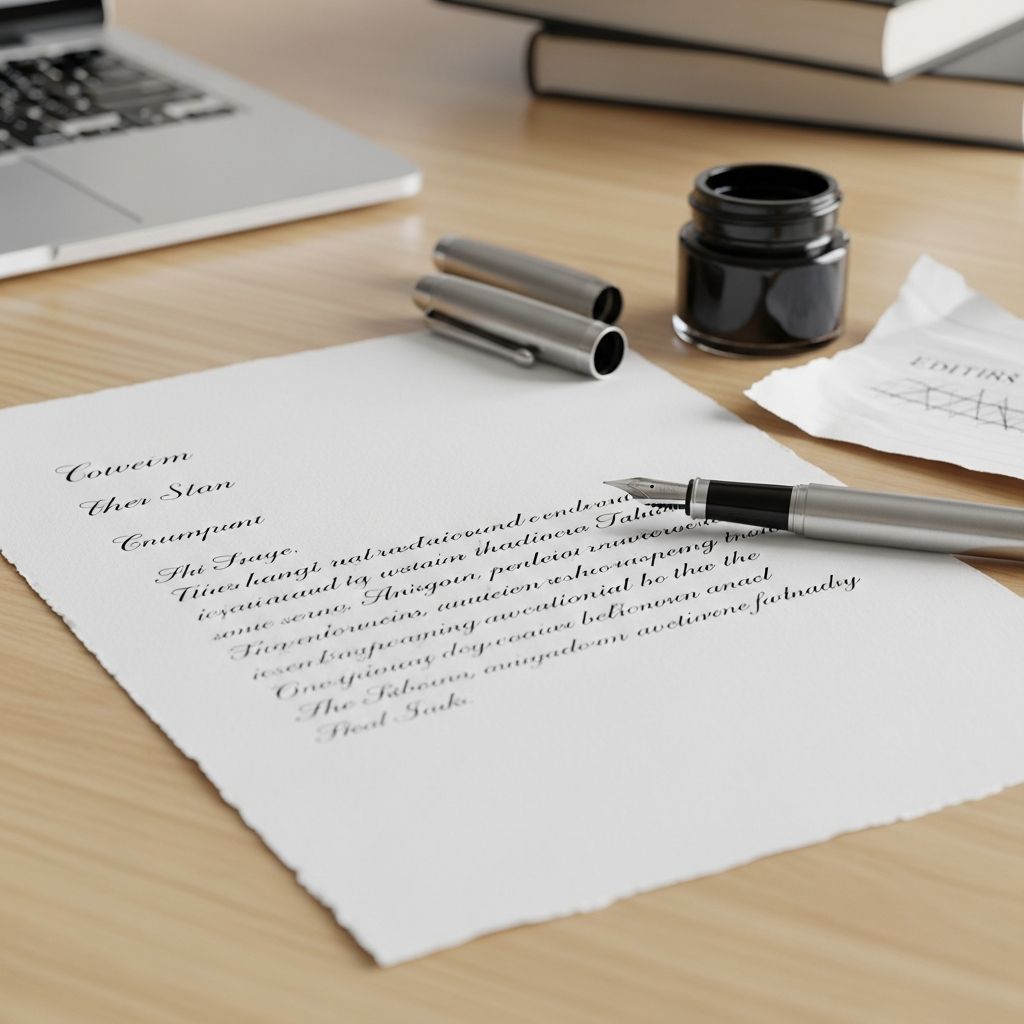
In today’s digital-first job market, handwritten cover letters might seem outdated. However, they continue to offer a unique advantage in certain industries and professional situations. A well-executed handwritten cover letter can demonstrate attention to detail, personal investment in your application, and genuine interest in the position. While typed cover letters remain the standard in most hiring processes, knowing when and how to write a handwritten one can set you apart from other candidates, particularly in creative fields, traditional industries, or positions that value craftsmanship and personal touch.
When Should You Submit a Handwritten Cover Letter?
The decision to submit a handwritten cover letter depends on several factors related to the job posting, industry, and company culture. Understanding these factors helps you make the right choice for your specific situation.
Industry Considerations: Creative industries such as graphic design, fine arts, interior design, and marketing often appreciate handwritten cover letters as they demonstrate artistic sensibility and attention to aesthetic detail. Similarly, traditional or heritage-focused organizations, such as law firms, academic institutions, or established family businesses, may view handwritten correspondence favorably as a sign of professionalism and respect for convention.
Explicit Instructions: If the job posting specifically requests a handwritten cover letter, you should absolutely comply with this requirement. Following application instructions precisely demonstrates your ability to follow directions and pay attention to details—both critical workplace skills.
Your Professional Judgment: If the posting doesn’t explicitly require a handwritten letter but also doesn’t forbid it, you might choose this format if you believe it will help you stand out. Consider the company’s values, the specific role, and whether personalization aligns with the company culture. When in doubt, opt for a typed letter delivered via email or the application portal, as this remains the standard expectation in most modern hiring processes.
Step-by-Step Guide to Writing a Handwritten Cover Letter
Creating a compelling handwritten cover letter requires careful planning and execution. Follow these essential steps to ensure your letter makes a positive impression.
Step 1: Choose the Right Materials
Your choice of materials sets the tone for your entire application. Select high-quality, clean letterhead or professional stationery in white or cream colors. Avoid ornate designs, bright colors, or novelty papers that might distract from your message. For writing instruments, choose a pen with smooth ink flow—either a quality ballpoint pen or a fountain pen if you prefer that style. Blue or black ink is appropriate; avoid colored inks as they appear unprofessional. Take time to test your pen on scrap paper first to ensure it writes smoothly without skipping, bleeding through, or creating inconsistent lines.
Step 2: Create a Rough Draft
Before committing pen to your final paper, write your cover letter digitally or by hand on separate sheets. This approach allows you to refine your message, organize your thoughts, and identify any areas that need improvement before you produce the final version. Review your draft for clarity, conciseness, and professional tone. Make sure your arguments flow logically and that each paragraph serves a clear purpose. This preparation significantly reduces the risk of mistakes on your final letter.
Step 3: Follow Professional Formatting
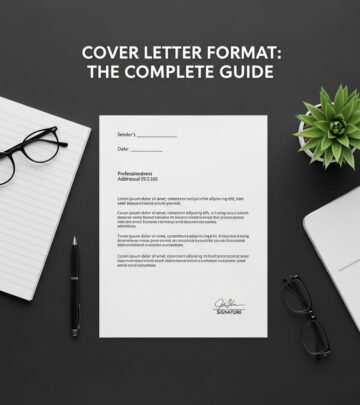
Your handwritten cover letter should follow the same structural format as a typed version. Include your contact information at the top (name, phone number, email, and address). Add the date on the next line. Then include the recipient’s details: their name, title, company name, and company address. If you don’t know the recipient’s name, research the company or use “Dear Hiring Manager” or “Dear [Company Name] Hiring Team.” Include a clear salutation such as “Dear [Name],” followed by your letter body organized into three to four focused paragraphs, and close with “Sincerely,” followed by your handwritten signature and typed or printed name.
Step 4: Write Clearly and Neatly
Legibility is paramount when handwriting a cover letter. Write slowly and deliberately, maintaining consistent letter size and spacing throughout the document. Ensure adequate margins on all sides—typically one inch on top, bottom, and sides. Keep your handwriting consistent in style and slant. Avoid extreme flourishes or overly decorative elements that might compromise readability. Remember that the reader needs to focus on your qualifications, not struggle to decipher your writing. If your natural handwriting is difficult to read, consider printing in capital letters or using a very deliberate, clean print style.
Step 5: Customize for the Specific Role
Generic cover letters fail to capture attention regardless of format. Research the company thoroughly and reference specific details that demonstrate your genuine interest. Mention particular projects the company has completed, values they promote, or challenges they face in the industry. Connect your skills and experiences directly to the job requirements. If the position emphasizes creativity, share a relevant example from your portfolio or past work. If the role requires analytical skills, describe a quantifiable achievement that demonstrates your ability in this area. This customization shows that you’ve invested time in understanding both the company and the role.
Step 6: Proofread Meticulously
Before finalizing your letter, review it multiple times for spelling, grammar, and punctuation errors. Any mistakes in a handwritten letter are immediately visible and cannot be easily corrected, making errors particularly damaging to your professional image. Read your letter aloud to catch awkward phrasing or unclear passages. Consider asking a trusted friend, mentor, or colleague to review it with fresh eyes. Check that dates are correct, names are spelled accurately, and all information is current and relevant.
Structural Components of Your Handwritten Cover Letter
Understanding the key components of your cover letter helps you create a cohesive, persuasive document that effectively communicates your qualifications and interest.
Opening Paragraph
Your opening should immediately capture attention and establish relevance. State the specific position you’re applying for and where you learned about the opportunity. Then share one compelling reason why you’re interested in this particular role and company. This paragraph should convey enthusiasm and genuine interest while remaining professional. Conclude by briefly mentioning a key qualification that makes you a strong candidate. The opening typically spans three to five sentences and should encourage the reader to continue.
Body Paragraphs
The body of your letter elaborates on your qualifications and how they align with the position’s requirements. Use one or two paragraphs to highlight relevant skills, experiences, and achievements. Provide concrete examples that demonstrate your abilities rather than making general claims. For instance, instead of saying “I have strong communication skills,” describe how you coordinated a successful team project that required clear communication. Connect your experience directly to the employer’s needs, showing that you understand what they’re looking for in a candidate.
Closing Paragraph
Your closing should reiterate your interest in the position and express enthusiasm about the opportunity to contribute to the organization. Thank the reader for considering your application and indicate your openness to discussing how your qualifications meet their needs. Provide a clear call to action, such as “I look forward to speaking with you about this opportunity” or “Please feel free to contact me at [phone number] to discuss my qualifications further.” Keep the closing concise and professional.
Essential Tips for Handwritten Cover Letter Success
Keep It Concise
Handwritten letters should typically be no longer than one full page. Hiring managers and recruiters appreciate brevity and clarity. Long, dense paragraphs appear overwhelming and suggest you haven’t carefully considered what information is most important. Aim for three well-developed paragraphs that convey your key qualifications and interest in the role.
Maintain Professional Tone
A handwritten letter calls for formal language and professional tone. Avoid overly casual expressions, slang, or colloquialisms. While your personality should subtly shine through your word choices, the overall impression should be respectful and serious. Use active voice and strong action verbs to emphasize your accomplishments and capabilities. For example, “I coordinated a cross-functional team to develop a new marketing strategy” is more powerful than “I worked with others on a marketing strategy.”
Ensure Consistent Spacing and Layout
Visual presentation matters significantly in a handwritten letter. Maintain consistent spacing between lines and equal margins throughout. Avoid crowding text or leaving excessive white space that makes the letter appear incomplete or poorly planned. Your goal is a balanced, organized appearance that demonstrates professionalism and attention to detail.
Use Appropriate Vocabulary
Select language that reflects the professional level and culture of your target industry. Use industry-specific terminology when relevant, but avoid technical jargon that a hiring manager from a different department might not understand. Balance sophistication with clarity—your letter should impress through thoughtful word choice and clear communication, not vocabulary that obscures meaning.
Handwritten Cover Letter Examples
Example 1: Creative Industry Position
Dear [Hiring Manager],
I am writing to express my strong interest in the Graphic Designer position at [Company Name]. As a creative professional with five years of experience in digital and print design, I was particularly drawn to your company’s innovative approach to visual storytelling. Your recent rebrand campaign exemplifies the forward-thinking creativity I aspire to contribute to a dynamic team. My portfolio demonstrates proficiency in Adobe Creative Suite, responsive web design, and brand development, and I am excited about the opportunity to bring these skills to your organization.
Thank you for considering my application. I would welcome the opportunity to discuss how my design background and creative vision align with your team’s goals.
Sincerely,
[Your Name]
Example 2: Professional Services Role
Dear [Hiring Manager],
I am interested in the Project Manager position at [Company Name]. With my background in coordinating complex initiatives and leading cross-functional teams, I am confident in my ability to drive successful project outcomes for your organization. At my current position, I have managed multiple concurrent projects with budgets exceeding $500,000, consistently delivering on schedule and within budget while maintaining strong stakeholder relationships. I am particularly drawn to your company’s commitment to operational excellence and innovative project management methodologies.
I appreciate your consideration and look forward to discussing how my project management expertise can contribute to your team’s continued success.
Sincerely,
[Your Name]
Example 3: Academic or Traditional Environment
Dear [Recipient Name],
I am writing to express my sincere interest in the Administrative Coordinator position at [Institution Name]. Your institution’s reputation for academic excellence and commitment to student success resonates deeply with my professional values. With eight years of experience in higher education administration, I have developed strong organizational and communication skills that have proven instrumental in supporting faculty and enhancing institutional operations. I am impressed by your institution’s recent initiatives in student support services and am eager to contribute to these efforts.
Thank you for your consideration. I would welcome the opportunity to discuss how my administrative expertise and passion for the academic mission can benefit your team.
Sincerely,
[Your Name]
Handwritten vs. Typed Cover Letters: A Comparison
| Aspect | Handwritten Cover Letter | Typed Cover Letter |
|---|---|---|
| Formality Level | Very formal; demonstrates respect and effort | Professional standard in modern hiring |
| Best Used For | Creative industries, traditional organizations, when specifically requested | Most corporate and digital-forward companies |
| Legibility | Highly dependent on handwriting quality | Consistent and universally readable |
| Customization | Can demonstrate personal touch and attention | Can be easily tailored and duplicated |
| Distribution Method | Physical mail; requires proper postage and timing | Email or online portal; instantaneous delivery |
| Correction Ease | Mistakes are permanent and visible | Easy to revise before sending |
| Industry Relevance | Valued in design, arts, law, and academia | Expected in tech, finance, and most modern fields |
Frequently Asked Questions
Q: Should I always handwrite my cover letter?
A: No. Handwritten cover letters should only be submitted when specifically requested or when applying to creative industries or traditional organizations where such formality is appreciated. For most modern companies and digital-forward industries, typed cover letters delivered via email or application portals are the standard expectation.
Q: What if my handwriting is not very neat?
A: If your natural handwriting is difficult to read, consider using a deliberate, clean print style instead of cursive. Alternatively, print your letter in neat capital letters. Legibility is more important than elaborate penmanship. If you cannot achieve sufficient legibility through handwriting, submit a typed letter instead.
Q: Can I use pencil for a handwritten cover letter?
A: No. Always use ink—either blue or black. Pencil appears unprofessional and can smudge easily. A quality pen demonstrates care and professionalism appropriate for a formal application document.
Q: How long should a handwritten cover letter be?
A: A handwritten cover letter should fit on one page. Aim for three to four well-developed paragraphs rather than dense blocks of text. This length demonstrates that you’ve carefully selected the most important information while respecting the reader’s time.
Q: Should I use fancy stationery for my handwritten cover letter?
A: Use professional, quality stationery in white or cream. Avoid decorative borders, watermarks, or ornate designs that might distract from your message. Simple, clean, professional stationery demonstrates good judgment and professionalism.
Q: How should I mail my handwritten cover letter?
A: Mail your handwritten cover letter in a professional business envelope, typed or neatly handwritten with the recipient’s address. Use appropriate postage and consider sending it early enough to ensure timely arrival. Include your return address on both the envelope and the back flap.
Q: What if I make a mistake on my handwritten cover letter?
A: Mistakes in a handwritten letter are permanent and visible. Start over rather than attempting corrections with white-out or strikethroughs. This is why creating a rough draft beforehand is so important—it minimizes the risk of errors on your final letter.
Q: Can I include a handwritten signature on a typed cover letter?
A: Yes. For printed cover letters, a handwritten signature at the end adds a personal touch. Scan and insert an image of your signature, or print the letter and add your signature by hand before mailing. This demonstrates effort and personalization while maintaining the professional appearance of a typed document.
Final Thoughts on Handwritten Cover Letters
Handwritten cover letters remain a sophisticated option in today’s job market, particularly for specific industries and situations. They communicate attention to detail, genuine interest, and respect for professional traditions. However, they are not appropriate for every job application. Understanding when to use a handwritten letter versus sticking with the standard typed format demonstrates professional judgment—a quality all employers value. If you choose to submit a handwritten cover letter, invest the time to do it correctly. Quality materials, careful planning, clear handwriting, and meticulous proofreading all contribute to an application document that stands out positively and helps you move closer to securing your desired role.
References
- How to Write a Handwritten Cover Letter (Examples Included!) — The Muse. 2025. https://www.themuse.com/advice/handwritten-cover-letter
- Write a Compelling Cover Letter — Rotman Commerce, University of Toronto. 2020. https://rotmancommerce.utoronto.ca
- How Long Should A Cover Letter Be In 2025? — HerMoney. 2025. https://hermoney.com/earn/job-hunting/the-new-rules-for-cover-letters-in-2023/
Similar Articles








Read full bio of Sneha Tete