REIT Investing: 8 Types And How To Choose Strong REITs
Unlock real estate wealth without owning property: Master REIT investing strategies for beginners and pros alike.
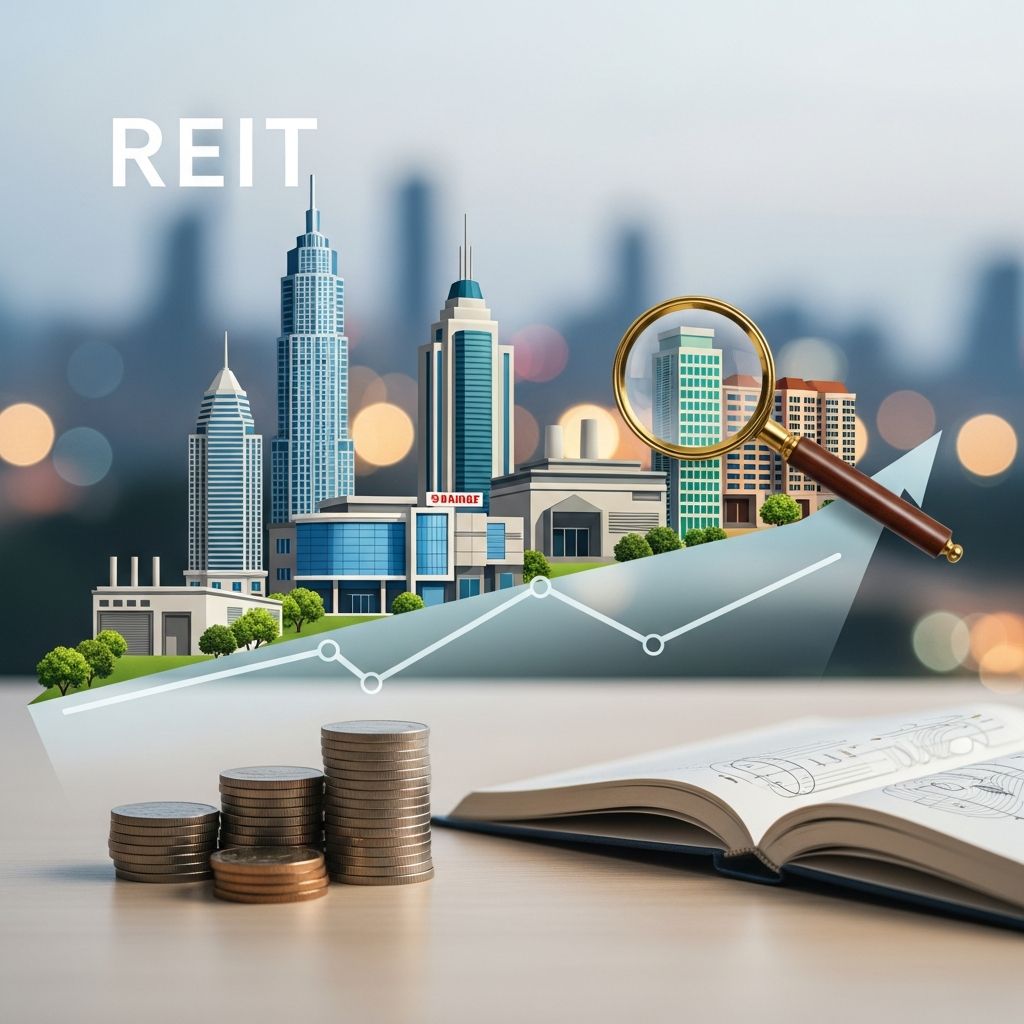
Guide to REIT Investing
Real estate investment trusts, known as REITs, enable individuals to invest in income-generating properties without the burdens of direct ownership. These entities pool investor funds to acquire, manage, or finance real estate, distributing profits primarily as dividends. This approach democratizes access to commercial real estate sectors like offices, retail spaces, and healthcare facilities, offering liquidity and potential for steady returns.
Understanding the Fundamentals of REITs
At their core, REITs function as companies that specialize in real estate assets. Unlike traditional real estate purchases, which demand significant capital and ongoing management, REIT shares trade on stock exchanges similar to common stocks. This structure allows investors to gain exposure to property appreciation and rental income streams through a simple brokerage transaction.
To qualify as a REIT under U.S. regulations, a company must adhere to strict Internal Revenue Service (IRS) criteria. Key requirements include investing at least 75% of assets in real estate-related holdings, deriving 75% of gross income from rents, mortgages, or property sales, and distributing no less than 90% of taxable income to shareholders annually. Additionally, a REIT needs at least 100 shareholders, with no five or fewer individuals holding more than 50% of shares.
These mandates ensure REITs prioritize shareholder payouts, making them attractive for income-focused portfolios. Over 87 million Americans hold REIT shares, underscoring their popularity as a gateway to real estate.
Exploring the Diverse Types of REITs
REITs vary by their investment focus and trading status, allowing investors to tailor choices to risk tolerance and goals. Broadly, they split into equity and mortgage categories, with further subdivisions by property type and liquidity.
Equity REITs: Ownership in Physical Properties
Equity REITs own and operate revenue-generating real estate, collecting rents from tenants and passing most proceeds to investors. These dominate the sector, often specializing in niches:
- Office REITs: Manage commercial buildings, from urban skyscrapers to suburban complexes leased to corporations or government entities.
- Retail REITs: Hold shopping centers, malls, and strip plazas anchored by major retailers.
- Residential REITs: Invest in apartments, student housing, and manufactured home communities.
- Healthcare REITs: Focus on medical facilities, senior living centers, and hospitals.
- Hotels and Resorts REITs: Own hospitality properties catering to leisure and business travelers.
- Industrial REITs: Warehouse and logistics centers supporting e-commerce and manufacturing.
- Data Centers and Infrastructure REITs: High-demand assets like cell towers and server farms.
- Diversified REITs: Portfolios blending multiple property types for broader exposure.
Equity REITs thrive on occupancy rates and rent growth, reflecting economic cycles.
Mortgage REITs: Financing Real Estate
Unlike equity peers, mortgage REITs (mREITs) provide loans secured by real estate or invest in mortgage-backed securities. Their income derives from interest payments rather than rents, making them sensitive to interest rate fluctuations. While offering higher yields, they carry elevated volatility.
Publicly Traded, Non-Traded, and Private REITs
- Publicly Traded REITs: Listed on exchanges like the NYSE, providing high liquidity and daily pricing.
- Non-Traded REITs: SEC-registered but not exchange-listed; available via brokers, with lower volatility but reduced liquidity.
- Private REITs: Unregistered and restricted to institutional or accredited investors, prone to higher fees and fraud risks.
Public versions suit most retail investors due to transparency and ease of access.
Key Advantages of Investing in REITs
REITs shine for diversification and income generation. They offer portfolio ballast against stock market downturns, as real estate often moves independently. High dividend yields—frequently exceeding bonds or S&P 500 averages—stem from the 90% payout rule, providing reliable cash flow for retirees or income seekers.
Liquidity sets REITs apart from direct property; sell shares anytime markets operate, unlike waiting months for a home sale. Low entry barriers mean starting with minimal capital via online brokers. Professional management handles tenant issues, maintenance, and leasing, freeing investors from operational hassles.
Historically, REITs deliver total returns blending dividends and appreciation, enhancing long-term wealth building. They also provide inflation hedges, as rents and property values rise with prices.
Potential Drawbacks and Risks
Despite merits, REITs expose investors to real estate cycles. Economic slowdowns slash occupancy and rents, eroding dividends. Interest rate hikes burden mortgage REITs directly and equity ones indirectly via higher borrowing costs.
Limited control frustrates hands-on investors; fund managers dictate property choices. Non-traded and private REITs impose steep fees—up to 11% upfront and 2% annually—eroding returns. Dividends face ordinary income taxes, unlike qualified stock dividends.
Market volatility affects publicly traded REITs, mirroring stocks during panics. Sector-specific risks, like remote work hitting offices or e-commerce challenging malls, demand careful selection.
Strategies for Selecting Strong REITs
Evaluate REITs using metrics like funds from operations (FFO), a cash flow gauge superior to net income due to depreciation quirks. Aim for FFO growth, low debt ratios (under 40% of assets), and payout ratios below 80% for sustainability.
Review occupancy rates above 90%, tenant quality (investment-grade preferred), and geographic diversification. Analyze balance sheets for liquidity and development pipelines. Tools like Nareit indices track performance across sectors.
| Metric | Ideal Range | Why It Matters |
|---|---|---|
| FFO Growth | 5-10% YoY | Signals operational health |
| Debt-to-Assets | <40% | Reduces bankruptcy risk |
| Payout Ratio | <80% | Ensures dividend sustainability |
| Occupancy Rate | >90% | Indicates demand strength |
Step-by-Step: How to Start Investing in REITs
Begin with a brokerage account at firms like Schwab or Fidelity, often commission-free for REIT trades.
- Research and Select: Use screeners for high-yield, low-debt REITs matching your sectors.
- Consider Vehicles: Buy individual shares, REIT ETFs (e.g., VNQ), or mutual funds for instant diversification.
- Tax Optimize: Hold in Roth IRAs to shelter dividends.
- Monitor and Rebalance: Track quarterly earnings; allocate 5-15% of portfolio to REITs.
Platforms like Fundrise offer eREITs for private market access starting at $10, blending liquidity with higher yields.
Building a Balanced REIT Portfolio
Diversify across 8-12 REITs or use ETFs spanning equity types. Balance growth (industrial/data centers) with income (retail/healthcare). Sector rotation—favoring logistics amid e-commerce—optimizes returns. Pair with bonds for stability.
Tax Implications and Efficiency Tips
REIT dividends qualify partially for lower rates, but most are ordinary income. Depreciation creates non-cash deductions, potentially leading to return-of-capital distributions lowering cost basis. Use tax-deferred accounts to minimize bites. Track via Form 1099-DIV.
Current Trends Shaping REIT Markets
As of 2026, data centers and renewable energy infrastructure REITs surge with AI and green transitions. Healthcare rebounds post-pandemic, while offices adapt to hybrid work. Rising rates pressure yields, but quality operators thrive.
Frequently Asked Questions (FAQs)
What is the minimum investment for REITs?
Public REITs require only the share price, often under $100. Some platforms like Fundrise start at $10.
Are REITs safe investments?
They offer diversification but face market and sector risks. Not FDIC-insured; diversify wisely.
How often do REITs pay dividends?
Typically quarterly, providing steady income.
Can I lose money in REITs?
Yes, due to price drops from economic shifts or rising rates.
Do REITs outperform stocks?
Historically competitive total returns, excelling in income.
References
- Real estate investment trust: what new investors need to know — Investment News. 2024. https://www.investmentnews.com/guides/real-estate-investment-trust-what-new-investors-need-to-know/259226
- Understanding REITs: A Beginner’s Guide to Real Estate Investing — SRH Funds. 2023. https://srhfunds.com/understanding-reits-a-beginners-guide-to-real-estate-investing-2/
- REITs 101: A Beginner’s Guide to Real Estate Investment Trusts — Fundrise. 2024. https://fundrise.com/education/reits-101-a-beginners-guide-to-real-estate-investment-trusts
- Best-Performing REITs for February 2026 and How to Invest — NerdWallet. 2026-02. https://www.nerdwallet.com/investing/learn/reit-investing
- Learn the Basics of REITS & REIT Investing — Nareit. 2025. https://www.reit.com/what-reit/reit-basics
- REITs Basics — Charles Schwab. 2024. https://www.schwab.com/learn/story/reits-basics
Similar Articles





Read full bio of medha deb