Guide To Purchasing ETFs: Step-By-Step For Beginners 2025
Master the essentials of buying exchange-traded funds with this comprehensive beginner's roadmap to building a diversified portfolio.
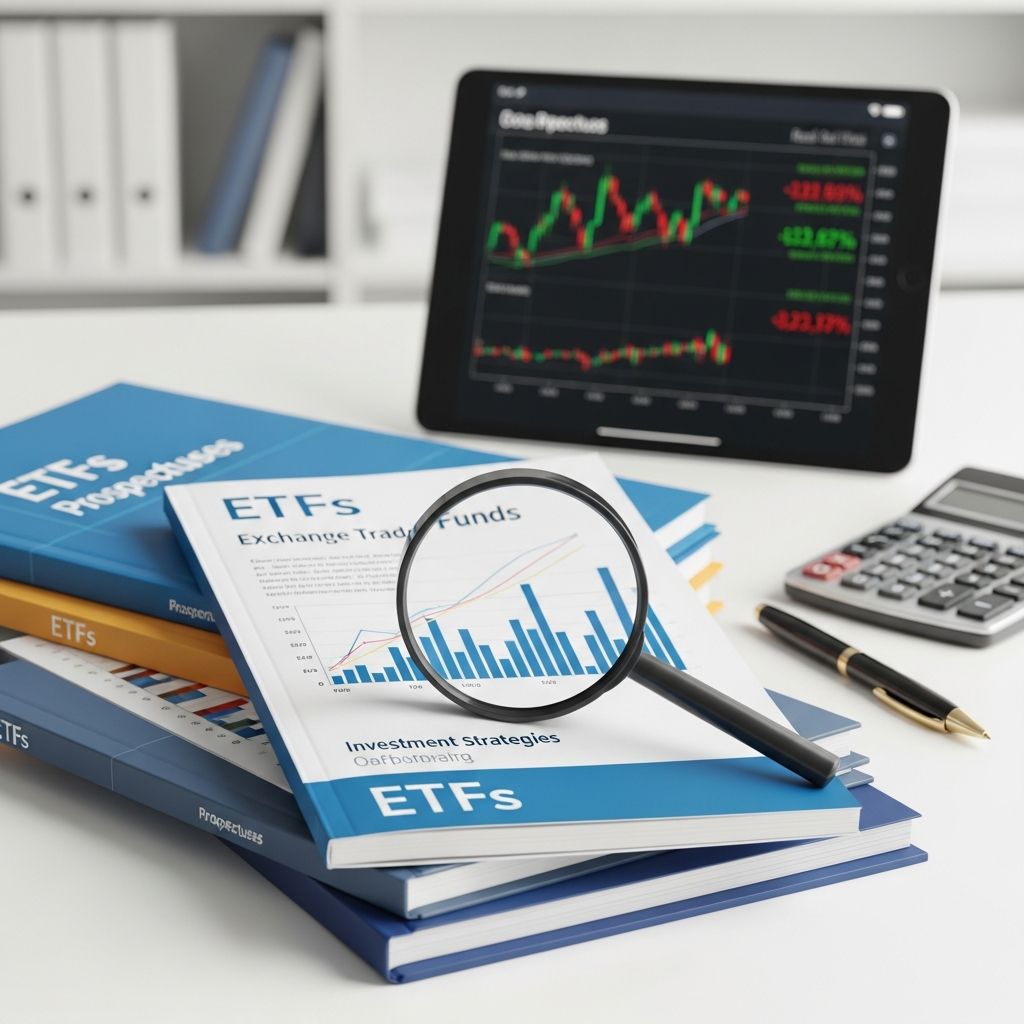
Exchange-traded funds (ETFs) offer investors a straightforward way to gain broad market exposure at low costs. These funds trade like stocks on exchanges, allowing purchases through standard brokerage platforms. This guide outlines the complete process for beginners, emphasizing diversification, cost efficiency, and risk management.
Understanding ETFs and Their Appeal
ETFs pool investor money to track indexes, sectors, or commodities, providing instant diversification. Unlike mutual funds, they trade throughout the day, offering flexibility. Key advantages include low expense ratios, liquidity, and tax efficiency, making them ideal for long-term wealth building.
- Low costs: Average expense ratios under 0.20% annually.
- Diversification: Exposure to hundreds or thousands of assets in one trade.
- Accessibility: No minimum investment requirements at many brokers.
For novices, starting with broad-market ETFs like those tracking the S&P 500 or MSCI World reduces risk compared to individual stocks.
Assessing Your Investment Readiness
Before buying ETFs, evaluate your financial situation. Define goals such as retirement savings or emergency funds, then determine your risk tolerance and timeline. Conservative investors may prefer bond ETFs, while aggressive ones opt for equity funds.
| Goal | Recommended ETF Type | Risk Level |
|---|---|---|
| Short-term savings | Bond or money market | Low |
| Retirement (10+ years) | Global equity | Medium-High |
| Growth portfolio | Sector or thematic | High |
Set a budget based on disposable income. Aim to invest consistently via lump sums or dollar-cost averaging to mitigate market timing risks.
Selecting the Right Brokerage Platform
Choose a broker with commission-free ETF trades, robust research tools, and user-friendly interfaces. Online brokers like those offering mobile apps simplify the process. Compare features such as account minimums (often $0), ETF screeners, and savings plan options.
- Verify regulatory compliance (e.g., SEC-registered in the US).
- Check for fractional shares to invest small amounts.
- Look for educational resources and 24/7 support.
Opening an account involves providing personal details, ID verification, and linking a bank for transfers. This typically takes minutes online, with approval in 1-3 days.
Researching and Picking ETFs
Use broker screeners to filter ETFs by index, expense ratio, assets under management (AUM), and performance. Prioritize funds with high liquidity (bid-ask spreads under 0.10%) and low costs. For beginners, one global ETF suffices for worldwide exposure.
Key metrics to evaluate:
- Expense ratio: Under 0.15% for broad indexes.
- Tracking error: Minimal deviation from the benchmark.
- AUM: Over $1 billion for stability.
- Accumulating vs. Distributing: Reinvest dividends (accumulating) for compounding or receive payouts.
Popular starter options include S&P 500 trackers for US focus or MSCI World for global reach, covering 80% of investor preferences.
Funding Your Account and Placing Orders
Transfer funds via ACH (free, 1-3 days) or wire (faster, fee may apply). Once funded, search by ticker or ISIN code. Decide on shares, order type, and price limits.
| Order Type | Description | Use Case |
|---|---|---|
| Market | Executes immediately at current price | Liquid ETFs during market hours |
| Limit | Buys only at or below specified price | Price control in volatile markets |
| Stop-Limit | Triggers at stop price, limits execution | Advanced risk management |
Confirm and submit. Trades settle in T+1 (next business day).
Building and Managing Your Portfolio
Start simple: 60-80% equities, 20-40% bonds, rebalanced annually. Use tools like portfolio builders to suggest allocations based on risk and investment size.
- Rebalance yearly to maintain targets.
- Monitor via apps for performance and dividends.
- Avoid frequent trading to minimize taxes and fees.
Dollar-cost averaging—investing fixed amounts regularly—counters volatility.
Common Pitfalls and Risk Mitigation
Avoid chasing past performance or ignoring fees. Market downturns are normal; focus on long-term horizons (5+ years). Diversify across regions and asset classes to weather economic shifts.
- Don’t invest money needed soon.
- Understand leverage or inverse ETFs’ higher risks.
- Review tax implications of distributions.
Advanced Strategies for Growth
Once comfortable, explore sector ETFs (tech, healthcare) or thematic ones (ESG, AI). Combine with savings plans for automated investing. Scale up as knowledge grows.
Frequently Asked Questions
What is the minimum to start buying ETFs?
Many brokers require $0-$25, enabling micro-investments.
Are ETFs safer than stocks?
Yes, due to diversification, but all investments carry market risk.
How often should I check my ETFs?
Quarterly reviews suffice; avoid daily monitoring to prevent emotional decisions.
Can I buy ETFs outside the US?
Yes, via international brokers tracking global indexes.
What if markets drop after I buy?
Hold long-term; historical data shows recovery over decades.
References
- ETFs for beginners – justETF — justETF. 2023. https://www.justetf.com/en/academy/etf-for-beginners.html
- Investing in ETFs: A Beginner’s Guide – N26 — N26. 2024. https://n26.com/en-eu/investing-in-etfs
- The Best ETFs Right Now and How to Start Investing – NerdWallet — NerdWallet. 2026-01. https://www.nerdwallet.com/investing/learn/how-to-invest-in-etf-exchange-traded-fund
- How to Choose an ETF – Guide to ETF Investing | Charles Schwab — Charles Schwab. 2024. https://www.schwab.com/etfs/tools
- Learn about ETFs | ETFs 101, trading, types, and strategies | Fidelity — Fidelity. 2025. https://www.fidelity.com/learning-center/investment-products/etf/etfs
- Beginner’s Guide to ETFs: What ETFs Are & How They Work | Ally — Ally. 2024. https://www.ally.com/stories/invest/etfs-for-beginners/
- Investing in ETFs for beginners | iShares – BlackRock — iShares (BlackRock). 2025. https://www.ishares.com/uk/individual/en/investing-basics/what-is-an-etf
Similar Articles








Read full bio of Sneha Tete