Guide to Foreign Transaction Fees While Traveling
Understand foreign transaction fees and learn strategies to minimize costs while traveling internationally.
Understanding Foreign Transaction Fees: A Complete Traveler’s Guide
When you travel internationally or make purchases from foreign merchants online, you may encounter foreign transaction fees that can significantly impact your travel budget. These fees are charges imposed by your credit card issuer or bank when you conduct transactions outside the United States. Understanding how these fees work and learning strategies to minimize them can help you save substantial amounts during your travels.
What Are Foreign Transaction Fees?
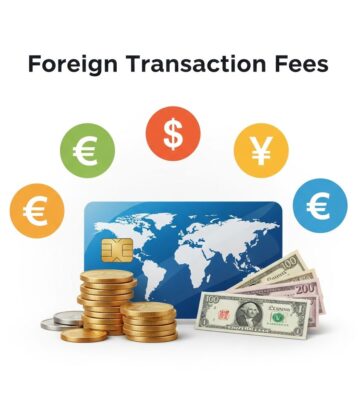
A foreign transaction fee is a surcharge applied to purchases made in a foreign country or with international merchants through online platforms. Not all credit cards charge these fees, but those that do typically add 1 to 3 percent to each transaction amount. These charges accumulate quickly during international travel and may push you over budget if you haven’t planned for them.
For example, if you charge a $1,000 hotel stay in another country and your card has a 2 percent foreign transaction fee, you’ll see an additional $20 charge on your statement. An important consideration is that foreign transaction fees typically don’t count toward credit card rewards like cash back, making them a net negative on your balance.
The Standard Rates You Should Expect
The standard foreign transaction fee tends to be around 3 percent across major card issuers. However, the structure of these fees involves multiple components that combine to create the total charge. Visa and Mastercard typically charge a 1 percent processing fee, and many U.S. banks tack on an additional 1 to 2 percent fee on top of that amount.
Different credit card issuers charge varying rates for foreign transactions. American Express charges 2.7 percent, while Bank of America, Barclays, Chase, Citi, U.S. Bank, and Wells Fargo all charge 3 percent. Notably, Capital One and Discover stand out as unique providers by offering zero foreign transaction fees across all their credit cards, making them excellent options for frequent international travelers.
Currency Conversion Fees: A Different Type of Charge
Currency conversion fees, also called foreign currency exchange fees, are distinct from foreign transaction fees and come in two primary forms. Understanding the difference between these charges is crucial for minimizing your total costs abroad.
Credit Card Processor Currency Conversion Fees
When your credit card processor handles the currency conversion, they typically charge around 1 percent of the transaction amount. This fee appears on your statement after the purchase posts, so you won’t know the exact cost until later. If your credit card doesn’t charge foreign transaction fees, the card issuer may be responsible for the currency conversion fee instead.
Dynamic Currency Conversion Fees
Dynamic currency conversion (DCC) is a separate fee that merchants charge for converting purchases into your home currency. The merchant’s payment service provider usually sets these fees, which typically include a markup benefiting both the provider and the merchant. Merchants must ask your permission before applying DCC, and you’ll usually see this option on the payment terminal.
If you choose to convert to U.S. dollars, you’ll pay a fee ranging from 3 to 12 percent of the transaction amount. For example, the DCC on a $1,000 purchase could come to as much as $120, making this option significantly more expensive than alternatives.
Comparing Fee Types: A Detailed Breakdown
Understanding the differences between various international transaction fees helps you make informed decisions about when and how to pay abroad:
| Fee Type | Transaction Type | Charged By | Typical Rate |
|---|---|---|---|
| Foreign Transaction Fee | Transactions in foreign countries or online with foreign merchants | Credit or debit card issuer | 2 to 3 percent |
| Dynamic Currency Conversion Fee | Transactions converting one currency to another at the payment terminal | Merchant’s service provider | 3 to 12 percent |
| Currency Conversion Fee | Transactions that convert one currency to another | Credit network or processor | 1 percent |
Sometimes, card issuers combine foreign transaction fees and currency conversion fees into a single charge, labeled as a foreign transaction fee or international transaction fee. You might face both fees on a single purchase depending on your card issuer and the merchant.
ATM Fees While Traveling Abroad
Beyond purchase-related fees, using ATMs in foreign countries can result in multiple charges that accumulate throughout your trip. When you use an ATM abroad, you may encounter a flat fee from your bank for using an ATM not affiliated with your bank (typically $5), a foreign currency conversion fee (typically 3 percent), and additional fees charged by the owner of the specific ATM you use.
For example, a $100 AUD cash withdrawal could result in paying international fees of around $8.50 when factoring in all charges. Multiple withdrawals during a trip can easily add up to significant amounts, making strategic cash withdrawal planning essential for budget-conscious travelers.
Practical Strategies to Minimize Foreign Transaction Fees
Reject Dynamic Currency Conversion Offers
One of the most effective ways to reduce costs is to reject dynamic currency conversion at payment terminals and pay in local currency when merchants offer this option. Choosing U.S. dollars triggers dynamic currency conversion, which might seem convenient since you’ll see the exact amount in a familiar currency. However, with a 12 percent DCC fee, you’ll pay significantly more.
For instance, if you’re making a purchase in euros and you choose to convert to U.S. dollars, you might face a 12 percent DCC fee plus your card’s foreign transaction fee (2 to 3 percent). By paying in euros instead, you might only face your card’s standard currency conversion fee (1 percent) and foreign transaction fee (2 percent), adding just a few euros to your bill compared to several more dollars with DCC.
Apply for a Travel Credit Card
The most effective long-term strategy is to apply for a credit card without travel-related surcharges and fees. Travel-specific credit cards often eliminate foreign transaction fees entirely, protecting you from these charges throughout your journey. Some cards even offer additional travel benefits like trip insurance, emergency assistance abroad, and travel rewards that accelerate faster on international purchases.
Review Fee Policies Before Traveling
Review your credit card fee policies before traveling outside the U.S. to avoid surprise costs. Contact your card issuer to confirm their specific foreign transaction fee rates and ask about alternative products they offer. Understanding exactly what fees you’ll face helps you budget accurately and make informed decisions about which card to use for different types of purchases.
Understand Your Banking Network
To avoid high conversion fees, understand potential ATM fees abroad and what foreign ATMs are within your banking network. Some banks have partnerships with international financial institutions that waive or reduce ATM fees. Research these partnerships before your trip to identify where you can withdraw cash without incurring excessive charges.
Batch Your Currency Exchanges
Some currency exchange services charge extra fees if you only exchange a small amount. Batching your exchange transactions together can help you avoid these unnecessary charges. Rather than exchanging money multiple times throughout your trip, consider exchanging larger amounts less frequently.
Avoid Double Conversions
It’s typically not a good idea to exchange one foreign currency for another foreign currency, as this will often expose you to two conversion charges. If you’re traveling to multiple countries, avoid converting currencies at currency exchange services; instead, use your credit card to make purchases in each country’s local currency.
Comparing Cards by Foreign Transaction Fee Rates
Making the right credit card choice for international travel can save you thousands of dollars over time. Here’s how major card issuers compare on foreign transaction fees:
| Card Issuer | Standard Foreign Transaction Fee |
|---|---|
| American Express | 2.7% |
| Bank of America | 3% |
| Barclays | 3% |
| Capital One | None |
| Chase | 3% |
| Citi | 3% |
| Discover | None |
| U.S. Bank | 3% |
| Wells Fargo | 3% |
Hidden Fees at Currency Exchange Services
Beyond credit card fees, currency exchange services impose their own charges that can significantly increase your costs. Understanding these fees helps you choose the most economical way to obtain foreign currency.
Commission Fees
It’s not uncommon for a currency exchange business to impose a commission on your transaction. You may experience a fee of 1 to 3 percent on your transaction, charged either as a percentage or a flat amount.
Service Fees
Like other businesses, it’s common to see currency exchange services add a charge for administrative needs. You may see this more often at less desirable places to swap currency, such as at airport kiosks, where convenience comes at a premium price.
Small Transaction Fees
Some services may charge extra if you only exchange a small amount. This is another reason to batch your exchanges and plan your currency needs strategically before traveling.
International Payment Methods Beyond Credit Cards
While credit cards are convenient, exploring alternative payment methods can help you avoid or reduce fees in certain situations. Debit cards with no foreign transaction fees offer a viable alternative for withdrawing cash, while travel money cards and prepaid cards designed for international use often feature competitive exchange rates and lower fees than traditional banks.
Many checking accounts now offer features specifically designed for international travelers, including no foreign transaction fees on debit card purchases. Before your trip, research your bank’s account features to see what protections and fee waivers they provide for international transactions.
Frequently Asked Questions About Foreign Transaction Fees
Q: Do all credit cards charge foreign transaction fees?
A: No, not all credit cards charge foreign transaction fees. Some card issuers, including Capital One and Discover, offer zero foreign transaction fees across all their credit cards. Many travel-specific credit cards also eliminate these fees as a key benefit for international travelers.
Q: What should I do if a merchant offers dynamic currency conversion at checkout?
A: You should reject the dynamic currency conversion offer and pay in the local currency instead. DCC fees typically range from 3 to 12 percent, making it significantly more expensive than allowing your card issuer to handle the currency conversion at their standard rate of 1 to 3 percent.
Q: Can I avoid foreign transaction fees by using traveler’s checks?
A: While traveler’s checks can be obtained without foreign transaction fees, they are increasingly difficult to use internationally and may come with their own commission fees when cashed. Credit cards with no foreign transaction fees are generally a more practical and convenient option.
Q: How much do ATM withdrawals abroad typically cost?
A: ATM withdrawals abroad can include a flat fee from your bank (typically $5), a foreign currency conversion fee (typically 3 percent), and additional fees charged by the ATM owner. For a $100 withdrawal, total fees could easily exceed $8.50.
Q: Should I exchange currency before traveling or use ATMs abroad?
A: Using ATMs abroad with a card that has no foreign transaction fees is typically more economical than exchanging currency at airport kiosks or currency exchange services, which often charge higher fees and offer worse exchange rates.
Q: Do foreign transaction fees count toward my credit card rewards?
A: No, foreign transaction fees typically don’t count toward credit card rewards like cash back or points. This makes them a net negative on your balance, which is another reason to consider travel-specific cards that eliminate these fees.
Q: Can I dispute foreign transaction fees with my credit card company?
A: Foreign transaction fees are typically disclosed in your card’s terms and conditions, so they cannot be disputed once charged. Your best strategy is to choose cards that don’t charge these fees or to minimize their impact through the strategies outlined in this guide.
References
- Foreign transaction fees vs. currency conversion fees — Bankrate. 2025. https://www.bankrate.com/personal-finance/foreign-transaction-fees-vs-currency-conversion-fees/
- Handy tips to avoid international transaction fees — Wise. 2025. https://wise.com/au/blog/avoid-international-transaction-fees
- What are the typical fees associated with money exchange? — Bankrate. 2025. https://www.bankrate.com/personal-finance/fees-associated-with-money-exchange/
- Guide to foreign transaction fees: What to know — The Points Guy. 2025. https://thepointsguy.com/credit-cards/foreign-transaction-fees/
- Traveling Abroad: Payment Methods & Foreign Transaction Fees — Bank of America Better Money Habits. 2025. https://bettermoneyhabits.bankofamerica.com/en/saving-budgeting/how-to-pay-when-traveling-abroad
- Best credit cards with no foreign transaction fees — Bankrate. 2025. https://www.bankrate.com/credit-cards/travel/best-no-foreign-transaction-fees/
Similar Articles








Read full bio of Sneha Tete