Gross Profit Margin: Definition, Formula & Calculation
Master gross profit margin: Calculate profitability and compare business performance effectively.

What Is Gross Profit Margin?
Gross profit margin is a financial metric that measures the percentage of revenue that exceeds the cost of goods sold (COGS). It represents the portion of each dollar of revenue that a company retains after paying for the direct costs associated with producing its products or services. This fundamental profitability ratio provides insight into how efficiently a company manages its production costs relative to its sales revenue.
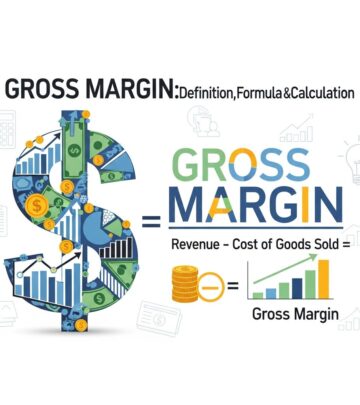
The gross profit margin is calculated by taking a company’s total revenue and subtracting the cost of goods sold, then dividing by total revenue and multiplying by 100 to express the result as a percentage. This metric is essential for business owners, investors, and financial analysts because it reveals how much profit a company makes on each unit of sales before accounting for operating expenses, interest, taxes, and other non-production costs.
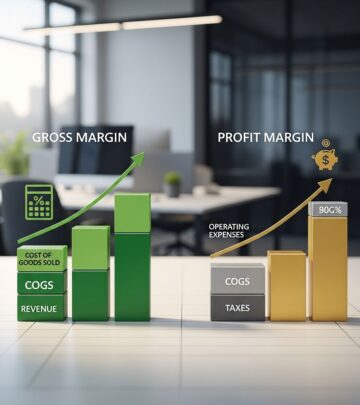
Unlike net profit margin, which accounts for all business expenses, gross profit margin focuses solely on the direct production costs. This makes it particularly useful for evaluating the efficiency of a company’s manufacturing or service delivery processes, independent of its overall business structure or financing arrangements.
Understanding Gross Profit Margin
Gross profit margin serves as a critical indicator of business health and operational efficiency. A higher gross profit margin suggests that a company is producing its goods or services more cost-effectively, while a lower margin may indicate production inefficiencies or pricing challenges. Understanding this metric helps stakeholders assess whether a company can cover its operating expenses and generate profit.
Several factors influence gross profit margin:
- Production Efficiency: Companies that optimize their manufacturing processes and reduce waste typically achieve higher gross profit margins.
- Pricing Strategy: The price at which a company sells its products directly impacts the margin. Premium pricing strategies can lead to higher margins if demand supports them.
- Input Costs: Fluctuations in raw material prices, labor costs, and other direct production expenses significantly affect gross profit margin.
- Scale of Operations: Larger companies often benefit from economies of scale, which can reduce per-unit production costs and improve margins.
- Industry Standards: Different industries have varying average gross profit margins based on their business models and cost structures.
Gross Profit Margin Formula
The gross profit margin formula is straightforward and easy to apply:
Gross Profit Margin = ((Revenue – COGS) / Revenue) × 100
Where:
- Revenue: Total sales or income generated by the company
- COGS (Cost of Goods Sold): Direct costs of producing goods or services, including raw materials, labor, and manufacturing overhead directly tied to production
For example, if a company generates $500,000 in revenue and has $300,000 in cost of goods sold, the calculation would be: (($500,000 – $300,000) / $500,000) × 100 = 40% gross profit margin. This means the company retains 40 cents for every dollar of sales after paying for direct production costs.
How to Calculate Gross Profit Margin
Calculating gross profit margin involves several steps:
Step 1: Identify Total Revenue
Start by determining the total revenue from all sales during the period you’re analyzing. This figure appears as the top line on an income statement and represents the total value of products or services sold before any deductions.
Step 2: Determine Cost of Goods Sold
Identify all direct costs associated with producing the goods or services sold during the same period. COGS typically includes raw materials, direct labor, and manufacturing overhead directly attributable to production. Do not include general administrative expenses, sales commissions, or distribution costs, as these are operating expenses, not production costs.
Step 3: Calculate Gross Profit
Subtract the cost of goods sold from total revenue. The result is your gross profit, which represents the amount available to cover operating expenses and generate profit.
Step 4: Divide by Revenue and Convert to Percentage
Divide the gross profit by total revenue, then multiply by 100 to express the result as a percentage. This standardized format allows for easy comparison across companies and time periods.
Example of Gross Profit Margin Calculation
Consider a retail clothing company with the following financial data for the year:
| Financial Item | Amount |
|---|---|
| Total Revenue | $1,200,000 |
| Cost of Goods Sold | $720,000 |
| Gross Profit | $480,000 |
Using the formula: (($1,200,000 – $720,000) / $1,200,000) × 100 = 40% gross profit margin. This indicates that the company retains 40% of its revenue after covering direct production costs, with the remaining 60% covering operating expenses, interest, taxes, and profit.
Gross Profit vs. Gross Profit Margin
It’s important to distinguish between gross profit and gross profit margin, as they represent different concepts:
Gross Profit is the absolute dollar amount remaining after subtracting COGS from revenue. In the clothing company example above, the gross profit is $480,000. This figure indicates the total money available to cover operating expenses and generate net profit.
Gross Profit Margin is the percentage of revenue that comprises gross profit. In this case, it’s 40%. This percentage allows for meaningful comparison between companies of different sizes and across different periods.
The margin percentage is more useful for analysis because it accounts for differences in company size and scale, making it easier to benchmark performance against competitors or industry standards.
Importance of Gross Profit Margin
Gross profit margin is important for several reasons:
- Operational Efficiency Assessment: It reveals how well a company manages its production processes and controls direct costs.
- Pricing Strategy Evaluation: The metric helps determine whether a company’s pricing strategy is competitive and sustainable.
- Industry Comparison: Comparing a company’s margin to industry benchmarks identifies competitive positioning and potential concerns.
- Financial Planning: It helps forecast how much revenue will be available for operating expenses and profit.
- Investment Decisions: Investors use this metric to evaluate a company’s financial health and profitability potential.
- Cost Control Monitoring: Trends in gross profit margin help identify increases in production costs that need addressing.
What Is a Good Gross Profit Margin?
The definition of a “good” gross profit margin varies significantly by industry. Different business sectors have inherently different cost structures and market dynamics that affect what constitutes an acceptable margin.
For example:
- Technology and Software: Often enjoy high gross profit margins of 70-90%, as digital products have minimal reproduction costs after initial development.
- Retail: Typically experience lower margins of 20-40%, reflecting the costs of inventory and distribution.
- Manufacturing: Usually see margins of 30-50%, depending on the complexity of production and material costs.
- Hospitality: Often operates with margins of 25-40% due to labor-intensive operations and perishable inventory.
When evaluating gross profit margin, analysts should compare a company’s performance to direct competitors in the same industry rather than applying a universal standard. Additionally, tracking changes in a company’s gross profit margin over time is as important as the absolute percentage, as declining margins may signal operational challenges or market pressures.
Limitations of Gross Profit Margin
While gross profit margin is a valuable metric, it has certain limitations:
- Excludes Operating Expenses: It doesn’t account for sales, general, administrative, and depreciation expenses, which significantly impact net profitability.
- Industry-Specific: Comparisons between companies in different industries may be misleading due to varying industry structures.
- Historical Data: It reflects past performance and may not predict future profitability if business conditions change.
- Ignores Financing Costs: It doesn’t consider interest expenses or the impact of debt on profitability.
- Tax Implications: The metric precedes tax calculations, so it doesn’t reflect the company’s actual net earnings to shareholders.
How to Improve Gross Profit Margin
Companies can take several actions to improve their gross profit margin:
- Reduce Production Costs: Negotiate better rates with suppliers, optimize inventory management, and eliminate waste in manufacturing processes.
- Increase Prices: Raise product prices if market conditions and demand support higher pricing without losing customers.
- Improve Efficiency: Invest in automation, streamline operations, and train staff to reduce labor costs and errors.
- Product Mix Optimization: Focus sales efforts on higher-margin products and services.
- Economies of Scale: Increase production volume to reduce per-unit costs through manufacturing efficiencies.
- Vertical Integration: Control more of the supply chain to reduce costs and increase margins.
Gross Profit Margin vs. Other Profitability Metrics
Several other profitability metrics complement gross profit margin:
Operating Profit Margin: This measures profit after accounting for operating expenses. It’s calculated as (Operating Income / Revenue) × 100 and provides a more complete picture of operational profitability than gross profit margin.
Net Profit Margin: This represents the percentage of revenue that remains as net income after all expenses, including taxes and interest. It’s the most comprehensive profitability measure but is influenced by factors beyond operational efficiency.
Return on Assets (ROA) and Return on Equity (ROE): These metrics measure how effectively a company uses its assets and shareholder capital to generate profit, providing different perspectives on financial performance.
Frequently Asked Questions
What is included in cost of goods sold (COGS)?
COGS includes direct costs necessary to produce goods or services, such as raw materials, direct labor, and manufacturing overhead directly tied to production. It excludes indirect expenses like sales commissions, administrative salaries, and distribution costs.
How does gross profit margin differ from markup?
Gross profit margin is calculated as a percentage of revenue, while markup is calculated as a percentage of cost. A product with a 50% markup has a gross profit margin of approximately 33%, demonstrating why these metrics should not be confused.
Can gross profit margin be negative?
Yes, a negative gross profit margin occurs when COGS exceeds revenue, indicating the company is losing money on every sale. This is unsustainable and requires immediate corrective action through price increases or cost reductions.
How frequently should gross profit margin be calculated?
Most companies calculate gross profit margin quarterly and annually as part of regular financial reporting. However, companies can calculate it more frequently for internal management purposes to monitor trends and address issues quickly.
Why might gross profit margin differ between competitors?
Differences in gross profit margin between competitors arise from variations in production efficiency, pricing strategies, supply chain management, economies of scale, and product quality. These factors create competitive advantages or disadvantages.
References
- Understanding Financial Statements — U.S. Securities and Exchange Commission (SEC). Last updated 2024. https://www.sec.gov/investor/pubs/asec.htm
- Generally Accepted Accounting Principles (GAAP) — Financial Accounting Standards Board (FASB). 2024. https://www.fasb.org/
- Industry Profitability Benchmarks — U.S. Bureau of Labor Statistics. Last updated 2024. https://www.bls.gov/iag/
- Financial Ratio Analysis — CFA Institute. 2023. https://www.cfainstitute.org/
- Accounting and Finance Standards — International Accounting Standards Board (IASB). 2024. https://www.ifrs.org/
Similar Articles








Read full bio of Sneha Tete