Gross Profit: Definition, Formula, and Calculation
Understanding gross profit: A fundamental metric for assessing business profitability and operational efficiency.

What Is Gross Profit?
Gross profit represents the profit a company realizes after deducting the cost of goods sold (COGS) from its total revenue. It is one of the most fundamental metrics used by investors, analysts, and business owners to assess the financial health and operational efficiency of a business. Gross profit measures how efficiently a company uses its resources to produce goods and services, making it a critical indicator of business performance.
This metric provides insight into the relationship between production costs and sales revenue, helping stakeholders understand the core profitability of a company’s primary business operations before accounting for operating expenses, taxes, and interest payments. A company that maintains a healthy gross profit margin is better positioned to cover its operating expenses and generate net income.
Understanding Gross Profit
Gross profit is calculated by subtracting the cost of goods sold from total revenue. The cost of goods sold includes all direct costs associated with producing goods that a company sells, including raw materials, labor, and manufacturing overhead. However, it does not include indirect expenses such as distribution costs, sales commissions, administrative salaries, or rent for office space.
The importance of gross profit lies in its ability to reveal whether a company can generate profit from its core business operations. Two companies in the same industry may have similar revenue figures, but significant differences in gross profit could indicate variations in production efficiency, pricing strategies, or competitive positioning. Understanding these differences is essential for making informed investment decisions and evaluating management effectiveness.
Key Components of Gross Profit
- Total Revenue: The total income generated from selling products or services before any expenses are deducted
- Cost of Goods Sold (COGS): Direct costs associated with producing goods, including materials, labor, and manufacturing overhead
- Gross Profit Margin: The percentage of revenue remaining after deducting COGS, expressed as a percentage of total revenue
The Gross Profit Formula
The formula for calculating gross profit is straightforward:
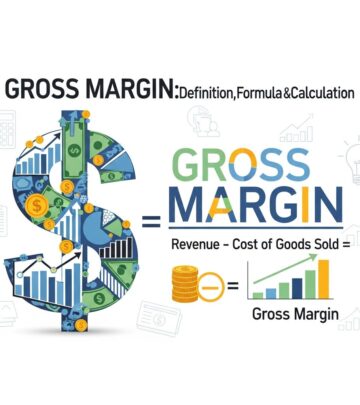
Gross Profit = Total Revenue – Cost of Goods Sold (COGS)
Alternatively, gross profit margin is calculated as:
Gross Profit Margin = (Gross Profit / Total Revenue) × 100
These formulas can be found on a company’s income statement, where both revenue and COGS are reported. By applying these calculations, investors and analysts can quickly determine how much profit a company generates from each dollar of sales before accounting for operating expenses.
How to Calculate Gross Profit
Calculating gross profit requires access to a company’s financial statements, particularly the income statement. Here’s a step-by-step process:
Step 1: Identify Total Revenue
Total revenue, also known as net sales or top-line revenue, represents all income generated from selling products or services. This figure appears at the top of the income statement and serves as the starting point for calculating gross profit.
Step 2: Determine Cost of Goods Sold
COGS includes all direct costs associated with producing goods, such as:
- Raw materials and components
- Direct labor costs for production employees
- Manufacturing overhead directly tied to production
- Depreciation of production equipment
Step 3: Subtract COGS from Revenue
Simply subtract the total COGS from total revenue to obtain gross profit. For example, if a company has revenue of $1,000,000 and COGS of $600,000, the gross profit would be $400,000.
Step 4: Calculate Gross Profit Margin
Divide gross profit by total revenue and multiply by 100 to express the result as a percentage. In the previous example, the gross profit margin would be ($400,000 / $1,000,000) × 100 = 40%.
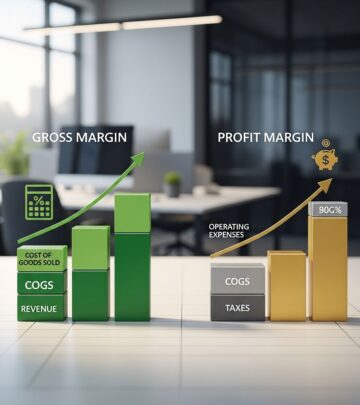
Gross Profit vs. Operating Profit vs. Net Income
While gross profit is important, it’s essential to understand how it differs from other profitability metrics:
| Metric | Definition | Formula |
|---|---|---|
| Gross Profit | Profit after deducting COGS | Revenue – COGS |
| Operating Profit | Profit after deducting operating expenses | Gross Profit – Operating Expenses |
| Net Income | Profit after all expenses, taxes, and interest | Operating Profit – Taxes – Interest |
Gross profit focuses solely on production efficiency, while operating profit includes the impact of operating expenses. Net income represents the bottom-line profit available to shareholders after all expenses. Understanding these distinctions helps investors gain a comprehensive view of company profitability at different stages.
Importance of Gross Profit
Gross profit serves several critical functions in financial analysis:
Assessing Operational Efficiency
Gross profit reveals how efficiently a company manages its production costs relative to sales. A consistently high gross profit margin suggests that a company has effective cost control and operational efficiency, while a declining margin may indicate rising production costs or pricing pressures.
Comparing Industry Performance
Different industries have varying gross profit margins based on their business models. For example, technology companies often have higher gross profit margins than retail companies. By comparing a company’s gross profit margin to industry averages, investors can determine if the company is performing better or worse than competitors.
Predicting Future Profitability
A strong gross profit provides a cushion for covering operating expenses and generating net income. Companies with healthy gross profit margins have greater flexibility to invest in research and development, marketing, and expansion while still maintaining profitability.
Identifying Business Model Viability
Gross profit analysis helps determine whether a company’s core business model is sustainable. If gross profit is consistently negative or declining, it suggests fundamental problems with the business that cannot be solved by cost-cutting at the operating expense level.
Factors Affecting Gross Profit
Several factors can influence a company’s gross profit:
- Raw Material Costs: Fluctuations in commodity prices, supply chain disruptions, or sourcing efficiency can significantly impact COGS
- Labor Costs: Wage increases, productivity levels, and labor market conditions affect direct production costs
- Pricing Strategies: A company’s ability to increase prices without losing market share directly impacts gross profit
- Production Efficiency: Improvements in manufacturing processes, automation, and waste reduction can enhance gross profit
- Product Mix: Changes in the proportion of high-margin versus low-margin products sold affect overall gross profit
- Economies of Scale: As production volume increases, per-unit costs typically decrease, improving gross profit
Gross Profit in Different Industries
Gross profit margins vary significantly across industries due to different business models and cost structures:
- Technology: Software and technology companies typically enjoy gross profit margins of 60% to 80% due to low production costs and high pricing power
- Retail: Retail businesses often operate with gross profit margins of 20% to 40%, reflecting higher inventory and distribution costs
- Manufacturing: Industrial manufacturers usually see gross profit margins ranging from 25% to 40%, depending on product complexity and competition
- Utilities: Utility companies often have lower gross profit margins, typically between 10% and 25%, due to high operational costs
Limitations of Gross Profit
While gross profit is a valuable metric, it has several limitations:
- Does Not Account for Operating Expenses: Gross profit ignores critical operating costs such as salaries, rent, marketing, and administrative expenses
- Industry Variations: Different industries have vastly different gross profit margins, making direct comparisons between companies in different sectors problematic
- Does Not Reflect Financing Costs: Gross profit does not account for interest expenses or the cost of capital, which can significantly impact net profitability
- Accounting Method Sensitivity: Different inventory valuation methods (FIFO, LIFO, weighted average) can affect reported COGS and gross profit
Frequently Asked Questions (FAQs)
Q: What is the difference between gross profit and net profit?
A: Gross profit is calculated by subtracting COGS from revenue and reflects production efficiency. Net profit, also called net income, is calculated after deducting all expenses, including operating costs, taxes, and interest. Net profit represents the actual profit available to shareholders.
Q: Why is gross profit important for investors?
A: Gross profit helps investors understand a company’s core business profitability and operational efficiency before considering overhead expenses. It indicates whether the company’s main business is fundamentally viable and whether management can effectively control production costs.
Q: Can a company have positive gross profit but negative net income?
A: Yes, absolutely. A company can have positive gross profit but negative net income if its operating expenses, interest payments, or taxes exceed the gross profit. This situation often occurs in growing companies that invest heavily in expansion and marketing.
Q: How do I find a company’s gross profit?
A: Gross profit can be found on a company’s income statement, which is part of its financial statements. You can access income statements through the company’s investor relations website, the SEC’s EDGAR database (for U.S. public companies), or financial data providers like Yahoo Finance or Google Finance.
Q: What is considered a good gross profit margin?
A: A good gross profit margin depends on the industry. Technology companies might have margins above 70%, while retail companies typically have margins between 20% and 40%. Compare a company’s margin to industry peers and historical averages rather than absolute figures.
Q: How does gross profit relate to cash flow?
A: While gross profit is an accounting measure, it differs from cash flow. High gross profit doesn’t guarantee positive cash flow if a company has significant receivables or inventory. Cash flow analysis requires additional consideration of working capital changes and capital expenditures.
References
- Financial Accounting Standards Board (FASB) Accounting Standards Codification — FASB. 2024. https://www.fasb.org
- SEC Guide to Understanding Financial Statements — U.S. Securities and Exchange Commission. 2023. https://www.sec.gov/investor/pubs/4sltd.htm
- Business Performance Metrics: A Comprehensive Guide — National Bureau of Economic Research. 2023. https://www.nber.org
- Generally Accepted Accounting Principles (GAAP) — American Institute of Certified Public Accountants (AICPA). 2024. https://www.aicpa.org
- Analysis of Financial Ratios and Profitability Metrics — CFA Institute. 2024. https://www.cfainstitute.org
Similar Articles








Read full bio of Sneha Tete