Gross National Income: Definition, Formula & Calculation
Understanding GNI: How countries measure total income and economic well-being.

What Is Gross National Income?
Gross national income (GNI) represents the total amount of money earned by a country’s residents and businesses in a given year, including income generated both domestically and abroad. It is one of the most important economic indicators used by governments, international organizations, and economists to measure a nation’s overall economic activity and the prosperity of its citizens. Unlike some other economic metrics that focus solely on geographic location of production, GNI provides a comprehensive view of the income earned by a country’s nationals, regardless of where that income originates.
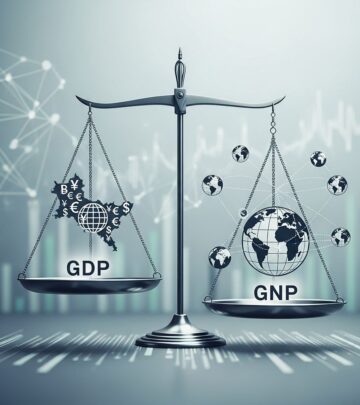
GNI has largely replaced the older term gross national product (GNP) in international economic statistics and reporting, though the two concepts are conceptually identical. The shift in terminology reflects a more precise understanding of what the metric actually measures—income earned by residents rather than production within borders. This distinction is crucial for accurately assessing economic well-being, particularly for nations with significant international investment or operations.
Understanding the GNI Formula
The basic formula for calculating gross national income is straightforward yet comprehensive. GNI is calculated by taking a country’s gross domestic product and adding net income received from abroad, plus taxes on production minus subsidies. This can be expressed mathematically as:
GNI = GDP + Net Income from Abroad + Taxes on Production – Subsidies
More specifically, GNI includes factor incomes received from non-residents by residents, minus factor income paid by residents to non-residents. Factor income encompasses wages, salaries, profits, interest, and rent earned by citizens and businesses of a country. The “net” component is essential because it accounts for both incoming and outgoing income flows, providing a true picture of what residents retain from international economic activities.
GNI Per Capita: Measuring Individual Prosperity
While total GNI provides a snapshot of national income, GNI per capita offers a more meaningful measure of individual economic well-being. GNI per capita is calculated by dividing a country’s total GNI by its midyear population. This metric allows for meaningful comparisons between countries of vastly different sizes and populations, revealing how much income is available to the average person in each nation.
GNI per capita figures are typically adjusted for inflation and differences in living costs between countries using purchasing power parity (PPP) rates. This adjustment ensures that international comparisons account for the fact that one dollar has different purchasing power in different countries. Data is usually expressed in international dollars at constant prices, most commonly using 2021 prices as a benchmark, which allows comparisons across both time and geography.
How GNI Differs From GDP
While often confused, GNI and GDP are fundamentally different economic measures, though they frequently produce similar results in many countries. The key distinction lies in what each metric captures:
Geographic Location Versus Ownership
Gross domestic product measures the total market value of all final goods and services produced within a country’s geographical borders during a specific period, regardless of who owns the factors of production. In contrast, GNI measures income generated by a country’s citizens and businesses, regardless of the geographic location where that income is earned. This distinction becomes critically important when examining countries with substantial foreign investment or when citizens and businesses earn significant income overseas.
When GNI and GDP Diverge Significantly
For many developed nations, GNI and GDP produce relatively similar figures, with differences typically ranging from 1-3 percent. However, certain countries experience dramatic divergences between these metrics. A prime example is Ireland, where U.S. multinational corporations’ profit-shifting strategies created such a distortion that Ireland’s GDP exceeded its GNI by 27 percent in 2017, and its Modified GNI* by 62 percent, prompting the Central Bank of Ireland to develop alternative measurement approaches.
Another example is the United States, where in 2016 the World Bank reported GNI was 1.5% higher than GDP. Countries with large income receipts or significant outlays to foreigners will experience the most pronounced differences between these measures.
Why the Difference Matters
When many foreign businesses operate within a country’s borders, GDP appears inflated relative to GNI because profits repatriated back to foreign owners are counted in GDP but reduce GNI. Conversely, when a country’s citizens and businesses earn substantial income abroad, GNI exceeds GDP. For this reason, GNI is often considered a superior measure of economic well-being than GDP, particularly for countries with substantial foreign investment positions or significant overseas income sources.
Components of Gross National Income
GNI includes several distinct types of income that residents and businesses earn:
Employment Compensation
Wages, salaries, and other compensation earned by workers represent a significant component of GNI. This includes income earned by both domestic workers employed within the country and citizens working abroad.
Property Income
Rental income, interest payments, and dividends received by residents constitute property income. This includes returns on investments, whether domestic or international, and rent received from real property ownership.
Business Profits
GNI includes both distributed profits of corporations (dividends paid to shareholders) and reinvested earnings on foreign direct investment. These profits are treated as if distributed to foreign direct investors in proportion to their ownership and then reinvested, following international balance of payments standards.
Taxes and Subsidies
GNI calculation includes product taxes (less subsidies) not included in the valuation of output, ensuring that the total income measure reflects the actual economic benefit received by residents.
The Evolution From GNP to GNI
The terminology shift from gross national product (GNP) to gross national income (GNI) reflects an important conceptual evolution in economic measurement. Originally, GNP was framed as a concept of production, defined by the United Nations in the 1953 System of National Accounts (SNA) as “the market value of product before deduction of provisions of consumption of fixed capital, attributable to factors of production supplied by normal residents of the given country.”
However, by the 1993 revision to the SNA, the definition was reframed from the perspective of residents receiving income rather than from the viewpoint of the factor of production. This shift in perspective led to the renaming from GNP to GNI, though the national concept was retained because it remains embedded in standard economic usage. Despite this terminology change, GNP continues to be used in national income and product accounts, particularly when calculating GNI based on expenditure data.
Why GNI Matters for Economic Analysis
GNI serves several critical functions in economic analysis and policy-making:
Measuring Economic Well-Being
GNI provides a more accurate picture of the income available to a country’s residents than GDP, especially for nations with significant international economic ties. By measuring what residents actually earn rather than just what is produced domestically, GNI better reflects the true economic prosperity of the population.
International Comparisons
GNI per capita allows meaningful comparisons of economic development and living standards between countries, adjusted for purchasing power parity and inflation. This makes it possible to assess relative prosperity across nations with different currencies, price levels, and population sizes.
Policy and Budget Decisions
GNI serves as the basis for calculating a significant portion of contributions to international budgets, including the European Union budget. Governments and international organizations use GNI data to inform spending decisions, foreign aid allocation, and economic policy.
Economic Growth Assessment
Tracking changes in GNI over time reveals whether a nation’s residents are becoming more prosperous and whether the economy is growing in ways that benefit citizens. This provides insight into the effectiveness of economic policies and the distribution of economic benefits.
How GNI Is Calculated at the National Level
Calculating a country’s GNI involves several methodological steps undertaken by national statistical agencies and international organizations like the World Bank:
Starting With GDP
The calculation begins with a country’s gross domestic product, which represents all economic output produced within national borders. This provides the baseline measure of domestic economic activity.
Adding Foreign Income
To this base figure, statisticians add all income earned by residents from abroad, including wages of citizens working in other countries, profits from foreign investments, interest on loans to foreign entities, and dividends from international holdings.
Subtracting Outflows
From the adjusted total, statisticians subtract income earned within the country by foreign workers and businesses that is paid back to non-residents. This includes profits earned by foreign subsidiaries operating domestically, wages paid to foreign workers, and interest paid to international creditors.
World Bank Atlas Method
For international reporting and comparison, the World Bank converts GNI to U.S. dollars using the World Bank Atlas method, then divides by midyear population to calculate GNI per capita. This standardized approach ensures consistency and comparability across all nations.
Real Versus Nominal GNI
Like GDP, GNI can be measured in both nominal and real terms. Nominal GNI represents the current-year income measured in that year’s prices. Real GNI adjusts for inflation, allowing comparisons of actual economic growth across different time periods without the distorting effects of price changes.
For meaningful long-term comparisons, real GNI expressed in constant prices is typically used, often adjusted to a specific baseline year such as 2021. This allows economists and policymakers to distinguish between growth driven by actual economic expansion versus growth driven merely by inflation.
Frequently Asked Questions About GNI
Q: What is the main difference between GNI and GDP?
A: The primary difference is that GDP measures all economic output produced within a country’s borders, while GNI measures income earned by a country’s residents regardless of location. GDP focuses on geographic production, while GNI focuses on ownership and residence-based income.
Q: Why should I care about GNI instead of just GDP?
A: GNI provides a better measure of actual prosperity for a country’s citizens because it includes income earned abroad and excludes profits earned by foreign companies that leave the country. For accurate assessment of citizen welfare, GNI is often more meaningful than GDP.
Q: How is GNI per capita calculated?
A: GNI per capita is calculated by dividing the total GNI by the country’s midyear population. This figure is typically adjusted for inflation and purchasing power parity to allow meaningful international comparisons.
Q: Is GNI the same as GNP?
A: GNI and GNP are conceptually identical, but GNI is the modern terminology adopted by the United Nations and international organizations. The shift reflects a reconceptualization from production-based to income-based measurement, though the calculations remain largely the same.
Q: What countries have the largest differences between GNI and GDP?
A: Countries with significant foreign direct investment or substantial overseas income sources experience the largest divergences. Ireland is the most dramatic example, with GDP exceeding GNI by 27% due to U.S. multinational profit-shifting strategies.
Q: How do purchasing power parity adjustments affect GNI comparisons?
A: PPP adjustments account for differences in living costs between countries, ensuring that international dollar comparisons reflect actual purchasing power rather than just exchange rates. This makes GNI per capita figures truly comparable across nations with different price levels.
Q: Can GNI decrease even if a country produces more goods?
A: Yes, GNI can decrease if foreign companies earning profits within the country increase their repatriation of earnings abroad, even if total domestic production increases. GNI reflects income retained by residents, not total production.
References
- Gross National Income (GNI) — Britannica Money. 2025. https://www.britannica.com/money/gross-national-income
- Gross National Income (GNI) per Capita — Our World in Data. 2024. https://ourworldindata.org/grapher/gross-national-income-per-capita-worldbank
- Gross National Income — Glossary — World Bank DataBank. 2025. https://databank.worldbank.org/metadataglossary/lac-equity-lab-/series/6.0.GNIpc
- Gross National Income — Wikipedia. 2024. https://en.wikipedia.org/wiki/Gross_national_income
- GDP and GNI — EcoNinja. 2024. https://www.econinja.net/macroeconomics/3-1-measuring-economic-activity/gdp-and-gni
Similar Articles








Read full bio of Sneha Tete