Gross Margin: Definition, Formula, and Calculation
Master gross margin: Learn how to calculate profitability and compare business efficiency.
What Is Gross Margin?
Gross margin is a fundamental financial metric that measures a company’s profitability by calculating the percentage of revenue that remains after deducting the direct costs of producing goods or services. In essence, it reveals how efficiently a company manages its production expenses relative to its sales revenue. This metric serves as a critical yardstick for assessing operational efficiency and comparing performance across competitors within the same industry.
The gross margin represents the portion of each sales dollar that a company retains after covering all direct production costs. These direct costs, commonly referred to as the cost of goods sold (COGS), include materials, labor, and manufacturing expenses directly tied to product creation. By understanding gross margin, investors, analysts, and business managers can evaluate how well a company converts revenue into profit before accounting for operating expenses like marketing, research and development, and administrative overhead.
Understanding Gross Margin Fundamentals
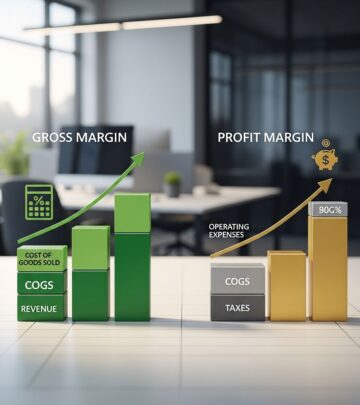
At its core, gross margin answers a straightforward question: how much profit does a company make on each sale before considering indirect expenses? Unlike net margin, which accounts for all operating expenses, taxes, and interest, gross margin focuses exclusively on the direct relationship between revenue and production costs. This focused perspective makes gross margin particularly valuable for analyzing operational performance and production efficiency.
Companies with higher gross margins have greater financial flexibility to invest in critical business areas such as research and development, marketing initiatives, sales teams, and infrastructure improvements. A company operating with a 50% gross margin, for instance, retains 50 cents from every dollar of sales to cover these operational expenses and generate profit. Conversely, a company with a 20% gross margin must operate with tighter financial constraints and has less room for expansion or investment.
The Gross Margin Formula
Calculating gross margin requires a simple three-step mathematical process. The formula is:
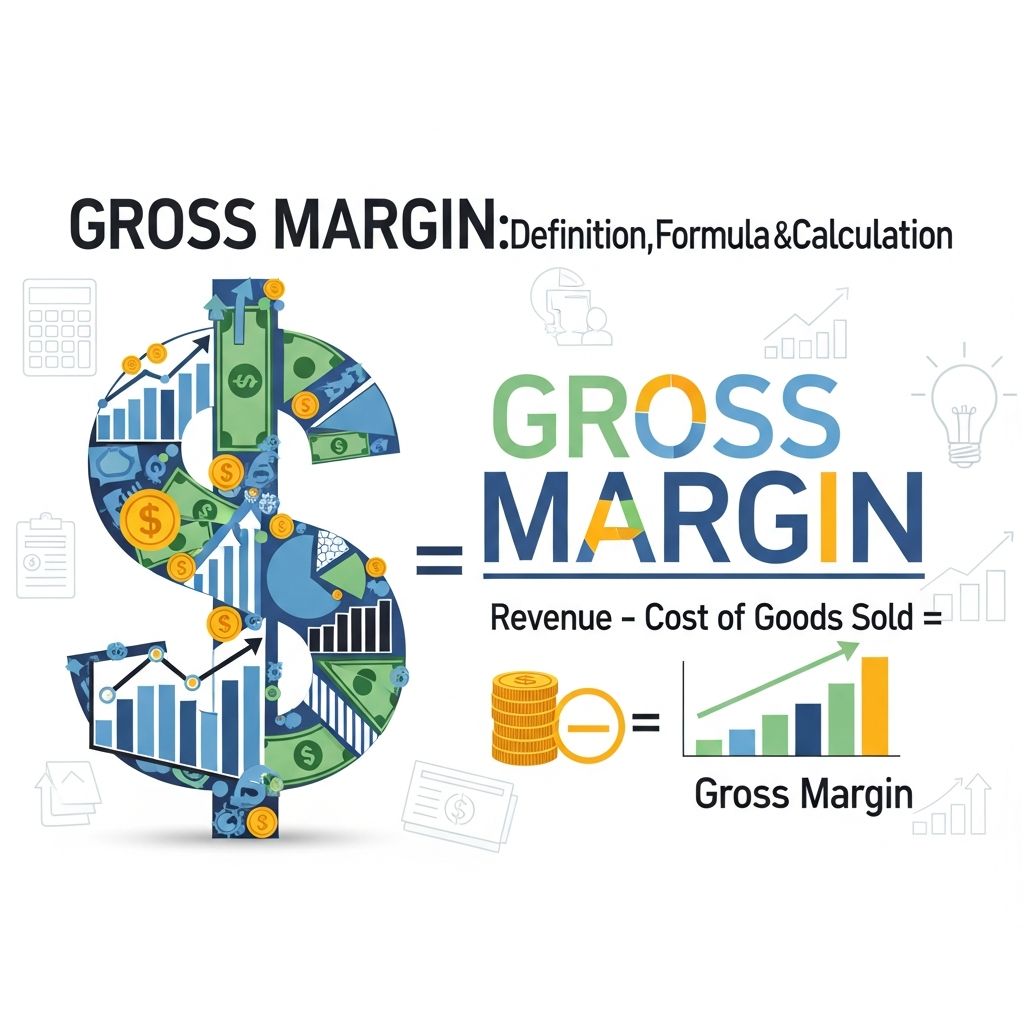
Gross Margin = (Revenue − Cost of Goods Sold) ÷ Revenue × 100
Breaking down this formula:
- Revenue represents the total sales generated during a specific period
- Cost of Goods Sold (COGS) includes all direct expenses associated with manufacturing or acquiring products for sale
- The result is multiplied by 100 to express the margin as a percentage
Alternatively, this can be expressed as: Gross Margin = (Gross Profit ÷ Revenue) × 100, where gross profit is the difference between revenue and COGS.
Calculating Gross Margin: Step-by-Step Example
Consider a practical example to illustrate gross margin calculation. Imagine Rose Candy Company generates annual revenue of $1,000,000 with cost of goods sold totaling $700,000. Using the gross margin formula:
Gross Margin = ($1,000,000 − $700,000) ÷ $1,000,000 × 100 = 30%
This 30% gross margin means Rose Candy retains 30 cents from every dollar of revenue after covering direct production costs. In dollar terms, the company generates $300,000 in gross profit from its $1,000,000 in sales. The remaining $300,000 must cover operating expenses, interest, taxes, and ideally contribute to net profit.
Now consider Rose Candy’s competitor, Lily Chocolate, which operates with a 40% gross margin. This higher margin could result from several factors: lower input costs for raw materials, more efficient labor practices, higher selling prices for specialty products, or superior supply chain management. The 10 percentage point difference translates to an additional $100,000 in gross profit on the same $1,000,000 in revenue, demonstrating how even modest margin differences significantly impact profitability and financial flexibility.
What Comprises Cost of Goods Sold
Understanding what qualifies as COGS is essential for accurate gross margin calculation. COGS includes only direct costs attributable to product manufacturing or acquisition:
- Raw Materials — All materials incorporated into finished products
- Direct Labor — Wages and benefits for factory workers directly involved in production
- Manufacturing Overhead — Utilities, equipment maintenance, and facility costs directly tied to production
Importantly, COGS excludes indirect expenses such as management salaries, corporate headquarters costs, marketing expenses, research and development, distribution costs, and administrative overhead. These expenses are considered operating expenses and are deducted separately when calculating net profit. This distinction is crucial because it allows gross margin to specifically measure production efficiency without contamination from broader business operations.
Gross Margin Across Different Industries
Gross margin varies significantly across industries due to fundamental differences in business models, competition levels, and production requirements. Technology companies and software firms often maintain higher gross margins (60-90%) because they produce digital products with minimal direct costs after initial development. Retail businesses typically operate with lower gross margins (20-40%) due to the costs of purchasing inventory. Restaurants generally work with thin gross margins (60-70% of revenue goes to COGS), while luxury goods manufacturers may enjoy margins of 50-70%.
When analyzing a company’s gross margin, comparing it against industry peers provides meaningful context. A 30% gross margin might be excellent for a grocery retailer but concerning for a software company. Industry-specific benchmarks help investors and analysts distinguish between efficient operations and underperformance.
Why Gross Margin Matters for Business Analysis
Gross margin serves multiple critical functions in financial analysis and business evaluation. First, it provides a measure of operational efficiency—how effectively a company converts raw inputs into sellable products. Second, it indicates pricing power and competitive positioning. Companies commanding premium prices or enjoying cost advantages demonstrate higher gross margins. Third, it reveals how much resources a company can dedicate to growth initiatives, innovation, and market expansion.
For investors, gross margin trends matter significantly. An improving gross margin suggests strengthening competitive advantage or successful cost management. A declining margin warns of rising input costs, pricing pressure, or operational challenges. Monitoring gross margin trends over multiple quarters or years reveals whether management effectively navigates competitive pressures and operational challenges.
Gross Margin Versus Other Profitability Metrics
While gross margin measures production efficiency, other profitability metrics provide broader perspectives on business performance:
| Metric | Definition | Key Difference |
|---|---|---|
| Gross Margin | Revenue minus COGS, divided by revenue | Focuses only on direct production costs |
| Operating Margin | Operating income divided by revenue | Includes operating expenses like marketing and administration |
| Net Margin | Net income divided by revenue | Includes all expenses, taxes, and interest |
| EBITDA Margin | EBITDA divided by revenue | Excludes interest, taxes, depreciation, and amortization |
Understanding these distinctions helps analysts gain comprehensive insights into company profitability at different operational levels.
Factors Influencing Gross Margin
Several factors directly impact a company’s gross margin. Raw material costs significantly influence COGS—companies sourcing expensive inputs face pressure on margins. Labor efficiency and wage levels affect direct labor costs. Manufacturing technology and automation can reduce per-unit production costs. Supply chain optimization lowers procurement expenses. Pricing strategy determines revenue; companies with strong brands or unique products command premium prices. Production scale affects per-unit costs—larger production volumes typically reduce unit costs through economies of scale. Geographic location influences labor and operational costs. Currency fluctuations impact companies with international operations.
Improving Gross Margin Performance
Companies can enhance gross margin through various strategic initiatives. Improving manufacturing efficiency through automation or process optimization reduces direct labor and overhead costs. Sourcing alternative suppliers or negotiating better contracts lowers material costs. Implementing lean manufacturing principles minimizes waste. Increasing prices, particularly for differentiated products, directly improves margins. Improving product mix toward higher-margin offerings enhances overall profitability. Implementing supply chain innovations reduces procurement costs. Investing in technology and equipment improves production efficiency. Training workforce to minimize defects and rework reduces waste.
Limitations of Gross Margin Analysis
While valuable, gross margin has important limitations. It ignores operating expenses, which can vary significantly between competitors and impact ultimate profitability. A high gross margin doesn’t guarantee overall profitability if operating expenses are excessive. Gross margin doesn’t account for capital intensity—companies requiring heavy investment in equipment face challenges despite healthy gross margins. It doesn’t reflect working capital management or cash flow. Seasonal variations can distort margin analysis across periods. One-time items or accounting changes can temporarily affect margins. Gross margin should complement, not replace, comprehensive financial analysis including cash flow, return on equity, and debt levels.
Frequently Asked Questions
Q: What is a good gross margin percentage?
A: Good gross margin depends on industry. Software companies typically maintain 70-90% margins, while retailers operate with 20-40%. Compare margins against industry peers rather than using absolute benchmarks.
Q: How does gross margin differ from net margin?
A: Gross margin excludes operating expenses, while net margin includes all expenses including operating costs, interest, and taxes. Net margin provides a complete profitability picture, while gross margin focuses on production efficiency.
Q: Why is gross margin important for investors?
A: Gross margin reveals operational efficiency and competitive positioning. Improving trends suggest strengthening advantage, while declining margins warn of challenges. Comparing margins against competitors identifies relative performance.
Q: Can gross margin be negative?
A: Yes, negative gross margin occurs when COGS exceeds revenue, meaning the company loses money on each sale. This unsustainable situation signals severe operational problems requiring immediate correction.
Q: How do I calculate gross margin percentage?
A: Subtract cost of goods sold from revenue, divide by revenue, and multiply by 100. Formula: (Revenue − COGS) ÷ Revenue × 100 = Gross Margin %
Q: What’s included in cost of goods sold?
A: COGS includes raw materials, direct labor, and manufacturing overhead directly tied to production. Operating expenses, marketing, and administrative costs are excluded from COGS.
References
- Gross Margin Definition and Calculation — Investopedia. 2024. https://www.investopedia.com/terms/g/grossmargin.asp
- Understanding Financial Ratios: A Guide to Analyzing Company Performance — U.S. Securities and Exchange Commission (SEC). Office of Investor Education and Advocacy. https://www.sec.gov/investor/pubs/asec.htm
- Financial Analysis Standards and Best Practices — Financial Accounting Standards Board (FASB). 2024. https://www.fasb.org/
- Cost Accounting and Profitability Analysis — American Institute of Certified Public Accountants (AICPA). 2023. https://www.aicpa.org/
- Industry Benchmarking and Performance Metrics — Bureau of Labor Statistics, U.S. Department of Labor. 2024. https://www.bls.gov/
Similar Articles








Read full bio of Sneha Tete