Grocery Store Stocks Soar Amid Food Price Hikes
Supermarket stocks surge as grocery chains hike prices beyond inflation rates.
Grocery Stores Have Hiked Prices Beyond Inflation — and Their Stocks Are Soaring
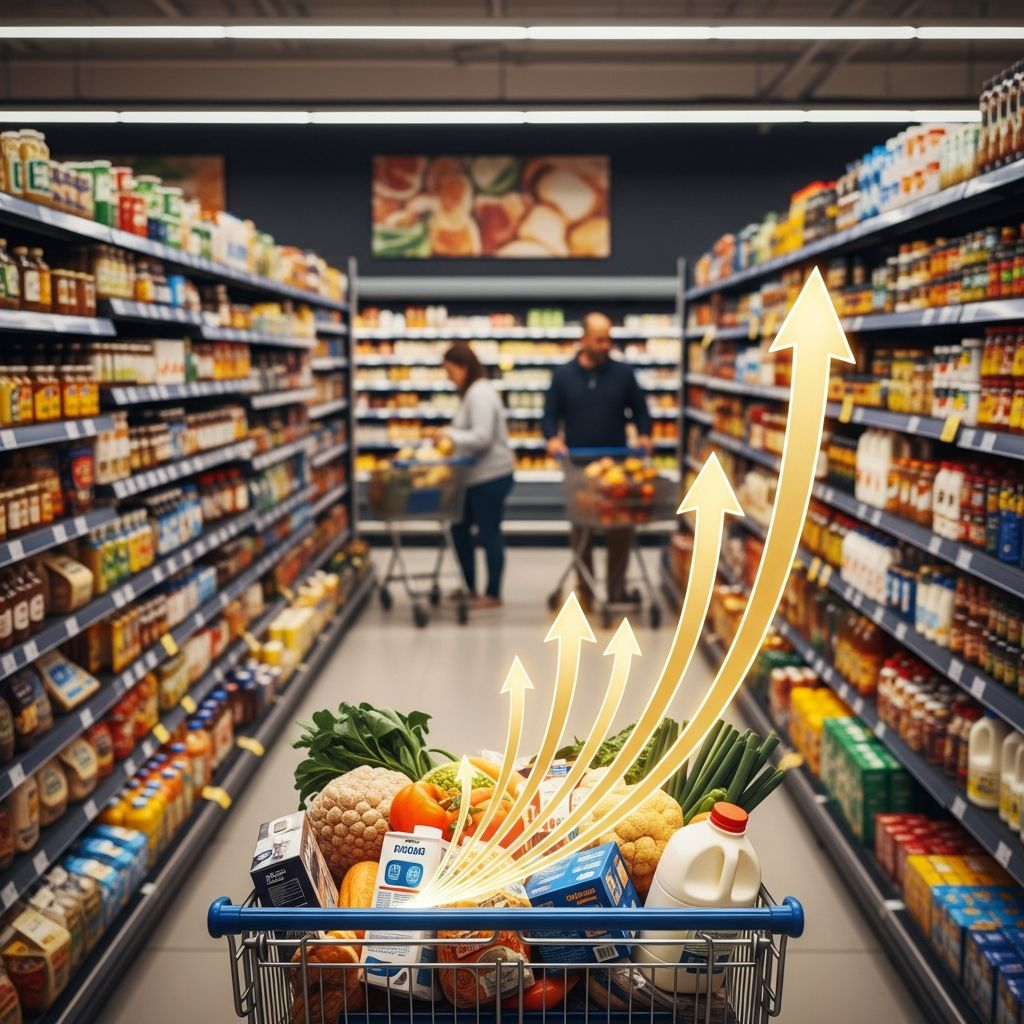
American consumers have experienced significant sticker shock when shopping for groceries over the past few years. While families struggle with escalating food costs at checkout counters, shareholders of the country’s largest grocery chains are celebrating impressive gains in their investment portfolios. This paradox reveals a troubling trend in the retail food industry: supermarkets are raising prices at rates that significantly outpace actual inflation, translating that consumer pain directly into stock market gains.
Understanding Food Inflation Beyond the Headlines
Food prices present a unique challenge when analyzing inflation data. The U.S. Bureau of Labor Statistics strips food and energy prices from its core Consumer Price Index reading each month because these categories are historically volatile. When the core CPI reported 3.2% inflation in August, this figure obscured what was actually happening in grocery stores across America.
While the BLS tracks food prices separately, and data initially suggested that the pace of food inflation had slowed, examining specific food categories tells a different story. This granular analysis reveals which items are putting the most pressure on household budgets and which sectors are driving the impressive gains in grocery stock valuations.
Food Inflation is Sticky and Selective
Certain food categories have experienced welcome relief for consumers. Dairy products, fruits, and vegetables saw year-over-year disinflation of 0.2%, providing modest relief at the dairy counter and produce section. However, this encouraging news masks troubling price increases in other critical categories.
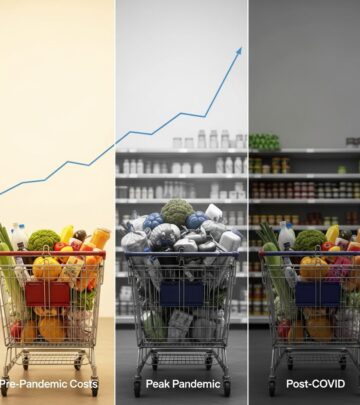
Nonalcoholic beverages rose 1.9% year-over-year, while meats, poultry, fish, and eggs experienced price increases of 3.0%. These increases exceed the broad CPI reading of 2.9% reported in July, which includes food and energy prices. The real story emerges when examining the broader historical trend: since 2020, food-at-home prices have increased a staggering 26.43%, compared to the relatively flat trajectory from 2010 to 2019.
The Corporate Greed Factor: When Prices Exceed Costs
Industry analysts and supermarket executives consistently point to supply-chain disruptions and increased labor costs as the primary drivers of food inflation. However, these explanations fail to address documented evidence that corporate profit margins have expanded beyond what these factors justify.
Former U.S. Secretary of Labor Robert Reich observed this pattern across the economy, noting that “consumer prices are still up, allowing most corporations to keep their profit margins near a 10-year high,” even as inflation has subsided. This observation highlights a critical issue: while inflation rates have moderated, companies continue charging elevated prices, maintaining artificially high profit margins.
Federal Trade Commission Findings on Price Gouging
In March, the Federal Trade Commission conducted a comprehensive investigation into food retail practices. Their report found that food retailers’ profit margins exceeded the costs they passed along to consumers both during and after the pandemic at rates that cannot be rationalized by supply-chain disruptions or wage increases alone. This official government finding provides substantial evidence that corporate pricing strategies, not just external economic factors, are responsible for elevated grocery prices.
Evidence of Price Gouging in Legal Proceedings
Perhaps the most damning evidence of deliberate price inflation emerged during Kroger’s antitrust trial in August. The grocery giant’s senior director for pricing, Andy Groff, was forced to acknowledge that Kroger had raised prices for certain food staples—including eggs and milk—beyond what cost increases justified. When the FTC presented internal company emails showing that “retail inflation has been significantly higher than cost inflation” for these items, Kroger could not adequately defend its pricing decisions.
This admission, made under legal pressure, revealed what many consumers have suspected: major supermarket chains are deliberately pricing products higher than their cost structure warrants, exploiting inflation as cover for profit margin expansion.
Grocery Chain Stocks Continue to Surge
The relationship between price-gouging and stock performance has been remarkably direct. As grocery retailers maintain elevated profit margins through aggressive pricing strategies, their stock valuations have soared. The performance comparison is striking:
Over the past five years, the S&P 500 has gained nearly 86%, largely driven by the Magnificent Seven tech companies. Meanwhile, individual supermarket chains have substantially outperformed this benchmark:
- Ingles Markets: 84% gain over five years
- Walmart: 102% gain since 2019
- Kroger: Over 117% gain
- Costco: Over 190% gain
- Sprouts Farmers Market: Astounding 445% gain
These performance figures demonstrate that supermarket stocks, far from being laggard retail investments, have dramatically outpaced the overall stock market. The primary driver of this outperformance appears directly linked to the profit margin expansion that comes from charging consumers prices unrelated to actual cost increases.
Market Growth Projections and Profit Sustainability
According to Grand View Research, the grocery retail market in the United States is expected to expand at a compound annual growth rate of 3.2% from 2024 to 2030. However, this modest industry-wide growth rate masks the outsized performance of individual companies that have successfully implemented aggressive pricing strategies.
With food companies now openly admitting to anticompetitive practices and price-gouging—both of which continue to fortify record profits—their stocks could continue to markedly outperform the overall grocery retail industry’s projected CAGR. This suggests that the current trajectory of supermarket stock gains may persist, at least as long as consumers continue paying inflated prices without significant regulatory intervention.
Historical Context of Food Price Inflation
The current food price environment represents one of the most dramatic inflation episodes in decades. In August 2022, grocery prices were up 13.5% on a yearly basis—the highest annual jump since 1979. Specific categories experienced even more dramatic increases: flour spiked 23% annually, while dairy prices increased 16.2%, marking the biggest annual increase since 1974.
This historical context illustrates that while inflation rates have moderated from their 2022 peaks, the cumulative price increases over the three-year period from 2020 to 2023 remain historically significant. Grocery costs are up over 25% in the past five years, outpacing average wage growth, and experts increasingly believe consumers should not expect prices to decline.
The Complexity of Food Price Dynamics
While price-gouging represents a significant factor, the complete picture of food inflation involves multiple interconnected elements. Supply chain disruptions from pandemic-related factory closures and transportation bottlenecks created genuine cost pressures. The war in Ukraine disrupted global commodity markets, particularly grain and oil supplies. Rising labor costs, driven by tight employment markets, increased operational expenses for retailers and food producers.
Additionally, commodity prices for agriculture and livestock surged dramatically from 2021 to 2022, coinciding with peak inflation periods. These genuine cost pressures provided legitimate justification for some price increases. However, the evidence suggests that retailers used these legitimate cost increases as cover for profit margin expansion beyond what circumstances warranted.
Why Grocery Prices May Never Fall
Despite some normalization in commodity prices and easing labor market pressures, experts warn that consumers should not expect grocery prices to return to pre-pandemic levels. Several factors contribute to this pessimistic outlook:
First, companies that successfully implemented price increases during the inflation period have restructured consumer expectations. Shoppers may resist price rollbacks as “unfair” after accepting increases, making downward price adjustments difficult to implement without competitive pressure.
Second, companies have discovered that consumers exhibit surprising tolerance for price increases when framed as responses to external inflation. This psychological adaptation suggests price reductions would be viewed as leaving money on the table from a corporate perspective.
Third, with profit margins expanded and stock valuations rewarding price-based revenue growth, grocery retailers lack incentive to reduce prices. The current trajectory—maintaining elevated prices while modestly reducing costs—maximizes shareholder returns.
Consumer Adaptation and Changing Purchasing Patterns
As grocery prices have climbed beyond inflation rates, consumers have adapted their purchasing behavior. Many shoppers are buying less meat, shifting to more affordable proteins like chicken and pork. Beef and veal prices, up 14.7% year-over-year, have prompted this dietary shift.
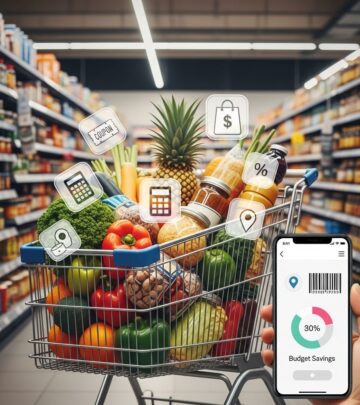
Additionally, consumers are increasingly exploring ways to save on groceries through creative shopping strategies, deals, and alternative retailers. This consumer adaptation, while helping individual shoppers manage expenses, ultimately benefits large retailers like Walmart and Costco, which offer private-label alternatives and volume discounts that smaller competitors cannot match.
Frequently Asked Questions
Q: Why are grocery store stocks performing better than the overall stock market?
A: Supermarket stocks are outperforming because retailers are raising prices beyond actual cost increases, expanding profit margins significantly. These margin expansions translate directly to higher earnings, which drive stock valuations. Companies like Sprouts, Costco, and Kroger have seen gains of 190% to 445% over five years as they maintain elevated prices while carefully managing costs.
Q: How much more are grocery stores charging beyond inflation?
A: The Federal Trade Commission found that retailers’ profit margins exceeded their cost increases both during and after the pandemic. In Kroger’s antitrust trial, the company admitted to raising prices for staples like eggs and milk at rates significantly higher than their cost inflation, demonstrating deliberate price-gouging.
Q: Will grocery prices ever come down?
A: Experts increasingly believe grocery prices will not significantly decline. Consumers have adjusted expectations to higher price levels, companies have restructured operations around current pricing, and retailers lack competitive incentive to reduce prices. While modest moderation may occur as commodity prices normalize, prices are unlikely to return to pre-2020 levels.
Q: Which grocery stocks have performed best over the past five years?
A: Sprouts Farmers Market leads with 445% gains, followed by Costco (190%), Kroger (117%), Walmart (102%), and Ingles Markets (84%). All dramatically outperformed the S&P 500’s 86% gain, demonstrating that aggressive pricing strategies translate to superior stock returns.
Q: What categories of food have the highest price inflation?
A: Meats, poultry, fish, and eggs lead with 3% annual increases. Beef and veal specifically are up 14.7% year-over-year. Nonalcoholic beverages are up 1.9%. Conversely, dairy products, fruits, and vegetables have actually seen slight disinflation of 0.2%, though these gains remain modest.
References
- Grocery Stores Have Hiked Prices Beyond Inflation — and Their Stocks Are Soaring — Money Magazine. 2024. https://money.com/grocery-store-prices-inflation-stocks/
- Inflation: Prices Rise for Groceries, Rent, Health Insurance — Money Magazine. 2022. https://money.com/inflation-food-rent-price-increase/
- Grocery Store Greedflation – Is Price Gouging Behind Higher Food Costs? — YouTube. 2023. https://www.youtube.com/watch?v=_30tGAZEZ5o
- Grocery Prices Are ‘Never’ Coming Down, Experts Say — Money Magazine. 2024. https://money.com/grocery-prices-may-never-fall/
- What Was Up with Grocery Prices? — Federal Reserve Bank of New York Liberty Street Economics. 2024. https://libertystreeteconomics.newyorkfed.org/2024/07/what-was-up-with-grocery-prices/
Similar Articles








Read full bio of medha deb