Great Federal Credit Union Options for 2025
Explore top federal credit unions offering competitive rates, lower fees, and member benefits.

Understanding Federal Credit Unions and Their Advantages
Federal credit unions represent a unique segment of the financial services industry, offering members a compelling alternative to traditional banking institutions. Unlike conventional banks that operate as for-profit entities owned by investors, federal credit unions function as not-for-profit organizations owned by their members. This fundamental structural difference has profound implications for how these institutions operate and the benefits they provide to their constituents.
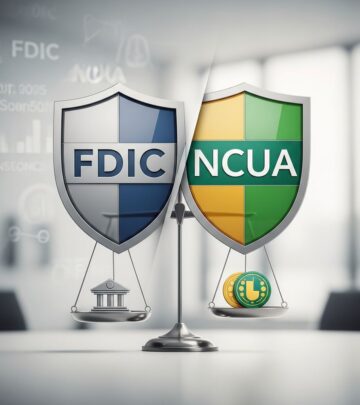
The distinction between credit unions and banks extends beyond mere organizational philosophy. Credit unions are federally insured by the National Credit Union Administration (NCUA), which provides the same level of deposit protection as the Federal Deposit Insurance Corporation (FDIC) at traditional banks, insuring deposits up to $250,000. This ensures that members’ funds remain protected regardless of the institution’s financial circumstances.
One of the most significant advantages of choosing a federal credit union is the potential for superior interest rates and lower fees. Because credit unions operate on a not-for-profit basis, any surplus funds are returned to members in the form of better rates on savings accounts and loans, as well as reduced fees on various banking services. Additionally, the NCUA caps the interest rates that credit unions can charge on credit cards at 18% APR, compared to the average credit card rate of 21.76% at traditional banks as of October 2024.
The Largest Federal Credit Unions in America
The credit union sector has experienced remarkable growth in recent years. Total assets in federally insured credit unions have increased by approximately 45 percent over the past five years, growing from $1.64 trillion in March 2020 to $2.38 trillion in June 2025, according to the National Credit Union Administration.
Top Credit Unions by Assets
| Rank | Credit Union Name | Total Assets | Members | Branches |
|---|---|---|---|---|
| 1 | Navy Federal | $191.7 billion | 14+ million | 300+ |
| 2 | State Employees’ | $56.2 billion | 2.9 million | 260+ |
| 3 | SchoolsFirst | $34 billion | N/A | N/A |
| 4 | Pentagon Federal | $29.9 billion | 2.7 million | 39 |
| 5 | Boeing Employees | $28.9 billion | 1.5 million | N/A |
| 6 | America First | $22.8 billion | 1.5 million | N/A |
| 7 | Mountain America | $21.5 billion | 1.3 million | 100+ |
| 8 | Golden 1 | $20.5 billion | 1.1 million | 63 |
| 9 | Alliant | $19.9 billion | 900,000 | Online-only |
Navy Federal Credit Union: The Nation’s Largest
Navy Federal Credit Union stands as the largest credit union in the United States, with total assets of $191.7 billion and more than 14 million members. The institution operates over 300 branches nationwide and maintains over $160 billion in deposits, making it a powerhouse in the financial services industry.
As a comprehensive financial services provider, Navy Federal offers an extensive range of products and services tailored to meet diverse financial needs. Members have access to traditional deposit products including checking and savings accounts, along with credit products such as credit cards and auto loans. The member-owned structure means that Navy Federal’s leadership focuses on delivering value to account holders rather than maximizing shareholder returns.
One of Navy Federal’s distinguishing characteristics is the breadth of its membership eligibility criteria. While the credit union initially served military personnel and their families, membership eligibility has expanded considerably, making it accessible to a much wider audience than many might expect.
State Employees’ Credit Union: A Regional Leader
Chartered in 1937, State Employees’ Credit Union holds the position as the second-largest credit union in the United States with total assets of $56.2 billion. The institution serves more than 2.9 million members and operates more than 260 branches, all strategically located throughout North Carolina.
State Employees’ maintains a strong regional presence with its headquarters in Raleigh, North Carolina. The credit union maintains deposits exceeding $50 billion and continues to be a vital financial resource for its member base. Membership is primarily open to North Carolina state employees and their families, though the exact eligibility requirements may vary based on current membership policies.
SchoolsFirst, Pentagon Federal, and Other Major Players
SchoolsFirst Credit Union ranks as the third-largest credit union in the country with $34 billion in assets, serving educators and school employees primarily in California.
Pentagon Federal Credit Union, also known as PenFed, ranks as the fourth-largest credit union despite moving down one position from 2024 to 2025. With $29.9 billion in total assets and more than 2.7 million members, PenFed operates just 39 branches scattered across the United States but maintains a robust online presence. The credit union offers a comprehensive spectrum of financial products, including certificates of deposit, money market accounts, and both checking and savings accounts. A significant advantage of PenFed is that membership is open to anyone, regardless of military affiliation or geographic location.
Boeing Employees’ Credit Union remains the fifth-largest credit union in the nation for the second consecutive year and is the largest credit union headquartered in Washington state. BECU serves more than 1.5 million members who hold deposits exceeding $25 billion. While membership was traditionally limited to Boeing employees, eligibility has expanded to include those who live, work, or attend school in Washington state, as well as residents of select counties in Oregon, Idaho, and South Carolina.
Growing Regional Credit Unions
America First Credit Union, founded in 1939, has strengthened its position in the ranking system, advancing from seventh place in 2024 to sixth place in 2025. This Utah-based institution boasts 1.5 million members and maintains deposits exceeding $20 billion. The credit union’s branch network is concentrated primarily in Utah, with membership available to those who live, work, worship, or attend school in Salt Lake and Juab Counties, as well as select portions of Arizona, Nevada, New Mexico, Idaho, and Oregon.
Mountain America Credit Union experienced a significant advancement, moving two positions up from ninth largest in 2024 to seventh largest in 2025. The credit union operates primarily in the western United States, serving more than 1.3 million members with deposits exceeding $19 billion. Mountain America maintains over 100 branches strategically positioned throughout Utah, New Mexico, Arizona, Idaho, Nevada, and Montana.
Golden 1 Credit Union, chartered in 1933, ranks as the eighth-largest credit union in 2025, though it held the sixth position in 2024. Serving more than 1.1 million members with deposits exceeding $18 billion, Golden 1 offers a comprehensive range of both deposit and loan products. The credit union maintains 63 branches throughout California.
Alliant Credit Union rounds out the top nine with $19.9 billion in assets and more than 900,000 members. As an online-only credit union with no physical branches, Alliant offers a unique value proposition for members who prefer digital banking solutions and don’t require in-person branch visits.
Key Benefits of Federal Credit Union Membership
Member Ownership and Democratic Governance
One of the most compelling reasons to join a federal credit union is the member-ownership structure. Unlike traditional banks where shareholders make decisions, credit union members have the right to vote in elections for board members who represent their interests and help determine the strategic direction of the institution. This democratic approach to governance ensures that member interests remain at the forefront of institutional decision-making.
Competitive Interest Rates
Federal credit unions are positioned to offer more competitive interest rates compared to traditional banks. The NCUA’s regulatory framework caps credit union credit card rates at 18% APR, significantly below the industry average of 21.76% charged by many banks. Additionally, credit unions typically offer higher interest rates on savings products and lower rates on loans, returning the benefits of their not-for-profit status directly to members.
Lower Fees and Better Service
Credit unions typically charge lower fees than traditional banks. Many credit union members can open checking accounts with no monthly maintenance fees and without minimum balance requirements. Furthermore, credit unions often participate in surcharge-free ATM networks, allowing members to avoid fees when accessing their funds through affiliated ATMs outside their institution’s branch network.
Financial Security and Insurance Protection
Federal credit unions provide the same level of deposit insurance protection as traditional banks. The NCUA insures member deposits up to $250,000, ensuring financial security even if the institution fails. This protection mirrors the coverage provided by the FDIC at conventional banks.
Membership Eligibility and Access
Membership in federal credit unions varies significantly based on the institution. Some credit unions maintain occupational or geographic restrictions—for example, Navy Federal traditionally served military personnel, while State Employees’ serves North Carolina state employees. However, membership eligibility has expanded at many institutions, making access more democratic.
Some credit unions offer alternative pathways to membership. For instance, Alliant Credit Union provides free membership after individuals join the non-profit Alliant Foundation, with the credit union even making a $5 donation on the member’s behalf. Other credit unions allow membership through making small donations to designated nonprofit organizations.
Credit Unions in 2025: Growth and Challenges
The credit union sector continues evolving to meet changing consumer needs. Financial institutions within the sector are focused on growing their direct member base, recognizing that long-term success depends on building strong relationships with account holders who maintain multiple products and services.
The industry faces certain challenges in 2025, including competitive pressure around deposit growth as interest rates stabilize and economic conditions shift. However, credit unions that maintain strong asset quality, manage their balance sheets effectively, and focus on member value proposition remain well-positioned for continued growth.
Choosing the Right Federal Credit Union for Your Needs
Selecting a federal credit union requires considering several factors based on your individual financial situation and preferences. If you value convenience and extensive branch access, Navy Federal’s 300+ branches provide significant advantages. If you prefer online banking and want to avoid branch visits, Alliant’s online-only model may be ideal.
Consider your geographic location, employment status, and specific financial needs when evaluating options. Regional credit unions like Mountain America, America First, or Golden 1 may offer better rates and more personalized service if you live within their service areas. For those with military connections or who simply value the benefits of a member-owned institution, Navy Federal or Pentagon Federal remain excellent choices.
Frequently Asked Questions
Q: What is the main difference between a federal credit union and a traditional bank?
A: Federal credit unions are not-for-profit, member-owned institutions, while traditional banks are for-profit entities owned by investors. This means credit unions return profits to members through better rates and lower fees, whereas banks prioritize shareholder returns.
Q: Are my deposits insured at a federal credit union?
A: Yes, deposits at federal credit unions are insured by the NCUA up to $250,000, providing the same level of protection as the FDIC insurance at traditional banks.
Q: Do all federal credit unions have the same membership requirements?
A: No, membership requirements vary by credit union. Some have occupational or geographic restrictions, while others like Pentagon Federal are open to anyone. It’s important to check specific eligibility criteria for each institution.
Q: Can I access my money at other credit union ATMs?
A: Most federal credit unions participate in surcharge-free ATM networks, allowing members to withdraw funds from numerous affiliated ATMs without paying fees, even outside their home institution’s branch network.
Q: What types of financial products do federal credit unions offer?
A: Federal credit unions typically offer a comprehensive range of deposit products including checking and savings accounts, certificates of deposit, and money market accounts, along with credit products such as personal loans, auto loans, mortgages, and credit cards.
Q: How do federal credit unions determine their interest rates?
A: The NCUA regulates credit union interest rates, capping credit card APRs at 18%. Additionally, credit unions set rates based on their operational costs and member needs rather than market maximization, resulting in more competitive rates compared to traditional banks.
References
- The 10 Largest Credit Unions In The US — Bankrate. 2025-06. https://www.bankrate.com/banking/biggest-credit-unions-in-america/
- 5 Reasons Why Credit Unions Are Better Than Banks — Solarity Credit Union. 2024. https://www.solaritycu.org/post/articles/5-reasons-why-credits-unions-are-better-than-banks
- Credit Unions Seek Elusive Demographic with Youth Banking Rollouts — NASCUS. 2025-05-29. https://www.nascus.org/2025/05/29/credit-unions-seek-elusive-demographic-with-youth-banking-rollouts/
- Credit Unions Can Save You Money. Here’s Why You Should Take a Look — Fortune. 2024. https://fortune.com/article/how-to-join-credit-union/
- How 5 Credit Unions Are Approaching Deposits In 2025 — CreditUnions.com. 2025. https://creditunions.com/features/how-5-credit-unions-are-approaching-deposits-in-2025/
- National Credit Union Administration (NCUA) – Asset and Member Statistics — NCUA. 2025-06. https://www.ncua.gov/
Similar Articles








Read full bio of Sneha Tete