Grantor Retained Annuity Trusts Explained
Discover how GRATs enable tax-efficient wealth transfer to heirs through strategic annuity payments and asset growth.
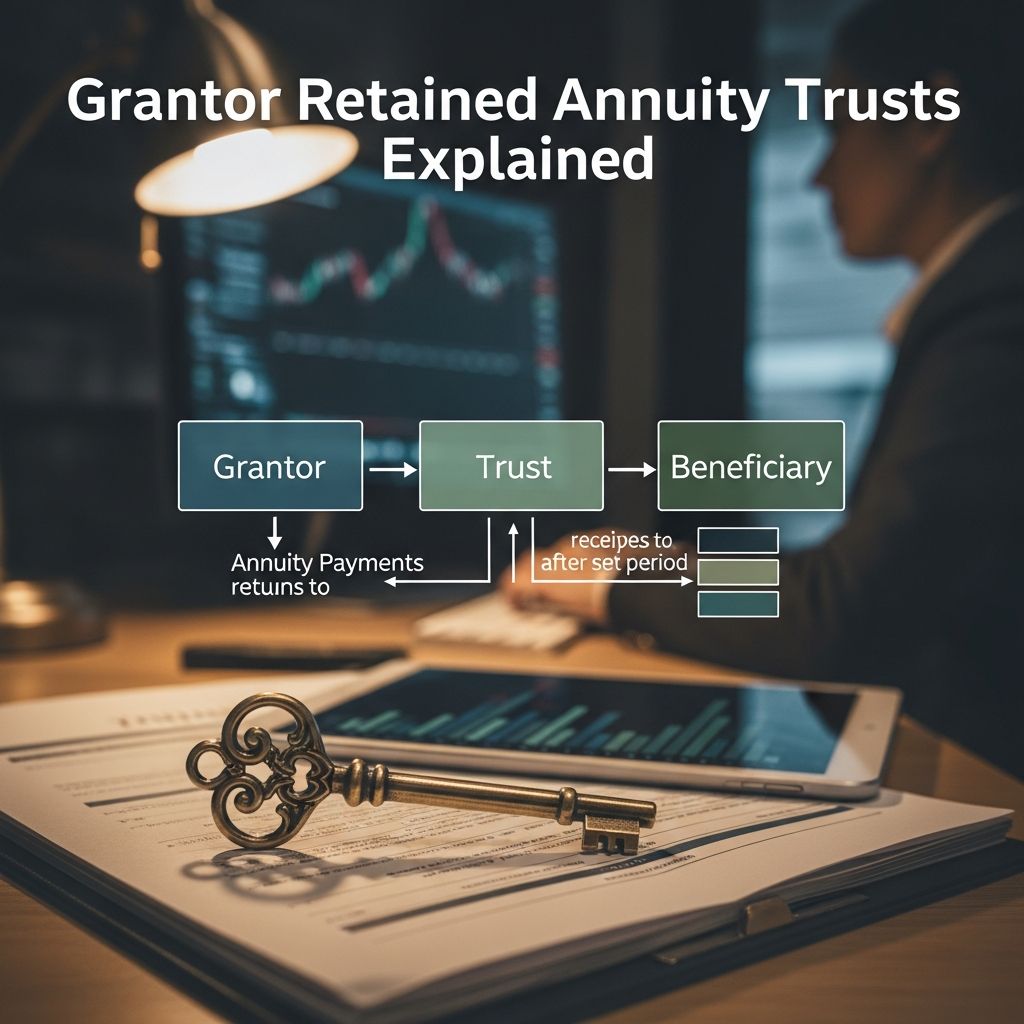
Grantor Retained Annuity Trusts, commonly known as GRATs, serve as sophisticated instruments in estate planning, designed to facilitate the transfer of wealth to future generations with reduced tax implications. By placing appreciating assets into an irrevocable trust, the grantor receives fixed annuity payments over a set period, while any excess growth passes to beneficiaries potentially free of federal gift and estate taxes.
Core Principles of GRAT Functionality
At its essence, a GRAT operates by freezing the value of transferred assets at the time of funding, allowing the grantor to reclaim the principal plus a predetermined interest component through annuity payments. The Internal Revenue Service (IRS) Section 7520 rate, often called the hurdle rate, dictates the minimum return the trust must generate for success. This rate fluctuates monthly based on market conditions, creating opportunities when it’s historically low.
The grantor transfers assets—typically high-growth stocks or business interests—into the trust. Annuity payments, calculated as a percentage of the initial fair market value, return annually, quarterly, or as specified. If assets outperform the hurdle rate, the surplus value transfers to heirs without additional transfer taxes.
Step-by-Step Process to Establish a GRAT
Creating a GRAT demands precision. Here’s how it unfolds:
- Asset Selection: Choose volatile, appreciating assets like concentrated stock positions to maximize upside potential over the hurdle rate.
- Valuation: Obtain a professional appraisal of the assets’ fair market value on the funding date, forming the annuity calculation base.
- Term Determination: Select a term, often 2-10 years, balancing risk of premature death against growth opportunities. Shorter terms reduce mortality risk.
- Annuity Rate Setting: Define the payout rate to zero out the gift tax value, ensuring minimal taxable remainder initially.
- Trust Execution: Draft the irrevocable document with an estate attorney, naming beneficiaries and an independent trustee.
- Funding and Payments: Transfer assets; receive annuities starting at term’s outset.
Tax Implications Across GRAT Lifecycle
GRATs excel in tax efficiency but carry nuances.
| Tax Type | GRAT Treatment | Key Details |
|---|---|---|
| Gift Tax | Minimal or Zero | Structured as ‘zeroed-out’ GRAT; retained annuity value offsets transferred amount. |
| Income Tax | Grantor Pays | Grantor reports all trust income on personal return; annuities tax-free as return of basis. |
| Estate Tax | Avoided on Growth | Remainder passes tax-free if grantor survives term; annuities includible but offset by payments. |
| GST Tax | Applicable | Generation-skipping transfer tax may apply to skip beneficiaries; allocate exemption strategically. |
If the grantor dies during the term, undelivered annuities revert to the estate, potentially triggering inclusion. A ‘survivor’s GRAT’ clause can mitigate this by directing payments to a spouse for marital deduction.
Strategic Variations for Optimized Outcomes
GRATs aren’t one-size-fits-all; variations enhance flexibility.
- Zeroed-Out GRAT: Annuity calibrated to consume entire value at IRS rate; pure upside bet with no gift tax downside.
- Increasing Annuity GRAT: Payments escalate up to 120% annually, back-loading for greater remainder potential in rising markets.
- Rolling GRATs: Sequence short-term GRATs; unsuccessful ones ‘roll’ assets into new ones, compounding opportunities.
- Laddered GRATs: Multiple GRATs with staggered terms hedge against varying interest rates and mortality risks.
Asset substitution powers allow grantors to swap equivalent-value holdings, optimizing performance without tax events.
Illustrative Examples of GRAT Performance
Consider a $5 million GRAT funded in October 2024 at 4.4% Section 7520 rate over 5 years. Annual annuity: approximately $1,135,796. Outcomes:
- At 4.4% Return: Trust depletes; grantor recovers all, beneficiaries get zero (no worse off, minus fees).
- At 6.4% Return (20% outperformance): Remainder ~$5.68 million (or $6.25 million backloaded) to heirs tax-free.
In low-rate environments (e.g., post-2008), GRATs transferred billions tax-free, as seen in high-profile uses by executives divesting stock.
Potential Risks and Mitigation Tactics
GRATs offer upside but aren’t risk-free.
- Mortality Risk: Death during term includes remainder in estate. Mitigate with short terms or spousal provisions.
- Underperformance: Assets below hurdle erode remainder. Solution: High-beta assets, substitution rights.
- Interest Rate Volatility: Rising rates post-funding hurt. Time funding when rates dip.
- Costs: Legal/setup fees ($10k+), annual admin. Offset by tax savings on large transfers.
- Irrevocability: No unwind; requires commitment. Pre-funding modeling essential.
Ideal Candidates and Timing Considerations
GRATs suit high-net-worth individuals with:
- Concentrated, appreciating positions (e.g., founder stock).
- Expectation of strong market returns.
- Large estates nearing exemption limits ($13.61M per person in 2024, sunsetting 2026).
- Good health for term survival.
Optimal timing: Low Section 7520 rates (under 3-4%), bullish asset outlook. Monitor IRS announcements monthly.
Integration with Broader Estate Strategies
GRATs complement other tools:
- With Dynasty Trusts: Remainder into perpetual trusts for multi-generational planning.
- CLAT Pairing: Charitable Lead Annuity Trust for philanthropy + family wealth.
- SLAT Synergy: Spousal Lifetime Access Trust for liquidity.
- IdGT Alternative: Intentionally Defective Grantor Trust for sales to IDGTs post-GRAT.
Consult integrated planning to allocate exemptions efficiently amid looming Tax Cuts and Jobs Act changes.
Frequently Asked Questions (FAQs)
What assets work best in a GRAT?
Appreciating, non-income producing assets like private stock, real estate, or business interests outperform the hurdle rate most effectively.
Can I be my own trustee?
Typically no; independent trustee required to avoid inclusion risks and ensure arm’s-length management.
What if rates change after funding?
Hurdle fixed at funding month; subsequent changes don’t retroact but inform new GRATs.
Are GRATs available to everyone?
Best for estates over $10M+ with growth assets; smaller estates may not justify costs.
How do GRATs fare in recessions?
Poorly if assets decline; zeroed-out structure limits loss to fees, enabling restarts.
Professional Guidance Imperative
GRATs demand customization. Engage board-certified estate attorneys, CPAs, and advisors for modeling, compliance, and state-specific nuances. Projections using Monte Carlo simulations assess success probabilities.
References
- Grantor-retained annuity trust — Cornell Law School Legal Information Institute. Accessed 2026. https://www.law.cornell.edu/wex/grantor-retained_annuity_trust
- Understanding Grantor Retained Annuity Trust (GRAT) — Western & Southern Financial Group. Accessed 2026. https://www.westernsouthern.com/retirement/grantor-retained-annuity-trust
- What is a grantor retained annuity trust (GRAT)? — Fidelity Investments. Accessed 2026. https://www.fidelity.com/viewpoints/wealth-management/insights/grantor-retained-annuity-trusts
- Understanding Grantor Retained Annuity Trusts — Sterlington PLLC. 2024-10. https://www.sterlingtonlaw.com/understanding-grantor-retained-annuity-trusts/
- What is a Grantor Retained Annuity Trust (GRAT)? — City National Bank. Accessed 2026. https://www.cnb.com/private-banking/insights/grantor-retained-annuity-trust.html
- Estate planning Q&A: Grantor Retained Annuity Trusts explained — RSM US LLP. 2024. https://rsmus.com/insights/tax-alerts/2024/grantor-retained-annuity-trusts-explained.html
Similar Articles








Read full bio of Sneha Tete