Debt-To-Income Ratio: 4 Simple Steps To Calculate Your DTI
Understanding debt-to-income ratios: Calculate yours and improve your financial health today.

What is a Debt-to-Income Ratio?
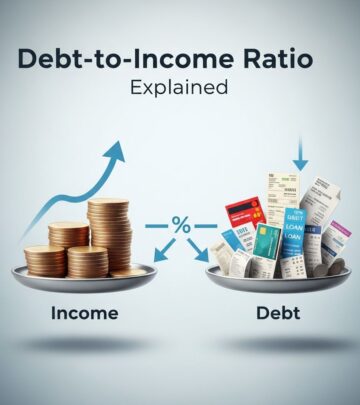
Your debt-to-income ratio, commonly referred to as DTI, is a financial metric that represents the percentage of your gross monthly income that goes toward paying your monthly debt obligations. This ratio serves as a critical indicator to lenders about your ability to manage additional debt and meet financial commitments. Understanding this metric is essential for anyone considering taking out a loan, whether for a mortgage, auto purchase, or other major financial decision.
The debt-to-income ratio essentially tells the story of your financial health by comparing what you owe each month to what you earn. It’s a straightforward calculation that provides lenders with a snapshot of your financial capacity and risk profile as a borrower.
How to Calculate Your Debt-to-Income Ratio
Calculating your debt-to-income ratio involves a simple mathematical formula that any borrower can perform in just a few minutes. Here’s the step-by-step process:
Step 1: Add Up All Monthly Debt Obligations
Begin by listing all your monthly debt payments. This includes:
– Mortgage or rent payments (including property taxes and homeowners insurance)
– Auto loan payments
– Student loan payments (even if deferred)
– Personal loan payments
– Minimum credit card payments
– Child support or alimony
– Any other debt appearing on your credit report
Step 2: Determine Your Gross Monthly Income
Your gross monthly income is your total earnings before any taxes or deductions are taken out. This includes your salary, wages, bonuses, and any other regular income sources. For self-employed individuals, this would typically be your average monthly income over the past two years.
Step 3: Perform the Division
Divide your total monthly debt payments by your gross monthly income. This gives you your DTI as a decimal number.
Step 4: Convert to a Percentage
Multiply the result by 100 to express your debt-to-income ratio as a percentage.
Example Calculation
Consider this practical example: If your monthly debt obligations total $1,500 and your gross monthly income is $6,000, you would calculate: $1,500 ÷ $6,000 = 0.25 × 100 = 25%. This means 25% of your gross monthly income goes toward debt payments. Many borrowers find using an online debt-to-income calculator helpful for ensuring accuracy, though the manual calculation is quite straightforward.
What’s Considered a Good Debt-to-Income Ratio?
The answer to what constitutes a “good” debt-to-income ratio depends on several factors, including the type of loan you’re seeking and your specific lender’s requirements. However, general guidelines provide helpful benchmarks for evaluating your financial position.
General DTI Guidelines
According to financial experts, a “good” debt-to-income ratio is typically 35% or less. A ratio of 50% or higher is generally considered an indicator of financial difficulties. Most lenders prefer to see a ratio between 35% and 45%, though specific thresholds vary by lending institution and loan product.
DTI Requirements by Loan Type
| Loan Type | Preferred DTI Range | Notes ||———–|——————-|——-|| Conventional Mortgages | 43-45% or less | Some lenders may approve up to 50% with strong compensating factors || FHA Loans | Up to 50% | Allows higher ratios with positive credit factors || VA Loans | Up to 50% or higher | Designed for veterans with flexible requirements || USDA Loans | 41% or less | Lower threshold due to 100% loan-to-value || Auto Loans | Varies | Generally more lenient than mortgage lenders || Personal Loans | Varies | Depends on lender’s risk assessment |
Conventional home loan programs typically prefer a debt-to-income ratio of 45% or less, though this isn’t necessarily a hard-stop threshold. Other factors such as your loan-to-value ratio and credit profile can influence approval decisions. FHA and VA loans offer more flexibility, allowing ratios above 45% as long as other positive factors are present. USDA loans maintain stricter requirements with a maximum DTI of 41% due to their 100% loan-to-value structure, meaning no down payment is required.
The 28/36 Rule Explained
A widely recognized benchmark in the lending industry is the 28/36 rule, which provides more granular guidance for mortgage borrowers. This rule suggests that no more than 28% of your gross monthly income should go toward housing-related debts, which includes your mortgage payment, property taxes, homeowners insurance, and HOA fees. This is known as your “front-end” DTI ratio.
Additionally, your total debt-to-income ratio, including all debts, should not exceed 36% of your gross monthly income. This is your “back-end” DTI ratio. Following the 28/36 rule ensures that if your mortgage payment uses 28% of your income, your remaining debt obligations should total no more than 8% to stay within the overall 36% threshold.
What’s Included in Your Debt-to-Income Calculation?
Accurately calculating your DTI requires understanding exactly which obligations should be included. Here’s a comprehensive breakdown:
Obligations That Count
– Monthly mortgage or rent payments (including property taxes, insurance, and HOA fees)
– Auto loan payments
– Student loan payments (including deferred loans)
– Personal loan payments
– Minimum monthly credit card payments
– Child support or alimony obligations
– Lease payments
– Any debt appearing on your credit report
Obligations That Typically Don’t Count
Utilities, insurance premiums (except those included in mortgage payments), groceries, and other living expenses are generally not included in DTI calculations. However, it’s important to note that different lenders may have varying criteria, so it’s always wise to verify with your specific lender.
How Your DTI Ratio Affects Loan Approval
Your debt-to-income ratio plays a significant role in loan approval decisions and the terms you receive. A lower DTI indicates that you’re a lower-risk borrower with substantial income remaining after debt obligations. This typically results in easier approval and more favorable interest rates.
Conversely, a higher DTI suggests you have less financial flexibility and may represent a higher risk to lenders. A DTI above 43% often makes loan approval more challenging and may result in less favorable loan terms. When your DTI exceeds 50%, you’re generally considered to have inadequate income to comfortably handle your current debt obligations, let alone additional borrowing.
Strategies to Improve Your Debt-to-Income Ratio
If your current DTI is higher than desired, several actionable strategies can help you improve it before applying for a loan.
Pay Down Existing Debt
The most direct approach to lowering your DTI is paying off existing debts, particularly high-balance credit cards or personal loans. By reducing your monthly debt payments, you immediately lower your numerator in the DTI calculation. However, ensure you maintain adequate cash reserves for your down payment and emergency expenses before aggressively paying down debt.
Consolidate High-Interest Debt
If you have multiple debts at varying interest rates, consolidating them into a single loan with a lower interest rate can reduce your overall monthly payment obligation. This strategy doesn’t eliminate debt but makes monthly payments more manageable and improves your DTI ratio. Many borrowers find debt consolidation loans effective for this purpose.
Increase Your Income
If paying down debt isn’t immediately feasible, increasing your gross monthly income will lower your DTI ratio. This could involve asking for a raise, taking a second job, or earning additional income through freelance work. Even modest income increases can significantly impact your DTI calculation.
Avoid Taking on New Debt
Before applying for a loan, refrain from opening new credit card accounts or taking out new loans, as these actions add to your debt obligations and negatively impact your DTI.
Dispute Errors on Your Credit Report
Occasionally, incorrect debts appear on credit reports. If you identify any errors, dispute them with the credit bureau. Removing erroneous debts can lower your actual monthly obligations.
DTI and Your Credit Score
While your debt-to-income ratio doesn’t directly affect your credit score, it does influence your ability to manage debt responsibly. Lenders use your DTI when making lending decisions, which can indirectly impact your credit profile. Additionally, if your high DTI leads to missed payments or defaults, those negative marks will directly damage your credit score.
Why Lenders Care About Your DTI Ratio
Lenders use your debt-to-income ratio as a risk assessment tool. It helps them determine whether you have sufficient income to comfortably handle additional debt obligations. A borrower with a low DTI demonstrates that they’re managing their current debts well and have financial capacity for new lending. This reduces the lender’s risk of default and increases the likelihood of timely repayment.
Frequently Asked Questions
Q: What is the average American’s debt-to-income ratio?
A: According to recent data, most Americans fall well below the “good” DTI cutoff, with an average ratio of approximately 26%. The average household carries about $1,225 in monthly debt payments.
Q: Can I get approved for a mortgage with a DTI above 45%?
A: Yes, it’s possible. While 45% is the typical threshold for conventional mortgages, approval above this level depends on compensating factors such as excellent credit scores, significant cash reserves, low loan-to-value ratios, and stable employment history.
Q: Should I pay off debt before applying for a mortgage?
A: It depends on your situation. While paying off debt improves your DTI, ensure you maintain sufficient cash reserves for your down payment and closing costs. Sometimes consolidating debt to lower monthly payments is more beneficial than paying it off entirely.
Q: How quickly can I improve my debt-to-income ratio?
A: DTI improvements depend on your strategy. Paying down debt provides immediate results, while increasing income may take time. Most financial experts recommend starting debt reduction efforts at least 6-12 months before applying for major loans.
Q: Does my spouse’s DTI affect my loan application?
A: If you’re applying for a loan jointly, lenders combine your debts and income to calculate a combined DTI. If applying individually, only your personal DTI matters, but the lender may still consider your spouse’s income if community property laws apply in your state.
Q: What if my income varies due to self-employment?
A: Most lenders use a two-year average of your self-employment income to calculate your gross monthly income. This smooths out income fluctuations and provides a more stable basis for DTI calculation.
Conclusion
Understanding your debt-to-income ratio is fundamental to managing your financial health and improving your chances of loan approval. By calculating your current DTI, comparing it to industry benchmarks, and implementing strategic improvements, you can position yourself for better borrowing terms and greater financial flexibility. Whether you’re planning to purchase a home, buy a car, or secure personal financing, maintaining a healthy DTI ratio demonstrates responsible financial management and increases your appeal to lenders.
References
- What is a Good Debt to Income Ratio and How to Calculate Yours — AgSouth Farm Credit. 2024. https://www.agsouthfc.com/news/blog/what-good-debt-income-ratio-and-how-calculate-yours
- What’s a Good Debt-to-Income Ratio? — Money. 2024. https://money.com/good-debt-to-income-ratio/
- What is Debt-to-Income (DTI) Ratio & Why is It Important — Bank of America. 2024. https://bettermoneyhabits.bankofamerica.com/en/credit/what-is-debt-to-income-ratio
- How much debt is too much? | DTI ratio targets — Citizens Bank. 2024. https://www.citizensbank.com/learning/how-much-debt-is-too-much.aspx
- How to Lower Your Debt-to-Income Ratio Before Applying for a Loan — Experian. 2024. https://www.experian.com/blogs/ask-experian/how-to-reduce-dti-before-applying-for-loan/
- What Is a Good Debt-To-Income Ratio For a Mortgage? — Money. 2024. https://money.com/what-is-a-good-debt-to-income-ratio-for-a-mortgage/
Similar Articles








Read full bio of medha deb