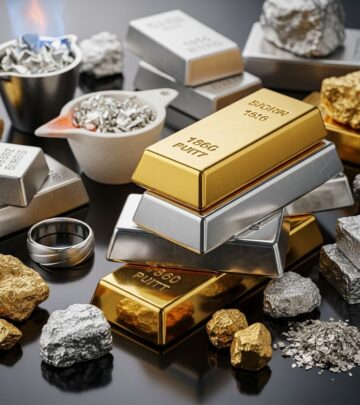
Gold’s Industrial Applications Beyond Jewelry
Discover how gold powers modern technology, medicine, and aerospace beyond its role in jewelry and investment.

Beyond Jewelry and Bars: Gold’s Industrial Applications
While gold has long been celebrated as a symbol of wealth and luxury, its true value extends far beyond the glittering jewelry adorning wrists and necks around the world. Gold is a precious metal whose unique physical and chemical properties make it indispensable in numerous industrial sectors, from cutting-edge consumer electronics to life-saving medical devices and advanced aerospace technologies. Understanding these industrial applications provides insight into why gold remains one of the most sought-after materials in the modern economy, commanding consistent demand from industries that depend on its irreplaceable properties.
Despite popular perception, industrial applications represent a significant portion of global gold consumption. While jewelry and investments dominate the headlines, accounting for approximately 90% of gold use in traditional markets, the remaining 10% drives substantial economic value through specialized industrial applications. This industrial segment accounts for roughly 300 tonnes of gold consumed annually across various sectors, with the electronics industry alone driving approximately 80% of industrial gold demand. These applications reveal gold as a critical material in technologies that shape modern life, from the smartphones in our pockets to the spacecraft exploring the cosmos.
Gold in Electronics: The Backbone of Modern Technology
The electronics industry represents the primary industrial consumer of gold, leveraging the metal’s exceptional electrical conductivity and corrosion resistance to create reliable components that power contemporary devices. Gold’s unique combination of properties makes it ideal for applications where performance and longevity are non-negotiable.
Electrical Conductivity and Component Applications
Gold possesses exceptionally high electrical conductivity, making it the preferred material for creating reliable electrical connectors, bonding wires, and other critical electronic components. This conductivity ensures efficient signal transmission without degradation, a property essential in high-performance devices. Semiconductors and microchips found in computers and mobile phones frequently incorporate gold, with smartphones containing approximately 50 milligrams of gold essential for their electrical connections. It is estimated that around 300 tonnes of gold are used in electronic components annually, with approximately 7% of the world’s gold found in such devices.
Corrosion Resistance and Device Longevity
Gold’s resistance to corrosion and oxidation distinguishes it from other conductive metals, ensuring that electronic components maintain their functionality over extended periods and under challenging environmental conditions. This property is particularly valuable in connectors and contact points, where oxidation would compromise performance. The metal’s reliability under extreme conditions enhances device performance and longevity, making gold a cost-effective choice despite its premium price point.
Gold in Aerospace: Protecting Spacecraft and Aircraft
The aerospace industry values gold for its remarkable ability to reflect infrared radiation and withstand extreme conditions encountered in space and high-altitude flight. Gold’s unique thermal management properties make it essential for protecting sensitive equipment and maintaining optimal operating temperatures.
Thermal Protection and Radiation Shielding
Gold reflects up to 98 percent of infrared radiation, a property that has proven invaluable in aerospace applications where temperature regulation is critical. Spacecraft employ gold-plated panels integrated into their structures to reflect infrared rays and help regulate device temperatures in the extreme environment of space. This thermal protection extends the operational life of sensitive electronics and ensures mission success in conditions where traditional materials would fail.
Aircraft and Space Applications
Beyond spacecraft, the aerospace industry uses gold leaf to coat parts of aircraft engines, satellites, and space capsules to protect them against extreme temperatures and radiation. Gold is also used as a component of aircraft windscreen coatings to help reflect infrared radiation, protecting pilots and sensitive instruments from UV exposure. Additional aerospace applications include:
- Turbine blades in aircraft engines
- Electrical connectors throughout aircraft systems
- Circuit breakers and spark plugs
- Satellite wire and communication systems
- Lubrication for mechanical parts in space environments
Gold’s reliability and unique thermal properties make it a preferred choice for space missions where equipment failure is not an option.
Gold in the Automotive Industry
The automotive sector, particularly manufacturers of high-performance vehicles, has recognized gold’s exceptional thermal insulation properties as a solution for protecting sensitive mechanical components.
Thermal Protection in High-Performance Vehicles
The automotive industry takes advantage of gold’s excellent thermal insulation qualities to prevent high temperatures from damaging the mechanics of Formula 1 cars and supercars from prestigious brands such as McLaren and Koenigsegg. By incorporating gold into vehicle design, manufacturers protect critical components from heat damage while maintaining peak performance standards. This application demonstrates how gold’s properties extend beyond electronics into mechanical protection.
Gold in Medical and Healthcare Applications
The medical sector has long recognized gold’s biocompatibility and non-reactive nature, making it an ideal material for applications ranging from diagnostic procedures to therapeutic treatments and surgical implants.
Dental and Prosthetic Applications
One of the most commonly known uses of gold in medicine is in dentistry, where the precious metal is used in some crowns and fillings. Gold’s strength and biocompatibility help protect teeth and create a durable barrier of protection against decay and damage. Technological advancements have refined the use of gold in dentistry, offering patients durable and aesthetic solutions to dental issues.
Medical Devices and Implants
Gold’s non-reactive and non-toxic properties make it ideal for use in prostheses and implantable medical devices, such as pacemakers. Healthcare professionals rely on gold electrodes and gold wires in pacemakers and other cardiac devices, where biocompatibility and reliability are essential. Additionally, gold wire may be used in the coil of a cochlear implant, demonstrating its versatility across different medical specialties.
Therapeutic and Diagnostic Applications
Nowadays, gold compounds are utilized to treat rheumatoid arthritis, taking advantage of gold’s anti-inflammatory properties. Gold alloys are employed in implants across various medical disciplines, while colloid gold is used in immunogold electron microscopy for advanced diagnostic techniques. Gold nanoparticles are used in biomedicine in diagnostic techniques for the detection of cancer cells and in treatment of rheumatoid arthritis and muscle pain.
The advent of gold nanotechnology offers promising advancements in cancer treatment and diagnostic imaging, showcasing the metal’s potential in innovative medical solutions. Gold’s application in medicine ranges from diagnostic procedures to treatment, including its use in radiology and targeted drug delivery systems.
Gold in Environmental Technologies
Gold’s catalytic properties are increasingly leveraged in chemical reactions to reduce environmental pollutants, marking its contribution to cleaner production methods and sustainable manufacturing processes.
Catalytic Properties and Pollution Reduction
Gold nanoparticles can catalyze the oxidation of carbon monoxide (CO) to carbon dioxide (CO2) at room temperature, effectively reducing the concentration of this toxic gas in the air. This application is particularly relevant in enclosed spaces and industrial settings where carbon monoxide can accumulate to dangerous levels. Gold’s catalytic properties also make it valuable in chemical processes within fuel cells and automotive catalysts, supporting the transition toward cleaner energy solutions.
Gold in Renewable Energy and Sustainable Technologies
Looking ahead, gold’s applications in renewable energy represent a frontier of industrial development, particularly in solar panel technology and emerging wearable devices that integrate electronic components into everyday fabrics.
Solar Panels and Organic Photovoltaic Cells
Gold is used in solar panels to improve electrical conductivity, enhancing their efficiency in converting sunlight into usable energy. Gold’s potential in green technologies is further demonstrated by its use in organic photovoltaic cells (OPVs), which enable more efficient solar energy conversion and highlight gold’s role in the transition towards sustainable energy solutions.
Organic photovoltaic cells offer several advantages over traditional silicon-based solar technology:
- Lighter weight, reducing structural requirements and installation costs
- Greater flexibility, enabling integration into curved surfaces and unconventional installations
- Potentially cheaper to manufacture than traditional silicon-based solar cells
Gold’s role in OPVs lies in its ability to facilitate more efficient solar energy conversion, thereby improving the performance and viability of these green technologies.
Wearable Technology and Electronic Textiles
The flexibility and conductive properties of gold are paving the way for innovations in wearable technology. Electronic textiles, or e-textiles, integrate electronic components into fabric to create clothing that can monitor health, track fitness, or even change color or temperature. Gold’s ability to withstand bending and stretching without breaking makes it an excellent choice for creating conductive threads and components in these smart fabrics. Its reliability and efficiency in conducting electrical signals ensure that wearable devices are not only functional but also durable and comfortable to wear.
Comparative Industrial Demand for Gold
| Application Sector | Percentage of Industrial Gold Use | Key Properties Utilized |
|---|---|---|
| Electronics | ~80% | Electrical conductivity, corrosion resistance |
| Aerospace | ~10-15% | Infrared reflection, thermal protection |
| Medicine & Dentistry | ~5% | Biocompatibility, anti-inflammatory properties |
| Automotive | ~2-3% | Thermal insulation |
| Environmental & Renewable Energy | ~2-3% | Catalytic properties, conductivity |
Investment Implications and Market Dynamics
The industrial applications of gold speak to its dual nature as both a consumer good and an investment asset, with diverse sources of demand supporting stable pricing and consistent market value. While jewelry remains the dominant use for newly mined gold, industrial demand provides a foundational floor for prices by creating continuous, specialized demand from industries where gold cannot be easily replaced by alternative materials. Understanding these industrial applications helps investors appreciate gold’s long-term value proposition beyond its traditional role as a store of wealth.
Frequently Asked Questions About Gold’s Industrial Applications
Q: What percentage of gold is used for industrial applications?
A: Approximately 10-11% of all gold produced globally is used for industrial purposes, with the remaining portion allocated to jewelry (50-70%), investment (20-40%), and central bank reserves.
Q: Why is gold preferred over other conductive metals in electronics?
A: Gold offers superior electrical conductivity combined with exceptional resistance to corrosion and oxidation, ensuring reliable performance and longevity in electronic components where other metals might degrade or fail.
Q: How much gold is contained in a typical smartphone?
A: A typical smartphone contains approximately 50 milligrams of gold, primarily used in electrical connectors and circuitry to ensure reliable device functionality.
Q: What makes gold valuable in aerospace applications?
A: Gold reflects up to 98% of infrared radiation and withstands extreme temperatures and radiation in space, making it essential for protecting sensitive spacecraft equipment and regulating temperatures in harsh environments.
Q: Are there emerging industrial uses for gold beyond traditional applications?
A: Yes, gold nanoparticles are increasingly used in renewable energy (organic photovoltaic cells), wearable electronics (e-textiles), advanced medical diagnostics, and environmental catalysis for pollution reduction.
Q: How does industrial demand affect gold’s market price?
A: Industrial demand provides consistent, specialized demand for gold that cannot be easily replaced by alternatives, creating a foundational support for prices independent of jewelry demand or investment speculation.
References
- The Industrial Use of Gold — Tavex Bullion. Accessed November 2025. https://tavexbullion.co.uk/the-industrial-use-of-gold/
- Surprising Industrial Uses of Gold — 11Onze. Accessed November 2025. https://www.11onze.cat/en/magazine/surprising-industrial-uses-gold/
- Use of Gold in Industry — Gold Market France. Accessed November 2025. https://www.goldmarket.fr/en/use-of-gold-in-industry/
- What are the Main Uses of Gold — BullionVault. Accessed November 2025. https://www.bullionvault.com/gold-news/infographics/what-are-main-uses-gold
- Gold Demand by Sectors — World Gold Council. Accessed November 2025. https://www.gold.org/about-gold/gold-demand/by-sector
- Gold’s Industrial Applications: What Investors Should Know Now — CBS News. Accessed November 2025. https://www.cbsnews.com/news/golds-industrial-applications-what-investors-should-know-now/
- Industrial Uses of Precious Metals — World Gold Council & Industry Sources. Accessed November 2025. https://www.gold.org/about-gold/gold-demand/by-sector
Similar Articles








Read full bio of medha deb