Golden Cross: Definition, Strategy & Trading Guide
Master the Golden Cross: A comprehensive guide to identifying bullish trends and maximizing trading opportunities.

Understanding the Golden Cross: A Comprehensive Guide to Technical Analysis
The Golden Cross is a fundamental technical indicator that plays a crucial role in identifying potential bullish market opportunities. This powerful trading signal has become essential for traders and investors seeking to capitalize on upward price movements and trend reversals. Whether you’re a beginner learning technical analysis or an experienced trader refining your strategy, understanding the Golden Cross can significantly enhance your decision-making process in financial markets.
What is a Golden Cross?
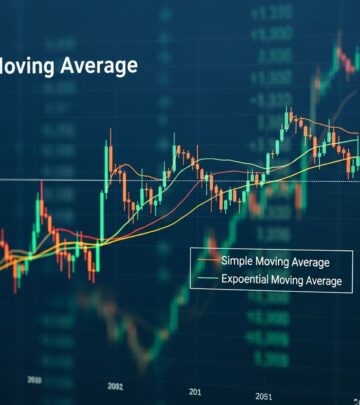
A Golden Cross is a technical indicator that manifests in the market when the short-term moving average (50-day) of an asset surpasses the long-term moving average (200-day). This crossover event is perceived by traders as a sign of a robust bull market and represents a significant shift in market momentum. The occurrence of a Golden Cross suggests that buying pressure is overcoming selling pressure, potentially indicating the beginning of a sustained uptrend.
The Golden Cross comprises three distinct phases that help traders understand market dynamics: In the first phase, a downturn is dying because purchasing enthusiasm is outpacing selling interest. New uptrends emerge in the second phase, with the Golden Cross occurring when the short-term average crosses above the long-term average, signaling the new uptrend. A bull market is confirmed in the final phase through the new uptrend’s persistent advances.
Historical Performance and Market Impact
Research has consistently demonstrated the effectiveness of the Golden Cross as a predictive indicator. According to a study by MarketWatch, the market has experienced an average gain of 9.9% in the year following a Golden Cross, highlighting its potential as a bullish signal. This substantial return suggests that traders who recognize and act upon this signal early may position themselves advantageously in growing markets.
In the cryptocurrency market, the Golden Cross has proven equally effective. According to research from CoinDesk, Bitcoin has seen an average increase of 16.1% in the three months following a Golden Cross, suggesting that this technical indicator is effective across different asset classes. Additionally, a study by Ned Davis Research found that stocks experiencing a Golden Cross outperformed the market by an average of 1.5% over the following three months, highlighting the indicator’s effectiveness in identifying bullish trends.
How to Calculate the Golden Cross
Understanding how to calculate the Golden Cross is essential for any trader looking to implement this strategy effectively. The calculation involves two primary moving averages and a straightforward comparison process.
The Formula
The formula to calculate the Golden Cross is straightforward: Golden Cross occurs when a stock’s 50-day moving average crosses above its 200-day moving average. The 50-day moving average (MA) tracks the stock’s average closing price over the past 50 trading days, while the 200-day MA tracks the average closing price over 200 trading days.
Step-by-Step Calculation Process
To identify a Golden Cross, follow these specific steps:
– Calculate the 50-day moving average of closing prices for the stock over the past 50 trading days- Calculate the 200-day moving average of closing prices for the stock over the past 200 trading days- Compare the two moving averages- If the 50-day MA crosses above the 200-day MA, a golden cross has occurred, signaling a potential buy opportunity
Golden Cross Trading Strategy
Implementing an effective Golden Cross trading strategy requires understanding entry points, exit signals, and risk management principles. Successful traders use this indicator as part of a comprehensive approach to market analysis.
Key Strategic Elements
To use the Golden Cross effectively, traders look for the 50-day moving average to cross above the 200-day moving average on a stock’s chart. This signals potential upside momentum and is seen as a buy signal. When the Golden Cross occurs, traders look to establish long positions in the stock with the expectation that the upward momentum will continue.
Entry Point Strategy
The ideal entry point would be as close to the crossover point as possible. Traders may set buy orders just above the 50-day moving average to try catching the stock early in the new uptrend. This approach allows traders to capitalize on the early stages of potential bullish momentum while minimizing the risk of entering after significant price appreciation.
Risk Management
Effective risk management is critical when trading the Golden Cross. Stop losses are placed below recent swing lows in case the crossover fails. This protective mechanism ensures that traders can exit positions if the anticipated uptrend fails to materialize, limiting potential losses.
Profit Target Determination
Profit targets are determined based on previous upside price objectives or using technical analysis techniques like Fibonacci extensions. By establishing predetermined profit targets, traders can secure gains and avoid the temptation to hold positions too long, which could result in giving back profits.
Optimal Market Conditions
The Golden Cross system works best with stocks showing an established uptrend. This means that the indicator is most reliable when used in conjunction with other confirmation signals that suggest strong bullish momentum. Traders should consider using the Golden Cross alongside volume analysis, price action patterns, and other technical indicators to increase the probability of successful trades.
Advantages of the Golden Cross
The Golden Cross offers several significant advantages for traders and investors:
– Signals potential upside momentum- Indicates opportune time to go long- Provides entry signals for uptrends- Ideal for swing trades and momentum stocks- Identify early entry into new uptrend- Gives possible exit signal when upside exhausted- Confirms bullish trend in intermediate time frame- Earlier entry compared to other lagging indicators
The Death Cross: The Counter-Signal
Understanding the inverse of the Golden Cross—the Death Cross—is equally important for comprehensive market analysis. The Death Cross occurs when a stock’s 50-day moving average crosses below its 200-day moving average, signaling potential downside momentum.
Death Cross Performance Data
Research demonstrates that the Death Cross is equally effective as a bearish indicator. A report from Goldman Sachs found that stocks exhibiting a Death Cross underperformed the market by an average of 2.3% over the subsequent six months, underlining the indicator’s utility in identifying bearish trends. Additionally, MarketWatch research shows an average 7.4% decline over 3 months following a Death Cross.
Death Cross Trading Strategy
When implementing a Death Cross trading strategy, stop losses are placed above the 200-day MA or recent swing highs in case the stock continues upwards. Profit targets are calculated based on previous downside objectives or Fibonacci retracements. Like the Golden Cross, the Death Cross works best with stocks in established downtrends.
Death Cross Advantages
The Death Cross provides traders with several benefits:
– Signals potential downside momentum- Indicates opportune time to go short- Provides entry signals for downtrends- Ideal for swing trades and momentum stocks- Gives possible exit signal when bull run stalls- Confirms bearish trend in intermediate time frame- Earlier entry compared to other lagging indicators- Average 7.4% decline over 3 months
Comparison: Golden Cross vs. Death Cross
| Aspect | Golden Cross | Death Cross |
|---|---|---|
| Definition | 50-day MA crosses above 200-day MA | 50-day MA crosses below 200-day MA |
| Signal Type | Bullish | Bearish |
| Trading Action | Go long / Buy signal | Go short / Sell signal |
| Average Market Performance | 9.9% gain annually; 1.5% outperformance in 3 months | 2.3% underperformance over 6 months; 7.4% decline over 3 months |
| Best Used With | Established uptrends | Established downtrends |
| Stop Loss Placement | Below recent swing lows | Above 200-day MA or recent swing highs |
Frequently Asked Questions (FAQs)
Q: What is the difference between a Golden Cross and a simple moving average crossover?
A: A Golden Cross specifically refers to the 50-day moving average crossing above the 200-day moving average, making it a standardized, widely-recognized signal. While simple moving average crossovers can use any combination of timeframes, the Golden Cross has proven track record of market performance and is extensively studied by traders and analysts.
Q: How reliable is the Golden Cross as a trading signal?
A: The Golden Cross has demonstrated significant reliability across different market conditions and asset classes. Historical data shows approximately 9.9% average annual gains following the signal and 16.1% increases in cryptocurrency markets. However, like all technical indicators, it should be used in conjunction with other analysis methods and is not foolproof.
Q: Can the Golden Cross be used for day trading or is it only for long-term investing?
A: The Golden Cross can be utilized for various trading timeframes, though it is particularly effective for swing trading and intermediate-term positions. While day traders may use it as one component of their strategy, the indicator’s design makes it more suitable for trades lasting weeks to months rather than hours.
Q: What should traders do if they receive conflicting signals from the Golden Cross and other indicators?
A: When the Golden Cross conflicts with other technical indicators, traders should seek additional confirmation from volume analysis, price action patterns, or fundamental analysis. It’s generally wise to wait for multiple confirmatory signals before initiating positions, which reduces false signal trading.
Q: Is the Golden Cross equally effective across all types of securities?
A: The Golden Cross has proven effective across stocks, cryptocurrencies, and other financial instruments. However, effectiveness can vary depending on market conditions, volatility levels, and the specific security being analyzed. Traders should test the indicator on their target assets and timeframes before committing capital.
Q: How do I avoid false signals when trading the Golden Cross?
A: To minimize false signals, traders should: confirm the crossover with volume analysis, ensure the crossover occurs during an established uptrend for best results, use appropriate stop losses below recent swing lows, wait for price confirmation after the crossover, and combine the Golden Cross with other technical indicators for additional validation.
References
- Golden Cross vs Death Cross: Difference, Calculation, Trading — Strike Money. 2025. https://www.strike.money/technical-analysis/golden-cross-vs-death-cross
Similar Articles








Read full bio of medha deb