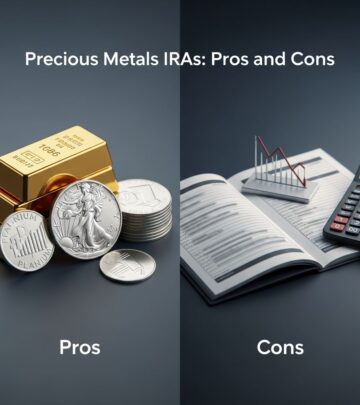
Gold in Your Portfolio: Weighing Pros and Cons
Discover how gold can diversify your portfolio while understanding storage costs and tax implications.

Gold has long been regarded as a store of value and a symbol of wealth, but its role in modern investment portfolios is far more nuanced. Whether you’re a seasoned investor or just beginning to explore the world of personal finance, understanding the advantages and disadvantages of gold investments is essential for making informed decisions about your financial future. This comprehensive guide will help you evaluate whether gold deserves a place in your diversified portfolio.
Understanding Gold as an Investment
Gold investments come in various forms, each offering distinct advantages and challenges. Physical gold investments allow you to own the precious metal directly, giving you complete control over your asset at all times. For those seeking tax advantages while maintaining gold ownership, a gold individual retirement account—or gold IRA—combines the benefits of holding precious metals with the tax-advantaged structure of a conventional IRA.
Alternatively, gold-backed assets such as gold stocks and gold ETFs provide exposure to precious metals without the need to physically hold or store the metal. For sophisticated investors, gold futures and other derivatives offer additional opportunities, though these highly complex instruments can magnify investment losses and are generally not recommended for average retail investors.
The Advantages of Investing in Gold
When executed properly, investing in gold can offer several meaningful benefits to your overall investment strategy. The process of buying gold is relatively straightforward and accessible to most investors. Beyond its simplicity, gold serves multiple strategic purposes within a diversified portfolio.
Portfolio Diversification
One of the most compelling reasons to consider gold is its role as a portfolio diversifier. The precious metals asset class, which includes gold, silver, platinum, and palladium, can provide significant benefits to your nest egg depending on your investment strategy and goals. Diversification is fundamental to building a balanced portfolio because it helps protect against stock market volatility while minimizing overall risk.
With appropriate allocations, holding multiple types of assets can help you manage both risk and return more effectively. When traditional assets like stocks decline in value, gold often maintains or increases its value, helping to offset your losses. This inverse relationship with equities makes gold a potential hedge against volatile economic conditions.
Investors frequently add gold to their portfolios when they anticipate challenging economic periods that might devalue the dollar and other assets. Because of this characteristic, gold is widely considered a safe-haven asset capable of preserving value regardless of broader economic conditions.
High Liquidity
Building a balanced portfolio requires ensuring adequate liquidity—meaning you have access to cash when needed and can purchase better-performing assets when opportunities arise. Without sufficient liquidity, you may miss valuable investment opportunities if high-performing assets suddenly become available but you lack the funds to invest.
Gold enhances your portfolio’s liquidity because it ranks among the easier assets to convert into cash quickly. This is especially true for gold-backed paper assets, such as shares in gold mining companies or exchange-traded funds backed by physical gold. You can typically sell these holdings rapidly during market hours without significant transaction delays.
The Disadvantages of Investing in Gold
Despite its numerous potential advantages, gold investments carry inherent risks and offer no guarantee of positive returns. Understanding these disadvantages is crucial for making balanced investment decisions.
Storage and Insurance Fees
While you have the freedom to purchase and hold physical gold, doing so requires incurring storage and insurance expenses. Your home may not provide adequate security for valuable precious metals, as physical gold investments carry an ongoing theft risk. To protect your investment properly, experts recommend storing gold bars and coins in secure locations such as bank safe deposit boxes or specialized vault facilities.
The fees associated with storing and insuring precious metals can accumulate significantly over time and substantially detract from your investment gains. This ongoing cost burden represents one primary reason why many investors prefer gold mining stocks or other gold-backed paper assets, which eliminate storage concerns entirely.
Lack of Passive Income Generation
Unlike many other investments, physical gold does not produce yield through dividends or interest payments. You only realize returns on your gold investment when prices rise and you sell the metal. Combined with the historical reality that gold prices appreciate slowly compared to other asset classes, this characteristic creates a potential performance lag in your portfolio over extended periods.
If you’re constructing a retirement portfolio specifically designed to generate passive income, a gold IRA might be appropriate. However, it’s important to recognize that even within an IRA structure, gold does not produce yield. Your returns depend solely on price appreciation.
Capital Gains Taxes and Performance Considerations
When you sell gold at a profit, you’ll owe capital gains taxes on those returns. Over the long term, gold has historically delivered significantly lower average annual returns compared to stocks. From 1971 to 2024, the stock market delivered average annual returns of 10.70%, while gold produced average annual returns of 7.98% over the same period.
Additionally, gold typically performs poorly during strong economic periods. When the economy is robust, investors tend to sell gold and redirect funds toward stocks and other growth-oriented assets, often resulting in losses for gold holders.
Comparison of Gold Investment Options
| Investment Type | Pros | Cons | Best For |
|---|---|---|---|
| Physical Gold | Direct ownership, tangible asset, full control | Storage fees, insurance costs, theft risk, no yield | Investors wanting tangible assets despite added costs |
| Gold ETFs | High liquidity, no storage concerns, easy trading | Management fees, no physical ownership, market risk | Most investors seeking convenient gold exposure |
| Gold Mining Stocks | Potential dividends, company growth upside, liquidity | Company-specific risks, correlation to equities | Investors wanting income potential with gold exposure |
| Gold IRA | Tax benefits, retirement savings vehicle | Contribution limits, no yield generation, penalties for early withdrawal | Retirement planning with precious metals |
| Gold Futures | Leverage potential, sophisticated trading opportunities | High complexity, magnified losses, significant risk | Experienced investors only |
How Much Gold Should You Own?
Financial advisors and investment experts generally agree that gold should represent only a small portion of your overall portfolio. The consensus recommendation is to maintain between 3% and 10% of your investment portfolio in gold, depending on your individual risk profile and investment objectives. Some conservative advisors suggest a maximum of 5% for everyday investors.
This measured approach ensures that gold provides meaningful diversification and hedging benefits without allowing it to dominate your portfolio at the expense of growth-oriented investments. The remainder of your portfolio should focus on assets with higher expected growth potential, such as stocks and stock-based investments.
Key Considerations Before Investing in Gold
Understanding Your Investment Goals
Before adding gold to your portfolio, clearly define your investment objectives. Are you seeking portfolio diversification, inflation protection, or a safe-haven asset? Your specific goals will influence which type of gold investment makes the most sense for your situation.
Choosing the Right Gold Format
Gold investors can choose from coins, jewelry, collectibles, and standardized investment products. For pure investment purposes, standardized options with predetermined gold content provide the most clarity. Investment-grade gold bars, for example, must be at least 99.5% pure gold, ensuring you know exactly what you’re purchasing.
Evaluating Your Financial Situation
Consider your current financial condition, investment experience level, and comfort with different asset types. If you’re a novice investor, complex instruments like futures and swaps expose you to magnified risks and potential losses that are best avoided until you gain more experience.
Gold as an Inflation Hedge
One of gold’s primary attractions is its potential to serve as an inflation hedge. When inflation rises, gold often outperforms the stock market, providing valuable portfolio protection. This characteristic makes gold particularly appealing during inflationary periods when other asset classes may struggle.
However, it’s important to recognize that gold prices can be volatile and don’t always move in tandem with inflation in the short term. Timing your gold purchases and sales is challenging, making a long-term investment horizon essential for maximizing the inflation-hedging benefits of gold.
Frequently Asked Questions About Gold Investing
Q: Is gold a good investment in 2025?
A: Gold can be a worthwhile investment component in 2025, particularly for portfolio diversification and hedging against financial instability. However, the decision requires strategic planning based on your specific financial goals and risk tolerance.
Q: What are the tax implications of gold investments?
A: When you sell gold at a profit, you’ll owe capital gains taxes on those returns. Gold IRAs offer tax-advantaged structures, but even these vehicles don’t generate annual yield. Consult a tax professional about your specific situation.
Q: Should I buy physical gold or gold ETFs?
A: Physical gold provides direct ownership but comes with storage and insurance costs. Gold ETFs offer convenience and liquidity without storage concerns. Your choice depends on your preference for tangible assets versus ease of trading.
Q: How volatile is the gold market?
A: While gold is generally less volatile than stocks, its price can fluctuate significantly, especially in the short term. Short-term investors should be particularly cautious about market swings and price volatility risks.
Q: What percentage of my portfolio should be gold?
A: Most financial advisors recommend keeping between 3% and 10% of your investment portfolio in gold, with 5% being a common conservative target for average investors.
Summary: Making Your Gold Investment Decision
Gold can add an element of balance and security to your investment portfolio through its hedging capabilities and liquidity benefits. However, investors must carefully consider the associated risks and costs. If you hold gold bullion in physical form, budget for storage and insurance expenses. Remember that physical gold generates no passive income and becomes subject to capital gains taxes when sold.
When determining appropriate gold allocation for your portfolio, keep in mind that financial advisors recommend a maximum of 5-10% in gold. This measured approach allows you to benefit from gold’s diversification properties while maintaining focus on growth-oriented investments. Before making any investment decisions, evaluate your portfolio strategy, current financial condition, and personal investing objectives to determine which gold investment products align with your needs and comfort level.
References
- Pros and Cons of Having Gold in Your Portfolio — Money. 2024. https://money.com/pros-and-cons-of-having-gold-in-your-portfolio/
- What Are the Pros and Cons of Investing in Gold Now? — Captrust. 2024. https://www.captrust.com/resources/investing-in-gold/
- Pros And Cons To Investing In Gold: A Complete Guide — Nasdaq. 2024. https://www.nasdaq.com/articles/pros-and-cons-investing-gold-complete-guide
- Does gold investing still make sense? Pros and cons to know for 2025 — CBS News. 2024. https://www.cbsnews.com/news/does-gold-investing-still-make-sense-pros-and-cons-to-know-for-2025/
- How to Buy Gold to Diversify Your Portfolio — Charles Schwab. 2024. https://www.schwab.com/learn/story/adding-gold-to-your-portfolio
Similar Articles








Read full bio of medha deb