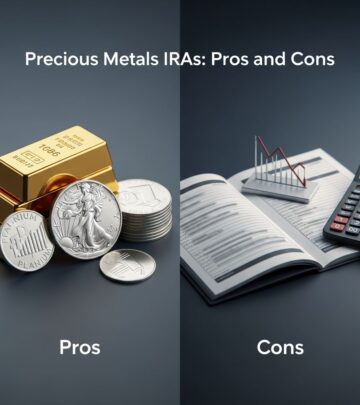
Gold IRA: Definition, Benefits, and Investment Guide
Complete guide to Gold IRAs: Learn how to invest in precious metals for retirement security.

A Gold IRA, also known as a precious metals IRA, is a specialized individual retirement account that allows investors to hold physical gold and other approved precious metals as part of their retirement savings strategy. Unlike traditional IRAs and 401(k)s that primarily focus on stocks, bonds, and mutual funds, a Gold IRA provides a unique opportunity to diversify retirement portfolios with tangible assets. This self-directed retirement account has gained significant attention among investors seeking to protect their wealth against inflation and economic uncertainty.
What Is a Gold IRA?
A Gold IRA is essentially a self-directed individual retirement account that permits investors to include physical gold coins and bullion as core holdings within their retirement portfolio. This retirement vehicle functions similarly to traditional IRAs, maintaining the same contribution limits and tax treatment options, but with the distinctive advantage of allowing precious metal investments. The account must be managed by an IRS-approved custodian or trustee, such as a bank or specialized brokerage firm, to ensure compliance with federal regulations.
The primary characteristic distinguishing a Gold IRA from conventional retirement accounts is its focus on tangible assets. Rather than holding paper-based investments, account holders own actual physical precious metals stored in secure, IRS-approved depositories. This approach appeals to investors who view precious metals as a reliable store of value and a hedge against market volatility.
Types of Gold IRAs
Gold IRAs come in multiple formats, mirroring the structure of conventional retirement accounts. Understanding these distinctions helps investors select the option that best aligns with their financial situation and retirement objectives.
Traditional Gold IRAs
Traditional Gold IRAs operate with pretax contributions, allowing investors to deduct contributions from their current taxable income, potentially reducing their tax liability in the contribution year. The significant advantage lies in tax-deferred growth—all earnings and appreciation within the account accumulate without annual taxation. Investors only pay taxes on withdrawals taken during retirement, typically when they may be in a lower tax bracket. This structure appeals to individuals seeking immediate tax relief and those who anticipate lower retirement income.
Roth Gold IRAs
Roth Gold IRAs operate under a fundamentally different tax framework. Contributions are made with after-tax dollars, meaning investors do not receive an immediate tax deduction. However, the substantial benefit emerges during retirement: qualified withdrawals are entirely tax-free. This option proves advantageous for younger investors with decades until retirement, those expecting higher retirement income, or individuals who prefer predictable tax-free retirement income. The tax-free withdrawal feature of Roth accounts provides significant long-term value when investments appreciate substantially.
Eligible Precious Metals for Gold IRAs
The IRS maintains strict guidelines regarding which precious metals and specific forms qualify for inclusion in Gold IRAs. These regulations ensure quality standards and prevent speculative collectibles from dominating accounts.
Gold Requirements
Gold held in IRAs must meet minimum purity standards of at least 99.5% fineness. Eligible forms include specific bullion coins such as American Gold Eagles and Canadian Gold Maple Leafs, as well as approved gold bars produced by recognized refineries. Importantly, collectible or numismatic coins—those valued primarily for rarity, age, or historical significance rather than metal content—are explicitly prohibited from Gold IRAs.
Other Approved Precious Metals
Beyond gold, three additional precious metals meet IRS approval for retirement accounts:
- Silver: Must meet 99.9% fineness standards; eligible forms include American Silver Eagles and Canadian Silver Maple Leafs
- Platinum: Requires 99.95% purity; approved coins include American Platinum Eagles
- Palladium: Must achieve 99.95% fineness; includes American Palladium Eagles and other NYMEX or COMEX-approved forms
These metals must be held in bullion form—either coins or bars—that directly reflect spot market prices rather than collectible premiums.
Contribution Limits and Regulations
Gold IRAs follow identical contribution limits as traditional and Roth IRAs. For 2025, the standard contribution limit is $7,000 annually for individuals under age 50. Those aged 50 and older benefit from a catch-up contribution provision, allowing an additional $1,000 annually, bringing their total to $8,000. These limits apply across all IRA accounts combined—contributions to multiple IRAs cannot exceed the annual maximum regardless of account type.
Annual contribution limits remain consistent whether funds go into precious metals or conventional securities. However, investors cannot contribute more simply because they hold multiple IRA types. The IRS enforces these limits strictly, and excess contributions face penalty taxes.
Tax Advantages of Gold IRAs
Gold IRAs provide the same tax benefits as conventional IRAs, making them attractive vehicles for tax-efficient retirement savings.
Tax-Deferred Growth
Both Traditional and Roth Gold IRAs offer tax-deferred or tax-free accumulation. With Traditional accounts, precious metals appreciate without triggering annual taxation. Investors defer tax obligations until they take distributions, potentially during years with lower income. This compounding effect, occurring without annual tax drains, can substantially enhance long-term wealth accumulation.
Tax-Free Withdrawals
Roth Gold IRA holders enjoy perhaps the most compelling tax advantage: qualified withdrawals are completely tax-free. This means if an investor’s gold holdings appreciate from $50,000 to $150,000 over their working years, the entire $100,000 gain emerges tax-free during retirement. This becomes increasingly valuable as precious metals appreciate over extended investment horizons.
Fees and Costs Associated with Gold IRAs
While Gold IRAs offer unique benefits, they typically involve higher fees than standard retirement accounts, a critical factor in investment planning.
Storage Fees
Precious metals must be held in IRS-approved depositories, and custodians charge annual storage fees for this safekeeping. These fees vary by custodian and storage provider, typically ranging from modest percentages of account value to flat annual amounts. Storage costs directly reduce net returns and warrant careful comparison when selecting providers.
Custodial Fees
Annual maintenance and custodial administration fees apply to manage the account and ensure IRS compliance. Many precious metals IRA specialists charge annual fees, unlike some traditional IRA providers offering accounts at no cost.
Setup and Transaction Costs
Initial account establishment may involve setup fees. Purchasing precious metals through IRA custodians typically involves markups above spot prices, known as premiums. Selling metals involves transaction costs as well.
Advantages of Gold IRAs
Despite higher fees, Gold IRAs offer compelling benefits for appropriate investors.
| Advantage | Description |
|---|---|
| Inflation Hedge | Gold historically preserves purchasing power during inflationary periods, protecting retirement savings from currency devaluation |
| Portfolio Diversification | Adding precious metals reduces correlation with stocks and bonds, smoothing portfolio volatility |
| Tangible Assets | Physical precious metals provide ownership of real assets rather than paper claims or digital entries |
| Economic Uncertainty Protection | During geopolitical tensions, trade wars, or financial instability, precious metals often appreciate as safe-haven assets |
| Tax Efficiency | Tax-deferred or tax-free growth accelerates wealth accumulation compared to taxable accounts |
Disadvantages and Risks of Gold IRAs
Prospective Gold IRA investors must carefully weigh several significant disadvantages before committing.
Price Volatility
Gold prices fluctuate daily based on global economic conditions, interest rates, and investor sentiment. This volatility can result in significant short-term value swings, making Gold IRAs unsuitable for investors uncomfortable with price uncertainty. Extended periods of declining gold prices can diminish retirement savings.
Limited Income Generation
Unlike dividend-paying stocks or bonds generating periodic income, physical gold produces no cash flow. Returns depend entirely on price appreciation. This static income generation contrasts sharply with traditional IRA investments providing dividends or interest.
Liquidity Concerns
Converting physical precious metals back to cash proves more complex than selling stocks or bonds. The market for specific coins or bullion bars may be limited, potentially requiring extended timeframes to achieve advantageous selling prices. Gold IRAs lack the instantaneous liquidity of paper assets.
Counterfeiting Risks
Precious metals markets face counterfeiting threats, particularly for high-value bars and coins. This risk necessitates dealing exclusively with reputable custodians and dealers to ensure authenticity. Counterfeit metals pose total financial loss dangers.
Storage and Security Requirements
Physical gold requires secure storage in approved depositories, incurring ongoing fees. Account holders cannot personally store metals; this restriction satisfies IRS requirements but eliminates direct control over holdings.
How to Open a Gold IRA
Establishing a Gold IRA involves several deliberate steps to ensure IRS compliance and proper account structure.
Select a Precious Metals IRA Company
Research and compare specialized Gold IRA companies that facilitate account establishment, metal purchases, and custodial relationships. These companies guide investors through the process and coordinate with custodians.
Choose an IRS-Approved Custodian
The custodian manages your account, holds precious metals in approved depositories, and ensures regulatory compliance. Custodians must be banks, federally insured credit unions, or IRS-approved entities meeting strict Treasury standards.
Fund Your Account
Gold IRAs can be funded through new contributions or transfers from existing IRAs and 401(k)s. Direct transfers are typically preferable, as they avoid potential tax penalties and withholding complications.
Select and Purchase Metals
Choose from approved precious metals forms. Many investors emphasize bullion bars and coins directly reflecting spot prices rather than numismatic coins carrying collectible premiums.
Arrange Storage
Your custodian arranges storage in an approved depository, typically a segregated account maintaining your specific metals separate from other investors’ holdings.
Gold IRA Rollovers and Transfers
Investors with existing IRAs or 401(k)s can transition these funds into Gold IRAs through structured processes.
Direct Transfers
Most investors prefer direct transfers, where funds move directly from an existing custodian to a Gold IRA custodian without passing through the investor’s hands. This approach avoids income taxation and potential early withdrawal penalties, making it the recommended method.
Rollover Considerations
Traditional IRAs and 401(k)s can be rolled into Traditional Gold IRAs. Roth conversion strategies allow transitioning pre-tax funds into Roth Gold IRAs, though this triggers taxation on converted amounts in the conversion year. Proper timing and tax planning are essential for rollover optimization.
Distribution Rules and Withdrawal Strategies
Gold IRA distribution rules mirror those of conventional IRAs, requiring strategic planning for retirement income.
Qualified Withdrawals
Account holders may liquidate precious metals for cash or take physical possession. Both actions constitute IRA distributions subject to tax treatment based on account type. Traditional IRA distributions face income taxation; Roth qualified distributions remain tax-free if account holders are at least 59½ and have held the Roth account for five years minimum.
Required Minimum Distributions
Beginning at age 73, Traditional IRA holders must take required minimum distributions annually, calculated from account balances. Roth IRAs impose no lifetime required distributions, offering flexibility for beneficiary planning.
Frequently Asked Questions About Gold IRAs
Can You Hold Actual Gold in an IRA?
Yes, provided the gold meets IRS purity standards of at least 99.5% fineness and takes approved forms such as bullion coins or bars. An IRS-approved custodian must hold and manage the physical gold in a secure depository; individual account holders cannot personally possess the metals.
What Are the IRS Purity Requirements for Precious Metals?
Gold must meet 99.5% purity minimums. Silver requires 99.9% fineness. Platinum and palladium both require 99.95% purity standards.
Are Collectible Coins Permitted in Gold IRAs?
No. Collectible or numismatic coins valued for rarity or historical significance are explicitly prohibited. Only bullion coins and bars directly reflecting spot metal prices are permitted.
What Happens to My Gold IRA Upon Death?
Beneficiaries inherit Gold IRA assets according to estate planning documents. They may continue the account, liquidate holdings for cash distributions, or take physical possession of precious metals. Beneficiary rules and tax treatment depend on the account type and beneficiary relationship.
Can You Directly Hold Gold Outside an IRA?
Yes. Investors may own physical precious metals outside retirement accounts, though without tax-deferred or tax-free growth advantages. Direct ownership requires personal security arrangements and lacks the regulatory protections of IRA accounts.
Gold IRA Investment Considerations for 2025
Current market dynamics make Gold IRA consideration particularly relevant. Rising geopolitical tensions, trade uncertainty, and inflation concerns have elevated precious metals’ appeal as portfolio stabilizers. Gold’s historical role as a safe-haven asset becomes increasingly valued during economic instability. For investors seeking inflation protection and portfolio diversification in today’s uncertain environment, Gold IRAs present a structured vehicle for precious metals accumulation within tax-advantaged retirement frameworks.
Conclusion
Gold IRAs represent a distinctive retirement savings vehicle combining the tax advantages of conventional IRAs with the tangible asset benefits of precious metals ownership. By permitting investment in physical gold, silver, platinum, and palladium, Gold IRAs enable portfolio diversification and inflation protection within regulated structures. While higher fees and limited liquidity present legitimate considerations, the tax efficiency, inflation hedging capabilities, and economic uncertainty protection make Gold IRAs valuable components of comprehensive retirement strategies for appropriate investors. Consulting financial advisors and tax professionals ensures proper account structuring and compliance with ever-evolving IRS regulations.
References
- Gold IRA: What It Is, How It Works, and Risks of Investing — CLUTE Institute. 2025. https://clutejournals.com/article/what-is-a-gold-ira/
- Individual Retirement Account (IRA) Requirements — Internal Revenue Service (IRS). Updated 2025. https://www.irs.gov/retirement-plans/individual-retirement-accounts-iras
- Taxpayer Relief Act of 1997 — U.S. Congress. 1997. https://www.congress.gov/105/plaws/publ34/PLAW-105publ34.html
- Publication 590: Individual Retirement Arrangements — Internal Revenue Service (IRS). Updated 2024. https://www.irs.gov/pub/irs-pdf/p590.pdf
- Precious Metals Market Standards and Requirements — COMEX/NYMEX (CME Group). Updated 2024. https://www.cmegroup.com/markets/metals/precious-metals.html
Similar Articles








Read full bio of medha deb