Gold Bars Now Worth $1 Million as Prices Hit Record Highs
Gold prices surge past $2,790 per ounce, pushing standard bars over $1 million for the first time.

Gold Bars Are Now Worth a Record $1 Million. Will Prices Keep Rising?
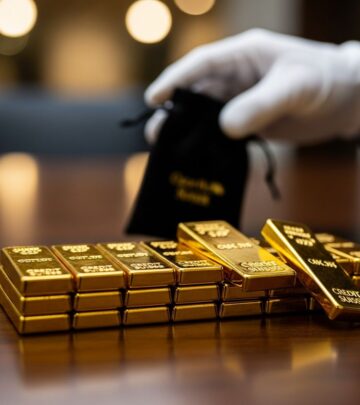
In a historic milestone, the price of gold has reached unprecedented levels, pushing the value of standard gold bars beyond $1 million for the first time. This remarkable achievement reflects significant shifts in the global economy, investor sentiment, and monetary policy. With gold hitting $2,790.07 per troy ounce earlier this year, an average 400-ounce gold bar now carries a value exceeding $1.1 million. This surge has captured the attention of both seasoned investors and casual buyers, with even major retailers like Costco experiencing unprecedented demand for their gold bar offerings.
The journey to this historic price point represents more than just a numerical milestone—it signifies changing economic conditions and investor preferences during uncertain times. Understanding the factors behind this surge, the performance of gold compared to traditional investments, and the implications for future market movements is crucial for anyone considering precious metals as part of their investment strategy.
Understanding Gold’s Record-Breaking Ascent
The path to $1 million gold bars reflects a confluence of economic factors that have created an ideal environment for precious metal appreciation. Standard gold bars, which typically weigh 400 troy ounces, have become valuable enough to cross this symbolic threshold. This price movement didn’t occur overnight but rather resulted from sustained upward pressure on gold prices throughout the year. The significance of this milestone extends beyond mere numbers—it represents a fundamental shift in how investors view gold’s role in their portfolios and their confidence in traditional currency stability.
Why Gold Prices Are Rising
Multiple interconnected factors have contributed to gold’s remarkable price surge. Understanding these drivers is essential for predicting future market movements and making informed investment decisions.
Federal Reserve Interest Rate Policy
Historically, gold prices maintain a negative correlation with interest rates. When interest rates decline, investors find fewer attractive returns in traditional fixed-income investments, driving them toward alternative assets like gold. The Federal Reserve’s decision to cut its effective federal funds rate (EFFR) at successive Federal Open Market Committee meetings has been one of the primary catalysts behind gold’s latest record high. With forecasts indicating continued rate cuts throughout the final months of the year, this relationship continues to support elevated gold prices. Lower rates reduce the opportunity cost of holding non-yielding assets like gold, making the precious metal more attractive to investors seeking value preservation.
Stock Market Volatility and Investor Sentiment
Another significant contributor to gold’s surge is increased volatility in equity markets. Although major market indices recovered from summer sell-offs and subsequent pullbacks, analysts expect turbulence to persist. The Chicago Board Options Exchange’s CBOE Volatility Index rose approximately 42% from late September through October, reflecting investor anxiety about market stability. Gold, long recognized as a safe-haven asset, attracts capital during periods of stock market uncertainty. When investors grow concerned about equity valuations and economic conditions, they redirect funds toward gold, which historically maintains value during market downturns and currency devaluation periods.
Geopolitical and Economic Uncertainty
Beyond monetary policy and market volatility, several macroeconomic concerns have reinforced gold’s appeal. These include persistent geopolitical tensions in the Middle East and Ukraine, ongoing recession fears, and the broader economic uncertainty surrounding presidential elections. Such factors create demand for assets perceived as safe stores of value, further supporting elevated gold prices. Investors facing multiple sources of uncertainty naturally gravitate toward precious metals as a hedge against various economic risks.
Gold’s Performance vs. Traditional Stocks
The performance comparison between gold and equities in 2024 reveals a striking divergence from historical patterns. Gold has significantly outperformed traditional stock market investments, demonstrating its value as a diversification tool during uncertain economic periods.
| Asset Class | Year-to-Date Performance | Key Characteristics |
|---|---|---|
| Gold | +38% in 2024 | Safe-haven asset, inflation hedge, volatile short-term |
| S&P 500 | +21% in 2024 | Growth-oriented, dividend potential, economic cycle sensitive |
The 38% gain in gold prices during 2024 represents the most dramatic annual rise since the pandemic period, when gold gained 25% between March 2020 and August 2020. This outperformance underscores gold’s effectiveness as a portfolio diversifier during periods of economic stress. While the S&P 500’s solid 21% gain reflects underlying economic resilience, gold’s superior performance highlights investor preference for safe-haven assets amid prevailing uncertainties.
Looking Ahead: Will Prices Continue Rising?
Predicting gold’s future price trajectory requires balancing multiple competing factors. The outlook for continued gold appreciation appears supported by several considerations. Expected additional rate cuts by the Federal Reserve should continue benefiting gold prices, as lower rates reduce the attractiveness of yield-bearing investments. However, the degree to which further price increases materialize will depend on how broader economic conditions evolve and how investors reassess risk factors.
Conversely, if economic conditions stabilize, inflation moderates more significantly, or the Federal Reserve reverses course on rate cuts, gold prices could face downward pressure. The relationship between interest rates and gold prices, while historically reliable, is not immutable and can shift with changing market perceptions and macroeconomic conditions. Additionally, strong stock market performance could reduce the safe-haven demand that currently supports elevated gold prices.
Investors should recognize that gold’s price path is inherently uncertain and influenced by numerous unpredictable variables. Geopolitical developments, currency movements, inflation trends, and shifts in investor sentiment can all significantly impact gold valuations. Rather than attempting to time gold prices perfectly, investors typically benefit more from adopting a measured, long-term approach to precious metal allocation within their portfolios.
Gold Investment Considerations and Portfolio Strategy
While gold’s recent performance has been exceptional, prospective investors should approach precious metals with appropriate perspective regarding portfolio construction. Financial advisors typically recommend limiting alternative assets like gold to no more than 10% of a total investment portfolio. This allocation ceiling reflects the reality that gold, despite its appeal as a safe-haven asset, remains a speculative investment that lacks the earning potential of productive assets like stocks or real estate.
The distinction between physical gold ownership and paper gold investments merits consideration. Physical bars and coins provide tangible assets but require secure storage, insurance, and face challenges when liquidation becomes necessary. Alternative approaches, including gold exchange-traded funds (ETFs) or gold mining company stocks, offer greater liquidity and convenience while providing exposure to precious metal price movements. Each approach carries distinct advantages and disadvantages depending on individual investment objectives, risk tolerance, and portfolio requirements.
The Broader Context of Precious Metals Markets
Gold’s ascent to $1 million per standard bar occurs within a broader shift toward precious metals as alternative investments. This trend extends beyond gold to include silver and platinum, as investors diversify their holdings across multiple precious metals. The psychological and practical significance of the $1 million milestone cannot be ignored—round number targets often capture media attention and reinforce investor perception of asset appreciation, which can itself become a self-fulfilling prophecy supporting further price increases.
Understanding gold prices within this broader context helps investors recognize both opportunities and risks. While gold’s current momentum appears supported by genuine economic factors, sustained price appreciation at current levels would require continued adverse conditions in equity markets or persistent monetary accommodation. Investors should avoid extrapolating recent performance trends indefinitely, recognizing instead that all asset prices undergo cyclical patterns of expansion and contraction.
Practical Implications for Investors
For those considering gold investments at current price levels, several practical considerations warrant attention. First, investors should clarify their investment objectives—whether seeking portfolio diversification, inflation hedging, or speculation on further price appreciation. Second, they should evaluate whether physical gold ownership or alternative investment vehicles better suit their circumstances. Third, investors must ensure any gold allocation represents an appropriate portion of their overall portfolio rather than an outsized bet on precious metal price direction.
Additionally, investors should monitor economic conditions and monetary policy developments that historically influence gold prices. Changes to Federal Reserve policy, inflation trends, interest rate movements, and geopolitical developments all warrant attention as potential catalysts for gold price adjustments. By remaining informed about these factors, investors can make more purposeful decisions regarding their precious metals exposure.
Frequently Asked Questions (FAQs)
Q: What is the current price of a standard gold bar?
A: A standard 400-ounce gold bar is now worth over $1.1 million, based on gold prices exceeding $2,790 per troy ounce. However, prices fluctuate continuously based on market conditions.
Q: Why are gold prices rising?
A: Gold prices are rising due to Federal Reserve interest rate cuts, stock market volatility, geopolitical uncertainty, and investors’ desire for safe-haven assets. Lower interest rates reduce the opportunity cost of holding gold.
Q: Should I invest in gold at these high prices?
A: Gold allocation should typically not exceed 10% of your portfolio. Consider your investment objectives, risk tolerance, and time horizon before committing to precious metals. Gold works best as part of a diversified portfolio rather than as a standalone investment.
Q: Is gold a good inflation hedge?
A: Yes, gold has historically served as an inflation hedge, maintaining purchasing power during periods of currency devaluation and rising prices. This characteristic makes it attractive to investors concerned about inflation.
Q: How does gold compare to stocks as an investment?
A: Gold and stocks serve different portfolio purposes. Gold provides stability and acts as a safe-haven asset during market stress, while stocks offer growth potential and earning power. Most investors benefit from holding both within a diversified portfolio.
Q: Can gold prices fall from current levels?
A: Yes, gold prices can decline if economic conditions stabilize, inflation moderates, interest rates stop declining, or investor sentiment shifts toward equities. All assets experience cyclical price movements.
References
- Gold Bars Are Now Worth a Record $1 Million. Will Prices Keep Rising? — Money Magazine. 2024. https://money.com/gold-bars-worth-1-million-dollars/
- Costco’s Gold Bars Remain a Hot Commodity — Money Magazine. January 2025. https://money.com/costco-is-selling-out-of-gold-bars/
- Federal Reserve Interest Rate Decisions and Market Impact — Board of Governors of the Federal Reserve System. 2024. https://www.federalreserve.gov/
- For the First Time, Gold Bars Are Worth $1 Million Dollars — My Modern Met. August 2024. https://mymodernmet.com/gold-bars-worth-million-for-first-time/
- Buyer Beware: Costco Gold Is Easier to Purchase Than Sell — Money Magazine. 2024. https://money.com/how-to-sell-gold-costco-bars/
- CBOE Volatility Index Historical Data — Chicago Board Options Exchange. 2024. https://www.cboe.com/
Similar Articles








Read full bio of Sneha Tete