Going Vegan Without Going Broke: The Budget-Friendly Guide
Discover practical strategies to adopt a vegan lifestyle while slashing your grocery bill and saving over $650 annually on food costs.
Adopting a vegan diet offers health benefits like reduced risk of obesity, type 2 diabetes, and heart disease, but many worry about the cost. Research shows a low-fat vegan diet actually cuts grocery expenses by 19%, or $1.80 per day—over $650 annually—compared to a standard American diet with meat and dairy. Savings come from ditching expensive animal products ($2.90/day on meat alone) while staples like beans and grains cost pennies per serving. This guide mirrors proven strategies to go vegan affordably, covering planning, shopping, cooking, and more, all grounded in high-credibility data.
Why Going Vegan Saves Money: The Research
A randomized crossover trial published in JAMA Network Open compared a low-fat vegan diet (fruits, vegetables, grains, beans) to a Mediterranean diet. Vegan participants saw total food costs drop 19% from baseline (−$1.8/day; 95% CI, −$2.6 to −$1.0; P < .001), versus no change on Mediterranean (+$0.6/day). The vegan diet was 25% cheaper overall (−$2.4/day vs. Mediterranean). Key savings: meat (−$2.9/day), dairy (−$0.5/day), added fats (−$0.5/day), outweighing modest increases in vegetables (+$0.5/day), grains (+$0.3/day), and meat alternatives (+$0.5/day).
Pricing linked to the USDA Thrifty Food Plan (2021), based on Consumer Price Index data, confirms these trends. A prior Physicians Committee study found 16% savings on vegan vs. omnivorous diets. UK data from The Vegan Society shows plant foods like dried lentils (11p/portion), peanut butter (11p), and baked beans (12p) beat chicken thighs (19p) and steak mince (59p). An Oxford study notes vegan diets cut costs by up to one-third. These primary sources prove vegan eating is economically viable, especially amid high grocery prices.
Plan Your Meals Ahead
Meal planning prevents impulse buys and waste, core to budget veganism. Start with a weekly template: breakfasts like oatmeal with fruit, lunches of bean salads, dinners featuring rice and veggies. Research-backed staples keep costs low—beans and grains provide protein cheaper than meat.
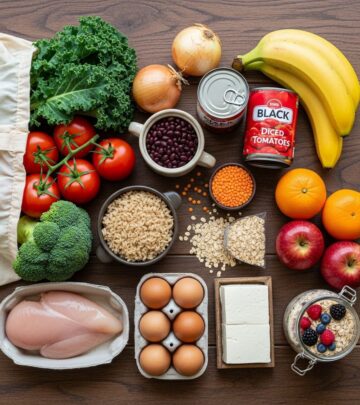
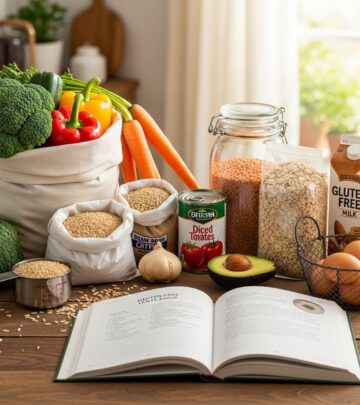
- Assess inventory: Use pantry items like rice, lentils, and canned tomatoes first.
- Build a master list: Focus on versatile, inexpensive bases (e.g., potatoes, pasta, oats).
- Theme nights: Meatless Monday with chili; Taco Tuesday with beans and veggies.
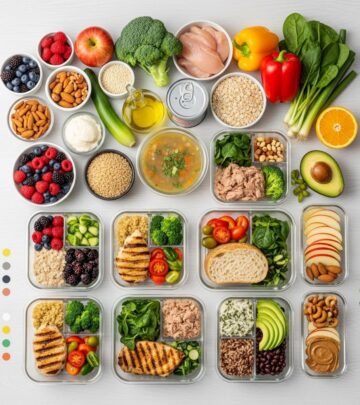
- Batch prep: Cook large pots of soup or curry for multiple meals.
- Adjust for sales: Swap based on weekly flyers.
This mirrors trial diets where ad libitum vegan eating led to savings without calorie limits. Planning ensures nutrition without excess spending.
Stick to a Shopping List
A strict list curbs overspending by 20-30%, per consumer studies. Categorize: produce, grains, proteins, frozen. Prioritize bulk dry goods—rice at $0.02/oz, lentils $0.03/oz vs. beef $0.50+/oz.
| Category | Budget Staples | Avg. Cost Savings vs. Animal Products |
|---|---|---|
| Proteins | Lentils, beans, peanut butter | 11-24p/portion vs. 59p steak |
| Grains | Rice, oats, pasta | $0.01-0.05/serving |
| Produce | Potatoes, cabbage, carrots | +50¢/day but offsets meat cuts |
| Alternatives | Tofu, plant milks | 53p tofu vs. $1.99 salmon |
Shop perimeter for fresh, aisles for deals. Apps track prices; never shop hungry.
Buy in Bulk and Go Frozen or Canned
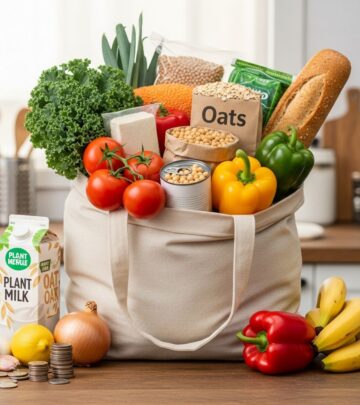
Bulk buys slash per-unit costs: 20-lb rice bags yield meals under $0.50. Frozen/canned veggies retain nutrients at half fresh prices, per USDA data. Canned beans: 23p/portion vs. fresh meat.
- Frozen berries/veggies: Year-round affordability.
- Bulk bins: Spices, nuts, grains without packaging markup.
- Canned tomatoes/beans: Rinse to cut sodium.
- Costco/Sam’s for families: Tofu cases, oat barrels.
Trials confirm higher veggie/grain intake on vegan diets boosts value without proportional cost hikes.
Embrace Cheap Vegan Staples
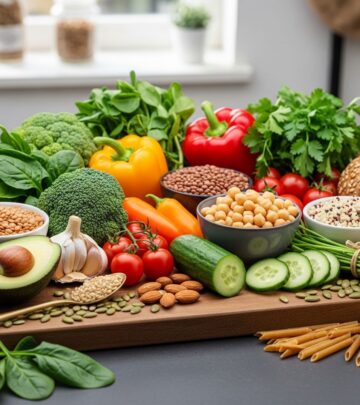
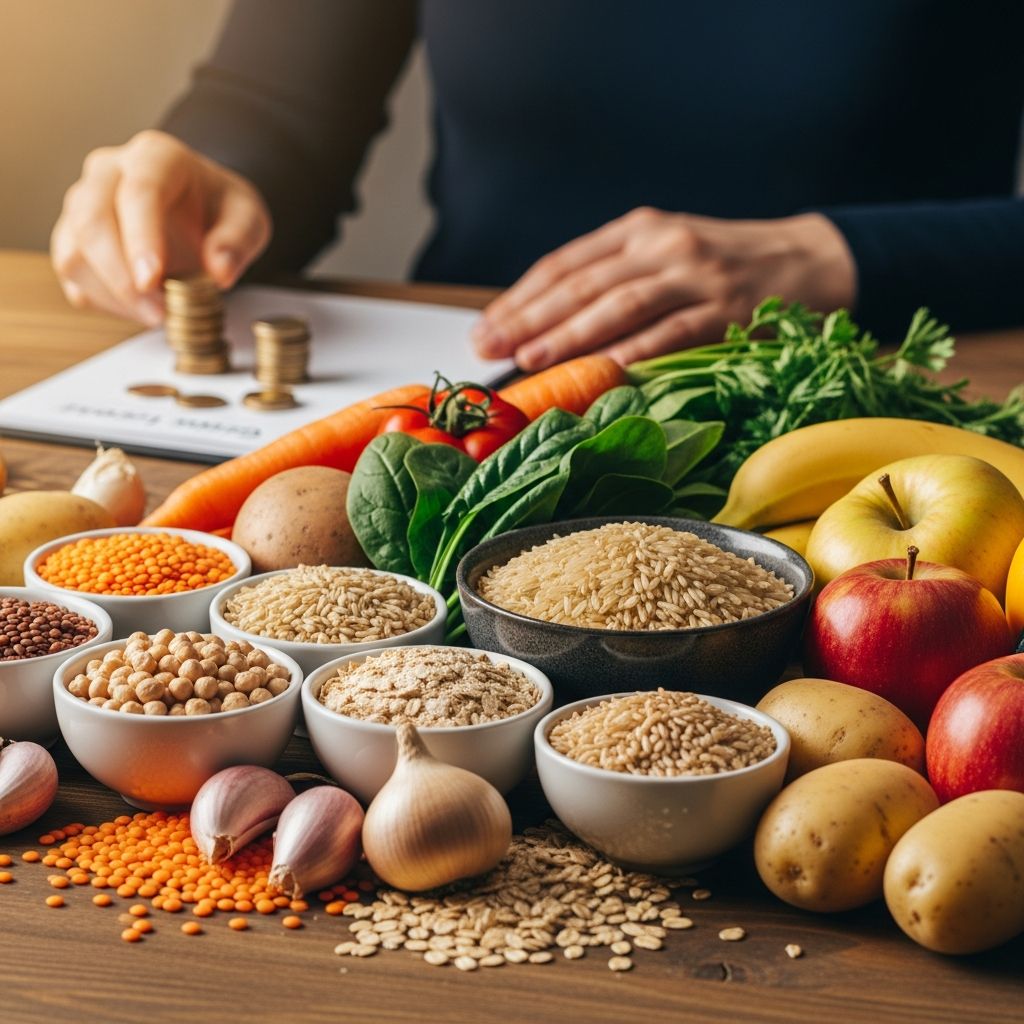
Core to savings: potatoes (4¢/serving), oats (3¢), beans (10¢ cooked). A day’s meals: oatmeal breakfast ($0.20), lentil soup lunch ($0.80), rice/bean dinner ($1.00)—total under $2 vs. $4+ omnivorous.
- Potatoes/Sweet Potatoes: Bake, mash, fry—versatile base.
- Rice/Quinoa: Pair with anything; buy brown for fiber.
- Beans/Lentils: Protein powerhouses; soak dry for max savings.
- Oats/Pasta: Filling, cheap carbs.
- Peanut Butter: 11p/portion calorie-dense spread.
These align with vegan trial foods yielding 19% savings.
Make Your Own “Faux” Meats and Dairy
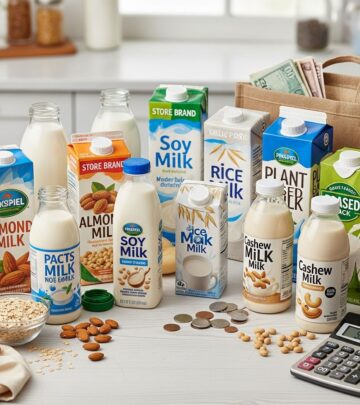
Store-bought beyond meat costs $5+/lb; DIY seitan (flour + water) or bean burgers: $1/lb. Plant milks: oats + blender = $0.50/quart vs. $3 almond.
- Chickpea “tuna”: Mash with kelp for $0.50/can equivalent.
- Nut cheeses: Cashews + lemon (35p base).
- Tofu scrambles: Season for “eggs.”
Trials show meat alternatives add only $0.5/day, offset by animal product cuts.
Cook from Scratch
Pre-made vegan meals inflate costs; scratch cooking saves 50%. One-pot recipes: lentil dal, veggie stir-fry. Invest in basics: blender, pots.
Weekly prep: Chop veggies Sunday, portion grains. Freezes well, reduces waste.
Grow Your Own Herbs and Veggies
Windowsill herbs (basil, cilantro) cost $0 after seeds. Microgreens yield salads for pennies. Community gardens expand this—USDA promotes for thrifty plans.
Shop Sales, Use Coupons, and Buy Store Brands
Sales + coupons = 30% off. Store tofu/beans beat name brands. Loyalty apps track vegan deals.
Reduce Food Waste
Waste costs $1,500/year/household; vegan abundance risks more. Compost scraps, freeze overripe fruit for smoothies. Apps like Too Good To Go for discounts.
Budget Vegan Meal Ideas
| Meal | Ingredients (Serves 4) | Est. Cost |
|---|---|---|
| Breakfast: Overnight Oats | Oats, banana, peanut butter | $1.00 |
| Lunch: Chickpea Salad | Canned chickpeas, veggies, tahini | $2.00 |
| Dinner: Lentil Curry & Rice | Lentils, canned tomatoes, spices | $3.00 |
| Snack: Apple w/ PB | Apple, peanut butter | $0.50 |
Total daily: ~$1.60/person, aligning with $1.80 savings.
Frequently Asked Questions
Is going vegan really cheaper?
Yes, research shows 19% grocery savings ($650+/year) vs. standard diets, 25% vs. Mediterranean.
What are the cheapest vegan proteins?
Beans/lentils (11-24p/portion), peanut butter (11p), tofu (53p)—far below meat.
Do I need expensive meat substitutes?
No; whole foods like beans suffice, adding minimal cost ($0.5/day).
Can families go vegan on a budget?
Absolutely—bulk buys and staples feed more for less.
Are vegan diets nutritious affordably?
Yes; trials confirm health benefits with staples, no supplements needed for most.
References
- Going Vegan Could Save More Than $650 a Year in Grocery Costs, Finds New Research — Physicians Committee for Responsible Medicine. 2024-10-02. https://www.pcrm.org/news/news-releases/going-vegan-could-save-more-650-year-grocery-costs-finds-new-research
- Cost Comparison Research — The Vegan Society. 2022-06-01. https://www.vegansociety.com/take-action/campaigns/live-vegan-less/cost-comparison-research
- Food Costs of a Low-Fat Vegan Diet vs a Mediterranean Diet — JAMA Network Open. 2024-10-02. https://jamanetwork.com/journals/jamanetworkopen/fullarticle/2826289
- Vegan Diet and Food Costs Among Adults With Overweight — PMC/NIH. 2023-09-01. https://pmc.ncbi.nlm.nih.gov/articles/PMC10481244/
- Sustainable eating is cheaper and healthier – Oxford study — University of Oxford. 2021-11-11. https://www.ox.ac.uk/news/2021-11-11-sustainable-eating-cheaper-and-healthier-oxford-study
Similar Articles








Read full bio of Sneha Tete