Global Entry Vs SENTRI: Key Differences And Best Choice 2025
Discover which trusted traveler program—Global Entry or SENTRI—best suits your international and border-crossing needs for faster travel.
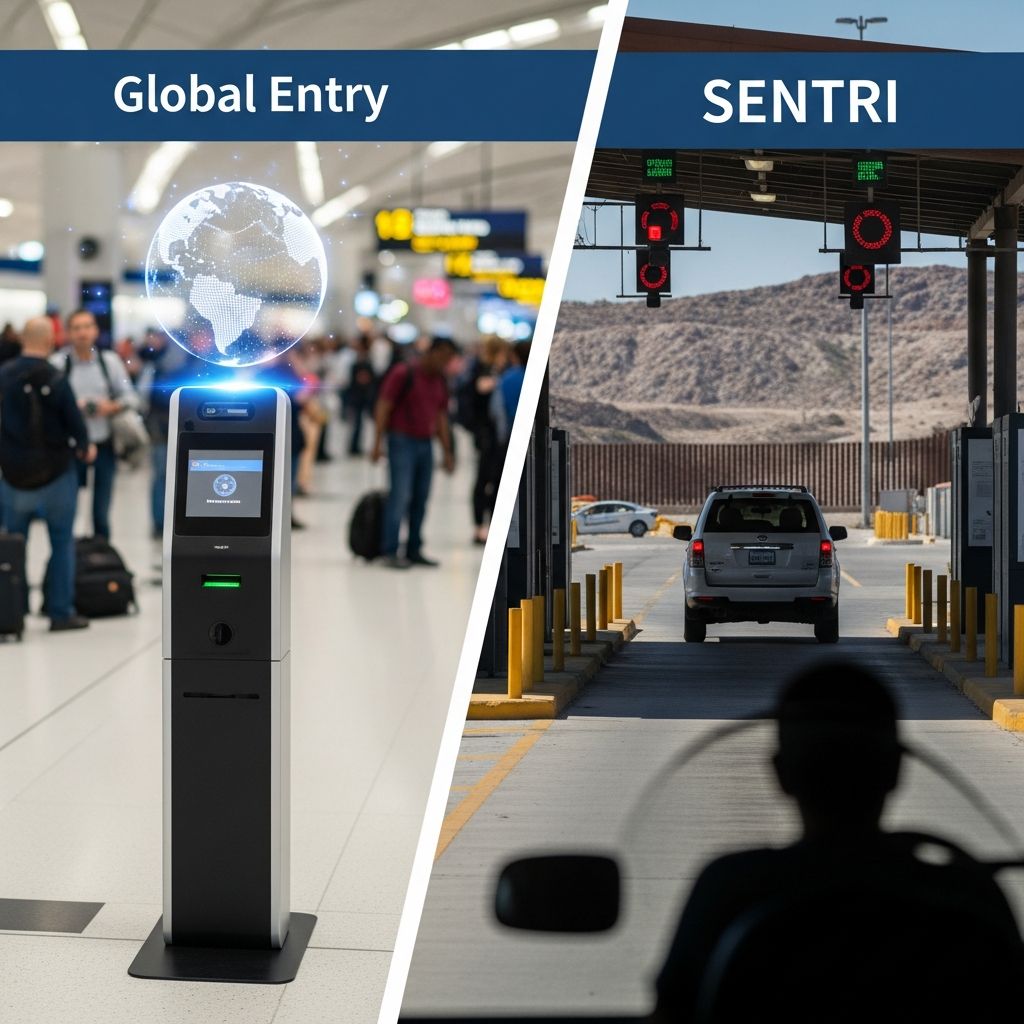
Trusted Traveler Programs offered by U.S. Customs and Border Protection (CBP) streamline entry into the United States for pre-approved, low-risk individuals. Global Entry focuses on air travelers returning from international destinations, while SENTRI targets frequent land border crossers, particularly from Mexico. Both provide significant time savings but cater to distinct travel patterns.
Understanding Global Entry
Global Entry enables expedited customs processing at over 50 U.S. airports and select land and sea ports upon arrival from abroad. Members use automated kiosks to scan passports, fingerprints, and take photos, bypassing long lines. This program is ideal for business professionals, vacationers, and anyone flying internationally multiple times a year.
Key advantages include access to dedicated lanes at participating locations. Global Entry membership also grants TSA PreCheck benefits, allowing faster domestic security screening with dedicated lanes, no shoe removal, and keeping laptops in bags. Over 10 million members currently benefit from these perks.
Understanding SENTRI
SENTRI, or Secure Electronic Network for Travelers Rapid Inspection, facilitates quick vehicle entry into the U.S. from Mexico and Canada at designated land border crossings. All enrollment centers are located near the U.S.-Mexico border, reflecting its primary focus on southern crossings. A physical SENTRI card is required for drivers and all passengers in vehicles.
Unlike vehicle-only perceptions, SENTRI extends to air travel. Approved members receive Global Entry and TSA PreCheck privileges after CBP verifies fingerprints and documents. This makes it a comprehensive option for those combining land borders with flights.
Core Benefits Comparison
Both programs share a five-year membership duration and demand rigorous vetting, but their scopes differ markedly. The table below outlines primary benefits:
| Feature | Global Entry | SENTRI |
|---|---|---|
| Primary Use | Airports (international arrivals) | Land borders (Mexico/Canada by vehicle) |
| Includes TSA PreCheck | Yes | Yes |
| Includes Global Entry | Yes | Yes (after verification) |
| Vehicle Access | Limited (SENTRI/NEXUS lanes if registered) | Dedicated lanes; vehicle registration required |
| Air Access | Full kiosk access | Full after fingerprint submission |
| Ports of Entry | 50+ airports, some land/sea | Southern border focused |
SENTRI’s vehicle expediting sets it apart for commuters, while Global Entry’s broader airport network suits global flyers.
Costs and Reimbursement Options
The non-refundable application fee stands at $120 for Global Entry and $122.25 for SENTRI, covering background checks and interviews. Both are valid for five years, offering strong value for frequent users.
- Fee Structure: Paid online during application; no refunds if denied.
- Vehicle Fees for SENTRI: Initial inspection free if registered during application; $42-$80 afterward.
- Credit Card Reimbursements: Many premium cards from Chase, American Express, and others provide statement credits up to $120 every four years for Global Entry, TSA PreCheck, or SENTRI fees. Enrollment required.
Examples include cards with $0 intro annual fees transitioning to $95-$150, reimbursing application costs directly.
Eligibility Requirements
Candidates must be U.S. citizens, permanent residents, or select foreign nationals. Disqualifiers include felony convictions, ongoing customs violations, or immigration issues. Mexican nationals with SENTRI need separate Global Entry activation.
- U.S. citizens, U.S. lawful permanent residents.
- Certain Canadian citizens (via NEXUS linkage).
- Mexican nationals eligible for SENTRI/Global Entry.
- No recent violations of customs/immigration laws.
Minors under 18 apply via a parent’s enrollment without separate fees.
Step-by-Step Application Process
Applying involves online submission, conditional approval, and in-person verification. Processing times vary from weeks to months due to interview slot availability.
- Online Application: Create Trusted Traveler Programs (TTP) account at ttp.dhs.gov; submit details and pay fee.
- Background Check: CBP reviews criminal, customs, and immigration records (10-30 days average).
- Conditional Approval: Schedule interview at enrollment center.
- In-Person Interview: Provide ID, fingerprints, photo; answer travel history questions (15-30 minutes).
- Final Approval: Receive membership card by mail; activate Known Traveler Number (KTN) for airlines.
SENTRI requires vehicle details if applicable; Global Entry users can add SENTRI vehicle registration later.
Choosing the Right Program for Your Travel
Selection hinges on travel habits. Frequent U.S.-Mexico drivers benefit most from SENTRI’s dedicated lanes, gaining bonus air perks. International air travelers without land border needs should opt for Global Entry, using its card in SENTRI/NEXUS lanes if occasionally driving from Mexico/Canada.
- Pick SENTRI if: You cross Mexico border weekly by car, value vehicle expediting, and fly occasionally.
- Pick Global Entry if: Primary travel is international flights, rare land crossings, broader airport access needed.
- Both? Not necessary: SENTRI encompasses Global Entry; reverse requires vehicle registration for full SENTRI use.
Hybrid travelers might start with Global Entry and upgrade if border trips increase.
Related Programs: TSA PreCheck, NEXUS, CLEAR
Global Entry and SENTRI include TSA PreCheck, but other options exist:
| Program | Focus | Cost | Includes GE/SENTRI? |
|---|---|---|---|
| TSA PreCheck | Domestic security | $78/5 years | No |
| NEXUS | U.S.-Canada land/air | $50/5 years | GE yes; SENTRI limited |
| CLEAR | ID verification at airports | $189/year | No (pairs with PreCheck) |
NEXUS suits northern border crossers; CLEAR accelerates ID checks but skips customs.
Frequently Asked Questions
Can Global Entry be used in SENTRI lanes?
Yes, Global Entry cards work in SENTRI lanes from Mexico/Canada, but vehicles must be registered with CBP. No extra fee if done during Global Entry application.
Does SENTRI work for air travel?
Yes, SENTRI provides full Global Entry access at kiosks after CBP receives fingerprints and documents.
How long does approval take?
From application to membership: 2-6 months, depending on interview availability. Expedited options unavailable.
Are family members covered?
No group plans; each person (including kids) needs individual approval. Children under 18 link to parents without separate interviews.
What if denied?
Appeal via TTP account or reapply after 6 months. Common reasons: criminal history, false info.
Maximizing Your Trusted Traveler Experience
Enroll early, use reimbursement-eligible cards, and update travel details promptly. Pair with airline status for ultimate efficiency. These programs reduce wait times by 70-90% at busy ports, enhancing travel productivity.
For border commuters, SENTRI’s vehicle lanes cut hours to minutes during peaks. Air-focused users appreciate Global Entry’s seamless kiosk process, often under 5 minutes total.
References
- SENTRI vs. Global Entry: Which Is Better? — NerdWallet. 2024. https://www.nerdwallet.com/travel/learn/sentri-vs-global-entry-which-is-better
- Global Entry vs. SENTRI: Which One’s Right for You? — American Express. 2024. https://www.americanexpress.com/en-us/credit-cards/credit-intel/global-entry-vs-sentri/
- Understanding the Differences Between Global Entry, SENTRI, NEXUS, CLEAR and TSA PreCheck — National Security Law Firm. 2024. https://www.nationalsecuritylawfirm.com/understanding-the-differences-between-global-entry-sentri-nexus-clear-and-tsa-precheck-which-program-is-right-for-you/
- TSA PreCheck, Global Entry, NEXUS, SENTRI & CLEAR PLUS — Getours. 2024. https://www.getours.com/expert-travel-advice/planning-your-vacation/tsa-precheck-global-entry-nexus-sentri-or-clear
- Global Entry Trusted Traveler Program Enrollment — U.S. Customs and Border Protection. 2025-02-01. https://ttp.dhs.gov/
Similar Articles








Read full bio of medha deb