Get Paid For A Power Outage: How To Claim Compensation
Discover how you can receive automatic bill credits and reimbursements when your power utility causes prolonged outages in your area.

Power outages can disrupt daily life, spoil food, and cause significant inconvenience, especially during widespread events like storms. Many utility companies across the United States offer compensation programs to affected customers, providing bill credits or reimbursements for extended outages. These programs vary by state and provider but often kick in after 48 to 120 hours without power, particularly during major events impacting thousands of customers. Understanding these policies can help you claim what’s rightfully yours without hassle.
This article breaks down how these programs work, eligibility criteria, specific examples from leading utilities, and tips to ensure you receive compensation. Whether it’s an automatic $25 daily credit or up to $250 for spoiled groceries, these relief measures are designed to incentivize faster restorations while supporting customers financially.
How Power Outage Compensation Works
Utility compensation for outages typically falls into two categories: bill credits for inconvenience and prolonged loss of service, and reimbursements for direct losses like food or medicine spoilage. These are often triggered by ‘widespread’ or ‘catastrophic’ events, defined by the number of affected customers or weather severity.
- Automatic Bill Credits: Applied directly to your next bill after 60-90 days, no claim needed in most cases.
- Spoilage Reimbursements: Require submitting a claim form with proof of loss, capped at $250 in many programs.
- Thresholds: Range from 48 hours (e.g., PG&E for storms) to 120 hours, excluding initial emergency periods.
Regulators like state public service commissions enforce these rules to improve reliability. For instance, Michigan’s MPSC recently raised credits to $42 per day, resulting in over $8 million paid out in 2024 alone. Programs exclude minor outages or those caused by customer equipment.
State and Utility-Specific Programs
Outage relief policies differ by region, often mandated by state regulators. Here’s a detailed look at major providers:
New York: NYSEG Extended Outage Relief
NYSEG provides automatic relief for residential customers during widespread outages affecting 20,000+ customers. Eligibility starts after 96 consecutive hours:
- Extended Outage Credit: $25 for every 24-hour period after the first 72 hours. Applied 60-90 days post-restoration.
- Food/Prescription Spoilage: Reimbursement available after 72 hours; submit claims for losses due to refrigeration failure.
No action required for credits; they’re automatic for qualifying events.
Connecticut: Eversource Credits and Reimbursements
Eversource offers two credits for Connecticut customers during qualifying storms (regulatory review required). The 96-hour clock starts when it’s safe to restore power, not outage onset.
| Program | Eligibility | Amount | Application |
|---|---|---|---|
| Daily Outage Credit | 120+ consecutive hours (96 + 24) | $25 per 24 hours after 96 | Automatic |
| Food/Medicine Spoilage | 96+ hours, proven loss | Up to $250 | Claim form |
Notes: Power restored >12 hours resets the clock. Excludes events where 70%+ customers are out (deemed non-qualifying). Payments within 60 days of restoration or 45 days of claim.
Connecticut: United Illuminating (UI)
UI’s program is similar but starts at 120 hours:
- Daily Outage Credit: $25 per 24 hours after 96 hours; automatic or via claim.
- Spoilage Compensation: $250 max after 96 hours; claim required.
Michigan: MPSC-Mandated Credits
The Michigan Public Service Commission (MPSC) sets aggressive standards, updated in 2025 to $42/day (68% increase since 2023). Automatic for:
- 96 hours in catastrophic conditions (10%+ customers out).
- 48 hours in ‘gray sky’ (1-10% out).
- 16 hours in normal conditions.
- 6+ interruptions/year.
In 2024, credits totaled $8.4 million, up 7x from 2022, incentivizing utilities like Consumers Energy and DTE.
California: PG&E and SCE
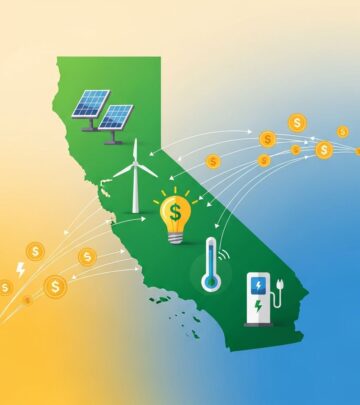
PG&E offers a Storm Inconvenience Bill Credit after 48 hours for major weather events. SCE guarantees 24-hour restoration or compensation under their Service Guarantee. CPUC oversees broader incentives, though not outage-specific.
Other Providers
- DTE Energy: Additional credits per 24 hours after qualification.
- Consumers Energy: Automatic after 96 hours catastrophic.
Eligibility Requirements Across Programs
Common criteria include:
- Duration: 48-120+ consecutive hours, often excluding emergency declaration periods.
- Scale: Widespread impact (e.g., 1-20,000+ customers).
- Cause: Utility distribution failure, not customer-side issues or generators.
- Residential Focus: Many extend to small businesses.
Track your outage via utility apps or 24/7 lines. Photos of spoiled items strengthen spoilage claims.
How to Claim Your Compensation
Steps for success:
- Monitor Outage Length: Use utility outage maps.
- Automatic Credits: Wait 60-90 days; check bills.
- File Claims: Download forms post-event; include receipts/photos. Deadlines: 45-60 days.
- Appeal Denials: Contact regulators (e.g., MPSC, PURA).
- Document Everything: Timestamps, receipts for groceries/meds.
Pro tip: Sign up for outage alerts to log start/end times accurately.
Food and Medicine Spoilage: What’s Covered
Reimbursements target refrigeration-dependent losses:
- Eligible: Perishables (meat, dairy), prescriptions needing cooling.
- Not Covered: Frozen items thawed pre-outage, non-refrigerated goods.
- Proof: Receipts, photos of discarded items, outage confirmation.
Caps: $250 (Eversource/UI), varies elsewhere. Average household fridge loss: $150-300 per event.
Frequently Asked Questions (FAQs)
Do I qualify if I used a generator?
No impact on bill credits; generators don’t disqualify you.
Is compensation automatic?
Bill credits yes (most cases); spoilage requires claims.
What if power flickers on briefly?
Restorations >12 hours reset clocks (Eversource).
Which states have the best programs?
Michigan ($42/day, low thresholds); NY/CT ($25 + spoilage).
Can businesses claim?
Yes, small businesses often eligible alongside residential.
Why These Programs Exist
Regulators use credits to penalize poor reliability without traditional fines—payments go directly to victims. Michigan’s model shows success: payouts surged, restorations improved. Expect expansions as climate events rise.
Prepare by knowing your utility’s policy (check website/outage page). During outages, minimize losses: eat perishables first, use coolers.
References
- Extended Outage Relief — NYSEG. Accessed 2026. https://www.nyseg.com/extended-outage-relief
- MPSC raises bill credit to $42 for customers experiencing long or repeat outages — Michigan Public Service Commission. 2025-09-11. https://www.michigan.gov/mpsc/commission/news-releases/2025/09/11/mpsc-raises-bill-credit-to-42-for-customers-experiencing-long-or-repeat-outages
- Extended Outage Relief — United Illuminating. Accessed 2026. https://www.uinet.com/outages/weareready/extended_outage_relief
- Extended Outage Credit and Reimbursement — Eversource. Accessed 2026. https://www.eversource.com/residential/services/claims/extended-outage-credits-reimbursement
- Outage Compensation Programs — PG&E. Accessed 2026. https://www.pge.com/en/outages-and-safety/outage-preparedness-and-support/general-outage-resources/outage-compensation-programs.html
Similar Articles








Read full bio of medha deb