Georgetown University: Academic Excellence and Value
Discover Georgetown University's rankings, costs, and outcomes for prospective students.
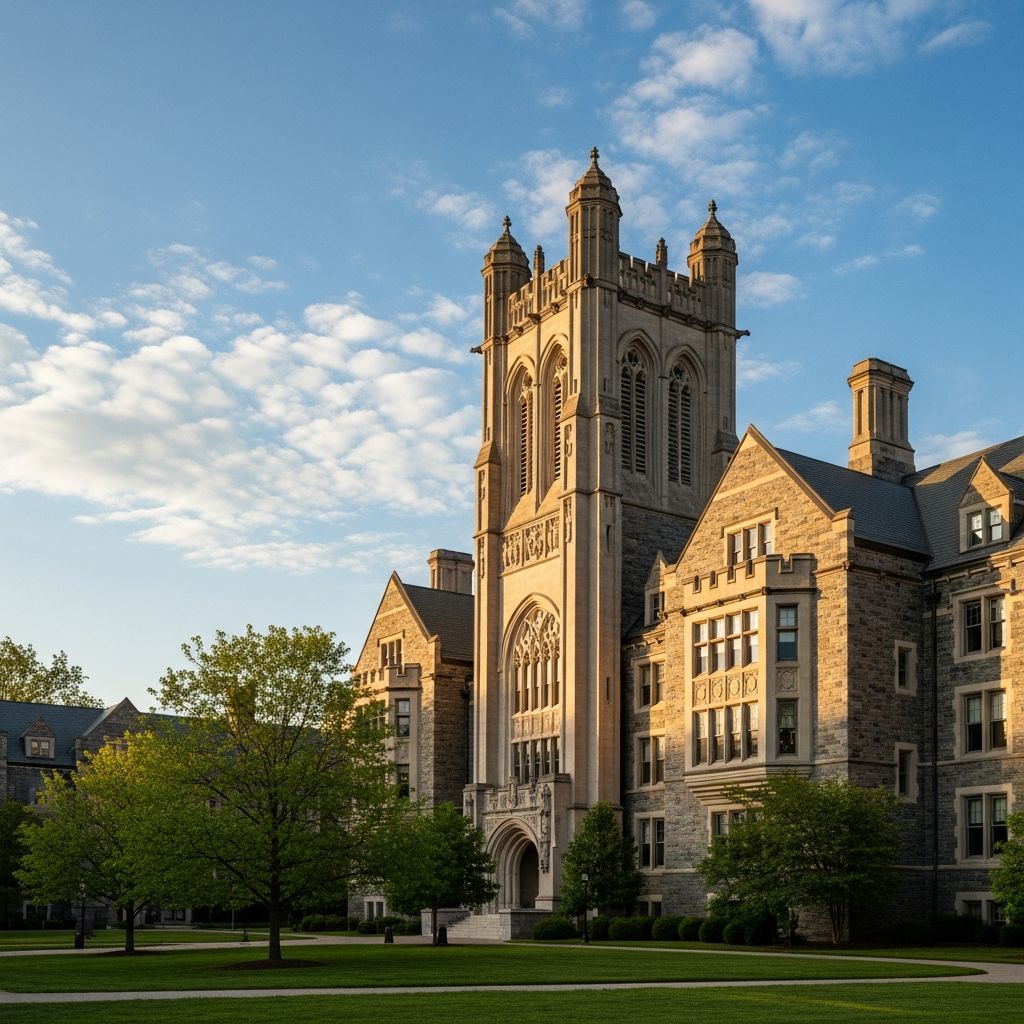
Georgetown University: A Comprehensive Profile
Georgetown University stands as the nation’s oldest Catholic and Jesuit institution of higher education, offering a distinguished academic experience in Washington, DC. With a strong commitment to educational excellence and student success, Georgetown has established itself as one of the premier universities in the United States, attracting ambitious students from around the world who seek a rigorous academic environment coupled with real-world impact.
University Rankings and Academic Standing
Georgetown University maintains a robust position in national college rankings, reflecting its commitment to academic quality and institutional excellence. According to the 2026 U.S. News & World Report rankings, Georgetown secured 24th place among national universities, maintaining its 2025 standing and tying with Emory University. This ranking places Georgetown just outside the prestigious top 20 category, though the university continues to demonstrate consistent performance in higher education evaluations.
The U.S. News methodology evaluates institutions based on graduation rates, graduation rate performance, and peer assessment, providing a comprehensive view of educational quality. Georgetown has maintained a stable presence in the top 25 over recent years, including a 22nd place ranking in 2023, demonstrating its sustained excellence in American higher education.
Beyond U.S. News rankings, Georgetown receives recognition from other influential ranking systems. Niche placed Georgetown at 17th on their “Best Colleges in America” list, while the Wall Street Journal ranked the institution at 37th, showcasing varying perspectives on institutional quality across different evaluation methodologies.
McDonough School of Business
Georgetown’s McDonough School of Business ranks among the nation’s top undergraduate business programs, securing 4th place in recent evaluations. This exceptional standing reflects the school’s rigorous curriculum, distinguished faculty, and strong connections to the business community in Washington, DC. The McDonough School offers comprehensive business education that prepares students for leadership roles across diverse industries.
Students pursuing business degrees at McDonough benefit from the university’s prime location in the nation’s capital, providing unique internship and networking opportunities with major corporations, government agencies, and financial institutions. The business program’s reputation attracts highly motivated students seeking to develop analytical skills, strategic thinking abilities, and professional competencies essential for modern business leaders.
Cost of Attendance and Financial Accessibility
Georgetown represents one of the more expensive universities in Money Magazine’s comprehensive rankings, reflecting its status as a highly selective private institution. The estimated full price for the 2025-26 academic year stands at approximately $92,510, positioning Georgetown among America’s most costly universities. However, the university recognizes the importance of financial accessibility and implements substantial financial aid programs to support students from diverse economic backgrounds.
The estimated price after average financial aid drops to approximately $64,310, demonstrating the significant impact of Georgetown’s aid packages. This substantial aid reduction reflects the university’s commitment to making its world-class education accessible to talented students regardless of their family’s financial circumstances.
Approximately 40% of undergraduate students receive grants or scholarships to help defray educational costs, making Georgetown more accessible than its sticker price might initially suggest. The university evaluates financial aid using multiple metrics, including net cost calculations that factor in grant assistance, loan amounts, and family income levels, ensuring that students receive aid packages tailored to their specific financial circumstances.
Graduation Rates and Student Success
Georgetown boasts an impressive 95% graduation rate, reflecting the university’s effective student support systems and the commitment of its student body. This exceptionally high completion rate places Georgetown among the nation’s top performers in terms of student retention and success. The strong graduation rate indicates that Georgetown students who enroll successfully complete their degrees within the expected timeframe, minimizing time-to-degree and reducing overall education costs.
The university’s graduation rate metrics are particularly noteworthy when considering Money Magazine’s comprehensive evaluation methodology, which emphasizes graduation rates for Pell Grant recipients and tracks how effectively institutions serve lower-income students. Georgetown’s strong performance in this category demonstrates its commitment to supporting all student populations, not merely its most advantaged enrollees.
Career Outcomes and Alumni Earnings
Georgetown graduates experience strong career outcomes and earning potential following their undergraduate education. Students report post-median earnings of approximately $103,000 a decade after enrollment, significantly exceeding many peer institutions and demonstrating the substantial return on investment that a Georgetown degree provides.
These earnings figures reflect the quality of Georgetown’s academic programs, the strength of its alumni network, and the university’s location in a major metropolitan area with robust employment opportunities. Georgetown graduates pursue careers across finance, technology, consulting, government service, law, medicine, and numerous other fields, leveraging their rigorous undergraduate education and extensive professional connections developed during their time on campus.
Money Magazine’s outcomes evaluation considers both early-career salaries and long-term earnings 10 years after enrollment, adjusting for factors such as major selection and student demographics. Georgetown’s strong performance across these metrics indicates that the university delivers genuine value to its graduates, translating educational investment into meaningful career success.
Campus Life and Student Activities
Sports represent an integral component of Georgetown’s vibrant campus culture, with approximately 1 in 10 undergraduates competing as varsity athletes. The university maintains highly competitive athletic programs across numerous sports, contributing significantly to campus community and school spirit.
Georgetown’s basketball program holds particular prominence, with the Hoyas earning national recognition for their excellence on the court. The basketball team has appeared in the NCAA Final Four five times throughout its storied history and captured the NCAA championship in 1984, establishing Georgetown as a basketball powerhouse and source of tremendous pride for the university community.
Beyond athletics, Georgetown offers extensive opportunities for student involvement through clubs, organizations, service initiatives, and academic competitions. The university’s location in Washington, DC, provides unparalleled access to internships, cultural institutions, professional networks, and government agencies, enriching the overall student experience and enabling students to engage with the broader world during their undergraduate years.
Money Magazine’s Evaluation Methodology
Money Magazine evaluates colleges using a comprehensive three-bucket approach encompassing educational quality, affordability, and outcomes, each weighted equally at approximately 30-40% of total scoring. This methodology avoids traditional numerical rankings that may exaggerate minor score differences, instead utilizing a five-star rating system that more accurately represents institutional performance variations.
The quality of education component examines graduation rates, peer quality, and instructor accessibility, providing insight into the academic rigor and student support systems available at each institution. Affordability metrics consider net price, student debt loads, and individual institutions’ ability to help students finance their education. Outcomes evaluation focuses on earnings, employment rates, and economic mobility, measuring how effectively universities prepare graduates for career success and financial independence.
Georgetown received four stars from Money Magazine, recognition reflecting its strong performance across quality, affordability, and outcomes dimensions. While representing one of America’s most expensive institutions, Georgetown’s substantial financial aid packages, exceptional graduation rates, and robust graduate earnings justify the significant investment required to attend the university.
The Jesuit Educational Mission
As a Jesuit institution, Georgetown integrates a distinctive educational philosophy emphasizing intellectual rigor, ethical development, and service to others. The Jesuit tradition of cura personalis—care for the whole person—shapes Georgetown’s commitment to student development beyond academic achievement, fostering leaders prepared to address complex global challenges with wisdom, integrity, and compassion.
This mission manifests through Georgetown’s emphasis on developing critical thinking skills, fostering interfaith dialogue, and encouraging students to consider how their education can contribute to social justice and the common good. Many Georgetown students engage in community service, international development work, and advocacy initiatives, reflecting the university’s values-based approach to undergraduate education.
Comparative Value Analysis
When comparing Georgetown to other highly selective private universities, several factors emerge that influence the institution’s overall value proposition. Georgetown’s $64,310 net cost after average aid compares favorably to peer institutions such as Washington University in St. Louis (approximately $68,030 net cost) and surpasses peer schools in terms of financial aid generosity relative to sticker price.
The university’s 95% graduation rate represents exceptional performance and contributes significantly to Georgetown’s value equation, as students progress efficiently toward degree completion. Combined with strong post-graduation earnings and a robust network of successful alumni, Georgetown delivers substantial return on investment for students willing to invest substantially in their education.
Admission and Student Profile
Georgetown maintains highly selective admission standards, recognizing that the rigor of the academic program requires students with strong intellectual capabilities and demonstrated motivation for scholarly achievement. The university seeks students who will contribute meaningfully to the campus community and who embody the values reflected in Georgetown’s Jesuit mission.
Admitted students typically demonstrate exceptional academic achievement, strong standardized test scores, meaningful extracurricular involvement, and evidence of leadership and intellectual curiosity. Georgetown’s commitment to socioeconomic diversity means that admission decisions prioritize talent and potential rather than exclusively favoring students from privileged backgrounds, ensuring that the campus reflects diverse perspectives and experiences.
Frequently Asked Questions
Q: What is Georgetown University’s current national ranking?
A: Georgetown University ranks 24th among national universities in the 2026 U.S. News & World Report rankings, maintaining its 2025 position and tying with Emory University.
Q: How much financial aid does Georgetown provide to students?
A: Approximately 40% of undergraduate students receive grants or scholarships, with the estimated net cost after average aid being approximately $64,310, down significantly from the $92,510 sticker price.
Q: What are typical earnings for Georgetown graduates?
A: Georgetown graduates report post-median earnings of approximately $103,000 a decade after enrollment, reflecting strong return on investment and career success.
Q: How selective is Georgetown’s admission process?
A: Georgetown maintains highly selective admission standards, seeking students with strong academic achievement, test scores, and evidence of intellectual curiosity and leadership potential.
Q: What is Georgetown’s graduation rate?
A: Georgetown boasts a 95% graduation rate, placing the university among the nation’s top performers in student retention and degree completion.
Q: Is Georgetown known for athletics?
A: Yes, approximately 1 in 10 undergraduates compete as varsity athletes. Georgetown’s basketball team is particularly renowned, having appeared in the NCAA Final Four five times and winning the national championship in 1984.
References
- Money Magazine’s 2025 Best Colleges For Top-Ranked Business Programs — Poets & Quants for Undergrads. 2025. https://poetsandquantsforundergrads.com/news/money-magazines-2025-best-colleges-for-top-ranked-business-programs/
- GU Maintains 24th in US News Rankings — The Hoya. 2025. https://thehoya.com/news/gu-maintains-24th-in-us-news-rankings/
- Georgetown University, DC – Complete Profile, Rankings and Data — Money Magazine. 2025. https://money.com/best-colleges/profile/georgetown-university/
- 2025 Best Colleges in U.S. — Money Magazine. 2025. https://money.com/best-colleges/
- College Rankings: Money Magazine Weighs In — Top Tier Admissions. 2025. https://toptieradmissions.com/college-rankings-money-magazine-weighs-in/
Similar Articles








Read full bio of medha deb