Geometric Mean: Definition, Formula, and Investment Applications
Master geometric mean calculations for accurate investment returns and portfolio performance analysis.

What Is Geometric Mean?
The geometric mean is a statistical measure that calculates the central tendency of a set of numbers by multiplying all values together and then taking the nth root, where n represents the total number of values in the dataset. In the context of finance and investing, the geometric mean represents the average rate of return on an investment over time, accounting for the effects of compounding. Unlike the arithmetic mean, which simply adds values and divides by the count, the geometric mean is particularly valuable when analyzing investment performance because it accurately reflects how returns compound over multiple periods.
The geometric mean is especially useful in finance because investments typically involve compounding returns. When an investment earns returns year after year, each year’s gains build upon the previous year’s gains. This compounding effect means that using a simple arithmetic average would misrepresent the actual performance of an investment. The geometric mean corrects for this by providing a more accurate picture of investment growth.
Geometric Mean Formula
The geometric mean is calculated using the following formula:
Geometric Mean = (x₁ × x₂ × x₃ × … × xₙ)^(1/n)
Where x₁, x₂, x₃, and xₙ represent individual data points, and n is the total number of data points. Alternatively, the formula can be expressed as:
Geometric Mean = ⁿ√(x₁ × x₂ × x₃ × … × xₙ)
For investment returns expressed as percentages, the formula is adjusted slightly to account for growth factors:
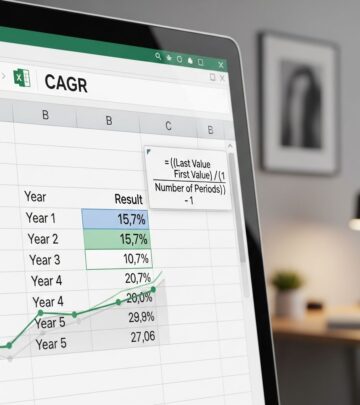
Geometric Mean Return = [(1 + r₁) × (1 + r₂) × … × (1 + rₙ)]^(1/n) – 1
This adjusted formula converts percentage returns into growth factors (by adding 1 to each return), multiplies them together, takes the nth root, and then subtracts 1 to convert back to a percentage format.
Geometric Mean vs. Arithmetic Mean
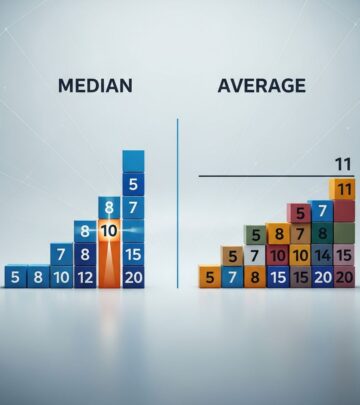
Understanding the difference between geometric mean and arithmetic mean is crucial for accurate financial analysis. The arithmetic mean, also called the simple average, is calculated by adding all values and dividing by the number of values. While this works well for independent data points, it fails to accurately represent investment performance over time.
Consider this example: An investor experiences annual returns of 5%, 10%, 20%, -50%, and 20% over five years.
Using the arithmetic mean: (5% + 10% + 20% – 50% + 20%) ÷ 5 = 1%
This suggests an average annual return of 1%, but this is misleading. Let’s trace what actually happened to a $1,000 investment:
- Year 1: $1,000 × 1.05 = $1,050
- Year 2: $1,050 × 1.10 = $1,155
- Year 3: $1,155 × 1.20 = $1,386
- Year 4: $1,386 × 0.50 = $693
- Year 5: $693 × 1.20 = $831.60
The actual five-year return is ($831.60 – $1,000) / $1,000 = -16.84%, not positive 1%. Using the geometric mean calculation instead yields approximately -3.62% annually, which accurately reflects the investment’s actual performance.
Why Geometric Mean Matters in Finance
The geometric mean is superior to the arithmetic mean for investment analysis because it accounts for compounding effects. When investment returns compound over multiple periods, the order and magnitude of returns matter significantly. A large negative return followed by a strong positive return produces a different outcome than the reverse sequence, and only the geometric mean captures this reality.
Financial professionals use geometric mean to evaluate:
- Historical investment performance and returns
- Portfolio management and asset allocation decisions
- Mutual fund and investment fund performance comparison
- Economic growth rates and inflation measurements
- Stock market index calculations
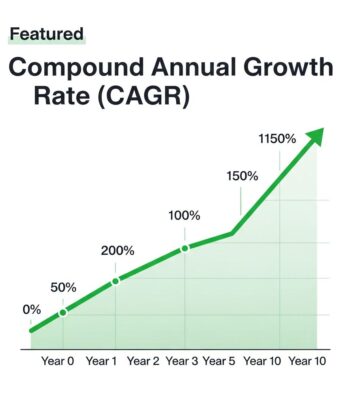
The geometric mean is also known as the compound annual growth rate (CAGR) when applied to investment returns over multiple years, making it a standard metric in financial reporting and analysis.
Calculating Geometric Mean: Step-by-Step Example
Let’s work through a detailed example of calculating the geometric mean for investment returns.
Scenario: An investor wants to calculate the average annual return for an investment with yearly returns of 8%, 12%, -5%, and 10%.
Step 1: Convert percentages to growth factors by adding 1 to each return:
- 8% becomes 1.08
- 12% becomes 1.12
- -5% becomes 0.95
- 10% becomes 1.10
Step 2: Multiply all growth factors together:
1.08 × 1.12 × 0.95 × 1.10 = 1.2676
Step 3: Take the 4th root (since there are 4 data points):
⁴√1.2676 = 1.0613
Step 4: Subtract 1 and multiply by 100 to convert to percentage:
(1.0613 – 1) × 100 = 6.13%
The geometric mean annual return is 6.13%, representing the average annual growth rate accounting for compounding effects.
Real-World Applications in Investment Analysis
Financial advisors and investment managers routinely use geometric mean to compare investment options and make recommendations. Consider an investor choosing between two investment strategies:
Option 1: A $20,000 initial deposit with a 3% annual interest rate compounded over 25 years.
Option 2: A $20,000 initial deposit that grows to $40,000 after 25 years.
To compare these options, we calculate the future value for Option 1 and the implied annual rate for Option 2.
Option 1 Calculation (Future Value):
FV = $20,000 × (1.03)²⁵ = $20,000 × 2.0937 = $41,875.56
Option 2 Calculation (Implied Rate):
$20,000 = $40,000 × [1/(1+r)²⁵]
0.5 = [1/(1+r)²⁵]
r ≈ 0.028 or 2.8%
Option 1 provides a superior future value of $41,875.56 compared to $40,000 and offers a higher annual rate of 3% versus 2.8%, making it the better investment choice.
Geometric Mean in Different Financial Contexts
Stock Market Analysis
Major stock market indices use geometric mean principles to calculate returns. When evaluating the S&P 500 or other indices over multiple years, geometric mean ensures accurate representation of investor returns, accounting for market volatility and compounding effects.
Mutual Fund Performance
Mutual fund companies report geometric mean returns to investors as the standard measure of performance. This allows investors to fairly compare funds with different volatility profiles and return patterns over specific time periods.
Economic and Business Metrics
Businesses use geometric mean to calculate compound annual growth rates (CAGR) for revenue, earnings, and market share expansion. Economists use geometric mean to measure inflation rates, productivity growth, and GDP expansion over time.
Advantages and Limitations
Advantages of Geometric Mean
- Accurately reflects compounding effects in investment returns
- Provides realistic representation of portfolio performance over time
- Accounts for volatility and sequence of returns
- Less sensitive to extreme outliers compared to arithmetic mean in certain contexts
- Universally accepted standard in financial reporting
Limitations of Geometric Mean
- Cannot be used with negative returns or zero values in the traditional formula
- More complex to calculate than arithmetic mean without financial calculators
- May understate performance in datasets with highly variable returns
- Requires more data points for accurate estimation
Geometric Mean vs. Other Return Metrics
| Metric | Definition | Best Use Case | Limitations |
|---|---|---|---|
| Geometric Mean | Average of compounded returns | Long-term investment performance | Cannot handle negative returns easily |
| Arithmetic Mean | Simple average of returns | Single-period returns | Misleading for multi-period investments |
| Internal Rate of Return (IRR) | Discount rate equaling present value of cash flows | Complex investment scenarios | Multiple IRRs possible in some cases |
| Time-Weighted Return | Returns adjusted for cash flow timing | Multi-manager portfolios | Complex calculation required |
Frequently Asked Questions About Geometric Mean
Q: Why is geometric mean important for investment analysis?
A: Geometric mean accurately accounts for compounding effects and provides a realistic representation of investment performance over multiple periods. Unlike arithmetic mean, it reflects the actual growth trajectory of an investment portfolio.
Q: Can geometric mean be negative?
A: Yes, when calculated for investment returns that include significant losses, the geometric mean can be negative, indicating net losses over the investment period. This represents actual portfolio depreciation in real terms.
Q: How does geometric mean differ from CAGR?
A: Geometric mean and CAGR are essentially the same concept when applied to investment returns over multiple years. Both measure the average annual growth rate accounting for compounding effects.
Q: What data should I use with geometric mean?
A: Geometric mean works best with positive numbers representing growth factors or percentage returns. For investment analysis, use actual annual returns expressed as decimals (e.g., 0.08 for 8% returns).
Q: How many years of data do I need for accurate geometric mean calculation?
A: While geometric mean can be calculated with any number of data points, financial professionals typically recommend using at least 3-5 years of data for meaningful investment performance analysis. Longer periods (10+ years) provide more reliable historical perspective.
Q: Is geometric mean better than arithmetic mean for all investments?
A: Geometric mean is superior for multi-period compound returns, but arithmetic mean may be more appropriate for single-period comparisons or when analyzing independent data points not affected by compounding.
References
- What is Geometric Mean? — Corporate Finance Institute. 2024. https://corporatefinanceinstitute.com/resources/data-science/what-is-geometric-mean/
- Geometric Mean — Pearson Education. 2024. https://www.pearson.com/channels/statistics/
- Investment Return Calculations and Performance Measurement — CFA Institute. 2024. https://www.cfainstitute.org/
Similar Articles








Read full bio of medha deb