General Partner: Definition, Roles, and Responsibilities
Understand what a general partner is, their crucial role in managing investment funds, and unlimited liability.

What Is a General Partner?
A general partner (GP) is an individual or entity that actively manages and operates an investment fund, partnership, or business venture. In the context of investment funds and partnerships, general partners are responsible for making strategic decisions, overseeing fund operations, and managing the assets on behalf of all investors. Unlike limited partners who contribute capital passively, general partners take on an active management role and bear unlimited personal liability for the partnership’s obligations and losses.
General partnerships form the backbone of many investment structures, particularly in private equity, venture capital, and real estate investment funds. The general partner’s expertise and decision-making capabilities are central to the partnership’s success, making their selection a critical decision for limited partners considering where to invest their capital.
Understanding General Partnerships
A general partnership is an unincorporated business entity formed by two or more individuals or entities who agree to share business responsibilities, assets, profits, and liabilities. This structure is marked by its relative simplicity in setup and management compared to more complex business entities like corporations or limited liability companies.
In a general partnership structure, each partner has equal rights and responsibilities unless otherwise specified in a partnership agreement. All general partners participate in management decisions, and each partner can bind the partnership to contracts and agreements. The partnership itself does not pay taxes; instead, profits and losses pass through to each partner’s individual income tax returns.
The key characteristic that distinguishes a general partnership is that each general partner bears unlimited personal liability for the partnership’s debts, obligations, and the actions of other partners. This means that creditors can pursue a partner’s personal assets if the partnership cannot meet its obligations.
Key Roles and Responsibilities of General Partners
General partners assume several critical responsibilities that are essential to the fund or partnership’s operation and success:
Fund Management and Decision-Making
General partners make all major business decisions for the fund or partnership. They are responsible for setting the investment strategy, identifying and evaluating investment opportunities, executing transactions, and managing portfolio companies. This decision-making authority is granted to them based on their expertise and experience in their specific investment domain, whether that’s private equity, venture capital, or real estate.
Capital Deployment
General partners pool capital from limited partners alongside their own investment and deploy these funds according to the partnership’s investment thesis. They are responsible for identifying suitable investment opportunities, conducting due diligence, negotiating terms, and structuring deals. This process requires extensive market knowledge, analytical skills, and strategic foresight to identify investments that will generate strong returns.
Fundraising
General partners bear the responsibility of raising capital from limited partners for the fund. They present the firm’s investment strategy, historical track record, and experienced management team to potential investors. Successfully raising capital requires compelling communication about the fund’s value proposition and demonstrated ability to generate returns.
Deal Sourcing and Execution
General partners actively network and build relationships to source investment opportunities. They work with investment bankers, venture capitalists, business brokers, and other deal intermediaries to identify potential investments. Once opportunities are identified, GPs conduct comprehensive due diligence, negotiate terms, structure transactions, and arrange necessary financing.
Portfolio Management and Value Creation
After making an investment, general partners take on ongoing management responsibilities. This includes active engagement with portfolio company management teams, providing strategic guidance, offering operational support, and sometimes securing board representation. The goal is to enhance company value and ensure growth aligns with the fund’s investment objectives.
Risk Management
General partners implement comprehensive risk management strategies to protect the partnership’s stability. This includes assessing financial risk, operational risk, and investment risk. They continuously monitor both internal and external factors that could impact the partnership and adjust strategies accordingly.
Unlimited Liability and Personal Exposure
One of the most significant characteristics of being a general partner is bearing unlimited personal liability for the partnership’s obligations. This means that if the partnership cannot meet its financial obligations or faces lawsuits, creditors can pursue the general partner’s personal assets to satisfy claims.
This unlimited liability reflects the active role general partners play in managing the partnership. Because they make all business decisions and control operations, they are held accountable for the consequences of those decisions. General partners may also be required to provide personal guarantees for certain partnership obligations, further extending their personal exposure.
This significant liability is one reason why general partners typically invest a portion of their own capital into the fund. By having “skin in the game,” general partners demonstrate confidence in their investment strategy and align their interests with those of limited partners. This capital contribution creates a powerful incentive for general partners to make sound decisions and manage risk prudently.
Compensation Structure for General Partners
General partners receive compensation through two primary mechanisms that align their incentives with investor returns:
Management Fees
General partners typically charge management fees, usually ranging from 1% to 2% of the total fund capital under management annually. These fees cover the operating expenses of the partnership, including salaries for investment professionals, office costs, legal and accounting services, and other administrative expenses. Management fees provide a stable income stream to support the fund’s operations regardless of investment performance.
Carried Interest
The more significant portion of general partner compensation typically comes from carried interest, commonly referred to as “carry.” This represents a percentage (typically 20%) of the profits the fund generates after returning investors’ capital and achieving certain return thresholds called hurdle rates. The hurdle rate is usually around 8% annually.
Carried interest aligns the general partner’s interests directly with those of limited partners, as general partners only receive significant profits if they successfully generate strong returns. This performance-based compensation structure creates a powerful incentive for general partners to identify sound investments and create value in portfolio companies.
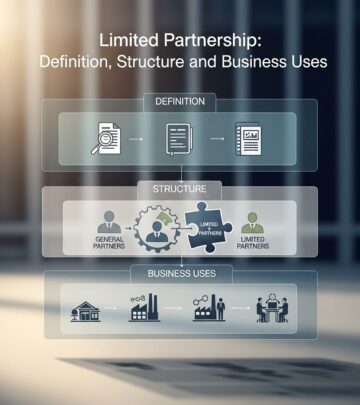
General Partners vs. Limited Partners
The partnership structure creates a clear distinction between general partners and limited partners based on their roles, responsibilities, and risk exposure:
| Aspect | General Partner | Limited Partner |
|---|---|---|
| Management Role | Active management and decision-making | Passive investor role |
| Liability | Unlimited personal liability | Liability limited to capital invested |
| Capital Contribution | Smaller percentage but significant commitment | Larger percentage of total capital |
| Control | Full control over operations and decisions | Limited or no control; no management involvement |
| Compensation | Management fees and carried interest | Share of profits based on capital contribution |
| Exit Decisions | Makes exit timing and strategy decisions | Receives returns when GP executes exits |
Alignment of Interests
The partnership structure is deliberately designed to align the interests of general partners with those of limited partners. General partners invest their own capital, making them directly affected by partnership performance. Their management fees are tied to assets under management, and their carried interest depends on achieving strong returns. This multi-layered compensation structure ensures that general partners have strong incentives to make sound investment decisions and create value for all partners.
Limited Partnership Agreements
The legal framework governing the relationship between general partners and limited partners is established through a Limited Partnership Agreement (LPA). This comprehensive document outlines the rights and responsibilities of each partner, the investment thesis, management procedures, fee structures, profit distribution, and other critical terms.
The LPA specifies how decisions are made, what happens in various scenarios, the process for distributing profits, the conditions for removing a general partner, and numerous other operational details. A well-drafted LPA protects both general partners and limited partners by establishing clear expectations and procedures for partnership governance.
Frequently Asked Questions
What is the primary difference between a general partner and a limited partner?
The primary difference is that general partners actively manage the fund or partnership and bear unlimited personal liability, while limited partners are passive investors whose liability is limited to their capital contribution. General partners make all business decisions, while limited partners typically have no involvement in management.
Can a general partner be held personally responsible for partnership debts?
Yes, general partners have unlimited personal liability. If the partnership cannot meet its financial obligations, creditors can pursue the general partner’s personal assets to satisfy claims. This is a significant risk that reflects the active management role and decision-making authority of general partners.
How do general partners earn money from a partnership?
General partners earn income through management fees (typically 1-2% of assets under management annually) and carried interest (typically 20% of profits above a hurdle rate). Management fees cover operating expenses, while carried interest aligns GP compensation with investor returns.
What qualifications should a general partner have?
General partners should possess deep expertise in their investment domain, strong analytical and decision-making skills, extensive market knowledge, experience in deal sourcing and execution, and a successful track record of generating returns. Trust and transparency with limited partners are also essential qualities.
Can limited partners become involved in management decisions?
Typically, limited partners remain passive and do not participate in day-to-day management decisions. However, the LPA may grant limited partners certain approval rights for major decisions or the ability to remove general partners under specific circumstances. Limited partners can also request reporting and transparency from general partners.
What happens if a general partner wants to exit the partnership?
The procedures for general partner exit should be outlined in the LPA. Typically, the remaining general partners or limited partners may have options to continue the partnership, find a replacement, or liquidate the fund. The specific terms depend on the partnership agreement and applicable laws.
References
- What’s the Difference Between a General Partner and a Limited Partner? — European Roundtable. https://www.roundtable.eu/learn/whats-the-difference-between-a-general-partner-and-a-limited-partner
- General Partner vs. Limited Partner: Breaking Down the Differences — Visible VC. https://visible.vc/blog/general-partner-vs-limited-partner/
- Limited Partners (LP) vs. General Partners (GP) in Private Equity — Affinity. https://www.affinity.co/blog/lp-gp-relationships
- What Is a General Partnership? — US Chamber of Commerce. https://www.uschamber.com/co/start/startup/general-partnerships
Similar Articles








Read full bio of Sneha Tete