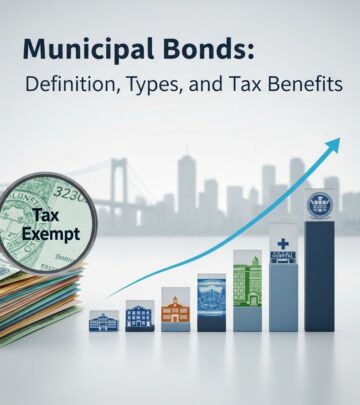
General Obligation Bond: Definition, Types & Uses
Understanding General Obligation Bonds: Municipal debt backed by full faith and credit of issuing government.

A general obligation bond (GO bond) is a type of municipal security issued by state and local governments to finance public projects and infrastructure. These bonds are backed by the full faith and credit of the issuing government entity, meaning the government pledges its entire revenue stream and taxing authority to ensure repayment. Unlike revenue bonds, which depend on specific project revenue, general obligation bonds are supported by the government’s general tax revenue, making them a more secure investment for bondholders. Understanding general obligation bonds is essential for both investors seeking municipal securities and citizens interested in how their local governments finance public works.
What Is a General Obligation Bond?
A general obligation bond is a municipal bond issued by a state, county, city, or other local government entity to raise capital for public projects and services. The distinguishing feature of a GO bond is that it is backed by the full taxing power and general revenues of the issuing municipality, not by revenues generated from a specific project. This backing creates a senior claim on the government’s finances, making GO bonds one of the safest municipal securities available.
When an investor purchases a general obligation bond, they are essentially lending money to a municipal government with the expectation that the government will repay the principal and interest from its general revenue sources. These revenue sources typically include property taxes, income taxes, sales taxes, and other general fund revenues. The government entity’s creditworthiness and ability to collect taxes directly determine the bond’s safety and the interest rate offered to investors.
Key Characteristics of General Obligation Bonds
- Full Faith and Credit Backing: GO bonds are secured by the complete taxing power and general revenues of the issuing government, providing the highest level of security among municipal bonds.
- Voter Approval Required: Most jurisdictions require voter approval before issuing general obligation bonds, adding a democratic dimension to municipal financing.
- Tax-Exempt Interest: Interest earned on GO bonds is typically exempt from federal income tax and often from state and local taxes as well, making them attractive to investors in higher tax brackets.
- Lower Yields: Because GO bonds are backed by the government’s general revenue and are considered very safe, they typically offer lower yields compared to revenue bonds or corporate bonds of similar maturity.
- Long-Term Maturity: General obligation bonds typically have maturity periods ranging from 10 to 30 years, making them suitable for long-term investors and retirees.
- Publicly Traded: Many GO bonds trade in the secondary market, allowing investors to buy and sell them before maturity, though trading activity varies by bond.
Purpose and Uses of General Obligation Bonds
Municipal governments issue general obligation bonds to finance a wide variety of public infrastructure and services. Common uses for GO bond proceeds include:
- Schools and Education: Building new schools, renovating existing facilities, and purchasing educational equipment.
- Public Infrastructure: Financing roads, bridges, water treatment facilities, and sewage systems.
- Parks and Recreation: Developing parks, recreational centers, and public sports facilities.
- Public Safety: Building police stations, fire stations, and emergency response facilities.
- Libraries and Cultural Facilities: Constructing public libraries and cultural centers.
- Transportation: Funding public transit systems, highways, and transportation infrastructure improvements.
- Utilities and Infrastructure: Investing in water systems, electric utilities, and other essential services.
How General Obligation Bonds Work
The process of issuing and managing general obligation bonds involves several key steps. First, a municipal government identifies a need for capital, such as building a new school or bridge. The government then decides to finance this project through bond issuance rather than using current tax revenues.
In most cases, the proposed bond issue must receive voter approval through a referendum. This democratic requirement ensures that taxpayers agree to the debt obligation before it is incurred. Once voter approval is obtained, the government works with investment banks to structure and market the bonds to potential investors.
The bonds are issued with a specific maturity date, typically ranging from 10 to 30 years, and an interest rate that reflects current market conditions and the issuing government’s credit rating. Investors receive periodic interest payments, usually semi-annually, and the principal is repaid upon maturity. The government dedicates revenues from its general fund to make these payments on schedule.
General Obligation Bonds vs. Revenue Bonds
While both general obligation bonds and revenue bonds are municipal securities, they differ significantly in their backing and characteristics:
| Feature | General Obligation Bonds | Revenue Bonds |
|---|---|---|
| Security Backing | Full faith and credit of issuing government | Revenue from specific project only |
| Voter Approval | Usually required | Not required |
| Interest Rates | Lower due to higher security | Higher due to increased risk |
| Debt Limit | Often subject to constitutional or statutory limits | Generally no explicit limit |
| Payment Priority | First priority, paid from general revenues | Paid only if project generates sufficient revenue |
| Example Projects | Schools, public buildings, roads | Toll roads, water treatment, utilities |
Advantages of General Obligation Bonds
General obligation bonds offer several significant advantages for both issuers and investors:
- Safety and Security: The backing of a government’s full taxing authority makes GO bonds among the safest securities available, with default rates historically very low.
- Tax-Exempt Income: Interest income is typically exempt from federal and sometimes state and local taxes, providing significant tax benefits to investors.
- Lower Borrowing Costs: Because of their safety, municipalities can issue GO bonds at lower interest rates than other types of debt.
- Democratic Process: Requiring voter approval for GO bonds ensures public accountability and prevents excessive government borrowing without citizen consent.
- Predictable Returns: Investors can rely on consistent interest payments backed by government revenue streams.
- Suitable for Retirees: The combination of safety, tax-exempt income, and predictable returns makes GO bonds ideal for fixed-income investors and retirees.
Disadvantages of General Obligation Bonds
Despite their advantages, general obligation bonds have certain limitations worth considering:
- Lower Yields: The safety of GO bonds means they offer lower interest rates compared to corporate bonds or other higher-yielding investments.
- Interest Rate Risk: Like all bonds, GO bond prices decline when interest rates rise, affecting investors who need to sell before maturity.
- Limited Liquidity: Many GO bonds have limited trading activity, making them difficult to sell quickly in the secondary market.
- Voter Approval Delays: Dependence on voter approval can delay project financing and complicate municipal planning.
- Inflation Risk: Fixed interest payments may not keep pace with inflation over long maturity periods.
- Political Risk: Changes in government administration or fiscal priorities can affect bond repayment reliability.
- Call Risk: Many GO bonds include call provisions allowing municipalities to redeem them early, which typically happens when interest rates decline, affecting investor returns.
Credit Ratings and Assessment
Credit rating agencies such as Moody’s, Standard & Poor’s, and Fitch evaluate general obligation bonds and assign ratings that reflect the issuing government’s creditworthiness. These ratings consider factors including:
- The government’s financial condition and reserve funds
- Trends in revenues and expenditures
- Economic conditions in the jurisdiction
- Population and employment trends
- Management quality and governance practices
- Existing debt levels and obligations
Higher-rated bonds offer lower yields, while lower-rated bonds must offer higher yields to attract investors. Investors should review these ratings before purchasing GO bonds to assess risk appropriately.
Risks Associated with General Obligation Bonds
While general obligation bonds are considered safe, they are not without risks. Economic downturns can reduce government tax revenues, potentially affecting the government’s ability to make bond payments. Budget crises, population decline, or significant business closures can threaten municipal finances. Additionally, natural disasters or public health emergencies can strain government budgets and create uncertainty about debt repayment. Investors should carefully evaluate the fiscal health and economic stability of the issuing jurisdiction before investing in GO bonds.
Frequently Asked Questions (FAQs)
Q: Are general obligation bonds safe investments?
A: Yes, general obligation bonds are generally considered safe because they are backed by the full faith and credit of the issuing government and its complete taxing authority. However, safety depends on the financial health of the issuing municipality. Investors should review credit ratings and financial statements before investing.
Q: What is the difference between GO bonds and municipal bonds?
A: Municipal bonds is a broader category that includes both general obligation bonds and revenue bonds. All GO bonds are municipal bonds, but not all municipal bonds are GO bonds. Revenue bonds, for example, are municipal securities backed by specific project revenues rather than general government revenues.
Q: Do general obligation bonds have tax advantages?
A: Yes, interest income from general obligation bonds is typically exempt from federal income tax and often from state and local income taxes as well. This makes GO bonds particularly attractive for investors in higher tax brackets seeking tax-efficient income.
Q: How long do general obligation bonds last?
A: General obligation bonds typically have maturity periods ranging from 10 to 30 years, though some may have shorter or longer terms. The specific maturity is determined when the bonds are issued and depends on the useful life of the financed project and market conditions.
Q: Can I sell general obligation bonds before maturity?
A: Yes, many GO bonds can be sold in the secondary market before maturity. However, the ease of selling depends on the bond’s size, issuer reputation, and current market interest rates. Selling before maturity may result in a gain or loss depending on market price changes.
Q: What happens if a municipality defaults on general obligation bonds?
A: Municipal defaults on GO bonds are extremely rare due to their backing by general government revenues and taxing authority. However, if a municipality faces severe financial distress, it could file for bankruptcy protection. Bondholders typically have priority claims on available government revenues.
References
- Introduction to Municipal Bonds — Municipal Securities Rulemaking Board (MSRB). 2024. https://www.msrb.org/
- Government Finance Officers Association: Municipal Bonds Overview — Government Finance Officers Association (GFOA). 2024. https://www.gfoa.org/
- SEC: Investor Guide to Municipal Bonds — U.S. Securities and Exchange Commission (SEC). 2024. https://www.sec.gov/investor/pubs/munibond.htm
- State and Local Government Debt: Characteristics and Challenges — Congressional Research Service. November 2023. https://crsreports.congress.gov/
- Rating Municipal Bonds: Assessing Credit Risk — Moody’s Investors Service. 2024. https://www.moodys.com/
Similar Articles








Read full bio of Sneha Tete