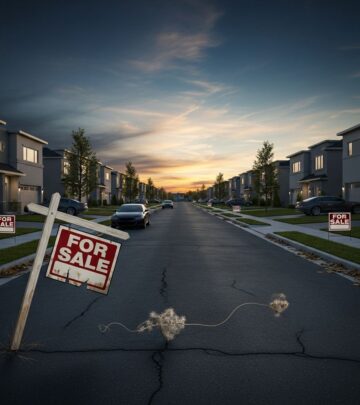
Why Gen Z and Millennials Can’t Afford Homes in 2025
Exploring the housing crisis: Why younger generations struggle to achieve homeownership dreams.

The Housing Crisis Facing Younger Generations
The American dream of homeownership has become increasingly elusive for Gen Z and millennials, despite their education levels and earning potential. In 2025, the housing market presents unprecedented challenges that are reshaping how younger Americans view financial independence and future planning. The situation has become so severe that millions of young adults are delaying or entirely abandoning hopes of owning their own homes, instead opting to share households with family members or roommates as a financial necessity rather than a lifestyle choice.
According to recent research from Realtor.com, millennials and Gen Z are experiencing what experts call being “pent up” when it comes to housing. There were 1.6 million fewer households formed by those between 18 and 44 than expected in 2024, demonstrating a fundamental gap between desired living situations and actual economic reality. The broader housing shortage tells an even more troubling story, with a total housing gap of 3.8 million units in 2024. This shortage directly impacts younger generations who are increasingly forced to share living spaces rather than establish independent households.
The Affordability Crisis: By The Numbers
The scale of housing unaffordability has reached crisis proportions across America. According to Bankrate’s 2025 Home Affordability Report, more than 83 percent of U.S. adults who don’t own a home but desire to cite affordability-related reasons as their primary barrier to homeownership. Breaking down the specific obstacles, aspiring homeowners identified several interconnected challenges:
- 59 percent lack sufficient income to qualify for mortgages
- 55 percent face home prices that are simply too high
- 46 percent cannot afford down payments and closing costs
For first-time homebuyers, the situation has become particularly dire. In 2025, the share of first-time home buyers plummeted to a record low of 21 percent, representing a significant decline in younger Americans entering the housing market. The median down payment requirement of over $83,000 for a 20 percent deposit on a median-priced home proves insurmountable for most young workers, particularly when combined with existing student loan debt and other financial obligations.
Harvard’s Joint Center for Housing Studies revealed that applying the standard lender affordability ratio of 31 percent debt-to-income ratio, a buyer would need an annual income of at least $126,700 to afford a typical monthly mortgage payment. This income threshold excludes the vast majority of Gen Z and millennial workers, effectively pricing them out of homeownership before they even begin the application process.
Understanding the Root Causes
While affordability challenges span multiple generations, the causes are well-documented and consistent across demographic groups. According to research on home affordability by generation, there is broad agreement on what’s driving the crisis. An overwhelming 93 percent of both boomers and Gen Xers blame inflation as the primary culprit, with 91 percent of millennials agreeing. Interest rates present another significant barrier, with 91 percent of boomers and Gen Xers pointing to high rates, alongside 89 percent of millennials. Property taxes compound the problem, with 92 percent of boomers, 87 percent of millennials, and 86 percent of Gen Xers identifying high taxes as a contributing factor.
However, generational perspectives diverge when assigning broader responsibility for the crisis. Boomers tend to blame supply and demand dynamics in the market, while millennials and Gen Z increasingly point fingers at state and federal government policies. This divide reflects deeper philosophical differences about market solutions versus government intervention in addressing housing affordability.
The Down Payment Dilemma
Perhaps no single factor more effectively demonstrates the housing crisis than the down payment challenge. For nearly three-quarters of non-homeowners, affording a down payment represents a hard-to-overcome obstacle, with 71 percent of respondents saying they couldn’t put down any money right now. This situation is particularly acute for younger generations who are already burdened by student loan debt and competing financial priorities.
The generational breakdown reveals stark disparities: although 25 percent of all respondents could put down $75,000 or more for a home purchase, this includes just 7 percent of boomer renters, 6 percent of Gen X renters, and essentially zero percent of millennial renters. Conversely, nearly two-thirds of boomer renters (63 percent) could only put down $5,000 or less, with approximately 61 percent of Gen Xers facing the same constraint. For younger generations seeking to build wealth through homeownership, these down payment requirements often feel impossible without parental assistance or inheritance.
The Student Debt Factor
Student loan debt represents a uniquely millennial and Gen Z burden that directly impacts homeownership prospects. Research indicates that 22 percent of millennials cite student debt as a reason they can’t afford a home—more than 7 times the number of boomers (3 percent) who face the same constraint. This educational debt fundamentally alters the financial trajectories of younger Americans, consuming income that might otherwise go toward down payment savings.
The intersection of student debt and housing affordability creates a compounding problem. Young professionals entering the workforce with six-figure student loans find their debt-to-income ratios already elevated before applying for a mortgage. Lenders, applying standard affordability criteria, determine that many potential borrowers don’t qualify for the mortgage amounts needed to purchase homes in their desired markets.
What Would Younger Generations Sacrifice for Homeownership?
When faced with the prospect of never owning a home, many younger Americans indicate willingness to make significant compromises. According to Bankrate’s 2025 Home Affordability Survey, 64 percent of Americans would be willing to do something to find more affordable housing. The specific sacrifices younger Americans would consider reveal important insights about their priorities and desperation levels:
- 29 percent would be willing to downsize their living space
- 24 percent would move out of state
- 19 percent would move farther from family and friends
- 18 percent would buy a fixer-upper property
Interestingly, generational preferences for sacrifice differ significantly. Across most generations, downsizing represents the top sacrifice for more affordable housing, cited by 26 percent of baby boomers, 32 percent of Gen Xers, and 29 percent of millennials. Gen Z represents a notable exception, with 32 percent most commonly saying they’d be willing to move out of state to find affordable housing. This preference reflects younger adults’ relative geographic flexibility, lack of established family roots in particular regions, and willingness to start fresh in markets with lower housing costs.
The Timeline to Affordability
When asked about their savings timelines to accumulate down payments, potential homebuyers provided sobering estimates. The data reveals a dramatically extended timeline for younger Americans to achieve homeownership:
- Just 4 percent expect to have enough saved within one year
- 11 percent expect to save sufficiently within 1-2 years
- 20 percent anticipate needing 3-5 years
- 11 percent estimate 5-7 years needed
- 9 percent say they’ll need 7-10 years
- 12 percent acknowledge they’ll need 10 or more years
These projections represent extended waiting periods for younger Americans to achieve a fundamental component of the traditional path to wealth building. For some Gen Z adults currently in their early twenties, reaching homeownership by their mid-thirties or beyond represents a dramatically delayed timeline compared to previous generations.
The Dream Home Reality Check
Perhaps most troublingly, a significant portion of Americans have abandoned hope of ever affording their dream home. Twenty-two percent of all American adults say they’ll never be able to afford their dream home, with important generational variations in this resignation. Among age cohorts, 29 percent of Generation X (ages 45-60) have given up, followed by 24 percent of millennials (ages 29-44), 20 percent of Gen Z (ages 18-28), and 18 percent of baby boomers (ages 61-79). These percentages represent millions of Americans who have consciously accepted that homeownership beyond their basic financial reach is simply unattainable.
Generational Perspectives on Homeownership Value
Despite these challenges, younger generations continue to place significant value on homeownership as a life goal and marker of financial success. Gen Zers (78 percent) and millennials (74 percent) place a high value on homeownership, with both cohorts saying it trumps other hallmarks of financial success. This represents a substantial portion of younger Americans who view home ownership as central to their vision of successful adulthood.
When existing millennial and Gen Z homeowners were asked whether they would purchase their current home again if they had the opportunity, 75 percent of millennial homeowners and 71 percent of Gen X homeowners said they would—compared to just 62 percent of Gen Z homeowners. This lower satisfaction rate among Gen Z homeowners potentially reflects their frustration with having to settle for properties that don’t fully meet their needs or preferences due to affordability constraints.
First-Time Homebuyer Demographics in Crisis
The makeup of first-time homebuyers has shifted dramatically, with younger generations conspicuously underrepresented in the market. Gen Z buyers and sellers aged 18 to 25 made up just 3 percent of buyers and 2 percent of sellers in the current market. These remarkably low percentages indicate that homeownership entry points for the youngest adult generation have become nearly inaccessible. Instead, properties are being purchased by older millennials, Gen Xers, and baby boomers who had more favorable conditions during their initial market entries or who possess accumulated wealth enabling them to purchase additional properties.
The Desperation Factor
As affordability pressures intensify, some younger Americans indicate willingness to make concerning compromises to achieve homeownership. Research reveals that 25 percent of respondents are desperate enough to buy any home they can afford, even if it’s not a good investment and doesn’t meet all their needs or preferences. While this desperation spans all age groups relatively consistently, Gen Z (40 percent) and millennials (39 percent) make up the vast majority of Americans whom the public perceives as most likely to overpay for homes out of desperation.
Furthermore, 76 percent of respondents believe Gen Z and millennials are the biggest victims of the current housing crisis, making those generations’ frustrations and concerns about homeownership access not only valid but widely recognized. This public recognition of generational hardship validates younger Americans’ concerns about systemic barriers to homeownership rather than personal financial failures.
Policy Solutions and Future Outlook
When asked about potential government intervention, generational divides become apparent. Eighty-seven percent of millennials believe government policies should do more to make homeownership accessible—substantially higher than the 75 percent of boomers and 78 percent of Gen Xers who feel this way. Additionally, 39 percent of millennials would be willing to pay more in taxes to fund government action on housing affordability, compared to just 21 percent of boomers and 25 percent of Gen Xers. This willingness to contribute financially to solutions reflects younger generations’ desperation to address the crisis affecting their futures.
Frequently Asked Questions
Q: Why is homeownership becoming impossible for Gen Z and millennials?
A: Multiple interconnected factors create the affordability crisis: high home prices, elevated interest rates, inflation, property taxes, student loan debt, and insufficient income relative to housing costs. The median down payment requirement exceeds what most young workers can save.
Q: What percentage of first-time homebuyers are under 30?
A: Gen Z buyers aged 18-25 represent just 3 percent of home buyers, reflecting how inaccessible the market has become for the youngest adult generation.
Q: What are Gen Z and millennials willing to sacrifice for homeownership?
A: Younger Americans indicate willingness to downsize living space, move out of state, relocate farther from family, or purchase fixer-upper properties to achieve more affordable homeownership.
Q: How long until younger Americans can save for a down payment?
A: Timelines vary dramatically, with only 4 percent expecting to save within one year and 12 percent estimating they’ll need 10+ years to accumulate sufficient down payments.
Q: Do Gen Z and millennials still value homeownership?
A: Yes, 78 percent of Gen Z and 74 percent of millennials place high value on homeownership, viewing it as central to financial success despite current barriers.
References
- Here’s How Millennials and Gen Z Afford Housing in 2025 — Elegran. 2025. https://www.elegran.com/blog/Here-s-How-Millennials-and-Gen-Z-Afford-Housing-in-2025
- Bankrate’s 2025 Home Affordability Report — Bankrate. 2025. https://www.bankrate.com/mortgages/home-affordability-report/
- 2025 Data: Surprising Findings on Homeownership by Generation — Clever Offers. 2025. https://cleveroffers.com/research/home-ownership-by-generation/
- The State of the Nation’s Housing 2025 — Harvard Joint Center for Housing Studies. 2025. https://www.jchs.harvard.edu/sites/default/files/reports/files/Harvard_JCHS_The_State_of_the_Nations_Housing_2025.pdf
- Home Buyers and Sellers Generational Trends — National Association of Realtors. 2025. https://www.nar.realtor/research-and-statistics/research-reports/home-buyer-and-seller-generational-trends
Similar Articles








Read full bio of medha deb