GDP vs GNP: Understanding Key Economic Indicators
Learn the critical differences between GDP and GNP and why each matters for economic analysis.
What Is the Functional Difference Between GDP and GNP?
Gross Domestic Product (GDP) and Gross National Product (GNP) are two of the most important economic indicators used by governments, economists, and investors to measure the economic performance and health of a nation. While these metrics are often mentioned together and appear similar on the surface, they represent fundamentally different approaches to measuring economic output. Understanding the distinction between GDP and GNP is crucial for anyone seeking to comprehend economic data, make informed investment decisions, or analyze international economic trends.
Core Definitions and Basic Concepts
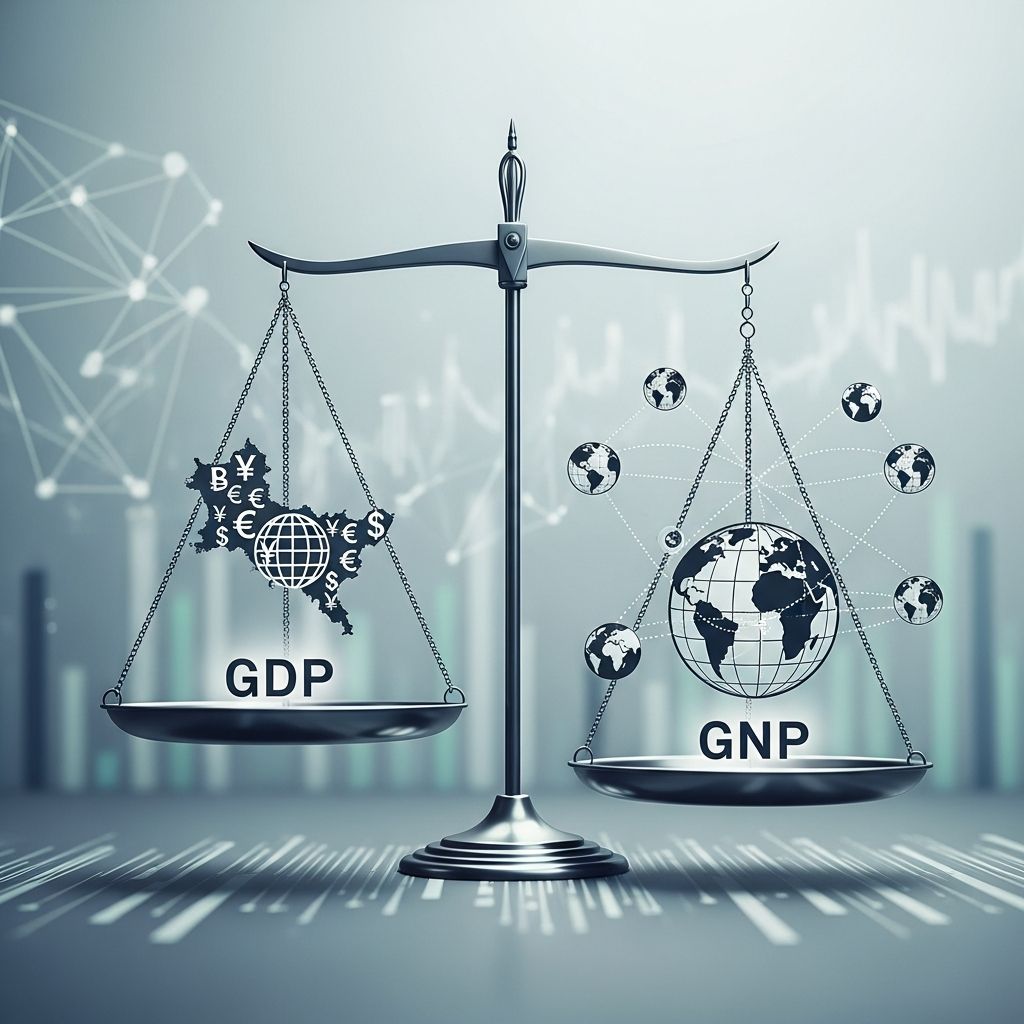
Before exploring the functional differences, it is essential to establish clear definitions of both terms. Gross Domestic Product (GDP) measures the total monetary value of all finished goods and services produced within a country’s borders during a specific period, regardless of who produces them. This includes production by both domestic and foreign companies operating within the country. GDP is typically calculated on an annual basis and is one of the most widely used indicators of a nation’s economic size and growth rate.
Gross National Product (GNP), on the other hand, measures the total monetary value of all finished goods and services produced by a nation’s residents, regardless of location. GNP focuses on who owns the means of production rather than where production occurs. This means GNP includes income earned by citizens abroad but excludes income earned within the country by foreign nationals or foreign companies.
Geographic Focus: The Primary Distinction
The most significant functional difference between GDP and GNP lies in their geographic focus:
- GDP: Measures production within a country’s geographic boundaries, focusing on where goods and services are produced
- GNP: Measures production by a country’s citizens, focusing on who produces goods and services regardless of location
This distinction has profound implications. For example, if a Japanese automobile manufacturer operates a factory in the United States and produces cars there, that production counts toward U.S. GDP. However, those same cars do not count toward U.S. GNP because they were produced by a foreign-owned entity. Conversely, if an American company operates a manufacturing facility in Mexico, the production counts toward U.S. GNP but not toward U.S. GDP.
Calculation Methodologies
Both GDP and GNP can be calculated using similar methodologies, but with crucial adjustments to account for international income flows:
GDP Calculation: GDP is typically calculated using the expenditure approach, which sums consumption, investment, government spending, and net exports. Alternatively, the income approach totals all incomes earned in production, or the production approach adds value across sectors.
GNP Calculation: GNP takes GDP as a starting point and makes adjustments. The formula is: GNP = GDP + Income earned by residents from abroad – Income earned within the domestic economy by foreign residents.
This adjustment process is critical because it captures the flow of income between residents and non-residents, ensuring that GNP accurately reflects national economic output as produced by a nation’s citizens.
International Income Flows
The functional differences between GDP and GNP become particularly apparent when examining international income flows. Modern economies involve significant cross-border investment, with multinational corporations operating in multiple countries and individuals earning income internationally.
Income earned by residents abroad includes:
- Wages and salaries earned by expatriate workers
- Income from foreign investments and dividends
- Profits from overseas business operations
- Remittances from family members working abroad
- Interest income from foreign bonds and securities
Income earned by non-residents domestically includes:
- Wages paid to foreign workers within the country
- Profits earned by foreign companies operating domestically
- Dividend payments to foreign investors
- Interest payments on foreign-owned debt securities
- Rental income earned by foreign property owners
For countries with significant international business activities or populations working abroad, these adjustments can result in substantial differences between GDP and GNP figures.
Practical Examples and Real-World Implications
Consider the United States economy. American corporations operate factories, research facilities, and service centers throughout the world. American workers are employed overseas, and American investors hold significant foreign assets. Conversely, foreign companies operate within U.S. borders, foreign workers earn wages in the United States, and foreign investors own shares in American companies. For the United States, GDP and GNP typically differ by relatively small percentages because inbound and outbound investment flows roughly balance.
In contrast, developing nations might show more pronounced differences. For instance, a country that relies heavily on remittances from citizens working abroad would have a significantly higher GNP than GDP. Conversely, a nation that attracts substantial foreign direct investment might have a higher GDP than GNP.
Which Metric Is More Important?
Both GDP and GNP serve important but different purposes in economic analysis. GDP is generally preferred for measuring economic activity within a specific geographic area and for assessing the productivity of a nation’s resources. It better reflects the actual level of economic activity occurring within a country and is more useful for policy makers focused on domestic economic conditions.
GNP, however, is more relevant for understanding the welfare of a nation’s citizens, as it measures income actually earned by residents. For development economists and those studying living standards, GNP per capita provides better insight into the average income available to citizens.
Most modern economic analysis relies heavily on GDP because it is more standardized internationally, allowing for better cross-country comparisons. However, informed economists consider both metrics when conducting comprehensive economic analysis.
Historical Context and Modern Usage
Historically, GNP was the primary economic indicator used by most countries. However, beginning in the 1990s, most nations transitioned to using GDP as their primary measure of economic performance. This shift occurred because GDP is considered a more accurate reflection of economic activity within a territory and is easier to standardize internationally for comparative analysis.
Despite this shift, many economists maintain that considering both metrics provides a more complete picture of economic health. Some countries continue to report both figures, and international organizations like the World Bank and International Monetary Fund track both indicators.
Impact of Globalization
The rise of globalization has made understanding the distinction between GDP and GNP increasingly important. As corporations expand internationally and capital flows across borders more freely, the gaps between these measurements have become more significant in many countries. Companies no longer need to be located in the country where their owners reside, and workers can earn income internationally more easily than ever before.
This globalization has led to situations where countries with significant outbound investment show higher GNP relative to GDP, while countries attractive to foreign investment show higher GDP relative to GNP. These patterns reveal important information about a nation’s economic relationships with the rest of the world.
Alternative Metrics and Refinements
In response to limitations in both GDP and GNP, economists have developed several alternative or supplementary metrics. Gross National Income (GNI) is essentially the modern term for what was previously called GNP, used primarily by the World Bank. Other metrics like Net National Product (NNP) adjust for capital depreciation, providing a more accurate picture of sustainable income.
Additionally, some economists advocate for measuring economic welfare through indicators that account for environmental degradation, income inequality, and non-market activities. These measures attempt to capture aspects of economic well-being that traditional GDP and GNP overlook.
Frequently Asked Questions
Q: Why do economists prefer GDP over GNP in modern analysis?
A: Economists favor GDP because it is standardized internationally, easier to compare across countries, and better reflects economic activity within a specific geographic area. GDP is also more directly relevant to domestic policy makers and better indicates the productivity of resources within a nation’s borders.
Q: Can GDP and GNP ever be the same for a country?
A: While unlikely in practice, GDP and GNP would be equal for a country with no international income flows—meaning no citizens earning income abroad and no foreign residents earning income domestically. In reality, most countries experience some international income flows that create differences between these metrics.
Q: How does GNP per capita differ from GDP per capita as a measure of living standards?
A: GNP per capita divides total GNP by population to show average income earned by residents, while GDP per capita shows average production within the country per person. GNP per capita may be a better indicator of actual resident welfare in countries with significant international income flows.
Q: Which countries show the largest differences between GDP and GNP?
A: Countries with large diaspora populations earning significant remittances or those with substantial foreign direct investment typically show larger differences. Developing nations and those with significant emigration often display more pronounced variations between these metrics.
Q: How frequently are GDP and GNP figures updated?
A: Most countries release preliminary GDP estimates monthly or quarterly, with revisions made as more complete data becomes available. Annual figures are considered most reliable. GNP figures are typically released less frequently, often on an annual basis or as part of broader national accounts data.
Q: Does the International Monetary Fund use GDP or GNP in its analyses?
A: The International Monetary Fund primarily uses GDP for international comparisons and economic analysis, though it may reference GNI (Gross National Income, the modern equivalent of GNP) in certain contexts. GDP is the standard metric for cross-country economic comparisons.
Summary and Key Takeaways
Understanding the functional differences between GDP and GNP is essential for anyone engaged in economic analysis, investment decisions, or policy formulation. GDP measures production within a country’s borders and is the primary indicator used for international economic comparisons. GNP measures income earned by a nation’s residents regardless of location and provides insight into the economic welfare of citizens. While GDP has become the dominant metric in modern economic analysis, both indicators provide valuable perspectives on national economic health and performance. The choice between using GDP or GNP depends on the specific analytical question being addressed and the context of the economic investigation.
References
- Gross Domestic Product (GDP) — Bureau of Economic Analysis, U.S. Department of Commerce. Accessed 2025. https://www.bea.gov/resources/learning-center/what-to-know/GDP
- National Income and Product Accounts — Bureau of Economic Analysis, U.S. Department of Commerce. 2025. https://www.bea.gov/national/
- Gross National Income (GNI) — The World Bank. 2024. https://data.worldbank.org/indicator/NY.GNP.ATLS.CD
- System of National Accounts 2008 — United Nations Statistics Division. 2009. https://unstats.un.org/unsd/nationalaccount/sna2008.asp
- International Monetary Fund: World Economic Outlook Database — International Monetary Fund. 2024. https://www.imf.org/external/datamapper/index.php
Similar Articles








Read full bio of medha deb