GDP Price Deflator: Definition, Formula & Calculation
Understand GDP price deflator: measure inflation, compare economic growth across time periods accurately.

What Is the GDP Price Deflator?
The GDP price deflator, also known as the implicit price deflator, is a fundamental economic measurement tool designed to track changes in the prices of all goods and services produced within a country’s economy. Unlike other inflation measures that rely on predetermined baskets of goods, the GDP deflator provides a comprehensive view of price movements across an entire economy by considering all domestically produced final goods and services in a given year.
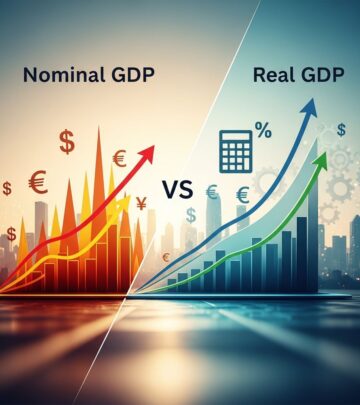
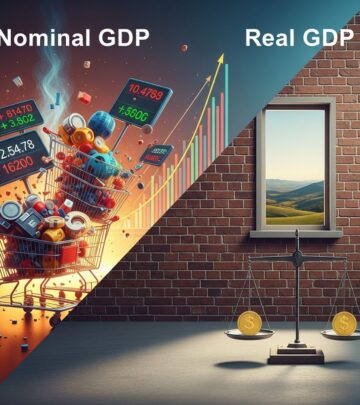
This metric serves a critical purpose in economic analysis: it allows policymakers, economists, and investors to distinguish between economic growth that results from actual increases in productivity and growth that stems merely from rising prices. By removing the effects of inflation or deflation from nominal GDP figures, the GDP deflator reveals the true underlying economic performance of a nation.
The GDP deflator is expressed as an index number with a base year value of 100. This means that if the GDP deflator for a particular year is 110, prices have increased by 10 percent compared to the base year. Conversely, a deflator below 100 would indicate deflation, or declining prices, relative to the base period.
Understanding the GDP Deflator Formula
The calculation of the GDP price deflator is straightforward and elegant in its simplicity:
GDP Price Deflator = (Nominal GDP ÷ Real GDP) × 100
To effectively apply this formula, you need to understand the components involved:
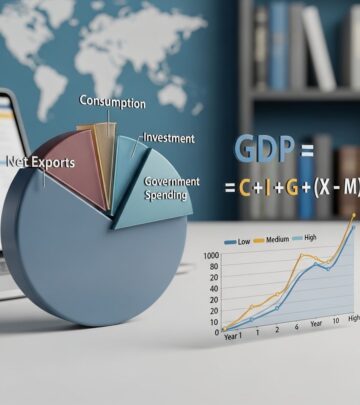
Nominal GDP represents the total dollar value of all goods and services produced by an economy during a specified period, calculated using current market prices. It comprises four main elements: consumption (C), investment (I), government spending (G), and net exports (X – M), expressed as C + I + G + (X – M).
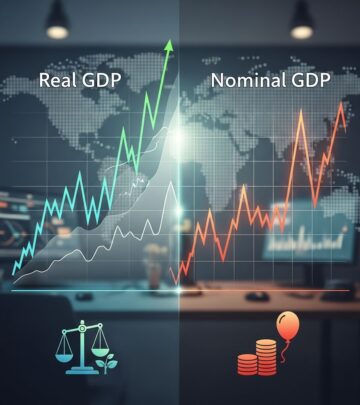
Real GDP represents the same economic output but adjusted to reflect price changes resulting from inflation or deflation. Rather than using current prices, real GDP uses prices from a designated base year, providing a constant-dollar measurement that isolates actual economic growth from price-level changes.
The relationship between these components is fundamental: when there is no inflation, nominal GDP equals real GDP, resulting in a GDP deflator of 100. The difference between the two represents the cumulative effect of price changes over time.
Calculating the GDP Deflator: Step-by-Step Process
To calculate the GDP deflator accurately, follow these systematic steps:
Step 1: Calculate Nominal GDP by multiplying current prices of all goods and services by their respective quantities produced in the current year.
Step 2: Calculate Real GDP by multiplying the original or base year prices by the quantities of goods and services produced in the current year.
Step 3: Apply the Formula by dividing nominal GDP by real GDP and multiplying the result by 100 to obtain the GDP deflator index.
For example, if an economy’s nominal GDP is $22 trillion and its real GDP (in base year dollars) is $21 trillion, the calculation would be: (22 ÷ 21) × 100 = 104.76. This indicates that prices have risen 4.76 percent compared to the base year. If this resulted from 10 percent nominal GDP growth, it would tell us that 4.76 percentage points came from inflation rather than actual economic expansion.
Key Advantages of the GDP Price Deflator
The GDP deflator offers several significant advantages over alternative inflation measures:
Comprehensive Coverage: Unlike the Consumer Price Index (CPI), which tracks only consumer goods and services, the GDP deflator encompasses all domestically produced final goods and services, providing a more complete picture of economy-wide inflation.
Dynamic Basket of Goods: The GDP deflator uses a constantly adjusting basket of commodities that reflects changing consumption and investment patterns, whereas the CPI relies on a fixed basket that is only periodically revised. This flexibility makes the GDP deflator more responsive to structural shifts in the economy.
Excludes Imported Goods: The GDP deflator calculation includes exports to foreign countries but excludes imports, focusing exclusively on domestically produced output. This provides a clearer measure of price changes in the domestic economy.
Better Reflects Economic Reality: Because it measures price changes across the entire spectrum of economic output rather than just consumer purchases, the GDP deflator often provides a more conservative and realistic assessment of inflation than the CPI.
GDP Price Deflator vs. Other Inflation Measures
Several inflation measures exist in economics, each with distinct characteristics and applications:
| Inflation Measure | Scope | Basket Type | Coverage | Import Treatment |
|---|---|---|---|---|
| GDP Deflator | All domestically produced goods and services | Dynamic/adjusting | Most comprehensive | Excludes imports |
| Consumer Price Index (CPI) | Selected consumer goods and services | Fixed basket | Consumer-focused | Includes imports |
| Producer Price Index (PPI) | Goods at wholesale level | Fixed basket | Producer-focused | Varies by category |
| Personal Consumption Expenditures (PCE) | Consumer spending on goods and services | Dynamic | Consumer-focused | Includes imports |
The GDP deflator and CPI often produce similar findings, though the GDP deflator typically yields slightly lower inflation readings because it represents a more conservative measurement approach. The CPI, by contrast, may overstate inflation for certain populations because it uses a fixed basket that doesn’t adjust to reflect how consumers actually change their purchasing behavior in response to price changes.
Real-World Application: The Post-Pandemic Economy
A practical example of the GDP deflator’s importance emerged in the early 2020s recovery. Following COVID-19 lockdowns, the U.S. experienced significant inflation driven by global supply chain disruptions. In the first quarter of 2022, prices rose approximately 15.11 percent according to data from the Bureau of Economic Analysis (BEA).
During this period, nominal GDP growth appeared robust, but when the GDP deflator was applied, economists and policymakers discovered that much of this growth came from inflation rather than actual increases in goods and services production. This distinction proved crucial for understanding the true state of the economy and informing policy decisions.
Why the GDP Deflator Matters
Understanding the GDP deflator is essential for several reasons:
Policy Decision Making: Central banks and government agencies rely on the GDP deflator to distinguish between real economic growth and price-driven nominal growth, enabling more informed monetary and fiscal policy decisions.
Investment Analysis: Investors use the GDP deflator to assess the actual health and productivity of an economy, helping them make better decisions about asset allocation and economic exposure.
Historical Comparisons: The GDP deflator allows economists to compare economic performance across different time periods by adjusting for price level changes, revealing true trends in productivity and output.
Inflation Measurement: As a broad measure of inflation covering all economic sectors, the GDP deflator provides a more complete picture of price movements than measures focused on specific consumer segments.
Rebasing and Updates
The GDP deflator undergoes periodic rebasing, during which the base year is changed and all real GDP figures and related data are recalculated to reflect the new baseline. This rebasing process ensures that the index remains relevant and accurately captures economic conditions relative to a more recent reference point. These updates typically occur at multi-year intervals and are coordinated across statistical agencies.
Limitations of the GDP Deflator
While powerful, the GDP deflator has certain limitations:
It may not capture price changes in non-market activities or informal economies. Additionally, because it relies on GDP data that requires extensive collection and processing, the GDP deflator is released with a significant time lag compared to other inflation measures. This means it may not provide the most current inflation assessment for immediate policy decisions.
Frequently Asked Questions
Q: How does the GDP deflator differ from the CPI?
A: The GDP deflator measures price changes for all domestically produced goods and services using a dynamic basket, while the CPI tracks only selected consumer goods using a fixed basket that changes infrequently. The GDP deflator also excludes imports, whereas the CPI includes them.
Q: What does a GDP deflator of 105 mean?
A: A GDP deflator of 105 indicates that prices have increased by 5 percent relative to the base year (which has a value of 100). This means it would take 5 percent more money to purchase the same basket of goods and services.
Q: Why is the GDP deflator considered more comprehensive than CPI?
A: The GDP deflator encompasses all domestically produced final goods and services in the economy, not just consumer purchases. This includes investment goods, government purchases, and exports, providing a broader measure of economy-wide price movements.
Q: How often is the GDP deflator updated?
A: The GDP deflator is typically released quarterly by the Bureau of Economic Analysis alongside GDP reports, though data undergoes revisions as more complete information becomes available.
Q: Can the GDP deflator be negative?
A: Yes, the GDP deflator can fall below 100, indicating deflation or declining prices relative to the base year. However, sustained deflation is rare in modern economies and typically signals economic difficulties.
References
- GDP Deflator | Definition, Formula & Example — Study.com. 2025. https://study.com/academy/lesson/gdp-deflator-definition-formula-example.html
- GDP Price Deflator | Formula, Example, & Investing Strategy — Britannica Money. 2025. https://www.britannica.com/money/gdp-price-deflator
- GDP Deflator | Formula + Calculator — Wall Street Prep. 2025. https://www.wallstreetprep.com/knowledge/gdp-deflator/
- GDP deflator — Wikipedia. 2025. https://en.wikipedia.org/wiki/GDP_deflator
- Bureau of Economic Analysis (BEA) — U.S. Department of Commerce. 2025. https://www.bea.gov/
- Economics 101: What Is the GDP Price Deflator — MasterClass. 2025. https://www.masterclass.com/articles/economics-101-what-is-the-gdp-price-deflator
Similar Articles








Read full bio of Sneha Tete