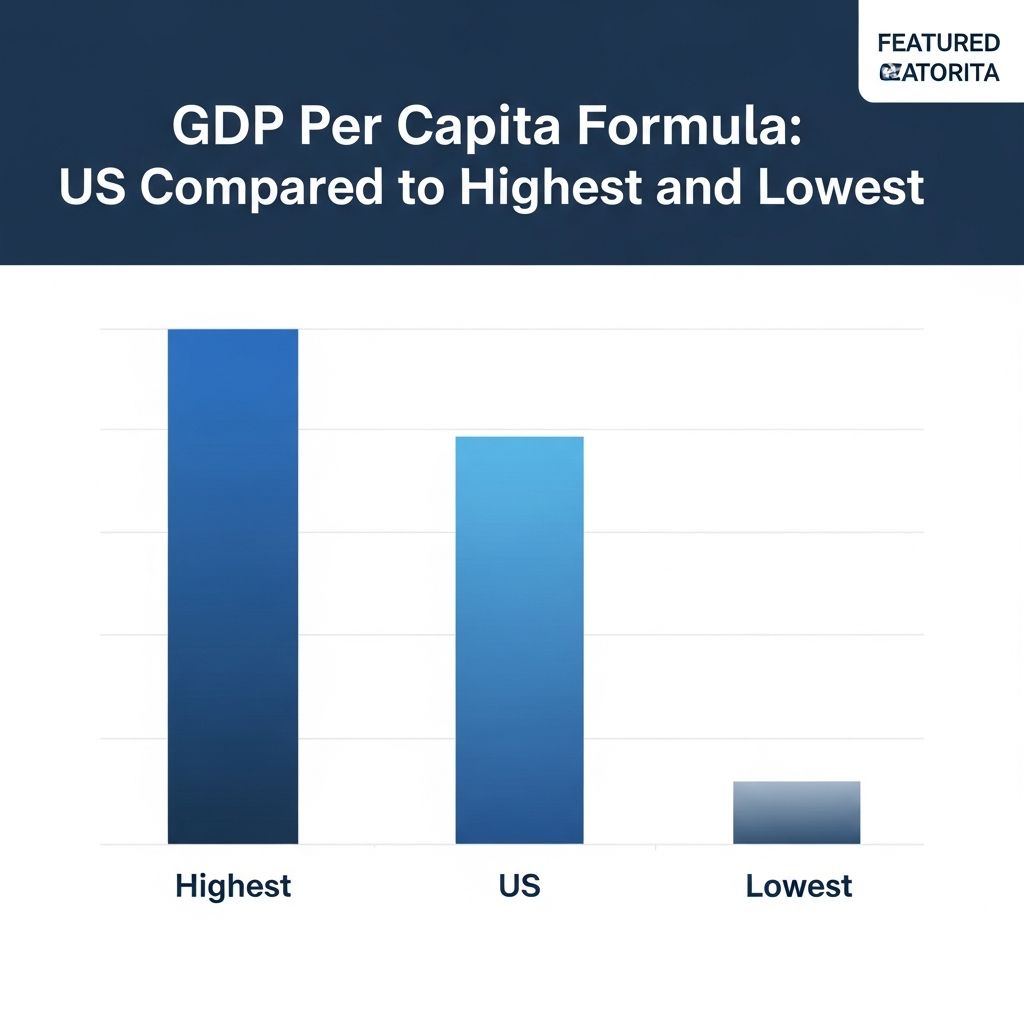
GDP Per Capita Formula: US Compared to Highest and Lowest
Understanding GDP per capita: Formula, calculations, and global comparisons.
Understanding GDP Per Capita: Formula and Global Comparison
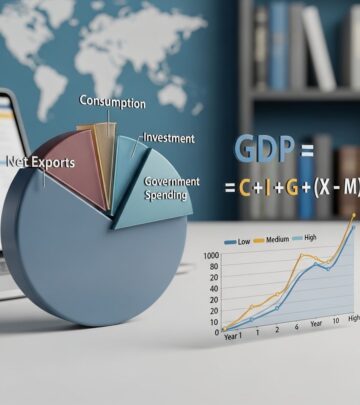
Gross Domestic Product (GDP) per capita is one of the most critical indicators used by economists and policymakers to assess a nation’s economic health and the standard of living of its citizens. This metric provides valuable insights into economic prosperity and productivity on a per-person basis, making it an essential tool for international economic comparisons. Unlike total GDP, which measures the aggregate economic output of a nation, GDP per capita adjusts this figure for population size, offering a more accurate representation of individual economic well-being.
What is GDP Per Capita?
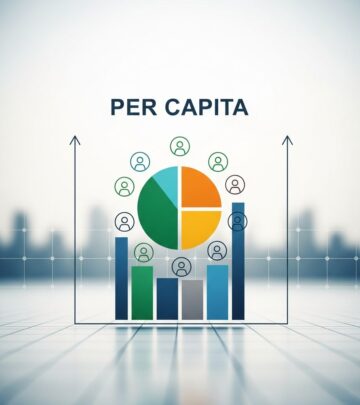
GDP per capita represents the average economic output produced by each person in a country. It is calculated by dividing a nation’s total Gross Domestic Product by its population, effectively spreading the country’s total economic production across all its inhabitants. This metric serves as a proxy for measuring living standards, as it reflects the average income and productive capacity available to each individual within an economy.
The concept of per capita originates from Latin, meaning “for each head” or “per person.” When economists refer to any measurement on a per capita basis, they are discussing the average value per individual within a given population. This standardized approach enables meaningful comparisons between countries of vastly different sizes, allowing for a more nuanced understanding of economic performance than raw GDP figures alone.
The GDP Per Capita Formula
The formula for calculating GDP per capita is straightforward and elegant in its simplicity:
GDP per capita = Gross Domestic Product / Population
While this basic formula appears simple, calculating it accurately requires attention to several important considerations. When comparing GDP per capita across different time periods or between nations, economists typically use real GDP rather than nominal GDP. Real GDP is adjusted for inflation, which ensures that comparisons reflect actual changes in the quantity of goods and services produced rather than mere price changes.
The process of calculating real GDP involves selecting a base year and valuing all goods and services at prices from that chosen year. For example, if 2011 is selected as the base year, all GDP calculations for subsequent years are made using 2011 prices. This standardization method provides meaningful comparisons of production across multiple years by eliminating the distorting effects of inflation.
Steps to Calculate Real GDP Per Capita
Calculating real GDP per capita involves a two-step process that, while more complex than the basic formula, remains manageable:
Step 1: Determine Real GDP
First, select an appropriate base year and multiply the total quantities of all goods and services produced in each year by the prices from that base year. This calculation yields the real GDP, which accounts for inflation and allows for valid year-to-year comparisons.
Step 2: Divide by Population
Once real GDP is established, divide this figure by the country’s population during the same period. This calculation produces the real GDP per capita, representing the average economic output per person.
Example Calculation
Consider a practical example using United States data. In 2016, the United States had a gross domestic product of approximately $20 trillion, with a population of roughly 300 million people. Using the GDP per capita formula:
$20 trillion ÷ 300 million = $66,666
This calculation reveals that the GDP per capita for the United States in 2016 was $66,666, representing the average economic output attributable to each person in the country. Such calculations provide economists and policymakers with quantifiable data regarding national prosperity and individual economic capacity.
The US GDP Per Capita in Global Context
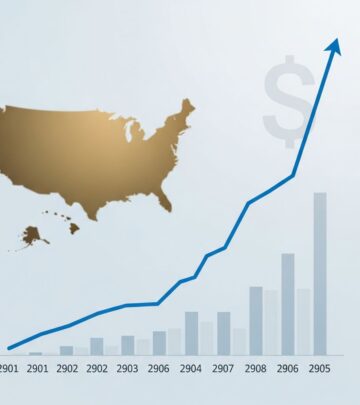
The United States maintains one of the highest standards of living in the world, with a GDP per capita that reflects its position as a leading global economy. As of recent data, the US real GDP per capita reached approximately $63,047, demonstrating the substantial productive capacity and wealth generation within the American economy. This figure places the United States among the world’s most economically advanced nations.
However, absolute GDP per capita values can vary depending on the calculation method employed. When using purchasing power parity (PPP), which adjusts for differences in price levels between countries, comparisons become more equitable and meaningful. PPP establishes a basket of identical commodities across economies, creating a level playing field for international comparisons by accounting for what a nation’s currency can actually purchase domestically rather than relying solely on exchange rates.
Countries with the Highest GDP Per Capita
Several nations have achieved remarkably high GDP per capita figures, reflecting advanced economies with sophisticated infrastructure, high productivity, and substantial capital investment. These countries typically feature developed financial systems, advanced technology sectors, and educated workforces capable of generating substantial economic value.
The nations consistently ranking among the highest in GDP per capita include:
- Luxembourg – One of Europe’s wealthiest nations with a highly developed financial sector
- Switzerland – Known for banking, pharmaceuticals, and precision manufacturing
- Norway – Benefiting from extensive oil and gas resources combined with strong economic management
- Singapore – A major global financial and trading hub in Southeast Asia
- Denmark – A developed Nordic economy with advanced infrastructure and technology
- Australia – A resource-rich developed nation with a diversified economy
- United States – A global economic superpower with diverse industries and high productivity
- Canada – A developed nation with abundant natural resources and stable institutions
These nations share common characteristics including strong institutions, advanced technology adoption, skilled labor forces, and substantial capital accumulation. Their high GDP per capita figures reflect not only abundant natural resources but also efficient economic systems and significant human capital development.
Countries with the Lowest GDP Per Capita
Conversely, numerous developing nations struggle with significantly lower GDP per capita figures, reflecting limited industrialization, lower productivity levels, and economic challenges. These countries often face obstacles including insufficient infrastructure, limited access to capital, lower levels of education and training, and vulnerability to external economic shocks.
Nations typically ranking among the lowest in GDP per capita include many sub-Saharan African countries such as:
- Niger – One of Africa’s poorest nations with limited economic development
- Malawi – Heavily dependent on agriculture with limited industrial capacity
- Mozambique – Challenged by infrastructure limitations and development constraints
- South Sudan – A newer nation facing significant economic and political challenges
- Liberia – Working to recover and rebuild its economic infrastructure
- Burkina Faso – A West African nation with limited economic diversification
- Chad – Dependent primarily on agriculture and oil production
- Democratic Republic of Congo – A resource-rich nation but with limited economic development
These nations typically face significant development challenges including limited industrialization, agricultural-dependent economies, infrastructure deficiencies, and constraints on human capital development. While many possess substantial natural resources, limited institutional frameworks and investment constraints prevent these resources from being fully leveraged for economic development.
Why GDP Per Capita Matters
GDP per capita serves several critical functions in economic analysis and policy development. As a standardized metric, it enables meaningful comparisons of economic performance across nations with vastly different populations, allowing policymakers to assess their country’s relative standing in the global economy. Economists use this metric to track economic growth over time, monitor the impact of policy changes, and evaluate whether nations are successfully improving living standards for their citizens.
The metric also provides insights into productivity levels, capital accumulation, technological advancement, and workforce efficiency within an economy. By examining trends in GDP per capita, analysts can identify economic patterns, recognize challenges, and develop appropriate policy responses to enhance economic performance and prosperity.
Limitations and Considerations
While GDP per capita provides valuable insights, it possesses important limitations that should inform its interpretation. The metric does not account for income inequality within a nation – two countries with identical GDP per capita may have vastly different distributions of wealth, with one experiencing significant poverty despite a high average income. Additionally, GDP per capita fails to capture non-market economic activities, environmental quality, leisure time, health outcomes, or other dimensions of quality of life that significantly impact human well-being.
The metric also ignores variations in price levels between nations. Purchasing power parity adjustments help address this limitation, but even PPP-adjusted figures may not fully capture differences in cost of living or access to goods and services. Furthermore, GDP per capita can be distorted by exchange rate fluctuations, resource booms, or one-time economic events that may not reflect underlying economic productivity or sustainable prosperity.
Real versus Nominal GDP Per Capita
Distinguishing between real and nominal GDP per capita is essential for accurate economic analysis. Nominal GDP per capita is calculated using current-year prices and does not adjust for inflation. This figure can be misleading when comparing across time periods, as it conflates actual economic growth with inflation-driven price increases. Real GDP per capita, by contrast, adjusts for inflation by valuing output at constant base-year prices, providing a more accurate picture of actual economic growth and productivity changes.
When economists and policymakers evaluate whether an economy is genuinely improving, they rely on real GDP per capita rather than nominal figures. For instance, nominal GDP per capita might appear to grow substantially in a high-inflation environment, while real GDP per capita might remain flat or even decline if inflation exceeds nominal growth, indicating a deterioration in actual purchasing power and economic well-being.
Frequently Asked Questions
Q: Why is real GDP per capita preferred over nominal GDP per capita?
A: Real GDP per capita is preferred because it adjusts for inflation, providing an accurate picture of actual economic growth rather than merely reflecting price increases. This allows for meaningful comparisons across different time periods and more accurately represents changes in living standards.
Q: How does purchasing power parity affect GDP per capita comparisons?
A: Purchasing power parity adjusts GDP per capita figures to account for differences in price levels between countries. PPP-adjusted GDP per capita provides more equitable international comparisons by reflecting what currency can actually purchase in each country, rather than relying solely on exchange rates.
Q: Can two countries with the same GDP per capita have different living standards?
A: Yes, absolutely. Countries with identical GDP per capita can have significantly different living standards due to variations in income inequality, access to healthcare and education, environmental quality, and the distribution of goods and services across the population.
Q: What factors contribute to high GDP per capita in developed nations?
A: High GDP per capita in developed nations typically results from advanced technology, skilled workforces, strong institutions, substantial capital investment, efficient economic systems, and diversified industrial sectors generating high productivity and value.
Q: How frequently is GDP per capita data updated?
A: GDP per capita is typically calculated annually by national statistical agencies, though preliminary figures may be released quarterly. International organizations like the World Bank and IMF compile global data and publish updated rankings regularly.
References
- GDP Per Capita Formula – Calculation, Example and Nation’s Data — Vedantu. Accessed November 2025. https://www.vedantu.com/formula/gdp-per-capita-formula
- Real GDP Per Capita | Definition, Formula & Calculation — Study.com. Accessed November 2025. https://study.com/academy/lesson/real-gdp-per-capita-definition-formula-quiz.html
- Per Capita: Definition, Calculation and Usage — Indeed Career Advice. Accessed November 2025. https://www.indeed.com/career-advice/career-development/how-to-calculate-per-capita
- GDP Per Capita Formula — BYJU’S. Accessed November 2025. https://byjus.com/commerce/gdp-per-capita-formula/
- GDP per Capita Calculator — Omni Calculator. Accessed November 2025. https://www.omnicalculator.com/finance/gdp-per-capita
- Gross Domestic Product (GDP) per capita — Statistics Canada. Accessed November 2025. https://www.statcan.gc.ca/hub-carrefour/quality-life-qualite-vie/prosperity-prosperite/gdp-pib-eng.htm
- Annual growth rate of real GDP per capita — UNECE Data Portal. Accessed November 2025. https://w3.unece.org/SDG/en/Indicator?id=117
Similar Articles








Read full bio of Sneha Tete