GDP: Gross Domestic Product Definition & Calculation
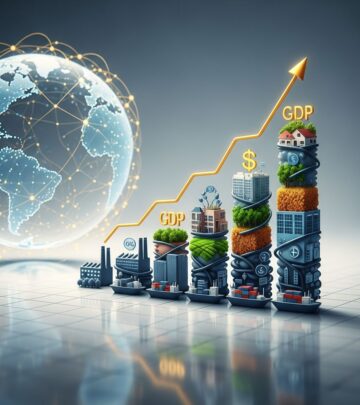
Understanding GDP: The comprehensive measure of a nation's economic performance and growth.
What Is Gross Domestic Product (GDP)?
Gross Domestic Product, commonly known as GDP, represents the total monetary value of all finished goods and services produced within a country’s borders during a specific period. This fundamental economic indicator serves as the primary measure of a nation’s economic health and is widely used by governments, businesses, and economists to gauge economic performance, growth rates, and overall prosperity. GDP encompasses all economic output generated by both domestic and foreign entities operating within the country’s geographic boundaries, making it a comprehensive snapshot of economic activity.
The concept of GDP has become essential in modern economics, providing policymakers with critical insights necessary for making informed decisions about monetary policy, fiscal policy, and long-term economic planning. By tracking GDP over time, analysts can identify economic trends, predict future growth, and compare the relative economic strength of different nations on a global scale.
Understanding the Basics of GDP
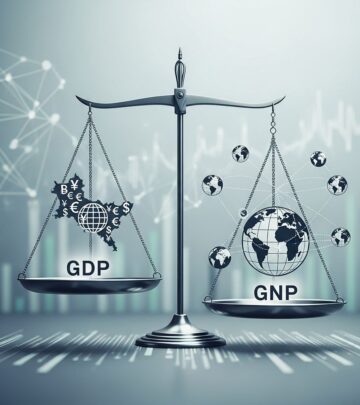
GDP measures all economic production that occurs within national borders, regardless of whether the production comes from citizens or foreign companies. This differs from Gross National Product (GNP), which measures production by a country’s citizens regardless of location. The GDP figure includes consumer spending, government expenditure, business investment, and net exports (exports minus imports).
The calculation of GDP provides economists and policymakers with a numerical representation of economic activity, enabling them to:
- Track economic growth rates quarter over quarter and year over year
- Identify periods of expansion and contraction in the economy
- Compare economic performance across different countries
- Evaluate the effectiveness of economic policies
- Make predictions about future economic trends
The Three Approaches to Calculating GDP
Economists employ three primary methods to calculate GDP, each offering a different perspective on economic activity. While all three approaches should theoretically yield identical results, they provide useful cross-checks and insights into different aspects of the economy.
1. The Expenditure Approach
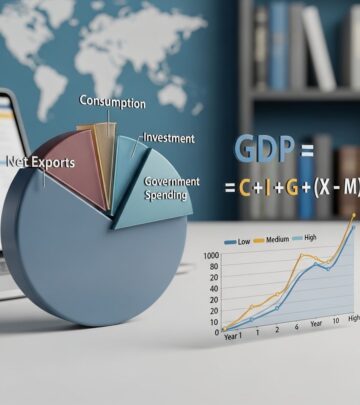
The expenditure approach is the most commonly used method for calculating GDP and focuses on the total spending on goods and services produced within a country. This method follows the formula: GDP = C + I + G + (X – M), where each component represents a different type of spending.
- C (Consumer Spending): Total expenditures by households on goods and services, including durable goods (automobiles, appliances) and non-durable goods (food, clothing). Consumer spending typically accounts for the largest portion of GDP in developed economies.
- I (Business Investment): Capital expenditures by businesses on equipment, machinery, structures, and inventories. This component reflects confidence in future economic conditions and growth prospects.
- G (Government Spending): All government expenditures on infrastructure, defense, public services, and social programs. This includes wages paid to government employees and purchases of goods and services.
- X – M (Net Exports): The difference between exports and imports. Exports add to GDP as they represent sales to foreign buyers, while imports are subtracted as they represent spending on foreign-produced goods.
2. The Income Approach
The income approach calculates GDP by summing all incomes earned in producing goods and services. This method is based on the principle that all expenditures in an economy must equal the income generated by producing goods and services. The income approach includes:
- Wages and salaries earned by workers
- Profits earned by businesses
- Interest income on capital
- Rental income from property owners
- Depreciation (capital consumption allowance)
- Indirect business taxes
By aggregating all income sources, economists arrive at the total GDP figure. This approach is particularly useful for analyzing income distribution and understanding how economic growth is distributed across different segments of the population.
3. The Production (Output) Approach
The production approach calculates GDP by summing the value of output produced in each industry, taking care to avoid double-counting by using only value-added at each stage of production. This method requires careful accounting to ensure that intermediate goods are not counted multiple times as they move through various production stages.
The output approach is expressed as: GDP = Σ (Output – Intermediate Consumption). This method provides detailed insights into which sectors of the economy are growing and which are contracting, making it valuable for sectoral analysis and industrial planning.
Nominal GDP vs. Real GDP
When analyzing GDP figures, it’s crucial to distinguish between nominal and real GDP, as each provides different insights into economic performance.
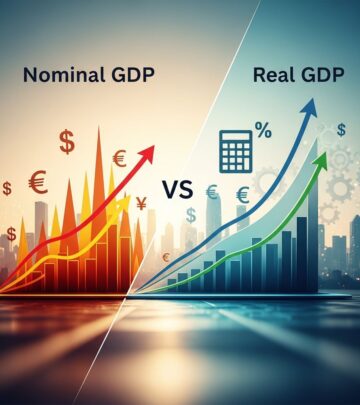
Nominal GDP measures the total value of goods and services at current market prices without adjusting for inflation. While nominal GDP can show growth over time, part of this growth may simply reflect price increases rather than actual increases in the quantity of goods and services produced. Nominal GDP is useful for comparing the size of different economies and analyzing government budgets and tax revenues.
Real GDP adjusts nominal GDP for inflation, presenting the value of goods and services in constant dollars using a specific base year. Real GDP provides a more accurate picture of actual economic growth because it removes the effects of price changes. Economists and policymakers typically rely on real GDP when assessing whether an economy is truly expanding or contracting in terms of actual output.
The Importance of GDP in Economic Analysis
GDP serves multiple critical functions in economic analysis and policy formulation:
- Economic Health Indicator: Rising GDP typically signals a healthy, growing economy, while declining GDP suggests economic contraction or recession.
- Comparison Tool: GDP allows governments and analysts to compare economic performance across different countries and regions.
- Policy Guide: Central banks and governments use GDP data to determine appropriate monetary and fiscal policies.
- Market Indicator: Financial markets respond significantly to GDP announcements, as investors use this data to make investment decisions.
- Standard of Living Proxy: GDP per capita (total GDP divided by population) serves as a rough proxy for average living standards and productivity.
GDP Per Capita and Its Significance
GDP per capita represents the average economic output per person and is calculated by dividing total GDP by the country’s population. This metric provides a more nuanced understanding of economic well-being than total GDP alone, as it accounts for population size. Countries with high GDP per capita typically enjoy higher standards of living, greater access to resources, and more robust healthcare and education systems.
GDP per capita is particularly useful for comparing living standards between countries with vastly different population sizes. For example, while China may have a higher total GDP than many smaller nations, its per capita GDP may be lower due to its enormous population, suggesting lower average individual wealth and living standards.
Limitations and Criticisms of GDP
Despite its widespread use, GDP has several important limitations:
- Environmental Externalities: GDP does not account for environmental degradation, pollution, or resource depletion that may accompany economic growth.
- Non-Market Activities: Unpaid work such as household labor, volunteer work, and childcare are not included in GDP calculations.
- Income Distribution: GDP figures alone do not reveal how income and wealth are distributed within a population, potentially masking inequality.
- Quality of Life: GDP does not measure factors that significantly impact quality of life, such as health, education quality, leisure time, or social cohesion.
- Black Market Economy: Illegal economic activities are not captured in official GDP figures, potentially understating true economic activity in some regions.
- Defensive Expenditures: Some spending that counters negative conditions (pollution cleanup, crime prevention) is counted as positive economic output.
Global GDP Comparisons
When comparing GDP across countries, it’s essential to account for currency differences and purchasing power. Two approaches are commonly used:
Nominal GDP Comparison: This approach converts all currencies to a common currency (typically U.S. dollars) using current exchange rates. This method reflects relative economic sizes but can be distorted by currency fluctuations.
Purchasing Power Parity (PPP): PPP adjusts for differences in price levels between countries, showing what the domestic purchasing power of each country’s income is. PPP-adjusted GDP often provides a more accurate picture of actual economic activity and living standards, particularly when comparing developed and developing nations.
GDP Growth and Economic Cycles
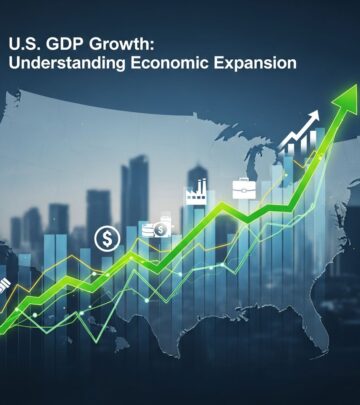
GDP growth rate, typically measured as the percentage change from one period to another, serves as a key indicator of economic health and direction. Growth rates are analyzed in several ways:
- Year-over-Year Growth: Compares GDP to the same period in the previous year, removing seasonal variations.
- Quarter-over-Quarter Growth: Measures change from one quarter to the next, often annualized for comparison purposes.
- Trend Analysis: Extended period comparisons help identify long-term growth patterns and cycles.
Economists typically define recession as two consecutive quarters of negative GDP growth. Understanding GDP growth helps predict employment trends, inflation rates, and overall economic well-being.
Frequently Asked Questions
Q: How often is GDP calculated and reported?
A: In the United States, the Bureau of Economic Analysis releases preliminary GDP estimates monthly for each quarter, followed by revised estimates. Most countries report GDP quarterly or annually.
Q: Can GDP be negative?
A: Yes, GDP can be negative when the economy contracts. Negative growth indicates that the total value of goods and services produced has declined, typically occurring during recessions.
Q: Is a higher GDP always better?
A: While higher GDP generally indicates greater economic output, it doesn’t necessarily mean improved quality of life or well-being. Environmental sustainability and income distribution are also important factors.
Q: How does inflation affect GDP measurements?
A: Inflation inflates nominal GDP figures without actual economic growth. Real GDP adjustments using a price deflator remove inflation effects, providing a more accurate picture of actual growth.
Q: What industries contribute most to GDP?
A: In developed economies, services (finance, healthcare, education, retail) typically contribute 60-70% of GDP, with manufacturing and agriculture contributing smaller but still significant portions.
References
- National Accounts Statistics: Main Aggregates and Tables — United Nations Statistics Division. 2024. https://unstats.un.org/unsd/nationalaccount/
- Bureau of Economic Analysis: Gross Domestic Product — U.S. Department of Commerce. 2024. https://www.bea.gov/data/gdp
- World Economic Outlook Database — International Monetary Fund. 2024. https://www.imf.org/en/Publications/WEO/weo-database
- Understanding Gross Domestic Product — OECD Statistics. 2023. https://www.oecd-ilibrary.org/
- System of National Accounts 2008 — United Nations, European Commission, OECD, IMF, and World Bank. 2009. https://unstats.un.org/unsd/nationalaccount/sna2008.asp
Similar Articles








Read full bio of Sneha Tete