Gap Insurance vs. Loan/Lease Payoff Coverage: Key Differences
Understand the critical differences between gap insurance and loan/lease payoff coverage for vehicle protection.
Gap Insurance vs. Loan/Lease Payoff Coverage: Understanding Your Protection Options
When you finance or lease a vehicle, understanding the difference between gap insurance and loan/lease payoff coverage is essential for protecting your financial interests. Both types of coverage address a critical gap that emerges when a vehicle is totaled or stolen—the difference between what your insurance company pays and what you still owe on your loan or lease. However, the way these two coverages work and their limitations differ significantly. This comprehensive guide will help you understand both options and determine which is best for your situation.
What Is Gap Insurance?
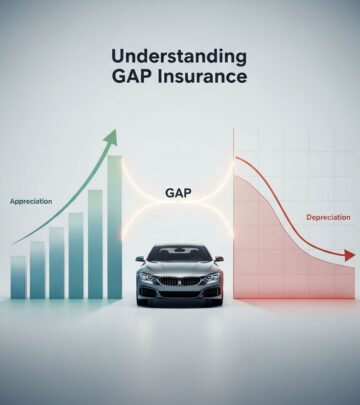
Gap insurance, also known as guaranteed asset protection insurance, is designed to cover the difference between your vehicle’s actual cash value (ACV) and the amount you still owe on your loan or lease if your vehicle is totaled or stolen. The term “gap” refers to this shortfall that can occur when a car depreciates faster than you pay down your loan balance.
Gap insurance is particularly valuable during the early years of a loan when negative equity is most likely. For example, if you owe $25,000 on your loan and your car is only worth $20,000 at the time of total loss, gap insurance would cover the $5,000 difference, minus your deductible. Without this coverage, you would be responsible for paying that $5,000 out of pocket, even though your vehicle is destroyed.
True gap insurance, often sold by dealers, lenders, or credit unions, is marketed as covering the entire deficiency between your payoff amount and the vehicle’s actual cash value, though specific contract terms vary by policy.
What Is Loan/Lease Payoff Coverage?
Loan or lease payoff coverage, also called loan/lease gap coverage, functions similarly to gap insurance in that it pays the difference between what your insurance company pays for your vehicle and what you still owe on your loan or lease. However, this coverage is typically offered as an endorsement or add-on to your standard comprehensive and collision insurance through your insurance company rather than as a standalone product.
The key distinction is that loan/lease payoff coverage through insurance companies is usually subject to specific limitations and caps. Most insurers limit this coverage to approximately 25% of your vehicle’s actual cash value, though exact limits can vary by state and carrier.
Key Differences Between Gap Insurance and Loan/Lease Payoff Coverage
| Feature | Gap Insurance | Loan/Lease Payoff (Insurer Add-On) |
|---|---|---|
| Trigger Event | Total loss or theft after ACV is paid | Total loss or theft after ACV is paid |
| Payout Structure | Marketed as full deficiency coverage | Capped, typically at 25% of ACV |
| Provider | Dealers, lenders, credit unions, specialty insurers | Auto insurance companies |
| Purchase Timing | Often required at time of financing | Can be added or removed from policy anytime |
| Typical Cost | Higher, especially if financed with loan | More affordable, typically $25-$50 per year |
Understanding Payout Caps: The Critical Distinction
The most significant difference between true gap insurance and loan/lease payoff coverage is how they handle payouts. True gap insurance is typically written to cover your entire shortfall between what you owe and your vehicle’s actual cash value. Loan/lease payoff coverage through insurers, however, is generally capped at approximately 25% of your vehicle’s actual cash value.
How the 25% Cap Works
To understand the practical impact of this cap, consider a concrete example. Suppose you financed a $30,000 vehicle with a small down payment, and after one year, your remaining loan balance is $28,000. Due to depreciation, your vehicle’s actual cash value is determined to be $22,000 at the time of total loss.
The gap between what you owe ($28,000) and what your vehicle is worth ($22,000) is $6,000. With loan/lease payoff coverage capped at 25% of ACV, the maximum payout would be $5,500 (25% × $22,000). This means you would still owe $500 out of pocket. With true gap insurance covering the full deficiency, the entire $6,000 shortfall would be covered by your policy.
When the Gap Exceeds the Cap: Real-World Scenario
The limitations of the 25% cap become even more apparent in scenarios involving larger down payments or longer loan terms. Consider this situation: you finance a vehicle with a loan payoff of $32,000, and the insurer determines the vehicle’s actual cash value at total loss to be $24,000. The deficit is therefore $8,000.
With a loan/lease payoff endorsement capped at 25% of ACV, the maximum payout is $6,000 (25% × $24,000). This leaves you responsible for paying $2,000 out of pocket. Conversely, with true gap insurance written to cover the full deficiency, the entire $8,000 shortfall would be paid by your policy, assuming your contract terms allow it.
How the Claims Process Works
Regardless of which coverage you choose, understanding the claims process helps you prepare for potential total loss situations. The process typically unfolds in three key steps:
Step 1: Actual Cash Value Determination — When you file a claim for a totaled vehicle, your insurance company determines the vehicle’s actual cash value and pays that amount, minus your deductible, through your comprehensive or collision coverage.
Step 2: Cap Application — If you have loan/lease payoff coverage, the insurer applies the 25% of ACV ceiling to calculate the maximum additional payout available.
Step 3: Shortfall Assessment — The gap coverage or payoff endorsement then determines whether the remaining difference between your loan balance and the insurance payout is covered, subject to any policy limits or caps.
Choosing Between Gap Insurance and Loan/Lease Payoff Coverage
Choose Gap Insurance When:
Gap insurance is the better choice when you anticipate a significant and prolonged gap between your loan balance and your vehicle’s value. This situation is most likely if you:
- Finance a vehicle with a low or no down payment
- Choose a long loan term (72-84 months or longer)
- Roll negative equity from a previous vehicle into your new loan
- Purchase a vehicle that depreciates quickly
- Lease a vehicle and want maximum gap protection
Choose Loan/Lease Payoff Coverage When:
Loan/lease payoff coverage is a reasonable alternative if you expect the gap between what you owe and your vehicle’s value to remain modest and temporary. This coverage may be sufficient if you:
- Make a substantial down payment (20% or more)
- Finance your vehicle for a shorter term (36-60 months)
- Have maintained positive equity throughout your loan
- Want flexibility to add or remove coverage from your insurance policy
- Prefer the simplicity of managing gap protection through one insurance company
Cost Considerations
Cost differences between these two coverage options can be substantial. Loan/lease payoff coverage added to your auto insurance policy typically costs between $25 and $50 per year, making it an economical option for basic gap protection. Gap insurance purchased through a dealer, however, can be considerably more expensive, particularly when financed as part of your loan. When gap insurance is financed, you also pay interest on the premium over your entire loan term, potentially doubling or tripling the actual cost.
For this reason, many experts recommend purchasing gap insurance through an insurance company as an endorsement rather than through a dealership, if that option is available to you.
Important Considerations Before Purchasing
Verify Lender and Lease Requirements
Before deciding which coverage is right for you, review your loan or lease agreement carefully. Some lenders and leasing companies require gap coverage if a significant gap exists between what they will finance and the vehicle’s value. These requirements may mandate specific types of coverage or minimum protection levels.
Monitor Actual Cash Value Depreciation
Vehicles depreciate most rapidly during their first year of ownership. If you have loan/lease payoff coverage with a 25% cap, this rapid early depreciation means the cap may become inadequate sooner than expected. For example, if your vehicle depreciates from $30,000 to $22,000 in the first year, the 25% cap drops from $7,500 to $5,500, effectively reducing your coverage even though you haven’t changed your policy.
Keep Essential Documentation Ready
Regardless of which coverage you choose, maintain organized records of your payoff letters, loan documents, title, and registration. These documents will be essential if you need to file a gap coverage claim, helping to prevent delays in the claims process.
Ensure Comprehensive and Collision Coverage
A critical requirement for both gap insurance and loan/lease payoff coverage is that you maintain comprehensive and collision insurance on your vehicle. Neither gap coverage nor payoff coverage can function without the initial actual cash value payout from your comprehensive or collision coverage. If you allow these coverages to lapse, your gap protection becomes useless.
Frequently Asked Questions
Q: Is loan/lease payoff coverage the same as gap insurance?
A: While both coverages serve similar purposes, they differ significantly in scope. Loan/lease payoff coverage often includes a 25% of ACV cap, while true gap insurance is marketed as covering the entire deficiency. Always read your policy to understand your specific coverage limits.
Q: Do I need both gap insurance and loan/lease payoff coverage?
A: No, you should choose one or the other based on your financial situation and gap risk. Having both would be redundant and wasteful.
Q: Can I drop gap coverage once my loan balance is lower than my vehicle’s value?
A: Yes, once you have positive equity in your vehicle, gap coverage becomes unnecessary. If you have an insurer endorsement, you can request to remove it. Dealer-financed gap coverage typically cannot be canceled early.
Q: Does gap insurance cover routine maintenance or regular accidents?
A: No, gap coverage only applies to total loss situations covered by comprehensive or collision insurance, such as theft, flooding, or major accidents where the vehicle is deemed a total loss.
Q: How long does gap coverage last?
A: Gap insurance typically covers for the duration of your loan or lease agreement. Insurer-provided loan/lease payoff coverage continues as long as you maintain the endorsement on your policy.
Bottom Line
Both gap insurance and loan/lease payoff coverage serve the important purpose of protecting you from financial hardship if your vehicle is totaled while you owe more than it’s worth. The choice between them depends on your specific circumstances, loan term, down payment amount, and comfort level with potential out-of-pocket expenses.
If you want maximum deficiency protection and anticipate a substantial gap between your loan balance and vehicle value, true gap insurance offers the most comprehensive protection. If your potential gap comfortably fits within approximately 25% of your vehicle’s actual cash value, loan/lease payoff coverage through your insurance company provides a clean, affordable, and flexible solution.
Regardless of which option you choose, always maintain active comprehensive and collision coverage—without the initial actual cash value payout, neither gap coverage nor payoff coverage can help you. Review your policy terms carefully, understand your specific coverage limits, and keep essential documentation organized to ensure smooth claims processing if the unexpected occurs.
References
- Gap Insurance vs. Loan/Lease Payoff Coverage: Understanding Your Options — Hotaling Insurance. 2025. https://hotalinginsurance.com/his-blogs-comparisons-gap-insurance-vs-loan-lease-payoff-coverage
- What Is Gap Insurance and How Does It Work? — Progressive Insurance. 2024. https://www.progressive.com/answers/gap-insurance/
- Loan or Lease Gap Coverage — Travelers Insurance. 2024. https://www.travelers.com/car-insurance/coverage/loan-lease-gap
- Gap Insurance Coverage — Allstate Insurance. 2024. https://www.allstate.com/resources/car-insurance/gap-insurance-coverage
- Loan and Lease Gap Insurance: Protection for Vehicle Owners — Pegram Online. 2024. https://pegramonline.com/what-is-loan-and-lease-gap-insurance/
- Loan/Lease Payoff Coverage: What Is It? — Gaudette Insurance. 2024. https://gaudette-insurance.com/blog/loan-lease-payoff-coverage-what-is-it/
Similar Articles








Read full bio of medha deb