Fungibility: Definition, Examples, and Financial Importance
Understanding fungibility and how interchangeable assets drive market efficiency.
What Is Fungibility?
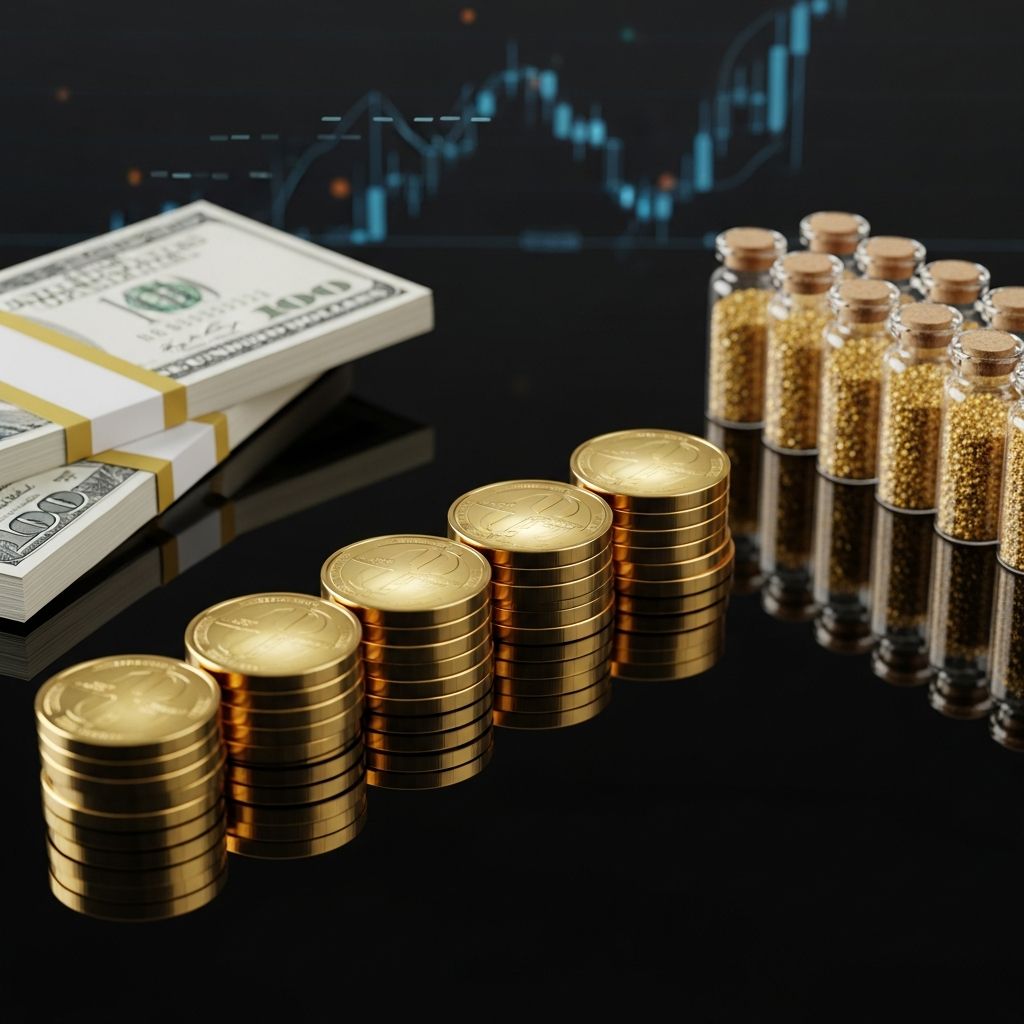
Fungibility is a fundamental concept in economics and finance that refers to the ability of an asset or good to be interchanged with another identical asset of the same type. When an asset is fungible, each unit is considered equal in value and function to any other unit of the same asset. This characteristic means that fungible assets can be freely substituted for one another without affecting the rights, obligations, or value received by either party in a transaction.
The term derives from the Latin word “fungibilis,” meaning “able to be replaced.” In practical terms, fungibility is what allows modern financial markets to operate smoothly and efficiently. Without fungibility, trading would be significantly more complicated, as buyers and sellers would need to verify the specific characteristics and condition of each individual unit being exchanged.
Understanding Fungibility in Detail
Fungibility operates on a simple principle: if two items are fungible, they are considered completely identical in every meaningful way. This means one unit can be substituted for another without any loss of value or functionality. The concept is essential to how economies function, particularly in financial markets where speed and efficiency are paramount.
The key distinction in fungibility is understanding what makes assets identical. For currency, any $10 bill is identical to any other $10 bill—it does not matter which specific bill you receive or return. For commodities like crude oil, gold, or wheat, all units meeting the same grade and quality standards are considered identical. However, non-fungible items like real estate property or vintage automobiles cannot be easily substituted because each possesses unique characteristics that affect its value.
Legal Ownership and Fungibility
Fungibility also involves considerations of legal ownership. When you borrow a fungible asset, such as currency or securities, the legal ownership transfers to you, and you have the right to use it freely. You are then obligated to return an equivalent amount of the same asset, not necessarily the identical physical item. This contrasts sharply with borrowing a non-fungible item, such as a bicycle, where ownership remains with the lender and you must return the specific item borrowed.
Examples of Fungible Assets
Fungible assets are prevalent throughout financial and commercial systems. Understanding common examples helps clarify how fungibility functions in practice.
Currency and Money
Money is one of the most recognizable examples of a fungible asset. All coins and bills of the same denomination possess equal value and are perfectly interchangeable. A one-dollar bill can be exchanged for any other one-dollar bill without any difference in economic value or function. This fungibility of currency is foundational to modern commerce and eliminates the need for barter systems or complex exchanges.
Commodities
Commodity markets rely heavily on fungibility. Crude oil, gold, natural gas, wheat, corn, and other raw materials that meet established quality and grade standards are fungible. When you purchase one barrel of West Texas Intermediate crude oil, it is identical to any other barrel meeting the same specifications. This fungibility allows commodity futures markets to function efficiently, enabling traders to standardize contracts and exchange positions without concerns about quality variations.
Stocks and Securities
In financial markets, shares of publicly traded companies are fungible assets. One share of Apple stock is identical to another share of Apple stock; they carry the same voting rights and dividend claims. This fungibility is essential to how stock markets operate, allowing millions of shares to be traded daily without buyers needing to verify specific share certificates or characteristics.
Government Bonds
Government bonds of the same series, issuance date, and maturity are fungible instruments. Two ten-year Treasury bonds issued on the same date are identical in terms of their cash flow obligations and yield characteristics, making them freely substitutable in the secondary market.
Examples of Non-Fungible Assets
Not all assets possess fungibility. Understanding what is not fungible provides important context for when fungibility matters most.
Real Estate
Property is fundamentally non-fungible. Each parcel of land is unique based on location, size, condition, improvements, and surrounding area characteristics. Two properties cannot be freely substituted for one another because their values and characteristics differ materially. While comparable properties may have similar market values, they are never truly identical.
Unique Items and Collectibles
Vintage automobiles, art, jewelry, and other collectible items are non-fungible. Even items of the same model or style possess individual characteristics—condition, history, rarity, provenance—that make each unique. A 1961 Ferrari 250 GT California cannot be substituted for another of the same model because each vehicle has distinct characteristics affecting its value.
Perishable Goods
While wheat or corn of the same grade might be fungible, the specific perishable goods vary. Apples from different orchards or harvests, though appearing similar, may possess different flavors, shelf lives, and characteristics based on growing conditions and harvest timing.
Fungibility in Financial Markets
Fungibility is absolutely critical to the functioning of modern financial markets. It enables standardization, efficient pricing, and seamless trading of assets at scale.
Short Selling and Fungibility
Short selling, a practice common in securities and futures markets, fundamentally relies on asset fungibility. When an investor engages in short selling, they borrow securities through a broker with the intention of selling them immediately and repurchasing them later at a lower price. This process only works because securities are fungible—the investor can return any shares of the same company rather than the specific shares originally borrowed. The broker, holding a large pool of securities for various investors, can transfer any shares to a buyer since all shares of the same company are identical. This fungibility allows short sellers to access borrowed securities readily, which is essential for the short selling mechanism to operate smoothly in public securities markets.
Commodities and Futures Trading
Commodities futures markets depend entirely on fungibility. Contracts specify standardized quantities and quality grades, allowing traders to enter and exit positions without concerns about receiving inferior goods. A trader can take a long position in crude oil futures and later offset it by taking an equal short position; the specific barrels of oil involved never matter because all oil meeting the contract specifications is identical.
Currency Exchange Markets
Foreign exchange markets operate on fungibility principles. One euro is identical to any other euro, facilitating trillions of dollars in daily currency trading. This fungibility allows market makers to quote prices and execute trades instantly without examining individual currency units.
Advantages of Fungibility
Fungibility creates several important benefits for financial markets and economies.
Market Efficiency
Fungibility enables efficient price discovery and market liquidity. Because assets are interchangeable, large volumes can be traded rapidly without concerns about quality variations or authenticity verification. This efficiency reduces transaction costs and allows prices to reflect true market supply and demand dynamics.
Simplified Trading and Settlement
Standardization through fungibility simplifies trading mechanics and settlement processes. Exchanges and clearing houses can process millions of transactions daily precisely because assets are fungible and standardized. This reduces operational complexity and risk.
Enhanced Liquidity
Fungible assets typically enjoy greater liquidity because more market participants are willing to trade them. The fungibility of stocks, for instance, means any shares can be exchanged, creating deeper markets with tighter bid-ask spreads and faster execution for traders.
Reduced Counterparty Risk
Fungibility allows for simplified lending and borrowing relationships. Lenders of fungible assets know they can receive equivalent replacement assets rather than being dependent on receiving specific items, reducing credit risk and default concerns.
Limitations and Challenges with Fungibility
While fungibility offers significant advantages, it also presents certain challenges and limitations.
Quality Degradation Over Time
For some fungible assets, particularly commodities, quality can vary subtly even within the same grade. Storage conditions, transportation, and handling can affect the actual value of fungible goods, potentially creating disputes about whether assets truly meet standardized specifications.
Regulatory Constraints
Financial regulations sometimes impose restrictions on the treatment of fungible assets. For example, restrictions may limit short selling of certain securities, effectively limiting the fungibility benefits in those markets. Initial public offerings (IPOs) cannot be sold short for a month after trading begins, constraining the fungibility benefits in newly public companies.
Margin and Financing Considerations
In short selling arrangements, complex financing and margin requirements can emerge. When short positions move against the investor, they must maintain adequate margin balances, and financing costs can become significant, reducing the practical fungibility benefits.
Fungibility vs. Divisibility
Fungibility is sometimes confused with divisibility, but these are distinct concepts. Divisibility refers to the ability to divide an asset into smaller units without loss of value. For instance, one dollar can be divided into one hundred cents. An asset can be both fungible and divisible (like currency) or fungible but not divisible (like shares, which typically trade in whole units). Some assets are divisible but not fungible, such as a chocolate cake that can be divided into pieces but where different pieces are not truly identical.
Fungibility in Different Asset Classes
Equities
Common shares of the same company are fully fungible, making stock markets exceptionally efficient. All shares carry identical voting rights and dividend claims.
Fixed Income Securities
Bonds of the same series and maturity are fungible, though credit risk and market conditions affect their practical interchangeability.
Cryptocurrencies
Most cryptocurrencies are fungible by design, though some users question whether all units are truly identical due to transaction history and blockchain analysis.
Digital Assets and NFTs
Non-fungible tokens (NFTs) represent the opposite of fungibility—each token is unique and non-interchangeable by design.
Impact on Pricing and Valation
Fungibility directly affects how assets are priced in markets. Perfectly fungible assets with identical characteristics should command identical prices (accounting for transaction costs and other market factors). When fungible assets trade at different prices, arbitrage opportunities typically emerge, with traders exploiting price differences until convergence occurs. This mechanism ensures that fungible assets maintain price consistency across markets and venues.
Frequently Asked Questions
Q: What does fungibility mean in simple terms?
A: Fungibility means that items are identical and interchangeable. One unit can be freely substituted for another identical unit without any loss of value or function, like exchanging one dollar bill for another.
Q: Are all currencies fungible?
A: Yes, all units of the same currency denomination are fungible. A ten-dollar bill is identical to any other ten-dollar bill, making currency one of the most commonly cited examples of a fungible asset.
Q: Why is fungibility important in stock markets?
A: Fungibility allows stock markets to operate efficiently. Since all shares of the same company are identical, millions of shares can be traded daily without verification concerns, enabling rapid price discovery and high liquidity.
Q: Can non-fungible assets become fungible?
A: Generally, no. Non-fungible assets like real estate or unique collectibles retain their individual characteristics and cannot be standardized into fungible units, though they can be packaged together in fungible investment instruments.
Q: What is the difference between fungibility and divisibility?
A: Fungibility means items are identical and interchangeable, while divisibility means an asset can be divided into smaller units. Money is both fungible and divisible, while individual shares are fungible but typically not divisible.
Q: How does fungibility affect short selling?
A: Fungibility is essential to short selling. Because securities are fungible, short sellers can return any shares of the same company rather than specific shares borrowed, making the short selling mechanism practical and efficient.
Q: Are cryptocurrencies always fungible?
A: Most cryptocurrencies like Bitcoin are designed to be fungible, with each unit identical to others. However, blockchain analysis and transaction history tracking have raised questions about whether some users view all units as truly fungible.
References
- Short (Finance) — Wikipedia. Accessed November 2025. https://en.wikipedia.org/wiki/Short_(finance)
Similar Articles








Read full bio of Sneha Tete