Funds vs. Individual Securities: Smart Choices
Discover how pooled funds and single securities differ in risk, costs, and returns to build a portfolio that fits your financial goals.
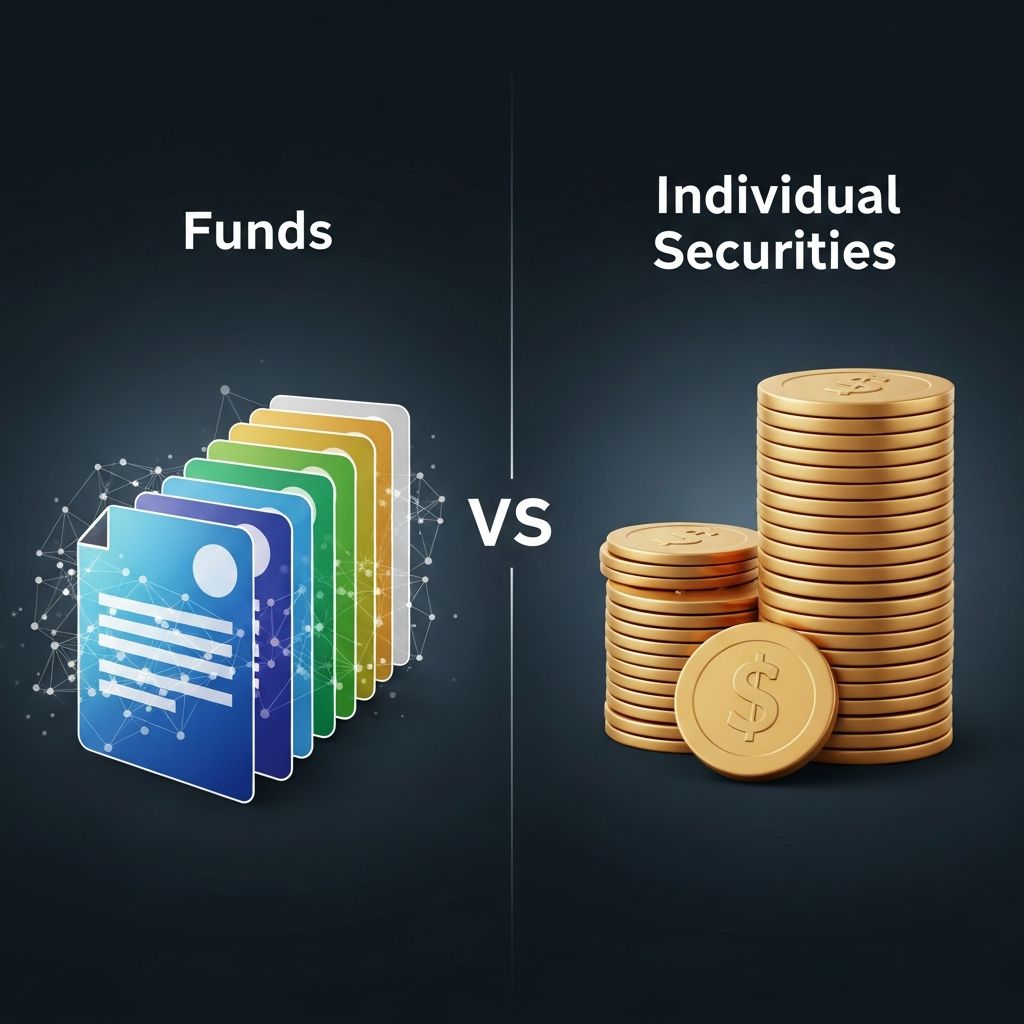
Investors face a fundamental decision: allocate capital to diversified funds or select individual securities. Funds pool resources for broad exposure, while individual securities demand targeted analysis. This choice impacts risk, returns, and management effort.
Core Differences in Investment Vehicles
Investment options span
stocks
,bonds
,mutual funds
,ETFs
, and more. Stocks represent company ownership with high growth potential but volatility. Bonds provide fixed income with lower risk. Funds combine these into diversified packages.Pooled investments like mutual funds and ETFs offer instant diversification by holding numerous assets. Individual securities require building diversity manually, increasing time and expertise needs.
Advantages of Pooled Funds
**Diversification** is a primary benefit. A single mutual fund might hold hundreds of stocks across sectors, reducing the impact of any one failure. ETFs mirror indices for similar broad coverage.
- Lower volatility compared to single stocks due to asset spreading.
- Professional management in active funds selects optimal holdings.
- Accessibility for beginners without deep research skills.
Costs are generally low for passive index funds, often under 0.1% annually, versus higher fees for active strategies.
Diversification: The Risk Reducer
Spreading investments across asset classes mitigates losses. Equities drive growth but fluctuate; fixed-income stabilizes. A balanced portfolio might allocate 60% stocks, 40% bonds.
| Asset Class | Risk Level | Expected Return | Example |
|---|---|---|---|
| Equities (Stocks) | High | High (7-10% long-term) | Individual shares, stock ETFs |
| Fixed Income (Bonds) | Low-Medium | Medium (3-5%) | Treasuries, bond funds |
| Cash Equivalents | Very Low | Low (1-3%) | Money market funds |
Data shows diversified portfolios outperform concentrated ones over time, balancing growth and stability.
Mutual Funds: Active Portfolio Building
Mutual funds aggregate investor money to buy diverse securities. Actively managed versions aim to beat benchmarks through expert picks. They trade once daily at net asset value.
Examples include equity funds for growth or balanced funds mixing stocks and bonds. While convenient, higher expense ratios (0.5-1%) apply for active management.
ETFs: Flexible Trading Power
**Exchange-traded funds (ETFs)** trade like stocks throughout the day, offering liquidity. They track indices passively, keeping costs minimal.
- Broad market ETFs cover entire indices like the S&P 500.
- Sector ETFs focus on tech or healthcare.
- Bond ETFs provide fixed-income exposure.
ETFs suit active traders seeking intraday adjustments without mutual fund end-of-day pricing.
Individual Securities: Hands-On Control
Buying single stocks or bonds grants direct ownership. Stocks offer voting rights and dividends; bonds yield interest.
Potential rewards include outsized gains from winners like growth stocks in tech. However, poor picks lead to significant losses.
Sectors vary: financials, healthcare, industrials show diverse opportunities.
Risk Profiles Across Choices
**Conservative investors** favor bonds or income funds for stability.
Aggressive profiles
chase equities or growth funds.Individual stocks rank riskiest due to company-specific events. Funds dilute this via diversification. Safest options: Treasury bonds, CDs.
Cost Structures Compared
| Investment Type | Typical Expense Ratio | Trading Costs | Minimum Investment |
|---|---|---|---|
| Index ETFs | 0.03-0.20% | Commission-free at many brokers | Low (fractional shares) |
| Active Mutual Funds | 0.50-1.50% | None (NAV pricing) | $1,000-$3,000 |
| Individual Stocks | 0 (broker fees) | Low/zero commissions | Share price |
| Individual Bonds | N/A | Spreads/markups | $1,000 face value |
Low-cost index funds maximize net returns over decades.
Performance Expectations
Historical data indicates equities yield highest long-term returns (around 10% annualized for broad indices), bonds 4-6%, cash under 3%. Individual securities can exceed or underperform benchmarks.
Funds tracking indices match market returns minus minimal fees, ideal for passive strategies.
Building Your Strategy
Assess goals, timeline, and risk tolerance. Retirement savers might use target-date funds auto-adjusting conservative over time.
- Determine allocation: young investors 80/20 stocks/bonds; nearing retirement 40/60.
- Choose vehicles: ETFs for flexibility, mutual funds for hands-off.
- Rebalance annually to maintain targets.
- Consider tax efficiency: ETFs often edge mutual funds.
Combine approaches: core funds for base, satellites of individual picks for alpha.
Alternative Investments to Consider
Beyond basics,
real estate
via REITs offers income and inflation hedge. Commodities like gold stabilize portfolios.- REITs: Rental property exposure without management.
- Precious metals: Counter inflation.
- Energy ETFs: Benefit from demand spikes.
These add layers but increase complexity.
Common Pitfalls to Avoid
Overconcentration in familiar stocks risks wipeouts. Chasing hot funds post-performance leads to buying high. Ignoring fees erodes gains—compound effects are massive over 30 years.
Emotional trading amplifies losses; stick to plans.
FAQs
What are the main benefits of funds over individual securities?
Funds provide built-in diversification, professional oversight, and lower entry barriers, reducing risk for most investors.
Are ETFs better than mutual funds?
ETFs offer intraday trading and lower costs; mutual funds suit buy-and-hold with active management. Depends on style.
Can individual securities outperform funds?
Yes, skilled selection can beat markets, but most underperform indices long-term due to risk and fees.
How much should I diversify?
Aim for 20-30 stocks minimum; funds achieve this instantly. Broader asset mix enhances stability.
What role do bonds play?
Bonds cushion equity volatility, provide income, especially in downturns.
Getting Started Tips
Open a brokerage account supporting fractional shares. Start small with low-cost ETFs. Use robo-advisors for automated allocation. Monitor but avoid daily checks.
Long-term compounding favors patient, diversified approaches over speculation.
References
- What Are the Different Types of Investments? — Stash. 2023. https://www.stash.com/learn/different-types-of-investments/
- An Investor’s Guide to Asset Classes: Types, Allocations & More — Thrivent. 2024. https://www.thrivent.com/insights/investing/an-investors-guide-to-asset-classes-types-allocations-more
- Investment portfolios: Asset allocation models — Vanguard Investor. 2025-02-01. https://investor.vanguard.com/investor-resources-education/education/model-portfolio-allocation
- What are the different types of stocks? An investor’s guide — Ameriprise. 2024. https://www.ameriprise.com/financial-goals-priorities/investing/types-of-stocks
- FINRED | Investing Basics: Bonds Stocks Mutual Funds and ETFs — USA Learning Gov. 2023. https://finred.usalearning.gov/saving/StocksBondsMutualFunds
- Learn About Investment Options — Investor.gov. 2025-01-15. https://www.investor.gov/introduction-investing/investing-basics/save-and-invest/learn-about-investment-options
- Types of investments: which ones are right for you? — UBS. 2024. https://www.ubs.com/ch/en/services/guide/investments/articles/comparison-of-popular-investment-options.html
Similar Articles








Read full bio of Sneha Tete