Funding Your ADU: Smart Financing Strategies
Unlock the potential of accessory dwelling units with proven financing methods that maximize home value and generate rental income.
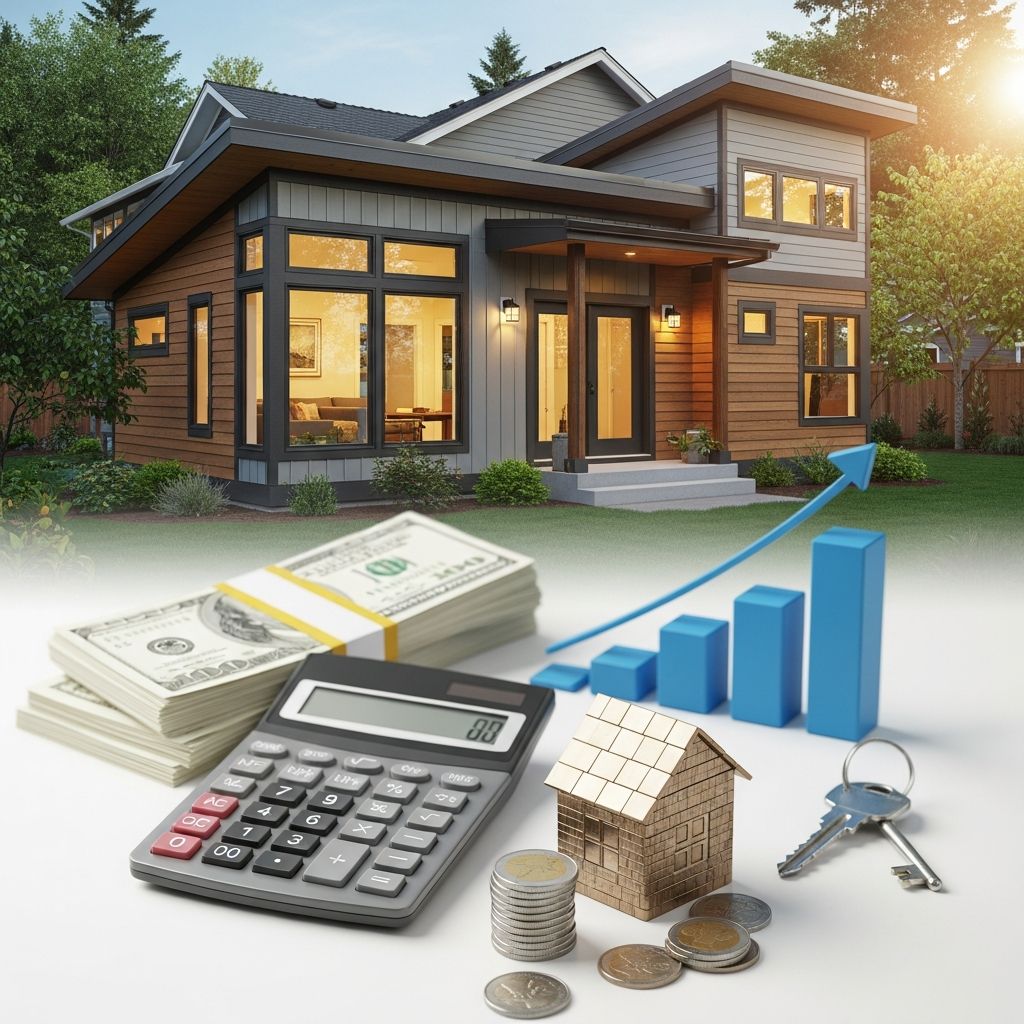
Accessory dwelling units (ADUs) represent a versatile solution for homeowners looking to expand living space, accommodate family, or create rental income streams. These secondary structures, often called granny flats or backyard cottages, can significantly enhance property value while addressing housing needs. However, the upfront costs—typically ranging from $100,000 to $300,000—require careful financial planning. This guide outlines proven financing approaches, drawing from established lending practices to help you navigate options effectively.
Understanding ADUs and Their Financial Appeal
An ADU is a smaller, independent residential unit on the same lot as a primary home, featuring its own kitchen, bathroom, and entrance. They come in attached forms, like basement apartments, or detached versions, such as backyard studios. Beyond providing extra space, ADUs can yield monthly rental income of $1,900 to $2,300 in high-demand areas, offsetting construction costs and increasing overall home equity.
Financially, ADUs boost property appraisals by adding usable square footage and income potential. Lenders increasingly recognize this value, offering products that factor in post-construction worth. Key benefits include improved cash flow from rents, multigenerational living support, and long-term wealth building through appreciated assets.
Assessing Your Financial Readiness Before Financing
Before pursuing loans, evaluate your equity, credit score, income stability, and local zoning laws. Most options require at least 20% home equity and a credit score above 620. Calculate potential rental income using tools from local real estate markets to strengthen loan applications. Also, budget for permits, utilities, and ongoing maintenance, which can add 10-20% to total costs.
- Equity Check: Confirm available home equity via recent appraisal.
- Credit Review: Aim for scores over 700 for best rates.
- Income Projection: Document expected ADU rents to qualify for income-based loans.
- Zoning Compliance: Verify local regulations allow ADUs and any size restrictions.
Core Financing Options for ADU Projects
Homeowners have diverse paths to fund ADUs, from equity-based borrowing to government-backed renovations. Each suits different equity levels, project timelines, and risk tolerances. Below, we break down the primary methods with pros, cons, and ideal scenarios.
| Financing Type | Max Loan Amount | Interest Rate Range | Best For |
|---|---|---|---|
| Home Equity Loan | 80-90% of equity | 6-9% fixed | Established equity, fixed payments |
| HELOC | 85% of equity | Variable 7-10% | Flexible draws during construction |
| Cash-Out Refinance | 80% of current value | 5.5-8% fixed | Low rates, consolidate debt |
| Renovation Loan (e.g., FHA 203k) | Based on after-repair value | 5-7.5% | New builds or major renos |
Home Equity Loans and Lines of Credit
A home equity loan provides a lump sum based on your property’s equity, with fixed rates and terms of 5-30 years. Ideal for detached ADUs, it offers predictable payments. Conversely, a HELOC functions like a credit card, allowing draws as construction progresses at variable rates. These suit homeowners with substantial equity but preserve the primary mortgage.
Pros: No refinancing needed; tax-deductible interest. Cons: Risk of foreclosure if unpaid; variable HELOC rates can rise.
Cash-Out Refinance Explained
This replaces your existing mortgage with a larger one, pulling out cash for the ADU. Lenders cap at 80% of current home value, but specialized variants consider future ADU-enhanced appraisals. It’s advantageous in low-rate environments, potentially lowering overall payments while funding the project.
Renovation and Construction Loans
Fannie Mae’s HomeStyle Renovation and FHA 203(k) loans finance ADU additions by appraising the ‘after-improved’ value, bridging equity gaps for recent buyers. Construction-to-permanent loans cover building phases, converting to standard mortgages post-completion. These are perfect for attached ADUs or full new builds, with FHA options accommodating lower credit profiles.
- FHA 203(k) Standard: For attached ADUs up to primary home size.
- HomeStyle: Flexible for any Selling Guide product, including purchases with existing ADUs.
Specialized and Emerging ADU Loan Products
Beyond traditional options, innovative loans address common barriers like limited equity. RenoFi Loans base amounts on post-ADU value, enabling up to 11x more borrowing power without refinancing. Community programs, such as city-run initiatives in Los Angeles or Boston, offer low-interest loans targeting low-income renters. Credit unions and CDFIs like Craft3 provide ADU-specific financing with favorable terms for moderate-income households.
Government-sponsored products from Fannie Mae allow rental income from existing ADUs in HomeReady loans, enhancing qualification. These trends signal a maturing market, with future options likely tying loans to verified low-income rentals for subsidies.
Comparing Costs: A Real-World Breakdown
Assume a $250,000 ADU on a $600,000 home with 30% equity. A HELOC at 8% over 10 years yields ~$3,800 monthly (principal + interest), offset by $2,000 rents. Renovation loans might offer lower 6% rates but require detailed contractor bids.
| Option | Est. Monthly Payment | Total Interest (10 yrs) | Rent Offset Potential |
|---|---|---|---|
| Home Equity Loan | $3,200 | $134,000 | High |
| HELOC | $2,900 (avg draw) | $150,000 (variable) | High |
| Cash-Out Refi | $3,500 (incl. primary) | $120,000 | Medium |
| FHA 203(k) | $2,800 | $110,000 | High |
Numbers are illustrative; actuals depend on credit, location, and rates as of 2026.
Steps to Secure ADU Financing Successfully
- Pre-Qualify: Shop multiple lenders for rates and terms.
- Gather Docs: Appraisals, plans, permits, income proofs.
- Choose Contractor: Licensed pros with ADU experience.
- Apply Early: Factor in 45-60 day processing.
- Monitor Progress: Draws require inspections for renovation loans.
Risks, Pitfalls, and Mitigation Strategies
Common issues include over-budgeting (add 15% contingency), zoning denials, or rate hikes on variable loans. Mitigate by securing fixed rates, obtaining pre-approvals, and consulting ADU specialists. Properties with multiple ADUs or manufactured primaries may not qualify for standard financing. Always project net income post-expenses like taxes and insurance.
Leveraging ADU Income for Long-Term Gains
Rentals can cover 70-100% of loan payments, accelerating payoff. Platforms like Airbnb amplify short-term yields, while long-term tenants stabilize cash flow. Post-construction refinancing captures added value, reducing debt loads.
Frequently Asked Questions (FAQs)
Can I finance an ADU with no home equity?
Yes, via renovation loans appraising future value or specialized products like RenoFi.
Are ADU loans tax-deductible?
Interest often qualifies if used for home improvements; consult a tax advisor.
How long does ADU financing take?
30-90 days, longer for construction loans.
Can I rent out my ADU immediately?
Typically yes, if zoned appropriately; some loans require owner-occupancy of primary.
What’s the average ADU ROI?
20-50% value increase, plus rental yields of 5-10% annually.
References
- Accessory Dwelling Units (ADUs) – Fannie Mae Single Family — Fannie Mae. 2023. https://singlefamily.fanniemae.com/originating-underwriting/mortgage-products/accessory-dwelling-units
- 6 ADU Loan Options for Financing an ADU (Accessory Dwelling Unit) — RenoFi. 2023. https://www.renofi.com/adus/adu/financing/
- Accessory Dwelling Unit (ADU) – CrossCountry Mortgage — CrossCountry Mortgage. 2023. https://crosscountrymortgage.com/mortgage/loans/construction/accessory-dwelling-unit-adu/
- The Future of Accessory Dwelling Unit (ADU) Financing — University of Michigan Real Estate. 2021-10-01. https://studyrealestate.umich.edu/wp-content/uploads/2021/10/The-Future-of-Accesory-Dwelling-Unit-Financing.pdf
- HELOC vs Construction Loan vs Cash-Out Refi – Smart Spaces ADU — Smart Spaces ADU. 2023. https://smartspacesadus.com/blog/adu-financing-options-in-georgia-heloc-vs-construction-loan-vs-cash-out-refi?hs_amp=true
Similar Articles








Read full bio of medha deb