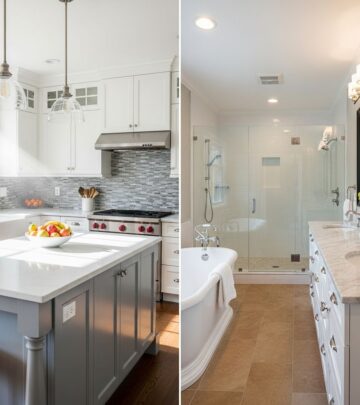
Funding Home Renovations Smartly
Discover the best loans, mortgages, and strategies to finance your 2026 home upgrades without financial strain.

Homeowners often face the challenge of balancing renovation dreams with financial reality. In 2026, rising property values and innovative lending products offer more ways than ever to finance upgrades. This guide breaks down the most effective strategies, from tapping equity to government-backed programs, helping you select the right fit for your project size, credit profile, and long-term goals.
Why Finance Renovations? Key Benefits and Considerations
Renovations boost comfort, property value, and energy efficiency. According to industry trends, projects like kitchen remodels or energy-efficient upgrades can yield returns of 50-70% on investment. However, poor financing choices lead to high debt burdens. Prioritize options with rates below 8% where possible, and calculate total costs including fees.
- Increase home value: Structural improvements often recoup costs upon sale.
- Improve livability: Modernize outdated spaces for daily enjoyment.
- Tax advantages: Energy upgrades qualify for federal credits under the Inflation Reduction Act.
- Risk management: Avoid depleting savings; spread costs over time.
Before borrowing, assess your equity (home value minus mortgage balance), credit score (ideally 620+), and debt-to-income ratio (under 43%). Tools from lenders like FHA calculators help estimate affordability.
Leveraging Home Equity: HELOCs and Home Equity Loans
Home equity is a prime funding source for renovations, offering lower rates than unsecured loans. Borrow against your home’s value at 6-9% APR typically.
Home Equity Line of Credit (HELOC)
A HELOC acts like a credit card secured by your home, ideal for phased projects. Draw funds as needed during a 10-year draw period, then repay over 20 years. Rates are variable, tied to prime rate.
| Feature | Details |
|---|---|
| Loan Amount | Up to 85% of equity |
| Timeline | Funds in 2-6 weeks |
| Best For | Ongoing or uncertain costs |
| Requirements | 15%+ equity, 680+ credit |
Pros include flexibility and interest-only payments initially. Cons: Variable rates could rise, and default risks foreclosure. Pay down quickly to minimize interest.
Fixed-Rate Home Equity Loan
This lump-sum option provides predictable payments, suiting one-time expenses like roof replacements. Terms span 5-30 years at fixed 7-8% rates.
- Stable budgeting with fixed monthly payments.
- Lower closing costs than refinances.
- Suitable for borrowers with steady income.
Mortgage Refinancing Strategies for Major Upgrades
Refinancing replaces your existing loan, potentially funding renovations at mortgage rates (around 6.5% in 2026).
Cash-Out Refinance Explained
Replace your mortgage with a larger one, pocketing the difference in cash. If your home appraises at $400,000 with $200,000 owed, borrow $280,000 and get $80,000 cash (80% LTV max).
| Pros | Cons |
|---|---|
| Low rates vs. personal loans | Higher monthly payments |
| Long repayment (15-30 years) | Closing costs 2-6% of loan |
| Extends term if desired | Resets clock on equity build |
Ideal if current rates are higher or you have substantial equity. Recent data shows average cash-out amounts at $50,000+ for remodels.
FHA 203(k) Rehabilitation Loans
Government-insured, these bundle purchase/refinance with repairs up to 110% of post-renovation value. Perfect for fixer-uppers; covers essentials like HVAC, not luxuries.
- Min credit: 580; 3.5% down.
- Two types: Limited ($35k max, streamlined) or Standard (larger projects).
- Funds held in escrow, released post-inspection.
Benefits include lenient quals and one closing. Drawbacks: More paperwork and FHA limits by county.
Unsecured Options: Personal Loans and Credit Cards
For smaller jobs ($5k-$50k), unsecured loans avoid home collateral risk, though rates hit 10-36%.
Top Personal Loan Providers
Credit unions like First Tech cap APR at 18%, offering $500-$50k terms up to 7 years. SoFi excels for $100k max and joint apps, with discounts for autopay.
| Lender | Max Amount | APR Range | Term |
|---|---|---|---|
| First Tech | $50k | Up to 18% | 6mo-7yr |
| SoFi | $100k | 8-25% | 2-7yr |
| LightStream | $100k | 6.5-25% | Up to 20yr |
Use for quick funding; qualify with 660+ credit. Avoid if project exceeds $20k due to high total interest.
Credit Cards: Short-Term Only
0% intro APR cards work for minor fixes under $10k, but revert to 20%+. Limit to what you can repay in promo period.
Government Programs and Incentives
Federal aid lowers barriers. FHA Title I loans fund $25k max improvements at low rates. Energy Efficient Mortgages (EEMs) finance efficiency upgrades via FHA/VA.
- IRA Tax Credits: 30% for solar, heat pumps (up to $3,200/yr via IRS Form 5695).
- PACE Financing: Repay green upgrades via taxes; no credit check.
- HUD Programs: Search state lenders for Title I.
These pair well with loans; claim credits post-install.
Comparing All Options: Which Fits Your Project?
| Option | Best Project Size | Rate Range | Risk Level |
|---|---|---|---|
| HELOC | $10k-$200k | 6-9% variable | Medium (home lien) |
| Cash-Out Refi | $50k+ | 6-7% fixed | High (full mortgage) |
| FHA 203(k) | $35k-$500k | 6.5-8% | Medium |
| Personal Loan | $5k-$50k | 8-36% | Low (unsecured) |
Match to needs: Equity-rich homeowners favor HELOCs; first-timers choose FHA. Always shop 3+ lenders.
Steps to Secure Financing Successfully
- Calculate project costs +20% contingency.
- Check credit/equity via free reports.
- Pre-qualify without hard pulls.
- Compare APRs, fees, terms.
- Get contractor bids; align with lender approvals.
- Close and monitor draws.
Budget for 2-5% closing costs. In 2026, digital apps speed approvals to days.
Frequently Asked Questions
What’s the cheapest way to fund a $30k kitchen remodel?
A HELOC or cash-out refi at 6-8% beats personal loans. Use savings if available to avoid debt.
Can I renovate a rental property?
Most loans require owner-occupancy; explore portfolio lenders or personal loans.
Do renovations always increase home value?
ROI varies: Kitchens 60%, bathrooms 50%. Over-improve at your risk.
How much equity do I need?
15-20% minimum for most; FHA allows less.
Are there grants for low-income renovations?
Check HUD CDBG or state programs; limited but available.
Final Tips for 2026 Renovations
Shop rates amid stable Fed policy. Pair financing with ROI-focused projects. Consult advisors to avoid pitfalls like over-borrowing. With smart choices, your upgrades enhance life without compromising stability.
References
- How to Pay for Your Home Renovation in 2025 — Block Renovation. 2025. https://www.blockrenovation.com/guides/how-to-pay-for-your-home-renovation-in-2025
- 2026 Home Renovation Outlook: Funding Projects Without… — Unison. 2026. https://www.unison.com/blog/2026-home-renovation-funding-options
- The 6 Best Home Improvement Loans | 2026 — The Mortgage Reports. 2026. https://themortgagereports.com/38797/home-improvement-loans-which-is-best-for-you
- Guide to Refinancing for Home Improvements in 2026 — Mortgage Equity Partners. 2026. https://mortgageequitypartners.com/guide-to-refinancing-for-home-improvements-in-2026/
- Best Home Improvement Loans of April 2026 — NerdWallet. 2026-04. https://www.nerdwallet.com/personal-loans/best/home-improvement-loans
- Home Renovation Financing in 2026 — Realm Home. 2026. https://realmhome.com/blog/home-renovation-financing-in-2026-should-i-renovate-or-move
Similar Articles








Read full bio of Sneha Tete