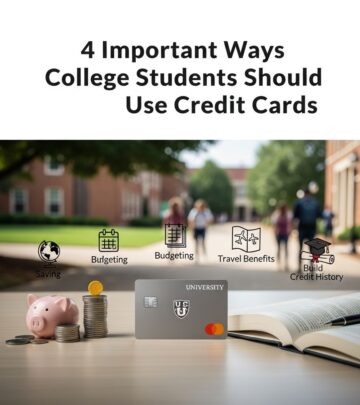
Funding Higher Education: Credit Cards for Tuition
Explore smart strategies for using credit cards to cover college costs, weighing rewards against fees and risks.

Paying for college tuition with a credit card is an option at many institutions, but it comes with important caveats like processing fees and interest risks that can offset any benefits. This approach works best when schools charge no extra costs and you pay off the balance immediately to capture rewards without debt.
Understanding Institutional Policies on Card Payments
Colleges vary widely in their acceptance of credit cards for tuition. Some outright prohibit it to avoid merchant fees, while others permit it with or without surcharges typically ranging from 2.25% to 3%. To determine your school’s stance, search online for “pay [school name] tuition credit card” or contact the bursar’s or registrar’s office directly. Categories include outright bans, fee-free acceptance, or fee-based options, making verification essential before planning payments.
- Banned payments: Institutions like certain private universities reject cards entirely to control costs.
- No-fee options: Rare but valuable, such as select public universities allowing direct card use without markup.
- Fee-required: Common, where schools pass on processing costs, often 2.5-3%, eroding rewards value.
Fee-free policies are ideal for reward maximization, but their scarcity means most students face added expenses that demand careful math.
Financial Pros and Cons of This Payment Method
The primary advantage is earning points, miles, or cash back on large tuition sums, potentially yielding high returns if no fees apply and balances are cleared promptly. However, surcharges often negate these gains; a 2.5% fee on $20,000 tuition equals $500, surpassing typical 1-5% rewards.
| Aspect | Pros | Cons |
|---|---|---|
| Rewards | Boosted points on big spends | Fees wipe out value |
| Convenience | Quick online payments | Interest if not paid off |
| Credit Impact | Builds history if managed well | High utilization hurts scores |
High credit utilization from tuition—often 100% of limits—can temporarily lower scores, even if paid off, as it reports before billing cycles close. Interest accrual post-grace period further compounds costs if carrying a balance.
Maximizing Rewards Without Extra Costs
When fees are absent, prioritize cards with strong flat rewards on everyday spends. Options like those offering 2% unlimited cash back shine for tuition, provided you avoid debt. For example, cards with introductory boosts or high-value miles can turn payments into travel or redemption perks, but only pay in full to preserve value.
- Flat-rate cash back cards: 1.5-2% on all purchases, ideal for no-fee scenarios.
- Miles earners: 2x miles equating to 3-4% effective return based on valuations.
- Large-purchase bonuses: 100% extra points on $5,000+ spends, amplifying tuition hauls.
Always calculate net return: rewards minus any fees must exceed zero, and full repayment is non-negotiable to dodge 20%+ APRs.
Navigating Fees: When It Might Still Pay Off
If fees apply, compare them against rewards rates. A 2% fee with a 2.5% cash back card nets positive if you value rewards highly, but slim margins leave little room for error. High-tuition payers might target welcome bonuses, where upfront spending thresholds align with semester bills, unlocking thousands in points.
Business cards sometimes offer elevated rates on big transactions, suitable for parent-funded education. Evaluate personal valuations—miles at 1.85-2 cents each can justify fees under certain conditions.
Leveraging 0% Intro APR for Short-Term Bridges
For families short on immediate funds post-529 exhaustion or aid delays, 0% introductory APR cards provide breathing room. These offer 12-21 months interest-free on purchases, allowing payoff schedules without student loan burdens, while still earning rewards. Eligibility requires good credit, and success hinges on completing repayment before promo ends, as standard rates follow.
Nearly 90% of students receive aid, but gaps persist; this tactic suits those confident in timelines, avoiding permanent debt.
Alternatives to Credit Card Tuition Payments
Credit cards rank low unless fee-free; prioritize these:
- 529 Plans: Tax-advantaged savings with cards like 1.529% cash back auto-depositing to accounts.
- Grants/Scholarships: Free money via FAFSA or platforms, no repayment.
- Student Loans: Federal options with income-driven plans, lower rates than cards.
- Debit Rewards: Rare cards earning miles on tuition-like spends.
- Work-Study: Earned aid combining income and flexibility.
Combining sources often covers costs without high-risk debt; cards as last resort.
Protecting Your Credit Health During Tuition Season
Large payments spike utilization, reported mid-cycle, potentially dropping scores 50-100 points temporarily. Request payment posting adjustments or use multiple cards to dilute impact. Monitor via free weekly reports and keep utilization under 30% ongoing.
Parents co-signing or using personal cards risk their scores; separate student cards build independent histories post-graduation.
Step-by-Step Guide to Safe Tuition Card Use
- Confirm school policy and fees via official channels.
- Calculate rewards net of costs using your valuations.
- Select optimal card: flat rewards, bonuses, or 0% APR.
- Pay immediately or within promo to avoid interest.
- Track utilization and scores closely.
Frequently Asked Questions
Is it ever free to pay tuition by credit card?
Yes, some schools like select public universities accept cards without fees, maximizing rewards.
What if my school charges a 2.75% fee?
Weigh against rewards; only viable if your card’s return exceeds this after fees.
Can intro 0% APR cards cover full semesters?
Possible for amounts fitting promo periods, ideal for aid gaps if repaid timely.
Does tuition payment hurt my credit score?
Temporarily via high utilization; mitigate with planning and monitoring.
Are there debit cards for tuition rewards?
Yes, new 2025 options like airline-linked debits earn miles on payments.
Long-Term Planning for Education Costs
Beyond one-off payments, build via 529s (some with dedicated rewards cards), employer tuition aid, or Roth IRAs for flexibility. Early savings compound tax-free, outpacing card rewards long-term. Consult advisors for personalized mixes avoiding high-interest traps.
References
- A guide to paying college tuition with a credit card — The Points Guy. 2025. https://thepointsguy.com/credit-cards/college-tuition-credit-card/
- Earn Points & Miles When You Pay for College With a Credit Card — AwardWallet. 2025. https://awardwallet.com/credit-cards/pay-college-tuition-with-credit-card/
- Paying College Tuition With a Credit Card — Scholarships360. 2025. https://scholarships360.org/personal-finance/paying-tuition-with-credit-card/
- Credit Cards That Can Help You Pay for College — NerdWallet. 2025. https://www.nerdwallet.com/credit-cards/learn/credit-cards-that-can-help-you-save-for-and-pay-for-college
- Can you pay for college with a credit card? — Chase. 2025. https://www.chase.com/personal/credit-cards/education/basics/can-you-pay-for-college-with-credit-card
Similar Articles








Read full bio of Sneha Tete